Self-justification, not lying, lets good people defend bad acts
Oct 30 · 13 min read

Tavris and Aronson map how cognitive dissonance rewrites belief, memory, and institutions until indefensible acts feel consistent with a decent self.
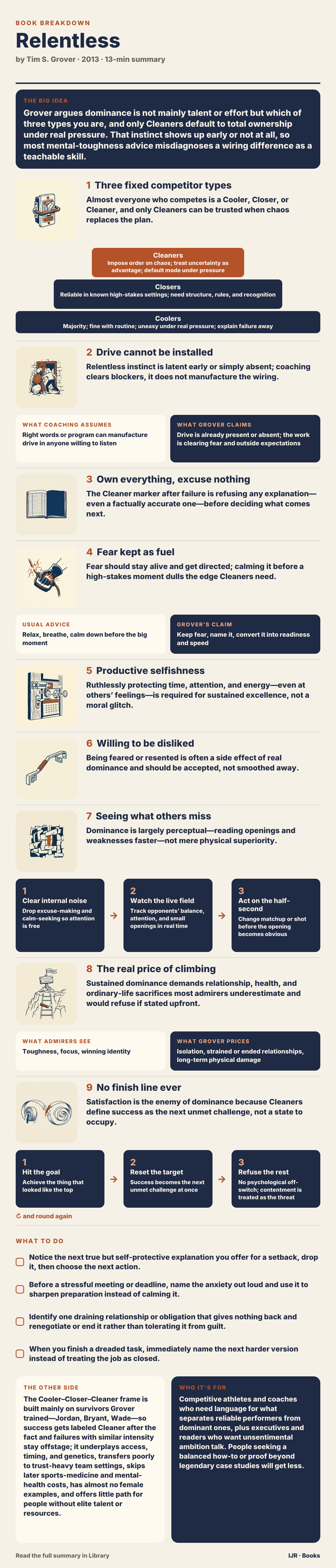
Grover claims clutch performance is a fixed competitive type—Cooler, Closer, or Cleaner—not trainable toughness.
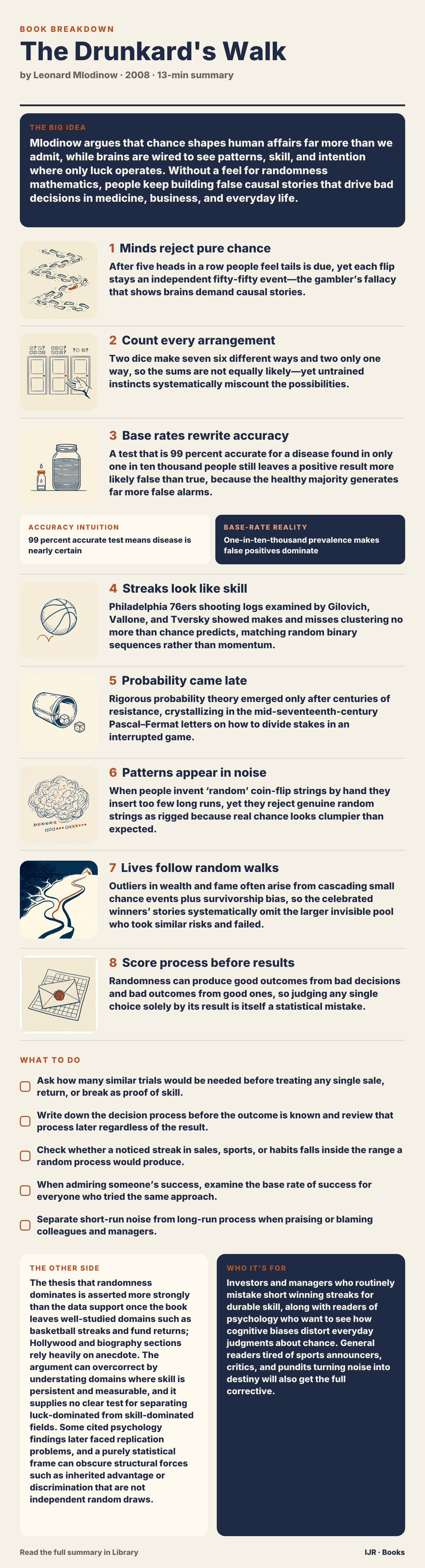
Mlodinow shows that brains invent skill and causes where randomness actually rules, warping medicine, investing, and careers.
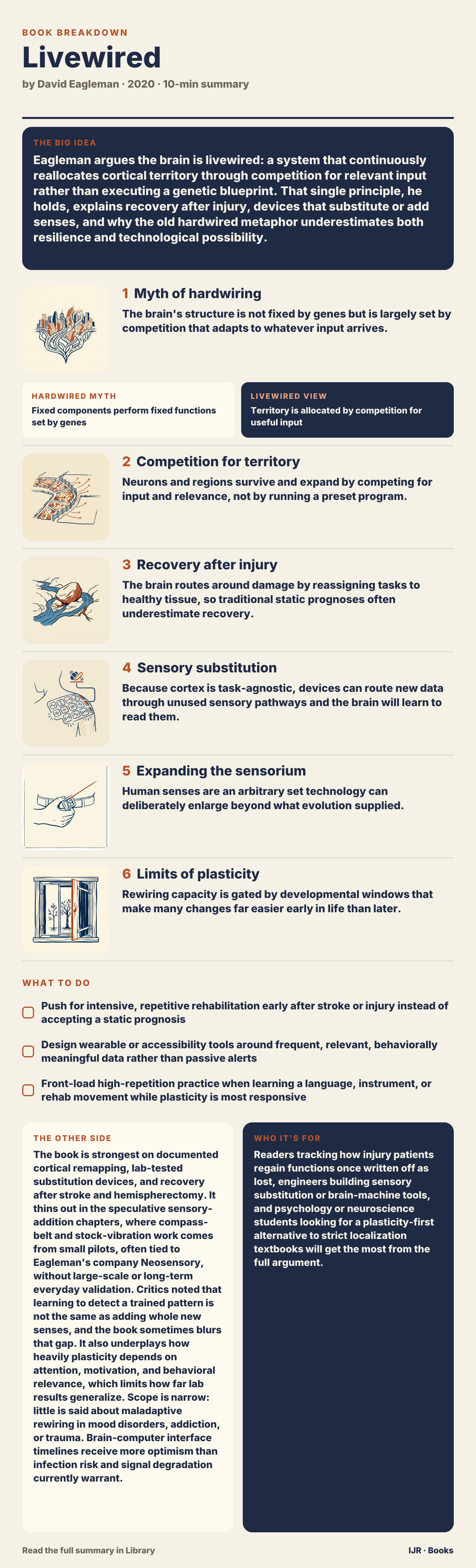
Eagleman argues the brain continuously rewires through competition for useful input, turning injury, disability, and new devices into problems of data and territory rather than permanent hardware loss.
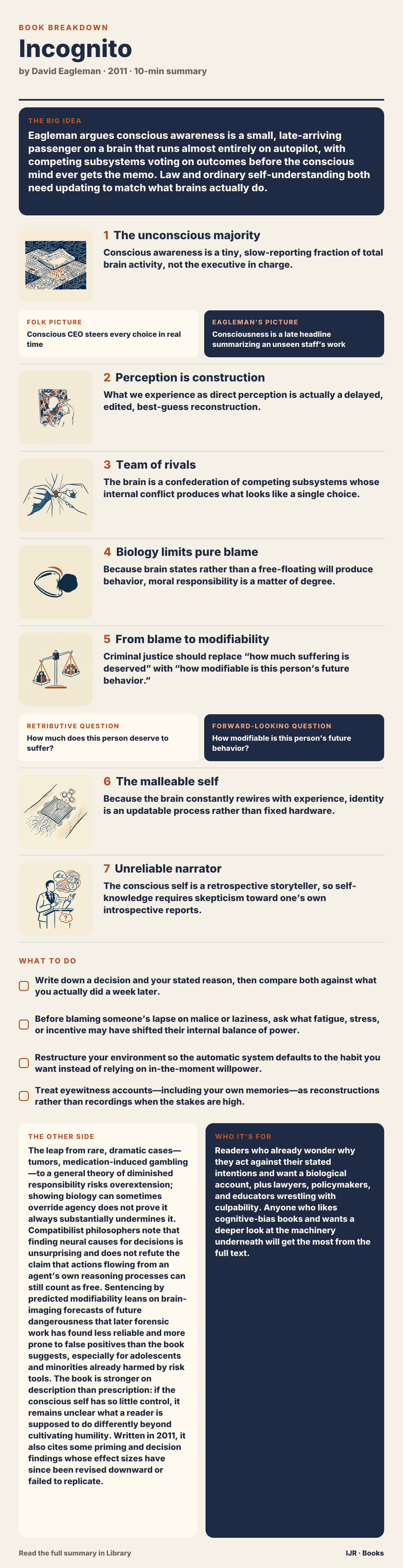
Eagleman argues most perception, choice, and behavior run on autopilot below awareness, so free will, blame, and identity need a biological rewrite.
The conversation starts in the journal — be the first to post.