

Aurora () is a home rule city located in Arapahoe, Adams, and Douglas counties, Colorado, United States. The city's population was 386,261 at the 2020 census, with 336,035 in Arapahoe County, 47,720 in Adams County, and 2,506 in Douglas County. It is the third-most-populous city in the state of Colorado and the 50th-most-populous city in the United States as of 2025. Aurora is a principal city of the Denver–Aurora–Centennial, CO Metropolitan Statistical Area and the Denver-Aurora-Greeley, CO Combined Statistical Area, and a major city of the Front Range Urban Corridor.
Contents
History
Before European settlement, the land that now makes up Aurora was the territory of the Arapaho, Cheyenne, Ute, and Sioux tribes. These lands were claimed by France in 1682 and subsequently became part of the 1803 Louisiana Purchase.
Aurora originated in the 1890 as the town of Fletcher, taking its name from Denver businessman Donald Fletcher who saw it as a real estate opportunity. He and his partners staked out four square miles (10 km2) east of Denver, but the town—and Colorado—struggled mightily after the Silver Crash of 1893. The Town of Fletcher was incorporated on May 5, 1903. Fletcher skipped town, leaving the community with a huge water debt. Voters decided to rename Fletcher the Town of Aurora in 1907 after one of the subdivisions composing the town. The Aurora, Colorado, post office opened on January 15, 1908.
By February 1928, the town of Aurora had reached a population of over 2,000 and it was reincorporated as a city on March 9. Aurora slowly began to grow in Denver's shadow becoming the fastest-growing city in the United States during the late 1970s and early 1980s. Aurora, composed of hundreds of subdivisions, thus carries the name of one of the original development plats from which it sprang.
Aurora's growing population in recent decades has led to efforts for co-equal recognition with its larger neighbor. Former mayor Dennis Champine once expressed the somewhat whimsical notion that eventually the area would be called the "Aurora/Denver Metropolitan Area". Indeed, since the 2000 Census Aurora has surpassed Denver in land area, and much of Aurora is undeveloped, while Denver is more fully built-out. However, such efforts are somewhat hampered by the lack of a large, historically important central business district in the city. Aurora is largely suburban in character, as evidenced by the city's modest number of multi-story buildings.
A large military presence has existed in Aurora since the early 20th century. In 1918, Army General Hospital #21 (later renamed Fitzsimons Army Hospital) opened, with the U.S. government expanding and upgrading the hospital facilities in 1941 just in time to care for the wounded servicemen of World War II. Lowry Air Force Base was opened in 1938, straddling the border of Aurora and Denver. It eventually closed in 1994, and has been redeveloped into a master-planned community featuring residential, commercial, business and educational facilities. In 1942, the Army Air Corps built Buckley Field, which has been renamed Naval Air Station, Buckley Air National Guard Base, Buckley Air Force Base, and finally Buckley Space Force Base. The base, home of the Buckley Garrison and the 140th Wing Colorado Air National Guard, is Aurora's largest employer.
Aurora theater shooting
On July 20, 2012, Aurora was the site of the deadliest shooting by a lone shooter in Colorado (and the state's overall second deadliest, after the 1999 Columbine High School massacre). The shooting occurred just after midnight, when James Holmes opened fire during the midnight premiere of The Dark Knight Rises in a Century movie theater, killing 12 people and injuring 70 others. Holmes was arrested and was eventually sentenced to 12 life sentences in prison with an additional required 3,318 years. The shooting drew an international response from world leaders. U.S. President Barack Obama visited victims, as well as local and state officials, and addressed the nation in a televised address from Aurora on July 22. Actor Christian Bale, who plays Batman in the film, also visited some victims in hospitals. The events marked a turning point in recognition and public perception of the city; rather than referring to the site as being in "Denver" or "suburban Denver", as would have been typical before the event, virtually all media accounts of the incident unequivocally named "Aurora" as its location.
Elijah McClain
On August 30, 2019, Elijah McClain died six days after an unprovoked detention by two Aurora police officers. On June 27, 2020, Aurora Police in riot gear dispersed thousands of protestors at a violin concert held in his honor. On October 12, 2023, one of the officers involved in McClain's death was found guilty on charges of assault and negligent homicide, while another officer was acquitted on all charges against him, which included assault and reckless manslaughter.
2024 U.S. Presidential Election
Aurora received national media attention during the run-up to the 2024 U.S. presidential election. In September 2024, statements made by mayor Mike Coffman and city council member Danielle Jurinsky, both Republicans, falsely claimed that the Venezuelan Tren de Aragua gang had taken control of an Aurora apartment complex and was extorting residents for their rent money. Jurinsky appeared on Fox News alleging "a huge cover-up" and that this "isn't just an Aurora issue." Presidential candidate Donald Trump repeated the claims during his September 10 debate with Kamala Harris, and subsequently scheduled a campaign rally in Aurora. Mayor Coffman denied the city was overrun by Venezuelan gangs. At the October 11 rally at Aurora's Gaylord Rockies Resort & Convention Center, Trump intensified his remarks regarding undocumented immigration and proposed an "Operation Aurora" to remove undocumented immigrants connected to gangs. At a press conference held the same day at Aurora's Stanley Marketplace to denounce Trump's rally, Colorado Governor Jared Polis said, "We welcome the eyes of the nation on a true Colorado gem, the great city of Aurora."
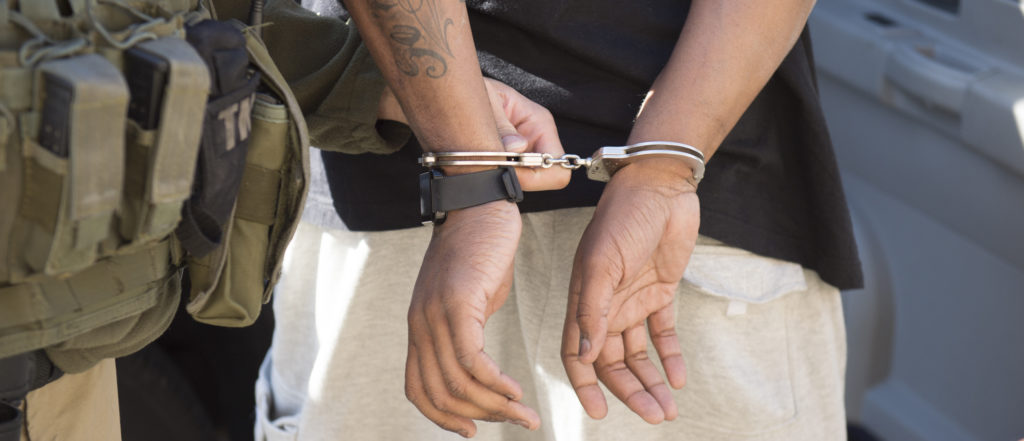
Following Trump's inauguration, U.S. Immigration and Customs Enforcement conducted raids targeting suspected Tren de Aragua gang members in Aurora and Denver. During a speech to a joint session of Congress on March 4, 2025, Trump falsely claimed immigrants "destroyed" Aurora and that the city had "buckled under the weight of migrant occupation." The apartment complex at the root of the controversy was eventually shut down by a court order describing it as a threat to public safety. Aurora's police chief, who advocated for the closure, stated that property mismanagement was to blame, and not gang activity among tenants.
Geography
Aurora's official elevation, posted on signs at the city limits, is 5,471 feet (1,668 m). However, the city spans a difference in elevation of nearly 1,000 feet (300 m). The lowest elevation of 5,285 feet (1,611 m) is found at the point where Sand Creek crosses the city limit in the northwest corner of the city, while the highest elevation of 6,229 feet (1,899 m) is on the extreme southern border of the city in Douglas County, near the intersection of Inspiration and Gartrell roads.
According to 2023 data published by the United States census, the city has a total area of 104,696 acres (423.691 km2) including 371 acres (1.500 km2) of water. The city is about 6 percent more extensive than neighboring Denver but 80 percent of the size of Colorado Springs, ranking as the 54th-largest U.S. city in land area.
Neighborhoods
Aurora is composed of dozens of neighborhoods, districts and (current and former) military installations. Among them:
Climate
Aurora experiences a semi-arid climate (Köppen climate classification BSk), with four distinct seasons and modest precipitation year-round. Summers range from mild to hot, with generally low humidity and frequent afternoon thunderstorms, and Aurora also averages about one dozen tornado warnings throughout tornado season, running from April to July. Although a touchdown does occur every couple of years, tornadoes are typically weak and short lived. Aurora residents typically hear the tornado sirens go off numerous times more than residents in Denver, to the West. All of Aurora is located east of I-25, where tornado alley begins. Hailstorms, at times one to two-plus feet deep happen on occasion, and typical hailstorms are very common throughout these months. July is the warmest month of the year, with an average high of 89 °F (32 °C) and an average low of 57 °F (14 °C). Winters range from mild to occasional bitter cold, with periods of sunshine alternating with periods of snow, high winds and very low temperatures. December is the coldest month of the year, with an average high of 43 °F (6 °C) and an average low of 17 °F (−8 °C). The average first snowfall in the Aurora area occurs in late October and the average final snowfall occurs in late April, although snow has fallen as early as September 4 and as late as June 5. Generally, deciduous trees in the area are bare from mid November to mid March.
Demographics
2020 census
As of the 2010 census, there were 325,078 people, 121,191 households, and 73,036 families residing in the city. The population density was 1,939.6 inhabitants per square mile (748.9/km2). There were 131,040 housing units at an average density of 766.7 units per square mile (296.0 units/km2). The racial makeup of the city was 61.1% White, 15.7% African American, 4.9% Asian (1.1% Korean, 0.8% Vietnamese, 0.5% Filipino, 0.5% Chinese, 0.5% Indian, 0.2% Japanese, 0.1% Thai, 0.1% Cambodian, 0.1% Burmese, 0.1% Nepalese, 0.1% Pakistani, 0.1% Indonesian), 1.0% Native American, 0.3% Pacific Islander, 11.6% from other races, and 5.2% from two or more races. Hispanic or Latino of any race were 28.7% of the population; 21.9% of Aurora's population is of Mexican heritage, 1.0% Salvadoran, 0.7% Puerto Rican, 0.4% Guatemalan, 0.3% Honduran, 0.3% Peruvian, 0.2% Cuban, 0.2% Colombian and 0.1% Nicaraguan. Non-Hispanic Whites were 47.3% of the population in 2010, compared to 85.1% in 1980.
Aurora is a center of Colorado's refugee population. There are about 30,000 Ethiopians and Eritreans living in the Denver–Aurora area. There is also a sizable population of Nepalese refugees.
There were 121,191 households, out of which 35.5% had children under the age of 18 living with them, 46.9% were married couples living together, 13.1% had a female householder with no husband present, and 34.8% were non-families. 27.4% of all households were made up of individuals, and 5.7% had someone living alone who was 65 years of age or older. The average household size was 2.6 and the average family size was 3.2.
In the city, the population was spread out, with 27.3% under the age of 18, 6.8% from 18 to 24, 37.6% from 25 to 44, 16.8% from 45 to 64, and 8.9% who were 65 years of age or older. The median age was 32 years. For every 100 females, there were 100.5 males. For every 100 females age 18 and over, there were 95.8 males.
The median income for a household in the city was $46,507, and the median income for a family was $52,551. Males had a median income of $35,963 versus $30,080 for females. The per capita income for the city was $21,095. About 6.8% of families and 8.9% of the population were below the poverty line, including 12.0% of those under age 18 and 6.1% of those age 65 or over.
Economy
According to the Aurora Economic Development Council, the largest public employers in the city are:
According to the Aurora Economic Development Council, the largest private employers in the city of Aurora are:
Other notable employers in the city include Lockheed Martin Corporation, Staples Inc., United Natural Foods, Aurora Mental Health Center, G45 Secure Solutions, Graebel Relocation, Core-Mark, and Nelnet, Inc.
Attractions
The city of Aurora manages more than 100 parks, more than 6,000 acres (24 km2) of open space and natural areas, and six award-winning municipal golf courses (Aurora Hills, Meadow Hills, Murphy Creek, Saddle Rock, Springhill and Fitzsimons). Aurora also is home to several privately owned golf courses including CommonGround Golf Course, Heather Ridge Country Club, Heritage Eagle Bend Golf Club and Valley Country Club. Hogan Park at Highlands Creek in the Aurora Highlands features world-class public art installations, including Liberty, among the 20 tallest statues in the United States.
Star K Ranch, home to Aurora's Morrison Nature Center, provides important habitat for wildlife. It has several trails for nature exploration, including access to the Sand Creek Greenway Trail. Jewell Wetland, a 50-acre (200,000 m2) wooded wetland, features trails, boardwalk/deck access into the wetland and a butterfly garden. Aurora Reservoir and Quincy Reservoir offer plenty of opportunities for outdoor water pursuits.
DeLaney Farm, site of Aurora's famous historic round barn, has 130 acres (0.53 km2) of open space, trails with access to the High Line Canal, an organic garden managed by Denver Urban Gardens, and two structures on the National Register of Historic Places. The Plains Conservation Center, with 1,100 acres (4.5 km2) of native shortgrass prairie, hosts a variety of educational programs.
Twenty-seven historic sites and landmarks are managed by the city of Aurora, including the Gully Homestead of 1870, the Victorian-style Centennial House of 1890, the privately owned American War Mothers National Memorial Home, the Art Deco-style KOA Building of 1934, the DeLaney Round Barn of 1902, Lowry Building 800, the interim headquarters for the U.S. Air Force Academy from 1955 to 1958, and Stanley Marketplace, which opened at the former site of Stanley Aviation in 2016.
The Aurora Fox Theatre & Arts Center, another historic landmark, is a 245-seat performing arts facility in the Aurora Cultural Arts District, along East Colfax Avenue. In that same area, The People's Building is a performing arts venue with flexible space, including 191 retractable seats and a gallery.
The Aurora History Museum is a community-based cultural center featuring a permanent exhibit on Aurora history and two changing exhibit galleries touching on topics related to history and decorative arts. Additionally, some of their collections can be accessed online here. Aurora is home to the Colorado Freedom Memorial and a memorial garden for the victims of the 2012 theater shooting is located adjacent to City Hall.
Government
The city of Aurora operates under a council-manager form of government, where the city manager runs the city's day-to-day operations with general guidance from the city council. The Aurora City Council is composed of a mayor and ten council members. Six members are elected from districts, while the other four are elected at large. The mayor is elected by the entire city. Aurora's mayor role is largely ceremonial, but the mayor does have direct impact on policy issues as the head of city council. The council is nonpartisan; however, parties of members have been listed below for reference.
This full-service city is protected by the Aurora Police Department, one of only 10 law enforcement agencies in Colorado to be accredited by the Commission on Accreditation for Law Enforcement Agencies; the Aurora Fire Department, which is accredited by the Commission on Fire Accreditation International; and a Public Safety Communications dispatch call center. The Aurora Municipal Courts handles a wide variety of offense violations, and the Aurora Detention Center is a 72-hour adult holding facility.
Politics
In national elections, Aurora leans to the left and the Democratic Party, though not as much as neighboring Denver but more than other suburbs in the Denver metro area. Northern and Central Aurora, due to an extremely racially and culturally diverse voter base and high density for a suburban city, are some of the most Democratic areas in Colorado and vote similarly to Denver and Boulder; southern Aurora, similar to neighboring Centennial, used to lean Republican but has swung Democratic entering the 2020s.
Aurora anchors Colorado's 6th congressional district and is represented in Congress by Jason Crow (D-Centennial). State representation is listed in the tables below (areas implied to be in Arapahoe County unless noted: not all districts are fully in Aurora).
Education
Primary and secondary education school districts:
Charter schools:
DSST Public Schools
Private schools:
Christ Our Redeemer Lutheran School
Merryhill Preschool
Post-secondary and career education:
Transportation
Aurora straddles I-70, I-225 and the E-470 beltway. The Regional Transportation District's light rail transit system was extended to serve the southwestern edge of Aurora on November 17, 2006. The H Line stops at Aurora's Dayton and Nine Mile Stations; a comprehensive network of feeder buses in southern Aurora serve the latter. On February 24, 2017, the line was extended as the R Line to Peoria Station in the city's northwest, where riders may transfer to the A Line providing service between Union Station in Downtown Denver and Denver Airport. Much of Aurora is more convenient to Denver International Airport than Denver itself, and the city is planning an Aerotropolis along the airport's southern flank. This proximity is a factor in the expected growth of the E-470 corridor directly south of Denver International Airport, projected to eventually accommodate 250,000 additional Aurora residents. The easternmost portions of Aurora adjoin the Colorado Air and Space Port.
In 2017, Aurora became the first city in Colorado to host a dockless bike sharing program, but operations have been suspended since August 2022.
Sports
In 2014 the U.S.A. Powerlifting Raw Nationals and the IPF Open Powerlifting World Championships were both held in Aurora. The WC was the 35th Women's and 44th Men's Open Powerlifting Championships, and it was held on the Radisson Hotel Denver Southeast.
Sister cities
Aurora's sister cities are:
Adama, Ethiopia (1988–2004, since 2014)
Chihuahua, Mexico (2023)
Jacó, Costa Rica (2016)
Seongnam, South Korea (1992)
Friendship cities
Aurora also has two friendship cities:
Antiguo Cuscatlán, El Salvador (2016)
New Taipei City, Taiwan (2023)