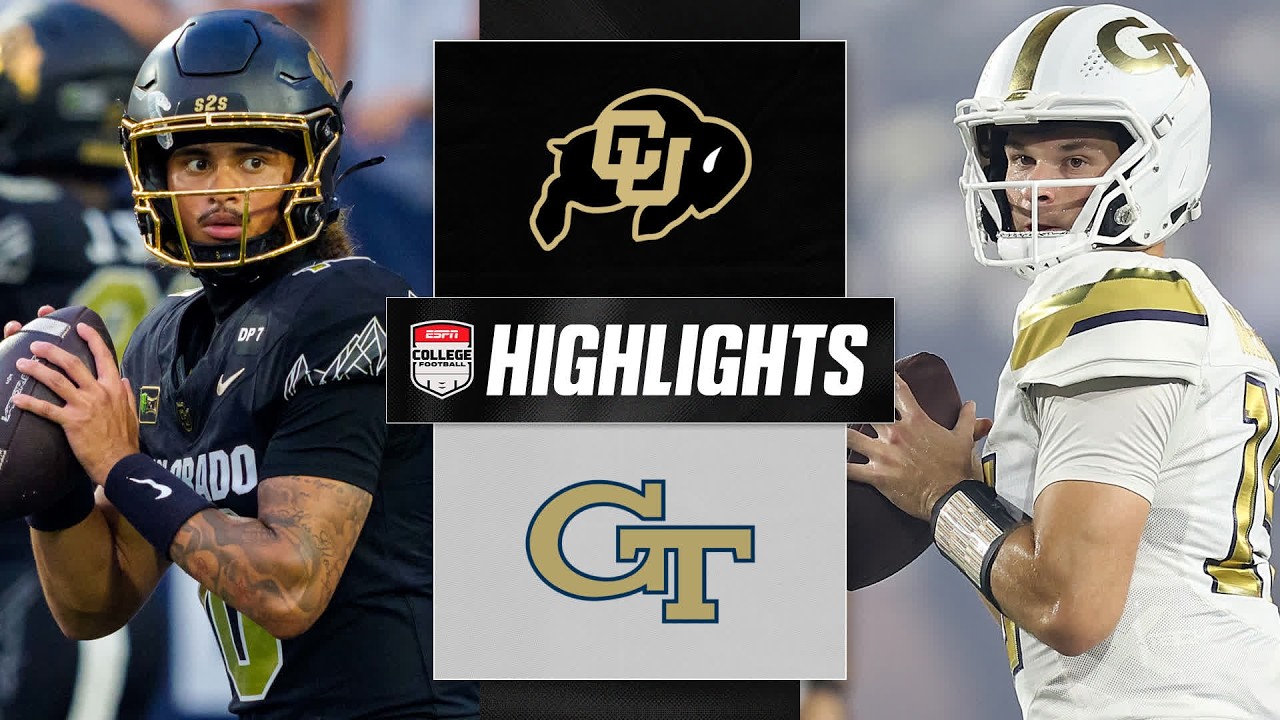




College football (French: Football universitaire) is gridiron football that is played by teams of amateur student-athletes at universities and colleges. It was through collegiate competition that gridiron football first gained popularity in the United States.
Like gridiron football generally, college football is most popular in the United States and Canada. While no single governing body exists for college football in the United States, most schools, especially those at the highest levels of play, are members of the National Collegiate Athletic Association (NCAA). In Canada, collegiate football competition is governed by U Sports for universities. The Canadian Collegiate Athletic Association (for colleges) governs soccer and other sports but not gridiron football. Other countries, such as Mexico, Japan and South Korea, also host college football leagues with modest levels of support.
Unlike most other major sports in North America, no official minor league farm organizations exist for American football or Canadian football. Therefore, college football is generally considered to be the second tier of American and Canadian football, ahead of high school competition but below professional competition. In some parts of the United States, especially the South and Midwest, college football is more popular than professional football. For much of the 20th century, college football was generally considered to be more prestigious than professional football.
The overwhelming majority of professional football players in the National Football League (NFL) and other leagues previously played college football, with players who previously played in the NCAA Division I Football Bowl Subdivision, the highest level of college football in the United States, making up 92.7% of the NFL's total active roster during the 2025 season. The NFL draft each spring sees 224 players selected and offered a contract to play in the league, with the vast majority coming from the NCAA. Other professional leagues, such as the Canadian Football League (CFL) and United Football League (UFL), hold their own drafts each year that also involve primarily college players selected. Players who are not selected can still attempt to win a professional roster spot as an undrafted free agent. Despite these opportunities, only around 1.6% of NCAA college football players eventually play professionally in the NFL.
Contents
History
Even after the emergence of the professional National Football League (NFL), college football has remained extremely popular throughout the U.S. Although the college game has a much larger margin for talent than its pro counterpart, the sheer number of fans following major colleges provides a financial equalizer for the game, with Division I programs – the highest level – playing in huge stadiums, six of which have seating capacity exceeding 100,000 people. In many cases, college stadiums employ bench-style seating, as opposed to individual seats with backs and arm rests (although many stadiums do have a small number of chair back seats in addition to the bench seating). This allows them to seat more fans in a given amount of space than the typical professional stadium, which tends to have more features and comforts for fans. Only three stadiums owned by U.S. colleges or universities, L&N Stadium at the University of Louisville, Center Parc Stadium at Georgia State University (which itself was a reconstruction of Turner Field which was a reconstruction of Centennial Olympic Stadium), and FAU Stadium at Florida Atlantic University, consist entirely of chair back seating.
Early history
Modern North American football has its origins in various games, all known as "football", played at public schools in Great Britain in the mid-19th century. Early 19th century American college students played a disorganized game resembling medieval mob football. In 1827, a Harvard tradition known as "Bloody Monday" began, which consisted of a mass ballgame between the freshman and sophomore classes. Violent games such as this were banned from college campuses around 1860.
By the 1840s, students at Britain's Rugby School were playing a game in which players were able to pick up the ball and run with it, a sport later known as rugby football. The game was taken to Canada by British soldiers stationed there and was soon being played at Canadian colleges. The first documented gridiron football game was played at University College, a college of the University of Toronto, on November 9, 1861. In 1864, at Trinity College, also a college of the University of Toronto, F. Barlow Cumberland and Frederick A. Bethune devised rules based on rugby football.
On November 6, 1869, Rutgers University faced Princeton University, then known as the College of New Jersey, in the first collegiate football game. The game more closely resembled soccer than rugby or gridiron football. It was played with a round ball, and used a set of rules based on The Football Association's first set of rules.
By 1873, representatives from Yale, Columbia, Princeton, and Rutgers met at the Fifth Avenue Hotel in New York City to codify the first set of intercollegiate football rules, based closely on association football (i.e., soccer). Before this meeting, each school had its own set of rules and games were usually played using the home team's own particular code. However, the colleges coming to an agreement on soccer-like rules were unable to obtain the crucial support of Harvard University, which had been playing its own intramural football based on an informal style called the "Boston game".
Unable to agree upon rules with American colleges, Harvard instead played multiple games against McGill University in 1874. In as much as Rugby football had been transplanted to Canada from England, the McGill team played under a set of rules which allowed a player to pick up the ball and run with it whenever he wished. Another rule, unique to McGill, was to count tries (the act of grounding the football past the opposing team's goal line; there was no end zone during this time), as well as goals, in the scoring. In the Rugby rules of the time, a try only provided the attempt to kick a free goal from the field. If the kick was missed, the try did not score any points itself. Harvard players were enthusiastic about McGill's rules and quickly abandoned most of the "Boston game."
Expansion
College football expanded greatly during the last two decades of the 19th century. Several major rivalries date from this time period.
November 1890 was an active time in the sport. In Baldwin City, Kansas, on November 22, 1890, college football was first played in the state of Kansas. Baker beat Kansas 22–9. On the 27th, Vanderbilt played Nashville (Peabody) at Athletic Park and won 40–0. It was the first time organized football played in the state of Tennessee. The 29th also saw the first instance of the Army–Navy Game. Navy won 24–0.
Rutgers was first to extend the reach of the game. An intercollegiate game was first played in the state of New York when Rutgers played Columbia on November 2, 1872. It was also the first scoreless tie in the history of the fledgling sport. Yale football starts the same year and has its first match against Columbia, the nearest college to play football. It took place at Hamilton Park in New Haven and was the first game in New England. The game was essentially soccer with 20-man sides, played on a field 400 by 250 feet. Yale wins 3–0, Tommy Sherman scoring the first goal and Lew Irwin the other two.
After the first game against Harvard, Tufts took its squad to Bates College in Lewiston, Maine for the first football game played in Maine. This occurred on November 6, 1875.
Penn's Athletic Association was looking to pick "a twenty" to play a game of football against Columbia. This "twenty" never played Columbia, but did play twice against Princeton. Princeton won both games 6 to 0. The first of these happened on November 11, 1876, in Philadelphia and was the first intercollegiate game in the state of Pennsylvania.
Brown entered the intercollegiate game in 1878. Penn State played its first season in 1887, but had no head coach for their first five years, from 1887 to 1891. In 1891, the Pennsylvania Intercollegiate Football Association (PIFA) was formed. It consisted of Bucknell University, Dickinson College, Franklin & Marshall College, Haverford College, Penn State, and Swarthmore College. Lafayette College, and Lehigh University were excluded because it was felt they would dominate the Association. Penn State won the championship with a 4–1–0 record. Bucknell's record was 3–1–1 (losing to Franklin & Marshall and tying Dickinson). The Association was dissolved prior to the 1892 season.
Violence, formation of NCAA
College football increased in popularity through the remainder of the 19th and early 20th century. It also became increasingly violent. Between 1890 and 1905, 330 college athletes died as a direct result of injuries sustained on the football field. These deaths could be attributed to the mass formations and gang tackling that characterized the sport in its early years.
The 1894 Harvard–Yale game, known as the "Hampden Park Blood Bath", resulted in crippling injuries for four players; the contest was suspended until 1897. The annual Army–Navy game was suspended from 1894 to 1898 for similar reasons. One of the major problems was the popularity of mass-formations like the flying wedge, in which a large number of offensive players charged as a unit against a similarly arranged defense. The resultant collisions often led to serious injuries and sometimes even death. Georgia fullback Richard Von Albade Gammon notably died on the field from concussions received against Virginia in 1897, causing Georgia, Georgia Tech, and Mercer to suspend their football programs.
The situation came to a head in 1905 when there were 19 fatalities nationwide. President Theodore Roosevelt reportedly threatened to shut down the game if drastic changes were not made. However, the threat by Roosevelt to eliminate football is disputed by sports historians. What is absolutely certain is that on October 9, 1905, Roosevelt held a meeting of football representatives from Harvard, Yale, and Princeton. Though he lectured on eliminating and reducing injuries, he never threatened to ban football. He also lacked the authority to abolish football and was, in fact, actually a fan of the sport and wanted to preserve it. The President's sons were also playing football at the college and secondary levels at the time.
Meanwhile, John H. Outland held an experimental game in Wichita, Kansas that reduced the number of scrimmage plays to earn a first down from four to three in an attempt to reduce injuries. The Los Angeles Times reported an increase in punts and considered the game much safer than regular play but that the new rule was not "conducive to the sport". In 1906, President Roosevelt organized a meeting among thirteen school leaders at the White House to find solutions to make the sport safer for the athletes. Because the college officials could not agree upon a change in rules, it was decided over the course of several subsequent meetings that an external governing body should be responsible. Finally, on December 28, 1905, 62 schools met in New York City to discuss rule changes to make the game safer. As a result of this meeting, the Intercollegiate Athletic Association of the United States was formed in 1906. The IAAUS was the original rule-making body of college football, but would go on to sponsor championships in other sports. The IAAUS would get its current name of National Collegiate Athletic Association (NCAA) in 1910, and still sets rules governing the sport.
Modernization and innovation (1906–1930)
As a result of the 1905–1906 reforms, mass formation plays became illegal and forward passes legal. Bradbury Robinson, playing for visionary coach Eddie Cochems at Saint Louis University, threw the first legal pass in a September 5, 1906, game against Carroll College at Waukesha. Other important changes, formally adopted in 1910, were the requirements that at least seven offensive players be on the line of scrimmage at the time of the snap, that there be no pushing or pulling, and that interlocking interference (arms linked or hands on belts and uniforms) was not allowed. These changes greatly reduced the potential for collision injuries. Several coaches emerged who took advantage of these sweeping changes. Amos Alonzo Stagg introduced such innovations as the huddle, the tackling dummy, and the pre-snap shift. Other coaches, such as Pop Warner and Knute Rockne, introduced new strategies that still remain part of the game.
Besides these coaching innovations, several rules changes during the first third of the 20th century had a profound impact on the game, mostly in opening up the passing game. In 1914, the first roughing-the-passer penalty was implemented. In 1918, the rules on eligible receivers were loosened to allow eligible players to catch the ball anywhere on the field—previously strict rules were in place allowing passes to only certain areas of the field. Scoring rules also changed during this time: field goals were lowered to three points in 1909 and touchdowns raised to six points in 1912.
Star players that emerged in the early 20th century include Jim Thorpe, Red Grange, and Bronko Nagurski; these three made the transition to the fledgling NFL and helped turn it into a successful league. Sportswriter Grantland Rice helped popularize the sport with his poetic descriptions of games and colorful nicknames for the game's biggest players, including Notre Dame's "Four Horsemen" backfield and Fordham University's linemen, known as the "Seven Blocks of Granite".
In 1907 at Champaign, Illinois Chicago and Illinois played in the first game to have a halftime show featuring a marching band. Chicago won 42–6. On November 25, 1911 Kansas played at Missouri in the first homecoming football game. The game was "broadcast" play-by-play over telegraph to at least 1,000 fans in Lawrence, Kansas. It ended in a 3–3 tie. The game between West Virginia and Pittsburgh on October 8, 1921, saw the first live radio broadcast of a college football game when Harold W. Arlin announced that year's Backyard Brawl played at Forbes Field on KDKA. Pitt won 21–13. On October 28, 1922, Princeton and Chicago played the first game to be nationally broadcast on radio. Princeton won 21–18 in a hotly contested game which had Princeton dubbed the "Team of Destiny".
From a regional to a national sport (1930–1958)
In the early 1930s, the college game continued to grow, particularly in the South, bolstered by fierce rivalries such as the "South's Oldest Rivalry", between Virginia and North Carolina and the "Deep South's Oldest Rivalry", between Georgia and Auburn. Although before the mid-1920s most national powers came from the Northeast or the Midwest, the trend changed when several teams from the South and the West Coast achieved national success. Wallace William Wade's 1925 Alabama team won the 1926 Rose Bowl after receiving its first national title and William Alexander's 1928 Georgia Tech team defeated California in the 1929 Rose Bowl. College football quickly became the most popular spectator sport in the South.
Several major modern college football conferences rose to prominence during this time period. The Southwest Athletic Conference had been founded in 1915. Consisting mostly of schools from Texas, the conference saw back-to-back national champions with Texas Christian University (TCU) in 1938 and Texas A&M in 1939. The Pacific Coast Conference (PCC), a precursor to the Pac-12 Conference (Pac-12), had its own back-to-back champion in the University of Southern California which was awarded the title in 1931 and 1932. The Southeastern Conference (SEC) formed in 1932 and consisted mostly of schools in the Deep South. As in previous decades, the Big Ten continued to dominate in the 1930s and 1940s, with Minnesota winning 5 titles between 1934 and 1941, and Michigan (1933, 1947, and 1948) and Ohio State (1942) also winning titles.
As it grew beyond its regional affiliations in the 1930s, college football garnered increased national attention. Four new bowl games were created: the Orange Bowl, Sugar Bowl, the Sun Bowl in 1935, and the Cotton Bowl in 1937. In lieu of an actual national championship, these bowl games, along with the earlier Rose Bowl, provided a way to match up teams from distant regions of the country that did not otherwise play. In 1936, the Associated Press (AP) began its weekly poll of prominent sports writers, ranking all of the nation's college football teams. Since there was no national championship game, the final version of the AP poll was used to determine who was crowned the National Champion of college football.
The 1930s saw growth in the passing game. Though some coaches, such as General Robert Neyland at Tennessee, continued to eschew its use, several rules changes to the game had a profound effect on teams' ability to throw the ball. In 1934, the rules committee removed two major penalties—a loss of five yards for a second incomplete pass in any series of downs and a loss of possession for an incomplete pass in the end zone—and shrunk the circumference of the ball, making it easier to grip and throw. Players who became famous for taking advantage of the easier passing game included Alabama end Don Hutson and TCU passer "Slingin" Sammy Baugh.
Modern college football (since 1958)
Following the enormous success of the 1958 NFL Championship Game, college football no longer enjoyed the same popularity as the NFL, at least on a national level. While both games benefited from the advent of television, since the late 1950s, the NFL has become a nationally popular sport while college football has maintained strong regional ties.
As professional football became a national television phenomenon, college football did as well. In the 1950s, Notre Dame, which had a large national following, formed its own network to broadcast its games, but by and large the sport still retained a mostly regional following. In 1952, the NCAA claimed all television broadcasting rights for the games of its member institutions, and it alone negotiated television rights. This situation continued until 1984, when several schools brought a suit under the Sherman Antitrust Act; the Supreme Court ruled against the NCAA and schools are now free to negotiate their own television deals. ABC Sports began broadcasting a national Game of the Week in 1966, bringing key matchups and rivalries to a national audience for the first time.
New formations and play sets continued to be developed. Emory Bellard, an assistant coach under Darrell Royal at the University of Texas, developed a three-back option style offense known as the wishbone. The wishbone is a run-heavy offense that depends on the quarterback making last second decisions on when and to whom to hand or pitch the ball to. Royal went on to teach the offense to other coaches, including Bear Bryant at Alabama, Chuck Fairbanks at Oklahoma and Pepper Rodgers at UCLA; who all adapted and developed it to their own tastes. The strategic opposite of the wishbone is the spread offense, developed by professional and college coaches throughout the 1960s and 1970s. Though some schools play a run-based version of the spread, its most common use is as a passing offense designed to "spread" the field both horizontally and vertically. Some teams have managed to adapt with the times to keep winning consistently. In the rankings of the most victorious programs, Michigan, Ohio State, and Alabama ranked first, second, and third in total wins.
In 1940, for the highest level of college football, there were only five bowl games (Rose, Orange, Sugar, Sun, and Cotton). By 1950, three more had joined that number and in 1970, there were still only eight major college bowl games. The number grew to eleven in 1976. At the birth of cable television and cable sports networks like ESPN, there were fifteen bowls in 1980. With more national venues and increased available revenue, the bowls saw an explosive growth throughout the 1980s and 1990s. In the thirty years from 1950 to 1980, seven bowl games were added to the schedule. From 1980 to 2008, an additional 20 bowl games were added to the schedule. Some have criticized this growth, claiming that the increased number of games has diluted the significance of playing in a bowl game. Yet others have countered that the increased number of games has increased exposure and revenue for a greater number of schools, and see it as a positive development. Teams participating in bowl games also get to practice up to four hours per day or 20 hours per week until their bowl game concludes. There is no limit on the number of practices during the bowl season, so teams that play later in the season (usually ones with more wins) get more opportunity to practice than ones that play earlier. This bowl practice period can be compared to the spring practice schedule when teams can have 15 on-field practice sessions. Many teams that play late in the bowl season use the first few practices for evaluation and development of younger players while resting the starters.
Organization
College teams mostly play other similarly sized schools through the NCAA's divisional system. Division I generally consists of the major collegiate athletic powers with larger budgets, more elaborate facilities, and (with the exception of a few conferences such as the Pioneer Football League) more athletic scholarships. However, the size of the Division I schools can vary widely. With the introduction of NIL (players can be directly paid by universities for their name, image and likeness), this widens the gap between the Power 4 conferences — the Southeastern Conference (SEC), Big 10 (B1G), Big 12, and Atlantic Coast Conference (ACC) – and the Group of 6 teams in the American Conference, Conference USA (CUSA), Mid-American Conference (MAC), Mountain West Conference (MW), Pac-12 Conference, and Sun Belt Conference (SBC). The NIL collective from fans/alumni is significantly larger in the bigger conferences because of revenue sharing. In the larger conferences Revenue Sharing will add an average of 15,394,899 million dollars per team, and the larger Power 4 conference teams will add an average of 20.5 million dollars This only widens the gap between the big and small conferences, making it nearly impossible to win a National Championship as a smaller Division I school.
Divisions II and III
Division II primarily consists of smaller public and private institutions that offer fewer scholarships and no Revenue Sharing unlike Division I. Division III institutions also field teams, but do not offer any scholarships tied directly to athletics. However, these teams usually give academic scholarships to aid student athletes.
Football teams in Division I are further divided into the Bowl Subdivision (consisting of the largest programs) and the Championship Subdivision. The Bowl Subdivision has historically not used an organized tournament to determine its champion, and instead teams compete in post-season bowl games. That changed with the debut of the four-team College Football Playoff at the end of the 2014 season, However, the NCAA does not operate that tournament, and its winner is not automatically crowned National Champion.
Teams in each of these four divisions are further divided into various regional conferences.
Several organizations operate college football programs outside the jurisdiction of the NCAA:
The National Association of Intercollegiate Athletics has jurisdiction over more than 80 college football teams, mostly in the Midwest.
The National Junior College Athletic Association has jurisdiction over two-year institutions, except in California, Oregon, and Washington. (The latter two states, neither of which has a junior college that sponsors football, are governed by the non-football Northwest Athletic Conference.)
The California Community College Athletic Association governs sports, including football, at that state's two-year institutions. CCCAA members compete for their own championships and do not participate in the NJCAA.
Club football, a sport in which student clubs run the teams instead of the colleges themselves, is overseen by two organizations: the National Club Football Association and the Intercollegiate Club Football Federation. The two competing sanctioning bodies have some overlap, and several clubs are members of both organizations.
Official rules and notable rule distinctions
Although rules for the high school, college, and NFL games are generally consistent, there are several minor differences. Before 2023, a single NCAA Football Rules Committee determined the playing rules for Division I (both Bowl and Championship Subdivisions), II, and III games (the National Association of Intercollegiate Athletics (NAIA) is a separate organization, but uses the NCAA rules). As part of an NCAA initiative to give each division more autonomy over its governance, separate rules committees have been established for each NCAA division.
A pass is ruled complete if one of the receiver's feet is inbounds at the time of the catch. In the NFL both feet must be inbounds.
A player is considered down when any part of his body other than the feet or hands touches the ground or when the ball carrier is tackled or otherwise falls and loses possession of the ball as he contacts the ground with any part of his body, with the sole exception of the holder for field goal and extra point attempts. In the NFL a player is active until he is tackled or forced down by a member of the opposing team (down by contact).
Before the 2023 season, the clock stopped after the offense completed a first down and began again—assuming it is following a play in which the clock would not normally stop—once the referee declared the ball ready for play. Since 2023, this has only been the case in the last two minutes of a half in NCAA Divisions I and II; Division III adopted this rule in 2024. In the NFL the clock does not explicitly stop for a first down.
Overtime was introduced in 1996, eliminating most ties except in the regular season. Since 2021, during each of the first two overtime periods, each team is given one possession from its opponent's 25-yard line with no game clock. The play clock remains in use, and each team is allowed one timeout per period. Any team that scores a touchdown in either of the first two overtimes must attempt a two-point conversion. Beginning with the third overtime, each team takes possession at the opponent's 3-yard line and can only score by conversion. A coin toss determines which team will have possession first at the start of each overtime period. Play continues until one team leads the other at the end of a period. [In the NFL overtime is decided by a modified sudden-death period of 10 minutes in regular-season games (no overtime in preseason up to 1973 & since 2021) and 15 minutes in playoff games, and regular-season games can still end in a tie if neither team scores. Overtime for regular-season games in the NFL began with the 1974 season; the overtime period for all games was 15 minutes until it was shortened for non-playoff games effective in 2017. In the postseason, if the teams are still tied, teams will play multiple overtime periods until either team scores.]
Determination of a national champion
Currently, the NCAA Division I football teams are divided into two divisions – the "football bowl subdivision" (FBS) and the "football championship subdivision" (FCS). As indicated by the name, FBS teams are eligible to play in post-season bowls. The FCS teams, Division II, Division III, National Junior College teams play in sanctioned tournaments to determine their annual champions. There is not now, and never has been, an NCAA-sanctioned tournament to determine the champion of the top-level football teams.
With the growth of bowl games, it became difficult to determine a national champion in a fair and equitable manner. As conferences became contractually bound to certain bowl games (a situation known as a tie-in), match-ups that guaranteed a consensus national champion became increasingly rare.
Bowl Coalition
In 1992, seven conferences and independent Notre Dame formed the Bowl Coalition, which attempted to arrange an annual No. 1 versus No. 2 matchup based on the final AP poll standings. The Coalition lasted for three years; however, several scheduling issues prevented much success; tie-ins still took precedence in several cases. For example, the Big Eight and SEC champions could never meet, since they were contractually bound to different bowl games. The coalition also excluded the Rose Bowl, arguably the most prestigious game in the nation, and two major conferences—the Pac-10 and Big Ten—meaning that it had limited success.
Bowl Alliance
In 1995, the Coalition was replaced by the Bowl Alliance, which reduced the number of bowl games to host a national championship game to three—the Fiesta, Sugar, and Orange Bowls—and the participating conferences to five—the ACC, SEC, Southwest, Big Eight, and Big East. It was agreed that the No.1 and No.2 ranked teams gave up their prior bowl tie-ins and were guaranteed to meet in the national championship game, which rotated between the three participating bowls. The system still did not include the Big Ten, Pac-10, or the Rose Bowl, and thus still lacked the legitimacy of a true national championship. However, one positive side effect is that if there were three teams at the end of the season vying for a national title, but one of them was a Pac-10/Big Ten team bound to the Rose Bowl, then there would be no difficulty in deciding which teams to place in the Bowl Alliance "national championship" bowl; if the Pac-10 / Big Ten team won the Rose Bowl and finished with the same record as whichever team won the other bowl game, they could have a share of the national title. This happened in the final year of the Bowl Alliance, with Michigan winning the 1998 Rose Bowl and Nebraska winning the 1998 Orange Bowl. Without the Pac-10/Big Ten team bound to a bowl game, it would be difficult to decide which two teams should play for the national title.
Bowl Championship Series
In 1998, a new system was put into place called the Bowl Championship Series. For the first time, it included all major conferences (ACC, Big East, Big 12, Big Ten, Pac-10, and SEC) and four major bowl games (Rose, Orange, Sugar and Fiesta). The champions of these six conferences, along with two "at-large" selections, were invited to play in the four bowl games. Each year, one of the four bowl games served as a national championship game. Also, a complex system of human polls, computer rankings, and strength of schedule calculations was instituted to rank schools. Based on this ranking system, the No.1 and No.2 teams met each year in the national championship game. Traditional tie-ins were maintained for schools and bowls not part of the national championship. For example, in years when not a part of the national championship, the Rose Bowl still hosted the Big Ten and Pac-10 champions.
The system continued to change, as the formula for ranking teams was tweaked from year to year. At-large teams could be chosen from any of the Division I-A conferences, though only one selection—Utah in 2005—came from a BCS non-AQ conference. Starting with the 2006 season, a fifth game—simply called the BCS National Championship Game—was added to the schedule, to be played at the site of one of the four BCS bowl games on a rotating basis, one week after the regular bowl game. This opened up the BCS to two additional at-large teams. Also, rules were changed to add the champions of five additional conferences (Conference USA [C-USA], the Mid-American Conference [MAC], the Mountain West Conference [MW], the Sun Belt Conference and the Western Athletic Conference [WAC]), provided that said champion ranked in the top twelve in the final BCS rankings, or was within the top 16 of the BCS rankings and ranked higher than the champion of at least one of the BCS Automatic Qualifying (AQ) conferences. Several times since this rule change was implemented, schools from non-AQ conferences have played in BCS bowl games. In 2009, Boise State played TCU in the Fiesta Bowl, the first time two schools from non-AQ conferences played each other in a BCS bowl game. The last team from the non-AQ ranks to reach a BCS bowl game in the BCS era was Northern Illinois in 2012, which played in (and lost) the 2013 Orange Bowl.
College Football Playoff
The longtime resistance to a playoff system at the FBS level finally ended with the creation of the College Football Playoff (CFP) beginning with the 2014 season. The CFP is a multi-team single-elimination tournament (originally four teams; expanded to 12 teams in the 2024 season) whose participants are chosen and seeded by a selection committee. Originally, the semifinals were hosted by two of the group of traditional bowl games known as the New Year's Six, with hosts rotating in a three-year cycle. In the current format, the first round is held at campus sites, with the quarterfinals and semifinals hosted by New Year's Six bowls. In both formats, semifinal winners advance to the College Football Playoff National Championship, whose host is determined by open bidding several years in advance.
The 10 FBS conferences are formally and popularly divided into two groups:
Power Four – Four of the six AQ conferences of the BCS era, specifically the ACC, Big Ten, Big 12, and SEC. It was formerly known as the Power Six, including the Big East and Pac-12 until the end of Big East football in 2013 and the collapse of the Pac-12 in 2024. During the CFP's four-team era, each champion of these conferences was assured of a spot in a New Year's Six bowl, though not necessarily in a semi-final game. Notre Dame remains a football independent, but is counted among the Power Four because of its full but non-football ACC membership, including a football scheduling alliance with that conference. In the 2020 season, Notre Dame played as a full-time member of the conference due to the effects that COVID-19 had on the college football season, causing many conferences to play conference-only regular seasons. Before the 2024 CFP expansion, Notre Dame had its own arrangement for access to the New Year's Six games if it met certain standards.
Group of Six – The five remaining FBS conferences: American, CUSA, MAC, MW, Pac-12, and Sun Belt. It was formerly known as the Group of Five until the Pac-12 became considered part of this group after its collapse. The other current FBS independent, UConn, is also considered to be part of this group. During the four-team CFP era, one conference champion from this group received a spot in a New Year's Six game. In the first two seasons of the current 12-team era, the top conference champion from this group received an automatic CFP berth. Starting in 2026, the top Group of Six team in the CFP rankings receives an automatic berth even if it fails to win a conference title. In the first seven seasons of the CFP, the Group of Five did not place a team in a semifinal. In 2021, Cincinnati, then a member of the American, qualified for the Playoff, becoming the first Group of 5 team to qualify (and only such team to do so in the four-team era). In the first season of the 12-team CFP in 2024, Boise State received a first-round bye into the New Year's Six. Of the 10 Group of Five teams selected for New Year's Six bowls, four have won their games.
Playoff games
Starting in the 2014 season, four Division I FBS teams were selected at the end of regular season to compete in a playoff for the FBS national championship. As the playoff got expanded in the offseason following the 2024 season, there had to be a committee gathered to vote on the 12 teams making the expanded playoff. The playoff committee is made up of 12 men and 1 woman. These people were chosen by the "CFP Management Committee" and mostly are made up of past coaches, players and athletic directors. They were tasked to choose 12 of the ‘best’ or ‘most qualified’ teams in the country. This was modified prior to the 2024 season, allowing twelve teams, four of which being conference champions, to compete for a FBS national championship. The inaugural champions for the four-team and twelve-team playoff were the 2014 Ohio State Buckeyes (four-team) and the 2024 Ohio State Buckeyes (twelve-team). The College Football Playoff replaced the Bowl Championship Series, which had been used as a selection method to determine the national championship game participants since in the 1998 season. The Ohio State Buckeyes won the most recent playoff 34–23 over the Notre Dame Fighting Irish in the 2025 College Football Playoff. The inaugural 12 team playoff field consisted of : Oregon, Georgia, Boise State, Arizona State, Texas, Penn State, Notre Dame, Ohio State, Tennessee, Indiana, SMU, and Clemson.
At the Division I FCS level, the teams participate in a 24-team playoff (most recently expanded from 20 teams in 2013) to determine the national championship. Under the current playoff structure, the top eight teams are all seeded, and receive a bye week in the first round. The highest seed receives automatic home field advantage. Starting in 2013, non-seeded teams can only host a playoff game if both teams involved are unseeded; in such a matchup, the schools must bid for the right to host the game. Selection for the playoffs is determined by a selection committee, although usually a team must have an 8–4 record to even be considered. Losses to an FBS team count against their playoff eligibility, while wins against a Division II opponent do not count towards playoff consideration. Thus, only Division I wins (whether FBS, FCS, or FCS non-scholarship) are considered for playoff selection. The Division I National Championship game is currently held in Nashville, Tennessee.
Division II and Division III of the NCAA also participate in their own respective playoffs, crowning national champions at the end of the season. The National Association of Intercollegiate Athletics also holds a playoff.
National championships
College football national championships in NCAA Division I FBS – Overview of systems for determining national champions at the highest level of college football from 1869 to present.
College Football Playoff – Four-team playoff for determining national champions at the highest level of college football beginning in 2014. After a vote by the College Football Playoff's Board of Managers, the Playoff was expanded to 12 teams in 2024.
Bowl Championship Series – The primary method of determining the national champion at the highest level of college football from 1998 to 2013; preceded by the Bowl Alliance (1995–1997) and the Bowl Coalition (1992–1994).
NCAA Division I Football Championship – Playoff for determining the national champion at the second highest level of college football, Division I FCS, from 1978 to present.
NCAA Division I FCS Consensus Mid-Major Football National Championship – Awarded by poll from 2001 to 2007 for a subset of the second-highest level of play in college football, FCS.
NCAA Division II Football Championship – Playoff for determining the national champion at the third highest level of college football from 1973 to present.
NCAA Division III Football Championship – Playoff for determining the national champion at the fourth highest level of college football from 1973 to present.
NAIA National Football Championship – Playoff for determining the national champions of college football governed by the National Association of Intercollegiate Athletics.
NJCAA National Football Championship – Playoff for determining the national champions of college football governed by the National Junior College Athletic Association.
Bowl games
Unlike other college football divisions and most other sports—collegiate or professional—the Football Bowl Subdivision, formerly known as Division I-A college football, has historically not employed a playoff system to determine a champion. Instead, it has a series of postseason "bowl games". The annual National Champion in the Football Bowl Subdivision is then instead traditionally determined by a vote of sports writers and other non-players.
This system has been challenged often, beginning with an NCAA committee proposal in 1979 to have a four-team playoff following the bowl games. However, little headway was made in instituting a playoff tournament until 2014, given the entrenched vested economic interests in the various bowls. Although the NCAA publishes lists of claimed FBS-level national champions in its official publications, it has never recognized an official FBS national championship; this policy continues even after the establishment of the College Football Playoff (which is not directly run by the NCAA) in 2014. As a result, the official Division I National Champion is the winner of the Football Championship Subdivision, as it is the highest level of football with an NCAA-administered championship tournament. (This also means that FBS student-athletes are the only NCAA athletes who are ineligible for the Elite 90 Award, an academic award presented to the upper class player with the highest grade-point average among the teams that advance to the championship final site.)
The first bowl game was the 1902 Rose Bowl, played between Michigan and Stanford; Michigan won 49–0. It ended when Stanford requested and Michigan agreed to end it with 8 minutes on the clock. That game was so lopsided that the game was not played annually until 1916, when the Tournament of Roses decided to reattempt the postseason game. The term "bowl" originates from the shape of the Rose Bowl stadium in Pasadena, California, which was built in 1923 and resembled the Yale Bowl, built in 1915. This is where the name came into use, as it became known as the Rose Bowl Game. Other games came along and used the term "bowl", whether the stadium was shaped like a bowl or not.
At the Division I FBS level, teams must earn the right to be bowl eligible by winning at least 6 games during the season (teams that play 13 games in a season, which is allowed for Hawaii and any of its home opponents, must win 7 games). They are then invited to a bowl game based on their conference ranking and the tie-ins that the conference has to each bowl game. For the 2009 season, there were 34 bowl games, so 68 of the 120 Division I FBS teams were invited to play at a bowl. These games are played from mid-December to early January and most of the later bowl games are typically considered more prestigious.
Division I FBS national championship games
Partly as a compromise between both bowl game and playoff supporters, the NCAA created the Bowl Championship Series (BCS) in 1998 to create a definitive national championship game for college football. The series included the four most prominent bowl games (Rose Bowl, Orange Bowl, Sugar Bowl, Fiesta Bowl), while the national championship game rotated each year between one of these venues. The BCS system was slightly adjusted in 2006, as the NCAA added a fifth game to the series, called the National Championship Game. This allowed the four other BCS bowls to use their normal selection process to select the teams in their games while the top two teams in the BCS rankings would play in the new National Championship Game.
The BCS selection committee used a complicated, and often controversial, computer system to rank all Division I-FBS teams and the top two teams at the end of the season played for the national championship. This computer system, which factored in newspaper polls, online polls, coaches' polls, strength of schedule, and various other factors of a team's season, led to much dispute over whether the two best teams in the country were being selected to play in the National Championship Game.
The BCS ended after the 2013 season and, since the 2014 season, the FBS national champion has been determined by a four-team tournament known as the College Football Playoff (CFP). A selection committee of college football experts decides the participating teams. Six major bowl games known as the New Year's Six (NY6)—the Rose, Sugar, Cotton, Orange, Peach, and Fiesta Bowls—rotate on a three-year cycle as semi-final games, with the winners advancing to the College Football Playoff National Championship. This arrangement was contractually locked in until the 2026 season, but an agreement was reached on CFP expansion to 12 teams effective with the 2024 season.
In the new CFP format, no conferences will receive automatic bids. Playoff berths will be awarded to the top six conference champions in the CFP rankings, plus the top six remaining teams (which may include other conference champions). The top four conference champions receive first-round byes. All first-round games will be played at the home field of the higher seed. The winners of these games advance to meet the top four seeds in the quarterfinals. The NY6 games will host the quarterfinals and semi-finals, rotating so that each bowl game will host two quarterfinals and one semi-final in a three-year cycle. The CFP National Championship will continue to be held at a site determined by open bidding several years in advance.
Awards
Division I FBS
Heisman Trophy
Maxwell Award
Walter Camp Award
Outland Trophy
Associated Press Player of the Year
Johnny Rodgers Award
Fred Biletnikoff Award
Lou Groza Award
Lombardi Award
Bronko Nagurski Trophy
Dick Butkus Award
Jim Thorpe Award
Doak Walker Award
Campbell Trophy
Johnny Unitas Golden Arm Award
Home Depot Award
Ray Guy Award
John Mackey Award
Burlsworth Trophy
Jet Award
Paul Hornung Award
Jon Cornish Trophy
Patrick Mannelly Award
Division I FCS
Walter Payton Award
Buck Buchanan Award
Jerry Rice Award
Controversy
With college football being a business that brings in over 1 billion dollars a year, there are some points of controversy. Usually corruption is involved with businesses that bring in that much money and college football is no different. The only difference is that the universities are ill-equipped to deal with said corruption. According to William E. Kirwan, chancellor of the University of Maryland System and co-director of the Knight Commission on Intercollegiate Athletics, "We've reached a point where big-time intercollegiate athletics is undermining the integrity of our institutions, diverting presidents and institutions from their main purpose." Football coaches often make more than the presidents of the universities which employ them. Athletes are alleged to receive preferential treatment both in academics and when they run afoul of the law. Although in theory football is an extra-curricular activity engaged in as a sideline by students, it is widely believed to turn a substantial profit, from which the athletes receive no direct benefit. There has been serious discussion about making student-athletes university employees to allow them to be paid. In reality, the majority of major collegiate football programs operated at a financial loss in 2014.
There had been discussions on changing rules that prohibited compensation for the use of a player's name, image, and likeness (NIL), but change did not start to come until the mid-2010s. This reform first took place in the NAIA, which initially allowed all student-athletes at its member schools to receive NIL compensation in 2014, and beginning in 2020 specifically allowed these individuals to reference their athletic participation in their endorsement deals. The NCAA passed its own NIL reform, very similar to the NAIA's most recent reform, in July 2021, after its hand was forced by multiple states that had passed legislation allowing NIL compensation, most notably California. NIL deals have allowed college athletes to entertain pushing off entering the draft given their ability to earn large wages while finishing their degrees.
On June 3 of 2021, "The NCAA's board of directors adopted a temporary rule change that opened the door for NIL activity, instructing schools to set their own policy for what should be allowed with minimal guidelines" (Murphy 2021). On July 1 of 2021, the new rules set in and student athletes could start signing endorsements using their name, image and likeness. "The NCAA has asked Congress for help in creating a federal NIL law. While several federal options have been proposed, it's becoming increasingly likely that state laws will start to go into effect before a nationwide change is made. There are 28 states with NIL laws already in place and multiple others that are actively pursuing legislation" (Murphy 2021).
Injuries
According to 2017 study on brains of deceased gridiron football players, 99% of tested brains of NFL players, 88% of CFL players, 64% of semi-professional players, 91% of college football players, and 21% of high school football players had various stages of CTE. The study noted that it has limitations due to "selection bias" in that the brains donated are from families who suspected CTE, but "The fact that we were able to gather so many instances of a disease that was previously considered quite rare, in eight years, speaks volumes." This study however, is dated and there has been some speculation that this was an attempt at shutting down football for children as it only picked the prolonged CTE patients and heavily injured professional players. Over the last decade injury prevention has taken leaps and bounds in all levels of football.
With the large number of injuries in college football, there was a push to lower the risk of head- and neck-related injuries. With this, the NCAA and NFL have pushed the bar in helmet technology. With the introduction of National Operating Committee on Standards for Athletic Equipment in 1978, helmet standards has taken leaps and bounds toward being safer for players. These new helmets are packed with sensors, gel padding and new age technology. With these advanced helmets being used now, there has been a downturn in concussions across all levels of college football. With the push for safer helmets comes the introduction of the Guardian Cap, this is a soft shell like pad that goes over the helmet of a player in practice that reduces the chances of head injury by 40%. This cap is worn by most players in practice but very few use the cap in game because of the large diameter it adds to the helmet. Furthermore, the NCAA mandates that all teams put their respective helmets through recertification. This puts the helmets through testing, cleaning and calibration to ensure greater safety for all players.
Attendances
The table shows the three intercollegiate American football teams with the highest average home attendance per year.
Source:
College football outside the United States
Canadian football, which parallels American football, is played by university teams in Canada under the auspices of U Sports. (Unlike in the United States, no junior colleges play football in Canada, and the sanctioning body for junior college athletics in Canada, CCAA, does not sanction the sport.) However, amateur football outside of colleges is played in Canada, such as in the Canadian Junior Football League. Organized competition in American football also exists at the collegiate level in Mexico (ONEFA), the UK (British Universities American Football League), Japan (Japan American Football Association, Koshien Bowl), and South Korea (Korea American Football Association).