


Flores ( FLOR-ess) is one of the Lesser Sunda Islands, a group of islands in the eastern half of Indonesia. Administratively, it forms the largest island in the East Nusa Tenggara Province. The area is 14,250 km2 (5,500 sq mi), similar to Shikoku or Jamaica. Including Komodo and Rinca islands off its west coast (but excluding the Solor Archipelago to the east of Flores), the population was 1,878,875 in the 2020 Census (including various offshore islands); the official estimate as of mid-2024 was 2,014,110. The largest towns are Ende and Maumere. The name Flores is of Portuguese origin, meaning "Flowers".
Flores is located east of Sumbawa and the Komodo Islands, and west of the Solor Islands and the Alor Archipelago. To the southeast is Timor. To the south, across the Sumba Strait, is Sumba Island, and to the north, beyond the Flores Sea, is Sulawesi.
Among all islands containing Indonesian territory, Flores is the 10th most populous after Java, Sumatra, Borneo (Kalimantan), Sulawesi, New Guinea, Bali, Madura, Lombok, and Timor, and also the 10th biggest island of Indonesia. Flores is among the 40 most populous islands in the world, with a population similar to Manhattan or Xiamen (Amoy).
Until the arrival of modern humans, Flores was inhabited by Homo floresiensis, a small archaic human.
Contents
Etymology
Unlike most islands in the Indonesian archipelago, the modern name Flores was given by the Portuguese.
According to Sareng Orin Bao (1969),
the oral tradition of the Sikka region gave the island the original name of Nusa Nipa, meaning 'Dragon island' or Snake island. (Nipa nai means "ascending snakes"; kaju nipa nai is the name of an unidentified tree with a bark resembling snake skin, but it can also mean "driftwood", or any sort of wood washed up in a flood.)
Forth says that "'Nusa Nipa' is a designation which at present is widely accepted on Flores as the indigenous name for the entire island. Despite the argument of Sareng Orin Bao (1969) who adduces a variety of evidence favoring this interpretation, it remains uncertain whether this was in a fact a traditional usage, or at any rate one that was known throughout Flores". The names Tandjoeng Bunga or Tanjung Bunga and Pulau Bunga are also mentioned.
The eastern part of the island, originally called Kopondai, was called Cabo de Flores (Cape of Flowers) by the Portuguese because of the flowering flamboyant trees (Delonix regia) found there. That name remained.
History
Prehistory
Before the arrival of modern humans, Flores was occupied by Homo floresiensis, a small archaic human. The ancestors of Homo floresiensis arrived on the island between 1.3 and 1 million years ago.
As of 2015, partial remains of fifteen individuals have been found, and the dominant consensus is that these remains do represent a distinct species due to anatomical differences from modern humans. The most recent evidence shows that Homo floresiensis likely became extinct 50,000 years ago, around the time of modern human arrival to the archipelago.
Modern history
Flores was most likely first inhabited by Melanesians at least since 30,000 BC.
Portuguese traders and missionaries came to Flores in the 16th century, mainly to Larantuka and Sikka. Their influence is still discernible in Sikka's language, culture, and religion. The first Portuguese visit took place in 1511, through the expedition of António de Abreu and his vice-captain Francisco Serrão, en route through the Sunda islands.
The Dominican order played an important role on this island, as well as on the neighbouring islands of Timor and Solor. When the Dutch attacked the fortress of Solor in 1613, the population of the fort, led by the Dominicans, moved to the harbor town of Larantuka on the eastern coast of Flores. This population was mixed, of Portuguese and local islander descent and Larantuqueiros, Topasses, or, as the Dutch knew them, the 'Black Portuguese' (Zwarte Portugezen).
The Larantuqueiros, also known as Topasses, became the dominant sandalwood trading people of the region for the next 200 years. This group was observed by William Dampier, an English privateer visiting the Island in 1699:
These [the Topasses] have no Forts, but depend on their Alliance with the Natives: And indeed they are already so mixt, that it is hard to distinguish whether they are Portuguese or Indians. Their Language is Portuguese; and the religion they have, is Romish. They seem in Words to acknowledge the King of Portugal for their Sovereign yet they will not accept any Officers sent by him. They speak indifferently the Malayan and their native Languages, as well as Portuguese.
In the western part of Flores, the Manggarai came under the control of the Sultanate of Bima, in eastern Sumbawa. The Dutch effectively established their administration over western Flores in 1907. In 1929, the Bimanese sultanate ceded any control over Manggarai.
In 1846, the Dutch and Portuguese initiated negotiations to delimit their territories, but these negotiations led nowhere. In 1851, Lima Lopes, the new governor of Timor, Solor, and Flores, agreed to sell eastern Flores and the nearby islands to the Dutch in return for a payment of 200,000 Florins to support his impoverished administration. Lima Lopes did so without the consent of Lisbon and was dismissed in disgrace; however, his agreement was not rescinded. In 1854, Portugal ceded all its historical claims on Flores. After this, Flores became part of the territory of the Dutch East Indies.
Administration
Flores is part of the East Nusa Tenggara province. The island along with smaller minor islands is split into eight regencies (local government divisions); from west to east these are Manggarai Barat (West Manggarai), Manggarai (Central Manggarai), Manggarai Timur (East Manggarai), Ngada, Nagekeo, Ende, Sikka and part of Flores Timur (East Flores). Flores has 35.24% of the East Nusa Tenggara provincial population as of 2023, and is the largest of all islands in the province, with the second-largest population (Timor has slightly more people).
The eight regencies are listed below from east to west, with their areas and their populations at the 2010 Census and the 2020 Census, together with the official estimates as of mid-2024.
Notes
(a) only the eight districts of this regency situated on Flores Island are included in these figures; the three districts comprising Solor Island and the eight districts on Adonara Island are excluded.
(b) West Manggarai Regency includes Komodo and Rinca islands off the west coast of Flores; these islands are part of a National Park and thus poorly inhabited.
The main towns on Flores are Maumere, Ende, Ruteng, Larantuka, and Bajawa, listed with their populations as of mid-2023.
Ende: 87,723 inhabitants (sum of populations of four districts)
Maumere: 77,909 inhabitants (excluding populations on offshore islands)
Ruteng: 65,694 inhabitants
Larantuka: 41,642 inhabitants
Bajawa: 40,259 inhabitants
Flora and fauna
The Komodo dragon is endemic to Flores and surrounding islands and has been continuously present on Flores for at least 1.4 million years. Today, it is confined to a handful of small areas on Flores itself. Varanus hooijeri is a smaller extinct species of monitor lizard which occurred on Flores into the Holocene.
The endemic fauna of Flores includes some rats (Murinae), some of which are now extinct, ranging from small-sized forms such as Rattus hainaldi, Paulamys, and the Polynesian rat (which possibly originated on the island), medium-sized such as Komodomys, and Hooijeromys, and giants such as Spelaeomys and Papagomys, the largest species of which, the still-living Papagomys armandvillei (Flores giant rat) is approximately the size of a rabbit, with a weight of up to 2.5 kilograms (5.5 lb).
Flores was also the habitat of several extinct dwarf forms of the proboscidean (elephant relative) Stegodon, the most recent (Stegodon florensis insularis) of which disappeared approximately 50,000 years ago. The island before modern human arrival was also inhabited by the giant stork Leptoptilos robustus and the vulture Trigonoceps.
Seismology
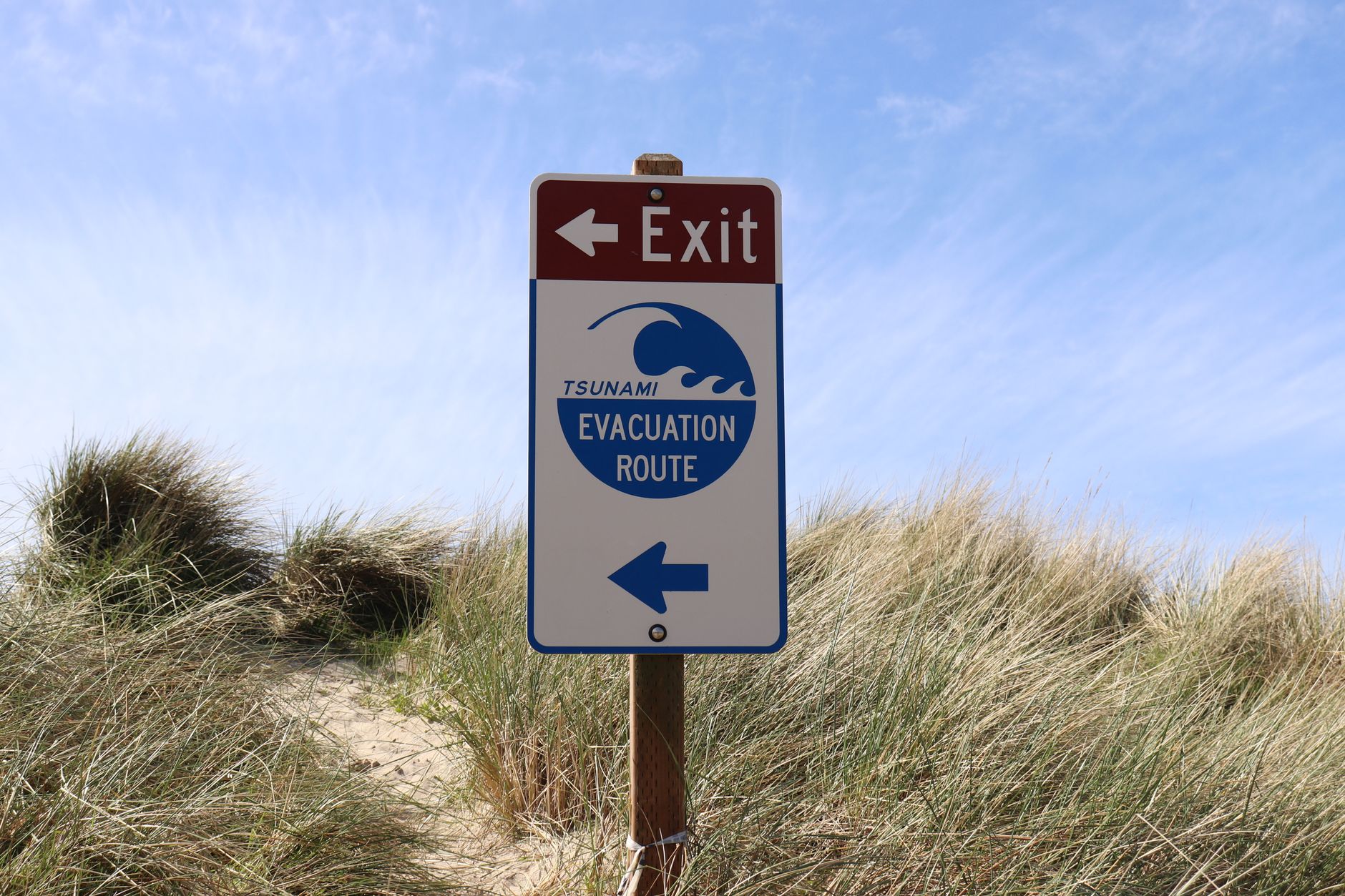
Flores Island is bounded by active tectonic regions, with the Sunda Trench to the south and the Flores back-arc thrust fault to the north. As a result, the island experiences many earthquakes each year and, on occasion, tsunamis. The largest recorded earthquake in the region was the 1992 Flores earthquake and tsunami, a magnitude 7.8 event that caused Severe shaking on the Mercalli intensity scale. The Flores back-arc thrust is of particular interest to researchers as it is believed to accommodate the transition between the Sunda Trench in the west and the subduction of the Australian plate in the east. The Flores Thrust is approximately 450 km long and consists of a deep-rooted basal fault and many overlying imbricate thrust faults. The system is highly active, with more than 25 earthquakes of a magnitude 6 or above since 1960. In 2018, a large sequence of earthquakes (such as on the 5th of August and in July) in Lombok ruptured sections of the Flores Thrust. The dip of the main thrust fault of approximately 2–3° compared to the 3–4° dip of the subducting plate on the Sunda Trench leads some to believe that the fault could someday be the site of a subduction polarity reversal and begin subducting.
A volcanic eruption in southeast Flores triggered earthquakes that killed at least 10 people as of 4 November 2024. Authorities warned of the possibility of more earthquakes in the coming days.
Society and culture
Languages
Many languages are spoken on the island of Flores, all of them belonging to the Austronesian family. In the west, Manggarai is spoken; Riung, often classified as a dialect of Manggarai, is spoken in the north-central part of the island. In the centre of the island in the regencies of Ngada, Nagekeo, and Ende, there is what is variously called the Central Flores dialect chain or linkage. Within this area, there are slight linguistic differences in almost every village. At least six separate languages are identifiable: from west to east, Ngadha, Nage, Keo, Ende, Lio, and Palu'e (which is spoken on the island with the same name off the north coast of Flores). Locals would probably also add So'a and Bajawa to this list, which anthropologists have labeled dialects of Ngadha. To the east, Sikka and Lamaholot can be found.
Djawanai (1983) precises that Ngadha somewhat deviates from Austronesian norms, in that words do not have clear cognates and the grammatical processes are different; for example, the Austronesian family of languages makes an abundant use of prefixes or suffixes (which form new words by adding extensions either before or after root-words, such as [per-]form or child[-hood]), whereas the Ngadha and Keo languages use no prefixes or suffixes.
Social organisation
The traditional social structure is based on complex extended family ties, where patrilineal and matrilineal lineages coexist and determine a strict social hierarchy within villages. It is similar to that in Lembata, East Nusa Tenggara; and is reflected in the spiderweb disposition of the rice fields around Cancar (16 km west of Ruteng): started as a pie centered on the point where buffaloes are sacrificed, the allotments originally shaped as pie slices were later divided transversally by the heirs.
Religion
The native peoples of Flores are mostly Roman Catholic Christians, whereas most other Indonesians are Muslim. As a consequence, Flores may be regarded as surrounded by a religious border. The prominence of Catholicism on the island resulted from its colonisation by Portugal in the east and early 20th-century support by the Dutch in the west. In other parts of Indonesia with significant Christian populations, such as the Maluku Islands and Sulawesi, the geographical divide is less rigid and Muslims and Christians sometimes live side by side. Flores thereby also has less religious violence than that which has sporadically occurred in other parts of Indonesia. There are several churches on the island. On 26 May 2019, Flores's St. Paul Catholic University of Indonesia was formally inaugurated by Indonesian Education Minister Mohamad Nasir, becoming the first Catholic university in Flores. Aside from Catholicism, Islam also has a presence on the island, especially in some coastal communities.
Totemism
Totemism is present, although anthropologists like Lévi-Strauss and historians like Robert Jones have eschewed the term "totemism" as an imprecise and artificial category of cultural phenomena. Forth (2009a), focusing on the Nage people of central Flores, argues that totemism manifests itself as a tendency to link people and plants, not as a totalizing form of analogical classification as described by Lévi-Strauss. He notes that many clans (woe) in Flores are named after various trees and that these trees have become taboo (pie), such that they must not be burnt or used as fuel (pie 'uge). The Nage people bear the name of the tamarind tree, Tamarindus indica, and thus avoid burning its wood.
A few clans are not named after plants, but also have taboos on particular trees. For example, the Wa or Ana Wa people, whose name means "wind" or "wind people, children", claim the nage or tamarind tree as taboo; the Dhuge people bear the name of a former village and taboo the zita tree (Alstonia scholaris); so do the Saga 'Enge people, whose name origin is not known.
The Nage people have plant totems but no animal totems—and, therefore, no taboo on killing and eating any animal. In contrast, their neighbours to the west, the Ngadha people, have 14 animal taboos and 16 plant taboos.
Textiles
Weaving on Flores utilizes cotton grown in the low-lying areas of the island.
Each ethnic group on Flores has its own tradition of dyeing, weaving, and trading in textiles.
The dyes used are essentially indigo, turmeric and morinda. Lamaholot people use maize starch to size the yarn before dying.
Blue (indigo)
indigo grows in the temperate zones at middle elevations;
It is the most commonly used plant base for blues and black dyes. Bar a few exceptions, it is always used in ikat.
Red (morinda and others)
Morinda citrifolia (mengkudu, keloré in Lamalera), extensively used in the archipelago as a source of red dye, does not grow well on Flores and, according to Hoopen, is scarcely used here. But its use is reported in N'Dona (just east of Ende), where it is mixed with various mordants including candlenut (kemiri, very oily nut). Barnes also reports its use in the villages of Ili Mandiri, East Flores – and describes at length the arduous process for its preparation and application. Close by, weavers from the village of Larantuka may use the tree called gemoli for red dye.
Powdered leaves of a plant (tree?) called "lobah" are used in N'Dona (east of Ende) to obtain bright reds.
Yellow (turmeric, mango, and others)
Yellow translates as kuma. In the Sikka area, turmeric was used for producing yellow monochrome warp stripes, as well as orange or green stripes by overdyeing with either morinda or indigo; sometimes, mango bark was used for that purpose.
At Doka in the 'Iwang Geté or Krowé region, a more durable deep mustard yellow is produced from turmeric, mango bark, Morinda citrifolia (mengkudu) tree bark (not root), jackfruit bark and powdered lime (kapur sireh). Dyers of that region also mix turmeric with mango bark. Another yellow was obtained from a combination of mango bark and morinda, without the addition of oil or loba.
Tourism
The most famous tourist attraction in Flores is the 1,639-metre-high (5,377-foot) Kelimutu volcano, which contains three colored lakes, located in the district of Ende, close to the town of Moni. However, there is also the Inierie volcano near Bajawa. These crater lakes are located in the caldera of a volcano and are fed by a volcanic gas source, resulting in highly acidic water. The colored lakes change colors on an irregular basis, depending on the oxidation state of the lake from bright red to green and blue.
There are snorkeling and diving locations along the north coast of Flores, most notably Maumere and Riung. However, due to the destructive practice of local fishermen using bombs to fish, and locals selling shells to tourists, combined with the after-effects of a devastating tsunami in 1992, the reefs have slowly been destroyed.
Labuan Bajo, located on the western tip, is often used by tourists as a base to visit Komodo and Rinca islands. Labuan Bajo also attracts scuba divers, as whale sharks inhabit the waters around Labuan Bajo.
The Luba and Bena villages in Flores feature traditional houses. Bena is also noted for its Stone Age megaliths.
Larantuka, on the isle's eastern end, is known for its Holy Week festivals.
In recent years, local tourist firms around Kelimutu have begun promoting cycling tours around Flores, some of which take up to five or six days, depending on the particular program.
Economy
In addition to tourism, the main economic activities on Flores are agriculture, fishing, and seaweed production. The primary food crops being grown on Flores are rice, maize, sweet potato and cassava, while the main cash crops are coffee, coconut, candle nut and cashew. Flores is one of the newest origins for Indonesian coffee. Previously, most Arabica coffee (Coffea arabica) from Flores was blended with other origins. Now, demand is growing for this coffee due to its rich body and sweet, chocolatey, floral, and woody notes.
In the 1980s, cotton crops were encouraged to generate income for the poorer subsistence farmers. It is planted in low-lying areas of the island.
Jackfruit, which occurs throughout the Indonesian archipelago – and elsewhere -, is specifically cultivated in Manggarai and Sikka regencies, and probably in every other regency.
Transport
There are at least six airports in Flores distributed along the island, ordered from west to east:
Komodo Airport and Port of Labuan Bajo in Labuan Bajo
Frans Sales Lega Airport or Ruteng airport
Pahdamaleda Airport or Bajawa airport
Turelelo Soa Airport in Bajawa
H. Hasan Aroeboesman Airport or Ende airport
Frans Xavier Seda Airport or Maumere airport
Gewayantana Airport close to Larantuka city.