

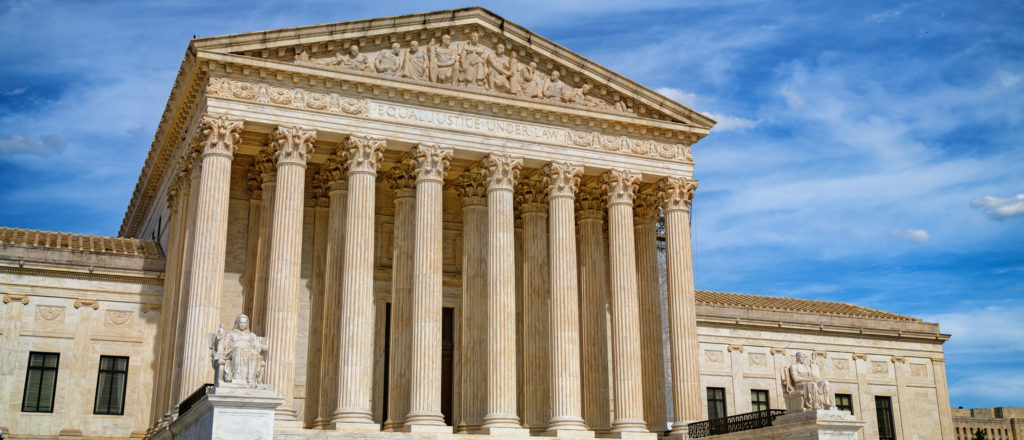
The Constitution of the United States is the supreme law of the United States of America. It superseded the Articles of Confederation, the nation's first constitution, on March 4, 1789. Originally including seven articles, the Constitution defined the foundational structure of the federal government.
The drafting of the Constitution by many of the nation's Founding Fathers, often referred to as its framing, was completed at the Constitutional Convention, which assembled at Independence Hall in Philadelphia between May 25 and September 17, 1787. Influenced by English common law and the Enlightenment liberalism of philosophers like John Locke and Montesquieu, the Constitution's first three articles embody the doctrine of the separation of powers, in which the federal government is divided into the legislative, bicameral Congress; the executive, led by the president; and the judiciary, within which the Supreme Court has apex jurisdiction. Articles IV, V, and VI embody concepts of federalism, describing the rights and responsibilities of state governments, the states in relationship to the federal government, and the process of constitutional amendment. Article VII establishes the procedure used to ratify the constitution.
Since the Constitution became operational in 1789, it has been amended 27 times. The first ten amendments, known collectively as the Bill of Rights, offer specific protections of individual liberty and justice and place restrictions on the powers of government within the U.S. states. Amendments 13–15 are known as the Reconstruction Amendments. The majority of the later amendments expand individual civil rights protections, with some addressing issues related to federal authority or modifying government processes and procedures. Amendments to the United States Constitution, unlike ones made to many constitutions worldwide, are appended to the document.
The Constitution of the United States is the oldest and longest-standing written and codified national constitution in force in the world. The first permanent constitution, it has been interpreted, supplemented, and implemented by a large body of federal constitutional law and has influenced the constitutions of other nations.
Contents
History
Background
From September 5, 1774, to March 1, 1781, the Second Continental Congress, convened in Philadelphia in what is now Independence Hall, functioned as the provisional government of the United States. Delegates to the First Continental Congress in 1774 and then the Second Continental Congress from 1775 to 1781 were chosen largely from the revolutionary committees of correspondence in various colonies rather than through the colonial governments of the Thirteen Colonies.
The Articles of Confederation and Perpetual Union was the first constitution of the United States. The document was drafted by a committee appointed by the Second Continental Congress in mid-June 1777 and was adopted by the full Congress in mid-November of that year. Ratification by the 13 colonies took more than three years and was completed March 1, 1781. The Articles gave little power to the central government. While the Confederation Congress had some decision-making abilities, it lacked enforcement powers. The implementation of most decisions, including amendments to the Articles, required legislative approval by all 13 of the newly formed states.
Despite these limitations, based on the Congressional authority granted in Article 9, the league of states was considered as strong as any similar republican confederation ever formed. The chief problem was, in the words of George Washington, "no money". The Confederated Congress could print money, but it was worthless, and while the Congress could borrow money, it could not pay it back. No state paid its share of taxes to support the government, and some paid nothing. A few states met the interest payments toward the national debt owed by their citizens, but nothing greater, and no interest was paid on debts owed to foreign governments. By 1786, the United States was facing default on its outstanding debts.
Under the Articles, the United States had little ability to defend its sovereignty. Most of the troops in the nation's 625-man army were deployed facing non-threatening British forts on American soil. Soldiers were not being paid, some were deserting, and others were threatening mutiny. Spain closed New Orleans to American commerce, despite the protests of U.S. officials. When Barbary pirates began seizing American ships of commerce, the Treasury had no funds to pay toward ransom. If a military crisis required action, the Congress had no credit or taxing power to finance a response.
Domestically, the Articles of Confederation was failing to bring unity to the diverse sentiments and interests of the various states. Although the Treaty of Paris in 1783 was signed between Britain and the U.S., and named each of the American states, various states proceeded to violate it. New York and South Carolina repeatedly prosecuted Loyalists for wartime activity and redistributed their lands. Individual state legislatures independently laid embargoes, negotiated directly with foreign authorities, raised armies, and made war, all violating the letter and the spirit of the Articles.
1787 drafting
On the appointed day, May 14, 1787, only the Virginia and Pennsylvania delegations were present, and the convention's opening meeting was postponed for lack of a quorum. A quorum of seven states met on May 25, and deliberations began. Eventually 12 states were represented, with Rhode Island refusing to participate. Of the 74 delegates appointed by the states, 55 attended. The convention's initial mandate was limited to amending the Articles of Confederation, which had proven highly ineffective in meeting the young nation's needs. Almost immediately, however, the delegates began considering measures to replace the Articles of Confederation.
Two plans for structuring the federal government arose shortly after the convention's outset:
The first proposal discussed, introduced by delegates from Virginia, was known as the Virginia Plan, Large State Plan, or the Randolph Plan. It called for a bicameral Congress that was to be elected on a proportional basis based on state population, an elected chief executive, and an appointed judicial branch. Generally favoring the most highly populated states, it used the philosophy of John Locke to rely on consent of the governed, Montesquieu for divided government, and Edward Coke to emphasize civil liberties.
The alternative to the Virginia Plan, known as the New Jersey Plan, also called for an elected executive but retained the legislative structure created by the Articles, a unicameral Congress where all states had one vote. Generally favoring the less-populous states, it used the philosophy of English Whigs, such as Edmund Burke, to rely on received procedure and the jurist William Blackstone to emphasize sovereignty of the legislature. This position reflected the belief that the states were independent entities and, as they entered the United States of America freely and individually, remained so.
On May 31, the Convention devolved into the Committee of the Whole, charged with considering the Virginia Plan. On June 13, the Virginia resolutions in amended form were reported out of committee. The New Jersey Plan was put forward in response to the Virginia Plan.
On June 19, 1787, delegates rejected the New Jersey Plan with three states voting in favor, seven against, and one divided. The plan's defeat led to a series of compromises centering primarily on two issues: slavery and proportional representation.
Ratification by the states
Within three days of its signing on September 17, 1787, the Constitution was submitted to the Congress of the Confederation, then sitting in New York City, the nation's temporary capital. The document, originally intended as a revision of the Articles of Confederation, instead introduced a completely new form of government. While members of Congress had the power to reject it, they voted unanimously on September 28 to forward the proposal to the thirteen states for their ratification. Under the process outlined in Article VII of the proposed Constitution, the state legislatures were tasked with organizing "Federal Conventions" to ratify the document. This process ignored the amendment provision of the Articles of Confederation which required unanimous approval of all the states. Instead, Article VII called for ratification by just nine of the 13 states—a two-thirds majority.
Two factions soon emerged, one supporting the Constitution, the Federalists, and the other opposing it, the so-called Anti-Federalists. Over the ensuing months, the proposal was debated, criticized, and expounded upon clause by clause. In the state of New York, at the time a hotbed of anti-Federalism, three delegates from the Philadelphia Convention who were also members of the Congress—Hamilton, Madison, and Jay—published a series of commentaries, now known as The Federalist Papers, in support of ratification.
Before year's end, three state legislatures voted in favor of ratification. Delaware was first, voting unanimously 30–0; Pennsylvania second, approving the measure 46–23; and New Jersey third, also recording a unanimous vote. As 1788 began, Connecticut and Georgia followed Delaware's lead with almost unanimous votes, but the outcome became less certain as leaders in key states such as Virginia, New York, and Massachusetts expressed concerns over the lack of protections for people's rights. Fearing the prospect of defeat, the Federalists relented, promising that if the Constitution was adopted, amendments would be added to secure individual liberties. With that, the anti-Federalists' position collapsed.
On June 21, 1788, New Hampshire became the ninth state to ratify. Three months later, on September 17, the Congress of the Confederation certified the ratification of eleven states, and passed resolutions setting dates for choosing the first senators and representatives, the first Wednesday of January (January 7, 1789); electing the first president, the first Wednesday of February (February 4); and officially starting the new government, the first Wednesday of March (March 4), when the first Congress would convene in New York City. As its final act, the Congress of Confederation agreed to acquire 100 square miles of land from Maryland and Virginia for establishing a permanent capital.
Aftermath
The Supreme Court was initially made up of jurists who had been intimately connected with the framing of the Constitution and the establishment of its government as law. John Jay (New York), a co-author of The Federalist Papers, served as chief justice for the first six years. The second chief justice, John Rutledge (South Carolina), was appointed by Washington in 1795 as a recess appointment, but was not confirmed by the Senate. Resigning later that year, he was succeeded in 1796 by the third chief justice, Oliver Ellsworth (Connecticut). Both Rutledge and Ellsworth were delegates to the Constitutional Convention. John Marshall (Virginia), the fourth chief justice, had served in the Virginia Ratification Convention in 1788. His 34 years of service on the Court would see some of the most important rulings to help establish the nation the Constitution had begun. Other early members of the Supreme Court who had been delegates to the Constitutional Convention included James Wilson (Pennsylvania) for ten years, and John Blair Jr. (Virginia) for five years.
Section 1, Article 3 provides that Congress can create lower (or "inferior") courts. The Judiciary Act of 1789 saw Congress's first exercise of such power. Currently, Title 28 of the U.S. Code describes judicial powers and administration. As of the First Congress, the Supreme Court justices rode circuit to sit as panels to hear appeals from the district courts. In 1891, Congress enacted a new system, where district courts would have original jurisdiction; intermediate appellate circuit courts with exclusive jurisdiction heard regional appeals before consideration by the Supreme Court; and the Supreme Court holds discretionary jurisdiction.
No part of the Constitution expressly authorizes judicial review, but the framers did contemplate the idea, and precedent has since established that the courts could exercise judicial review over the actions of Congress or the executive branch. To establish a federal system of national law, considerable effort goes into developing a spirit of comity between federal government and states. By the doctrine of res judicata, federal courts give "full faith and credit" to State Courts. The Supreme Court will decide Constitutional issues of state law only on a case-by-case basis, and only by strict Constitutional necessity, independent of state legislators' motives, their policy outcomes or its national wisdom. Two conflicting federal laws are under "pendent" jurisdiction if one presents a strict constitutional issue. Federal court jurisdiction is rare when a state legislature enacts something as under federal jurisdiction.
Influences
The U.S. Constitution was a federal one and was greatly influenced by the study of Magna Carta and other federations, both ancient and extant. The Due Process Clause of the Constitution was partly based on common law and on Magna Carta (1215), which had become a foundation of English liberty against arbitrary power wielded by a ruler. The idea of Separation of Powers inherent in the Constitution was largely inspired by eighteenth-century Enlightenment philosophers, such as Montesquieu and John Locke.
The influence of Montesquieu, Locke, Edward Coke and William Blackstone was evident at the Constitutional Convention. Prior to and during the framing and signing of the Constitution, Blackstone, Hume, Locke and Montesquieu were among the political philosophers most frequently referred to. James Madison, for example made frequent reference to Blackstone, Locke, and Montesquieu, who were among the most prominent political theorists of the late eighteenth century.
While the ideas of unalienable rights, the separation of powers and the structure of the Constitution were largely influenced by the European Enlightenment thinkers, like Montesquieu, John Locke and others, Benjamin Franklin and Thomas Jefferson still had reservations about the existing forms of government in Europe. In a speech at the Constitutional Convention Franklin stated, "We have gone back to ancient history for models of Government, and examined different forms of those Republics ... And we have viewed modern States all round Europe but find none of their Constitutions suitable to our circumstances." Jefferson maintained, that most European governments were autocratic monarchies and not compatible with the egalitarian character of the American people.
English law
Historian Jack P. Greene maintains that by 1776 the founders drew heavily upon Magna Carta and the later writings of "Enlightenment rationalism" and English common law.
In his Institutes of the Lawes of England, Coke interpreted Magna Carta protections and rights to apply not just to nobles, but to all British subjects. In writing the Virginia Charter of 1606, he enabled the King in Parliament to give those to be born in the colonies all rights and liberties as though they were born in England. William Blackstone's Commentaries on the Laws of England are considered the most influential books on law in the new republic.
The English Bill of Rights (1689) was an inspiration for the American Bill of Rights. Both require jury trials, contain a right to keep and bear arms, prohibit excessive bail and forbid "cruel and unusual punishments". Many liberties protected by state constitutions and the Virginia Declaration of Rights were incorporated into the Bill of Rights. Upon the arrival of the American Revolution, many of the rights guaranteed by the Federal Bill of Rights were recognized as being inspired by English law. A substantial body of thought had been developed from the literature of republicanism in the United States, typically demonstrated by the works of John Adams, who often quoted Blackstone and Montesquieu verbatim, and applied to the creation of state constitutions.
Enlightenment philosophy
Historian Herbert W. Schneider held that the Scottish Enlightenment was "probably the most potent single tradition in the American Enlightenment" and the advancement of personal liberties. Historian Daniel Walker Howe notes that Benjamin Franklin greatly admired David Hume, an eighteenth-century Scottish philosopher, and had studied many of his works while at Edinburgh in 1760. Both embraced the idea that high-ranking public officials should receive no salary and that the lower class was a better judge of character when it came to choosing their representatives.
Following the Glorious Revolution of 1688, British political philosopher John Locke was a major influence, expanding on the contract theory of government advanced by Thomas Hobbes, his contemporary. Locke advanced the principle of consent of the governed in his Two Treatises of Government. Government's duty under a social contract among the sovereign people was to serve the people by protecting their rights. These basic rights were life, liberty, and property.
Montesquieu's influence on the framers is evident in Madison's Federalist No. 47 and Hamilton's Federalist No. 78. Thomas Jefferson, Adams, and Mason were known to read Montesquieu. Montesquieu emphasized the need for balanced forces pushing against each other to prevent tyranny (reflecting the influence of Polybius's 2nd century BC treatise on the checks and balances of the Roman Republic). In his The Spirit of Law, Montesquieu maintained that the separation of state powers should be by its service to the people's liberty: legislative, executive and judicial, while also emphasizing that the idea of separation had for its purpose the even distribution of authority among the several branches of government.
Supreme Court Justices, the ultimate interpreters of the constitution, have also cited Montesquieu throughout the Court's history. (See, e.g., Green v. Biddle, 21 U.S. 1, 1, 36 (1823). United States v. Wood, 39 U.S. 430, 438 (1840). Myers v. United States, 272 U.S. 52, 116 (1926). Nixon v. Administrator of General Services, 433 U.S. 425, 442 (1977). Bank Markazi v. Peterson, 136 U.S. 1310, 1330 (2016).)
Iroquois
American Indian history scholars Donald Grinde and Bruce Johansen claim there is "overwhelming evidence" that Iroquois Confederacy political concepts and ideas influenced the U.S. Constitution, and are considered to be the most outspoken supporters of the Iroquois thesis. The idea as to the extent of that influence on the founding, however, varies among historians and has been questioned or criticized by various historians, including Samuel Payne, William Starna, George Hamell, and historian and archaeologist Philip Levy, who claims the evidence is largely coincidental and circumstantial. The most outspoken critic, anthropologist Elisabeth Tooker, claimed the Iroquois influence thesis is largely the product of "white interpretations of Indians" and "scholarly misapprehension".
John Napoleon Brinton Hewitt, who was born on the Tuscarora Indian Reservation, and was an ethnologist at the Smithsonian Institution's Bureau of Ethnology is often cited by historians of Iroquois history. Hewitt, however, rejected the idea that the Iroquois League had a major influence on the Albany Plan of Union, Benjamin Franklin's plan to create a unified government for the Thirteen Colonies, which was rejected.
Structure
The Constitution includes four sections: an introductory paragraph titled Preamble, a list of seven Articles that define the government's framework, an untitled closing endorsement with the signatures of 39 framers. 27 amendments have also been adopted under Article V.
Preamble
The Preamble, the Constitution's introductory paragraph, lays out the purposes of the new government:
We the People of the United States, in Order to form a more perfect Union, establish Justice, insure domestic Tranquility, provide for the common defence, promote the general Welfare, and secure the Blessings of Liberty to ourselves and our Posterity, do ordain and establish this Constitution for the United States of America.
The opening words, "We the People", represented a new thought: the idea that the people and not the states were the source of the government's legitimacy. Coined by Gouverneur Morris of Pennsylvania, who chaired the convention's Committee of Style, the phrase is considered an improvement on the section's original draft which followed the words We the People with a list of the 13 states. In place of the names of the states Morris substituted "of the United States" and then listed the Constitution's six goals, none of which were mentioned originally.
Closing endorsement
The signing of the United States Constitution occurred on September 17, 1787, when 39 delegates endorsed the constitution created during the convention. In addition to signatures, this closing endorsement, the Constitution's eschatocol, included a brief declaration that the delegates' work has been successfully completed and that those whose signatures appear on it subscribe to the final document. Included are a statement pronouncing the document's adoption by the states present, a formulaic dating of its adoption, and the delegates' signatures. Additionally, the convention's secretary, William Jackson, added a note to verify four amendments made by hand to the final document, and signed the note to authenticate its validity.
The language of the concluding endorsement, conceived by Gouverneur Morris and presented to the convention by Benjamin Franklin, was made intentionally ambiguous in hopes of winning over the votes of dissenting delegates. Advocates for the new frame of government, realizing the impending difficulty of obtaining the consent of the states needed to make it operational, were anxious to obtain the unanimous support of the delegations from each state. It was feared that many of the delegates would refuse to give their individual assent to the Constitution. Therefore, in order that the action of the convention would appear to be unanimous, the formula, Done in convention by the unanimous consent of the states present ... was devised.
Articles
The Constitution's main provisions include seven articles that define the basic framework of the federal government. Articles that have been amended still include the original text, although provisions repealed by amendments under Article V are usually bracketed or italicized to indicate they no longer apply.
Article I – The Legislature
Article I describes the Congress, the legislative branch of the federal government: Congress comprises both the Senate and House of Representatives; members of both houses are subject to age, citizenship, and state residency requirements; and are elected by the people of a state.
Section 3, Clause 1 provides for equal representation of the states in the Senate. Section 8 enumerates the powers delegated to the legislature and includes broad provisions such as the General Welfare Clause (also known as the Taxing and Spending Clause), Commerce Clause, and Necessary and Proper Clause.
Section 9 lists eight specific limits on congressional power. In McCulloch v. Maryland (1819), the Supreme Court read the Necessary and Proper Clause to permit the federal government to take action that would "enable [it] to perform the high duties assigned to it [by the Constitution] in the manner most beneficial to the people," even if that action is not itself within the enumerated powers. Section 9, Clause 1 prevents Congress from passing any law that would restrict the importation of slaves into the United States prior to 1808. Clause 4 holds that direct taxes must be apportioned according to state populations.
Article II – The Executive
Article II describes the office, qualifications, and duties of the president of the United States and the vice president. The Article is modified by the 12th Amendment, which regulates presidential elections, and the 25th Amendment, relating to office succession.
The president is head of the executive branch of the federal government; the nation's head of state and head of government; and the Commander in Chief of the United States Armed Forces, as well as of state militias when they are mobilized. The president makes treaties with the advice and consent of the Senate. To administer the federal government, the president commissions all the offices of the federal government as Congress directs; and may require the opinions of its principal officers and make "recess appointments" for vacancies that may happen during the recess of the Senate. The president ensures the laws are faithfully executed and may grant reprieves and pardons with the exception of Congressional impeachment. The president reports to Congress on the State of the Union, and by the Recommendation Clause, recommends "necessary and expedient" national measures. The president may convene and adjourn Congress under special circumstances.
Section 4 provides for the removal of the president and other federal officers. The president is removed on impeachment for, and conviction of, treason, bribery, or other high crimes and misdemeanors.
Article III – The Judiciary
Article III describes the court system, including the Supreme Court. Section 1 vests the judicial power of the United States in federal courts and, with it, the authority to interpret and apply the law to particular cases. Also included is the power to punish, sentence, and direct future action to resolve conflicts. Implied powers under Article III include the enforcement of judicial decisions through criminal contempt and civil contempt powers; injunctive relief and the habeas corpus remedy; and the ability to imprison for contumacy, bad-faith litigation, and failure to obey a writ of mandamus.
Clause 1 of Section 2, known as the Case or Controversy Clause, authorizes the federal courts to hear actual cases and controversies only. Their judicial power does not extend to cases that are hypothetical, or which are proscribed due to standing, mootness, or ripeness issues. Generally, a case or controversy requires the presence of adverse parties who have some interest genuinely at stake in the case. Section 2 also protects the right to trial by jury in all criminal cases. Section 3 bars Congress from changing or modifying Federal law on treason by simple majority. This section also defines treason as an overt act of making war or materially helping those at war with the United States.
Article IV – The States
Article IV outlines the relations among the states and between each state and the federal government. It also provides for such matters as admitting new states, border changes between the states, and extradition between the states, as well as laying down a legal basis for freedom of movement and travel among the states.
The Full Faith and Credit Clause requires states to recognise the public acts, records, and court proceedings of the other states. Congress is permitted to regulate the manner in which proof of such acts may be admitted. The "privileges and immunities" clause prohibits state governments from discriminating against citizens of other states in favor of resident citizens. For instance, in criminal sentencing, a state may not increase a penalty on the grounds that the convicted person is a non-resident. The Territorial Clause gives Congress the power to make rules for disposing of federal property and governing non-state territories of the United States. Finally, the fourth section of Article Four requires the United States to guarantee to each state a republican form of government and to protect them from invasion and violence.
Article V – Amendment Process
Article V outlines the process for amending the Constitution. The Articles of Confederation provided that amendments were to be proposed by Congress and ratified by the unanimous vote of all 13 state legislatures. This proved to be a major flaw in the Articles, as it created an insurmountable obstacle to constitutional reform. The amendment process crafted during the Philadelphia Constitutional Convention was, according to The Federalist No. 43, designed to establish a balance between pliancy and rigidity. Article Five ends by shielding certain clauses in the Constitution from being amended.
Article VI – Federal Powers
Article VI establishes that the Constitution and all federal laws and treaties made in accordance with it have supremacy over state laws, and that "the judges in every state shall be bound thereby, any thing in the laws or constitutions of any state notwithstanding". It validates national debt created under the Articles of Confederation and requires that all federal and state legislators, officers, and judges take oaths or affirmations to support the Constitution. This means that the states' constitutions and laws should not conflict with the laws of the federal constitution and that in case of a conflict, state judges are legally bound to honor the federal laws and constitution over those of any state. Article Six also states "no religious Test shall ever be required as a Qualification to any Office or public Trust under the United States".
Article VII – Ratification
Article VII describes the process for establishing the proposed new frame of government. Anticipating that the influence of many state politicians would be Antifederalist, delegates to the Philadelphia Convention provided for ratification of the Constitution by popularly elected ratifying conventions in each state. The convention method also made it possible that judges, ministers and others ineligible to serve in state legislatures, could be elected to a convention. Suspecting that Rhode Island, at least, might not ratify, delegates decided that the Constitution would go into effect as soon as nine states (two-thirds rounded up) ratified. Each of the remaining four states could then join the newly formed union by ratifying.
Amendments
The procedure for amending the Constitution is outlined in Article V and is currently overseen by the archivist of the United States. Between 1949 and 1985, it was overseen by the administrator of General Services, and before that by the secretary of state.
Under Article V, a proposal for an amendment must be adopted either by two-thirds of both houses of Congress or by a national convention that had been requested by two-thirds of the state legislatures. Following this, Congress decides whether the proposed amendment is to be ratified by state legislatures or state ratifying conventions. The proposed amendment along with the method of ratification is sent to the Office of the Federal Register, which copies it in slip law format and submits it to the states. To date, the convention method of proposal has never been tried and the convention method of ratification has only been used once, for the Twenty-first Amendment.
A proposed amendment becomes an operative part of the Constitution as soon as it is ratified by three-fourths of the States (currently 38 of the 50 states). No additional action by Congress or anyone else after ratification is required. When the Office of the Federal Register verifies that it has received the required number of authenticated ratification documents, it drafts a formal proclamation for the Archivist to certify that the amendment is valid. This certification is published in the Federal Register and United States Statutes at Large and serves as official notice to Congress and the nation that the ratification process has been completed.
The Constitution has twenty-seven amendments. Structurally, the Constitution's original text and all prior amendments remain untouched. The precedent for this practice was set in 1789, when Congress considered and proposed the first several Constitutional amendments. Among these, Amendments 1–10 are collectively known as the Bill of Rights, and Amendments 13–15 are known as the Reconstruction Amendments. Excluding the Twenty-seventh Amendment, which was pending before the states for 202 years, 225 days, the longest pending amendment that was successfully ratified was the Twenty-second Amendment, which took 3 years, 343 days. The Twenty-sixth Amendment was ratified in the shortest time, 100 days. The average ratification time for the first twenty-six amendments was 1 year, 252 days; for all twenty-seven, 9 years, 48 days.
Bill of Rights (1791)
The First Amendment prohibits Congress from obstructing the exercise of certain individual freedoms: freedom of religion, freedom of speech, freedom of the press, freedom of assembly, and right to petition. Its Free Exercise Clause guarantees a person's right to hold whatever religious beliefs they want, and to freely exercise that belief; its Establishment Clause prevents the federal government from creating an official national church or favoring one set of religious beliefs over another.
The Second Amendment protects the right of individuals to keep and bear arms. The Supreme Court has ruled that this right applies to individuals, not merely to collective militias. It has also held that the government may regulate or place some limits on the manufacture, ownership and sale of firearms or other weapons.
Requested by several states during the constitutional ratification debates, the amendment followed the efforts of the British to confiscate the colonists' firearms at the outbreak of the Revolutionary War. Patrick Henry had rhetorically asked, if the States would be stronger "when we are totally disarmed, and when a British Guard shall be stationed in every house?"
The Third Amendment prohibits the federal government from forcing individuals to provide lodging to soldiers in their homes during peacetime without their consent. Requested by several states during the Constitutional ratification debates, the amendment reflected the lingering resentment over the Quartering Acts passed by the British Parliament during the Revolutionary War, which had allowed British soldiers to take over private homes for their own use.
The Fourth Amendment protects people against unreasonable searches and seizures of either self or property by government officials. A search can mean everything from a frisking by a police officer or to a demand for a blood test to a search of an individual's home or car. A seizure occurs when the government takes control of an individual or something in the possession of the individual. Items that are seized often are used as evidence when the individual is charged with a crime. It also imposes certain limitations on police investigating a crime and prevents the use of illegally obtained evidence at trial.
The Fifth Amendment establishes the requirement that a trial for a major crime may commence only after an indictment has been handed down by a grand jury; protects individuals from double jeopardy; prohibits punishment without due process of law; and provides that an accused person may not be compelled to reveal to the police, prosecutor, judge, or jury any information that might incriminate or be used against themself in a court of law. Additionally, the Fifth Amendment also prohibits government from taking private property for public use without "just compensation", the basis of eminent domain in the United States.
Remaining amendments (1795–present)
The Eleventh Amendment specifically prohibits federal courts from hearing cases in which a state is sued by an individual from another state or another country, thus extending to the states sovereign immunity protection from certain types of legal liability. Article Three, Section 2, Clause 1 has been affected by this amendment, which also overturned the Supreme Court's decision in Chisholm v. Georgia (1793).
The Twelfth Amendment modifies the way the Electoral College chooses the president and vice president. It stipulates that each elector must cast a distinct vote for president and vice president, instead of two votes for president. It also suggests that the president and vice president should not be from the same state. Article II, Section 1, Clause 3 is superseded by this amendment, which also extends the eligibility requirements to become president to the vice president.
The Thirteenth Amendment (1865) abolished slavery and involuntary servitude, except as punishment for a crime, and authorized Congress to enforce abolition. Though millions of slaves had been declared free by the 1863 Emancipation Proclamation, their post-Civil War status was unclear, as was the status of other millions. Congress intended the Thirteenth Amendment to be a proclamation of freedom for all slaves throughout the nation and to take the question of emancipation away from politics. This amendment rendered inoperative or moot several of the original parts of the constitution.
The Fourteenth Amendment (1868) granted United States citizenship to former slaves and to all persons "subject to U.S. jurisdiction". It also contained three new limits on state power: a state shall not violate a citizen's privileges or immunities; shall not deprive any person of life, liberty, or property without due process of law; and must guarantee all persons equal protection of the laws. These limitations dramatically expanded the protections of the Constitution. This amendment, according to the Supreme Court's Doctrine of Incorporation, makes most provisions of the Bill of Rights applicable to state and local governments as well. It superseded the mode of apportionment of representatives delineated in Article 1, Section 2, Clause 3, and also overturned the Supreme Court's decision in Dred Scott v. Sandford (1857).
The Fifteenth Amendment (1870) prohibits the use of race, color, or previous condition of servitude in determining which citizens may vote. The last of three post Civil War Reconstruction Amendments, it sought to abolish one of the key vestiges of slavery and to advance the civil rights and liberties of former slaves.
Unratified amendments
Collectively, members of the House and Senate propose around 150 amendments during each two-year term of Congress. Most however, never get out of the Congressional committees in which they are proposed, and only a fraction of those approved in committee receive sufficient support to win Congressional approval and actually enter the constitutional ratification process.
Six amendments approved by Congress and proposed to the states for consideration have not been ratified by the required number of states to become part of the Constitution. Four of these are technically still pending, as Congress did not set a time limit for their ratification. The other two are no longer pending, as both had a time limit attached and in both cases the time period set for their ratification expired.
The Congressional Apportionment Amendment (proposed 1789) would, if ratified, establish a formula for determining the appropriate size of the House of Representatives and the appropriate apportionment of representatives among the states following each constitutionally mandated decennial census.
The Titles of Nobility Amendment (proposed 1810) would, if ratified, strip United States citizenship from any citizen who accepted a title of nobility from a foreign country.
The Corwin Amendment (proposed 1861) would, if ratified, shield "domestic institutions" of the states (which in 1861 included slavery) from the constitutional amendment process and from abolition or interference by Congress.
The Child Labor Amendment (proposed 1924) would, if ratified, specifically authorize Congress to limit, regulate and prohibit labor of persons less than eighteen years of age. The amendment was proposed in response to Supreme Court rulings in Hammer v. Dagenhart (1918) and Bailey v. Drexel Furniture Co. (1922) that found federal laws regulating and taxing goods produced by employees under the ages of 14 and 16 unconstitutional. A federal statute approved June 25, 1938, regulated the employment of those under 16 or 18 years of age in interstate commerce. The Supreme Court, by unanimous vote in United States v. Darby Lumber Co. (1941), found this law constitutional, effectively overturning Hammer v. Dagenhart. As a result, the movement pushing for the amendment concluded.
Judicial review
Scope and theory
Courts established by the Constitution can regulate government under the Constitution, the supreme law of the land. First, they have jurisdiction over actions by an officer of government and state law. Second, federal courts may rule on whether coordinate branches of national government conform to the Constitution. Until the twentieth century, the Supreme Court of the United States may have been the only high tribunal in the world to use a court for constitutional interpretation of fundamental law, others generally depending on their national legislature.
The basic theory of American judicial review is summarized by constitutional legal scholars and historians as follows: the written Constitution is fundamental law within the states. It can change only by extraordinary legislative process of national proposal, then state ratification. The powers of all departments are limited to enumerated grants found in the Constitution. Courts are expected (a) to enforce provisions of the Constitution as the supreme law of the land, and (b) to refuse to enforce anything in conflict with it. Judicial review relies on the jurisdictional authority in Article III, and the Supremacy Clause.
Case law
When John Marshall followed Oliver Ellsworth as chief justice of the Supreme Court in 1801, the federal judiciary had been established by the Judiciary Act, but there were few cases. Review of state legislation and appeals from state supreme courts was understood. But the Court's jurisdiction over state legislation was limited. The Marshall Court's landmark Barron v. Baltimore held that the Bill of Rights restricted only the federal government, and not the states.
In the landmark Marbury v. Madison case, the Supreme Court asserted its authority of judicial review over Acts of Congress. Its findings were that Marbury and the others had a right to their commissions as judges in the District of Columbia. Marshall, writing the opinion for the majority, announced his discovered conflict between Section 13 of the Judiciary Act of 1789 and Article III. In this case, both the Constitution and the statutory law applied to the particulars at the same time. "The very essence of judicial duty" according to Marshall was to determine which of the two conflicting rules should govern. The Constitution enumerates powers of the judiciary to extend to cases arising "under the Constitution". Further, justices take a Constitutional oath to uphold it as "Supreme law of the land." Therefore, since the United States government as created by the Constitution is a limited government, the federal courts were required to choose the Constitution over congressional law if there were deemed to be a conflict. "This argument has been ratified by time and by practice ..."
The Supreme Court did not declare another act of Congress unconstitutional until the controversial Dred Scott decision in 1857, held after the voided Missouri Compromise statute had already been repealed. In the eighty years following the Civil War to World War II, the Court voided congressional statutes in 77 cases, on average almost one a year.
Salmon P. Chase was a Lincoln appointee, serving as chief justice from 1864 to 1873. In one of his first official acts, Chase admitted John Rock, the first African American to practice before the Supreme Court. The Chase Court is famous for Texas v. White, which asserted a permanent Union of indestructible states. Veazie Bank v. Fenno upheld the Civil War tax on state banknotes. Hepburn v. Griswold found parts of the Legal Tender Acts unconstitutional, though it was reversed under a late Supreme Court majority.
The Civil Rights Cases, 109 U.S. 3 (1883), were a group of five landmark cases in which the Supreme Court of the United States held that the Thirteenth and Fourteenth Amendments did not empower Congress to outlaw racial discrimination by private individuals. The holding that the Thirteenth Amendment did not empower the federal government to punish racist acts done by private citizens would be overturned by the Supreme Court in the 1968 case Jones v. Alfred H. Mayer Co.The Fourteenth Amendment not applying to private entities, however, is still valid precedent to this day. Although the Fourteenth Amendment-related decision has never been overturned, in the 1964 case of Heart of Atlanta Motel, Inc. v. United States, the Supreme Court held that Congress could prohibit racial discrimination by private actors under the Commerce Clause.
Principles
The Supreme Court has developed a system of doctrine and practice that limits its own power of judicial review. The Court controls almost all of its business by choosing what cases to consider, limiting decisions by defining what is a "justiciable question". The Court requires a personal interest, not one generally held, and a legally protected right must be immediately threatened by government action. Cases are not taken up if the litigant has no standing to sue. The Court also generally refuses to make any advisory opinions in advance of actual cases. Further, friendly suits between those of the same legal interest are not considered.
The procedural ways by which the Court dismisses cases have led critics to charge that the Supreme Court delays decisions by unduly insisting on technicalities in their "standards of litigability". They say cases are left unconsidered which are in the public interest, with genuine controversy, and resulting from good faith action.
The Supreme Court balances several pressures to maintain its roles in national government. It seeks to be a co-equal branch of government, but its decrees must be enforceable. The Court seeks to minimize situations where it asserts itself superior to either president or Congress, but federal officers must be held accountable. The Supreme Court assumes power to declare acts of Congress as unconstitutional but it self-limits its passing on constitutional questions. But the Court's guidance on basic problems of life and governance in a democracy is most effective when American political life reinforces its rulings.
Justice Brandeis summarized four general guidelines that the Supreme Court uses to avoid constitutional decisions relating to Congress: The Court will not anticipate a question of constitutional law nor decide open questions unless a case decision requires it. If it does, a rule of constitutional law is formulated only as the precise facts in the case require. The Court will choose statutes or general law for the basis of its decision if it can without constitutional grounds. If it does, the Court will choose a constitutional construction of an act of Congress, even if its constitutionality is seriously in doubt.
Likewise with the executive department, Edwin Corwin observed that the Court does sometimes rebuff presidential pretensions, but it more often tries to rationalize them. Against Congress, an act is merely "disallowed". In the executive case, exercising judicial review produces "some change in the external world" beyond the ordinary judicial sphere. The "political question" doctrine especially applies to questions which present a difficult enforcement issue. Chief Justice Charles Evans Hughes addressed the Court's limitation when political process allowed future policy change, but a judicial ruling would "attribute finality". Political questions lack "satisfactory criteria for a judicial determination."
In anthropology and sociology
There is a viewpoint that some Americans have come to see the documents of the Constitution, along with the Declaration of Independence and the Bill of Rights, as being a cornerstone of a type of civil religion. Some commentators depict the multi-ethnic, multi-sectarian United States as held together by political orthodoxy, in contrast with a nation-state of people having more "natural" ties.
Worldwide influence
The United States Constitution has been a notable model for governance worldwide, especially through the 1970s. Its international influence is found in similarities in phrasing and borrowed passages in other constitutions, as well as in the principles of the rule of law, separation of powers, and recognition of individual rights.
The American experience of fundamental law with amendments and judicial review has motivated constitutionalists at times when they were considering the possibilities for their nation's future. It informed Abraham Lincoln during the American Civil War, his contemporary and ally Benito Juárez of Mexico, and the second generation of 19th-century constitutional nationalists, José Rizal of the Philippines and Sun Yat-sen of China. The framers of the Australian constitution integrated federal ideas from the U.S. and other constitutions.
Since the 1980s, the influence of the United States Constitution has been waning as other countries have created new constitutions or updated older constitutions, a process which Sanford Levinson believes to be more difficult in the United States than in any other country.
Criticism
The United States Constitution has faced various criticisms since its inception in 1787.
The Constitution did not originally define who was eligible to vote, allowing each state to determine who was eligible. In the early history of the U.S., most states allowed only white male adult property owners to vote; the notable exception was New Jersey, where women were able to vote on the same basis as men. Until the Reconstruction Amendments were adopted between 1865 and 1870, the five years immediately following the American Civil War, the Constitution did not abolish slavery, nor give citizenship and voting rights to former slaves. These amendments did not include a specific prohibition on discrimination in voting on the basis of sex; it took another amendment—the Nineteenth, ratified in 1920—for the Constitution to prohibit any United States citizen from being denied the right to vote on the basis of sex.
According to a 2012 study by David Law and Mila Versteeg published in the New York University Law Review, the U.S. Constitution guarantees relatively few rights compared to the constitutions of other countries and contains fewer than half (26 of 60) of the provisions listed in the average bill of rights. It is also one of the few in the world today that still features the right to keep and bear arms; the other two being the constitutions of Guatemala and Mexico.
Sanford Levinson wrote in 2006 that it has been the most difficult constitution in the world to amend since the fall of Yugoslavia. Levitsky and Ziblatt argue that the US Constitution is the most difficult in the world to amend, and that this helps explain why the US still has so many undemocratic institutions that most or all other democracies have reformed, directly allowing significant democratic backsliding in the United States.
Commemorations
In 1937, the U.S. Post Office, at the prompting of President Franklin Delano Roosevelt, an avid stamp collector himself, released a commemorative postage stamp celebrating the 150th anniversary of the signing of the U.S. Constitution. The engraving on this issue is after an 1856 painting by Junius Brutus Stearns of Washington and shows delegates signing the Constitution at the 1787 Convention. The following year another commemorative stamp was issued celebrating the 150th anniversary of the ratification of the Constitution. In 1987 the U.S. Mint issued commemorative coins in celebration of the 200th anniversary of the signing of the Constitution.