Overview
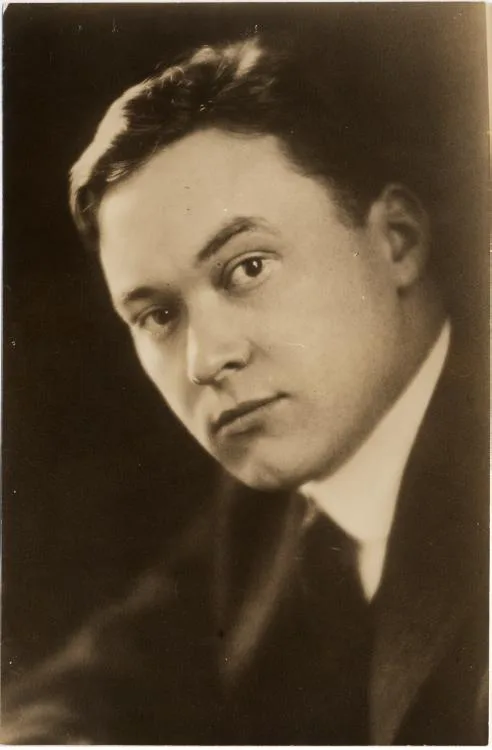
Walter Lippmann (September 23, 1889 – December 14, 1974) was an American writer, reporter, and political commentator. With a career spanning 60 years, he is famous for being among the first to introduce the concept of the Cold War, coining the term "stereotype" in the modern psychological meaning, as well as critiquing media and democracy in his newspaper column and several books, most notably his 1922 Public Opinion.
Lippmann also played a notable role as research director of Woodrow Wilson's post-World War I board of inquiry. His views on the role of journalism in a democracy were contrasted with the contemporaneous writings of John Dewey in what has been retrospectively named the Lippmann-Dewey debate. Lippmann won two Pulitzer Prizes, one for his syndicated newspaper column "Today and Tomorrow" and one for his 1961 interview of Nikita Khrushchev.
He has also been highly praised with titles ranging from "most influential" journalist of the 20th century to "Father of Modern Journalism". Michael Schudson writes that James W. Carey considered Walter Lippmann's book Public Opinion as "the founding book of modern journalism" and also "the founding book in American media studies".
Early life and education
Lippmann was born on New York's Upper East Side as the only child of Jewish parents of German origin. According to his biographer Ronald Steel, he grew up in a "gilded Jewish ghetto". His father Jacob Lippmann was a rentier who had become wealthy through his father's textile business and his father-in-law's real estate speculation. His mother, Daisy Baum, cultivated contacts in the highest circles, and the family regularly spent its summer holidays in Europe. The family had a Reform Jewish orientation; averse to "orientalism", they attended Temple Emanu-El. Walter had his Reform Jewish confirmation instead of the traditional Bar Mitzvah at the age of 14. Lippmann was emotionally distanced from both parents, but had closer ties to his maternal grandmother. The political orientation of the family was Republican.
From Wikipedia (CC BY-SA 4.0).