


Former Canadiens, Liverpool Owner Gillett Dies at 87

At a news conference in Laval, Quebec, on September 10, 2009, George Gillett Jr. stood beside Geoff Molson and announced the sale of the Montreal Canadiens to the Molson Group. The agreement had been reached on June 20 for $575 million. The NHL board of governors approved the transfer that December. Gillett’s ownership had run from 2001 to 2009.
When he died, Molson spoke for the club he now led: “On behalf of the entire Canadiens organization, I would like to extend my deepest condolences to George's family. George immersed himself in the Montreal community and was appreciated by everyone in the organization. We sincerely appreciate his contributions to the Montreal Canadiens during his time as owner.”
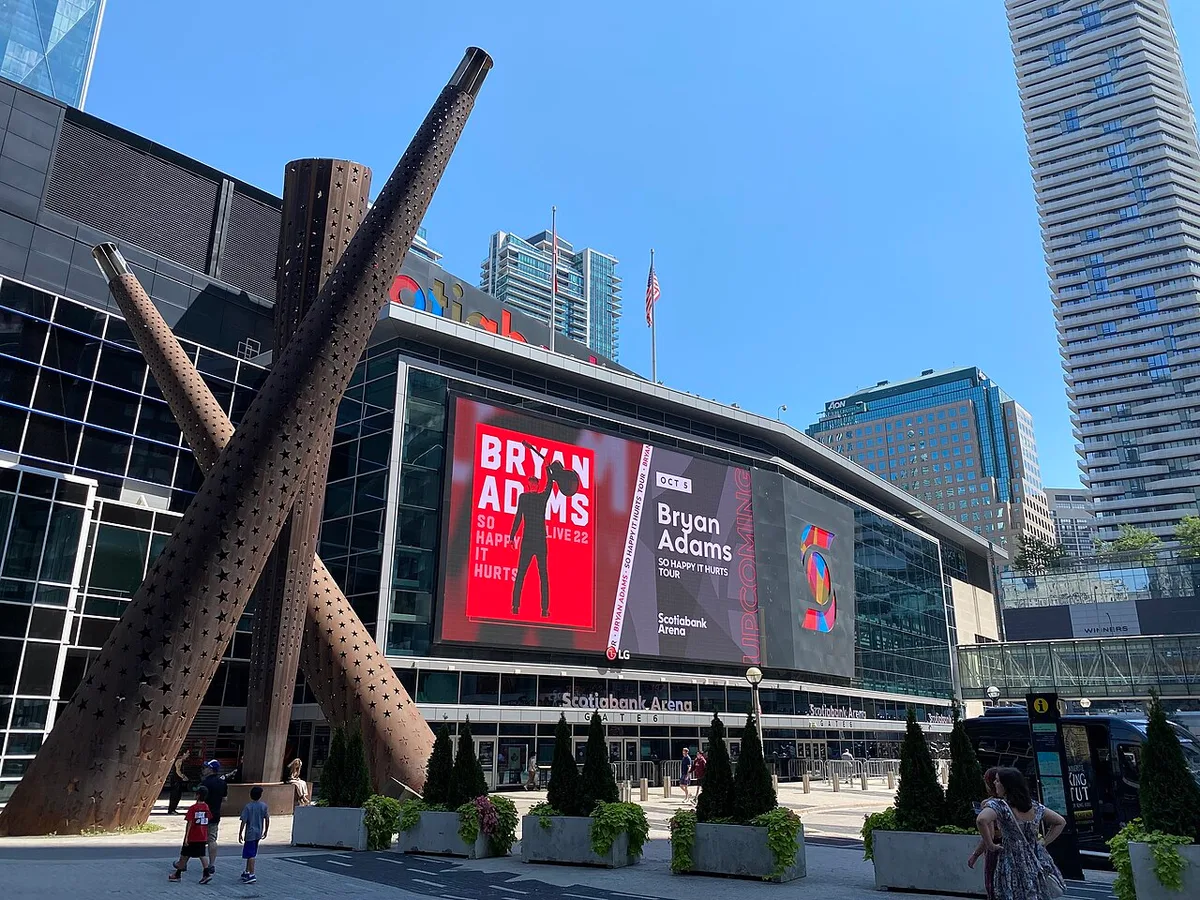
Those contributions began with the far smaller sum that first brought the franchise and its arena under his control. On January 31, 2001, Gillett bought a majority stake in the Montreal Canadiens and the Molson Centre for $275 million. Two banks and the Caisse de dépôt et placement du Québec put up $140 million of that sum in loans. The arena would later carry the Bell Centre name. The Canadiens, an Original Six franchise and the oldest continuously operating professional hockey club in the world, had played there since leaving the Forum.
Gillett was born on October 22, 1938, in Racine, Wisconsin. He founded Brook Creek Management Corp., a portfolio management firm, and built holdings that stretched from media to meatpacking before the hockey deal. NHL commissioner Gary Bettman described what followed: “George Gillett's passion for the Montreal Canadiens and commitment to the city of Montreal were demonstrated throughout his tenure as owner of the storied franchise from 2001 to 2009. He guided the Canadiens through a significant chapter in their history that included preparations for their Centennial Celebration, which honored the franchise's rich legacy and seminal place in our game.”
Bettman added a personal note: “George was a friend whose company I always enjoyed, whose counsel was wise, and whose energy was contagious. His contributions to the hockey world left an enduring mark, and his legacy will continue to be felt throughout the game for years to come.”
The same drive that secured the Canadiens had already reshaped American ski mountains years earlier. In 1985 Gillett acquired Vail Associates, the company that owned the Colorado resorts of Vail and Beaver Creek. He poured capital into high-speed detachable lifts, systematic grooming, and expanded terrain. Those same years he helped bring the 1989 FIS Alpine World Ski Championships to Vail, raising the area’s profile on the international circuit.
He told an industry audience that the business’s future rested on a single group. “The real future of the ski industry is with the kids,” Gillett said. “The bottom line of all this is that we have to continue to attract and retain the youth of America.”
The wider Gillett Holdings empire later buckled. The company filed for bankruptcy protection in 1991; Apollo Management took the Vail Associates shares. The operation was reorganized as Vail Resorts and went public in 1997. Bill Jensen, who watched the arc from inside the ski business, put the scale of it simply: “George always thought big, but more importantly, George did big. Very few can say that.”
That appetite for large stages next carried him across the Atlantic. In March 2007 Gillett and Tom Hicks completed a £174 million takeover of Liverpool Football Club, a figure also placed at roughly $576 million or £435 million. They promised a new stadium at Stanley Park and financial backing for manager Rafael Benítez. The side reached its on-pitch high under that ownership in 2008/09, finishing second in the Premier League. Steven Gerrard scored 24 goals across all competitions that season.
The partnership that had carried the deal soon began to fray in public. In March 2008 Gillett went on radio station Fan590 and severed any remaining public pretense of unity with Hicks. “This partnership has been unworkable for some time, but not because of us,” he said. “We have tried to be co-operative, we have tried to be supportive but when your public persona is more important than the facts, that makes it difficult to have a rational relationship.”
He laid out the failed exit he had already offered. “We were very fair. We gave our partner a long period of time to try to make arrangements to buy us out. We didn't put pressure on him but he ultimately did not get to the finish line. In the meantime, because of the things he said, the fans' reaction has been so negative towards him - and towards us if we sold to him - it has now made that an untenable alternative for us.”
One specific maneuver had hardened the stands against them both. “He threatened to block me selling to Dubai [International Capital] - that was certainly one of the things that made the fans upset. Lord knows DIC have the money; with oil prices going up every day, that's not an issue. They certainly have the history and they are fans. I think they would have been very responsible owners. But making that not possible or difficult didn't endear people to the fans.” Supporters organized protests under groups like Spirit of Shankly as the club’s finances slid deeper into turmoil, the pressure mounting toward the lenders’ next move.
By late 2010 the lenders demanded repayment of the refinanced loans. The High Court showdown that followed forced the sale of Liverpool for £300 million to New England Sports Ventures, the group led by John W. Henry that later became Fenway Sports Group. Gillett and Hicks left that year.
His death was announced on September 23, 2026. He was 87, though one source gave the age as 88. Per the Vail Daily he had died the day before, September 22, at a memory care facility in Denver after a long battle with Alzheimer’s disease.