
Adel Mohammed Emam Mohammed Bukhariny (Arabic: عادل محمد إمام محمد بخاريني; born 17 May 1940) is an Egyptian film, television, and stage actor. Over a career spanning more than 150 films, plays, and television series in comedic, social, and political genres, he became known as one of the leading figures of the second generation of Egyptian and Arab comedy performers. Although primarily known for comedy, he also took on more dramatic material, and in his early secondary roles combined comedy with romance, notably in films such as My Wife, the Director General, My Wife's Dignity, My Wife's Goblin and Virgo, all films starring Salah Zulfikar.
Emam began acting in the 1960s and became one of the best-known performers in Egyptian cinema. He holds a bachelor's degree in Agriculture from Cairo University, and has appeared in more than 103 films and 10 stage plays. He is married to Hala El-Shalaqani; their children include director Ramy Emam and actor Mohamed Emam.
Through roles that addressed social and political issues, Emam gained wide popularity across the Arab world during the 1980s and 1990s and is frequently described in Egyptian media as one of the country's leading cultural figures.
Emam has received a number of lifetime achievement awards and honors from Egyptian and international film festivals. In January 2000, the United Nations appointed him a Goodwill Ambassador for UNHCR.
Contents
Personal life
Early life and education
Adel Emam was born into a poor farming family on 17 May 1940 in the Sayeda Aisha district of Cairo, though his family's origins trace back to the village of Shaha in the Mansoura district of Dakahlia Governorate. His full name is Adel Mohammed Emam Mohammed Bukhariny (Arabic: عادل محمد إمام محمد بخاريني). Emam has said he was very close to his mother and was deeply affected by her death. His father, Mohamed Emam, was religious and worked as a "shawish" in the police force; he died in 1997 after suffering from Alzheimer's disease. Emam has one brother, producer Essam Emam, and two sisters, Eman and Mona. Mustafa Metwalli, his brother-in-law, is married to his sister Eman.
During his childhood, Emam moved with his family from Sayeda Aisha to the Helmiya district, then to Omrania in Giza, then to Mohandiseen, and later to Mansouria. He studied at Helmiya School before transferring to Benbaqdgan Secondary School and then to Marqosiya Secondary School in Alexandria. He then joined the Faculty of Agriculture at Cairo University, where his classmates included actor Salah El-Saadany and future Syrian Prime Minister Mahmoud Al-Zoubi. Emam has said that Amin Shalaby, Younes Shalaby, Saeed Saleh, and Salah Al-Saadani were his closest friends from university. He began performing at Cairo University's theater and appeared in the play Ana Wa Howa Wa Heya (1963) during his third year there.
His marriage and family
Emam has been married once, to Hala El-Shalaqani, since the mid-1960s. In interviews, he has said he was not initially interested in marriage, but that his wife, who came from a wealthy, land-owning family with ties to the Liberal Constitutional Party, was determined to marry him despite their different social backgrounds, and that her family was reluctant given his status at the time as an actor in minor roles. In one televised account, Emam described how he and his wife were once at the home of their friend Samir Khafaga when he first saw her, and that although others around them tried to flirt with her, he did not, saying he did not know how.
Hala El-Shalaqani discussed their early relationship in an interview with media personality Mufid Fawzy, saying she had insisted on marrying Emam because he was shy and hesitant about starting a new relationship. She recalled: "He once told me that he wasn't thinking about marriage at all." Emam has said the couple chose not to hold a wedding ceremony in order to save money, and that they built their household gradually, first buying a chair, then a refrigerator, then a stove. He has also said the marriage took place without his wife's family's approval, since they objected to his status as a film extra at the time, adding: "God loves me because I married Hala."
Emam has three children: director Ramy Emam, Sarah Emam, and actor Mohamed Emam, who played Taha El-Shazli in The Yacoubian Building. He has eight grandchildren: Adel, Ezz El-Din, and Roqaya (Ramy's children); Hala, Camellia, and Amina (Sarah's daughters); and Khadija and Qismat (Mohamed's daughters). Ramy's wife is Yasmine, Sarah's husband is Ahmed Mokbel, and Mohamed's wife is Nouran Talaat.
Emam typically spends summers with his children and grandchildren at a family villa on the North Coast. He is a keen reader and keeps a large personal library, and has a longstanding hobby of gardening.
Net worth
No official figures for Emam's wealth have been published. Some media reports have estimated his net worth at around $100 million, making him the richest actor in Egypt, though these figures are not independently verified.
Acting career
1962–1969: Early career breakthrough
Emam began performing in theater in Ana w Howa w Heya (1962) with Fouad El-Mohandes and Shwikar, and made his film debut in 1967 in small roles. His early film work included My Wife, the Director General (1966), My Wife's Dignity (1967), followed by his first significant role in My Wife's Goblin (1968) opposite Salah Zulfikar and Shadia. He was part of a younger generation of actors who emerged during a period of social and political change in 1960s Egypt, and was noted for both comedic and dramatic range. Despite his early minor roles, Emam drew the attention of writer Mahmud Sadani, who discussed him in his 1969 book The Comedians:
If Adel Imam realized how talented and in demand he is, he would have saved himself from the trap set for him. If he didn’t quickly escape from this narrow corner he was placed in, to roles of light-hearted villainy, the charming conman, a mix of Richard Widmark and Clifton Webb, a blend of Tawfik El-Deken and Fouad el-Mohandes, a concoction of Hassan Yousef and Abdel Moneim Ibrahim, even if Adel failed to escape this fate, even if he remained stagnant in supporting roles, it would not diminish his talent, nor undermine his stature as a brilliant, talented, and great artist.
1970s: Rise to fame
In the early 1970s, Emam gained a reputation for comedic and dramatic versatility, with roles including Virgo (1970), alongside Salah Zulfikar, and Searching for the Scandal (1973), shared with Mervat Amin and Samir Sabry.
During the early 1970s, Emam appeared in films addressing themes of love, youth, and societal pressures. Bahibek Ya Helwa (1970), co-starring Hassan Youssef and Nahed Sherif, was a romantic comedy centered on emerging youth culture and its effect on relationships.
By the mid-1970s, Emam was a household name in Egyptian cinema. His roles in comedy and theatre, including Madraset El Moshaghbeen (1973), established him as one of the leading comic actors of the period. In that play, he played the mischievous character Bahgat El Abasery, one of his best-known roles. In 1976, he starred in the play Shahed Ma Shafsh Haga (Witness Who Saw Nothing) alongside Omar Al-Hariri and Nahed Jabr.
1980s: Versatile roles
The 1980s marked a period of both professional growth for Emam, as he took on various characters across genres between comedy and drama. One of his notable films during the early 1980s was The Suspect (Arabic: المشبوه, 1981). The 1981 film Al-Mashbooh marked a significant turning point in Adel Emam's career, shifting from comedy to action and crime. The film explores themes of societal chaos, economic struggle, and personal redemption in the early 1980s, as the protagonist, Maher Al-Nemr, grapples with his criminal past and attempts to build a better future. The soundtrack by Hani Shnouda played a crucial role in intensifying the film's dramatic tension, blending music with the narrative. The movie not only showcased Emam's acting range beyond comedy but also set the stage for successful collaborations between him, Seif, and Shnouda in future films. It also symbolized a shift in Egyptian cinema towards realism and social commentary.
Adel Emam's diverse roles in 1980s show his versatility as one of the industry's most influential figures. In the 1980s, he was one of the highest-paid actors, and his films garnered the highest box office earnings during that period. His on-screen chemistry with actress Soad Hosny, another iconic star, added a unique charm to their collaboration in films like Love in a Jail Cell (1983). In The Street Player (1983), Emam’s portrayal of a character who blends humor with social commentary marked a pivotal moment in his career. The film's success further established him as a central figure in Egypt's evolving cinematic landscape. Additionally, Emam starred in Smart but Foolish (1980), a light-hearted comedy.
Moreover, in The Human Lives Only Once (1981), Emam depicted a man undergoing a transformation after personal trials, combining humor with emotional depth. Similarly, in At the Minister’s Door (1982), he portrayed a character struggling with the absurdities of bureaucracy while seeking a government job. Known for his sharp comedic timing, Emam masterfully infused humor into the frustrations of dealing with corruption and inefficiency.
Hamada and Tutu’s Gang (1982) marked a departure from his typical comedic roles. His performance brought a mix of action and comedy, as he portrayed a character caught in a world of crime and chaos. In The Beggar (1983), Emam played a man who, after a life of wealth, finds himself on the streets as a beggar. The film was an important social commentary on the plight of the poor.
1990s: Career peak
The 1990s marked the peak of Adel Emam's career, as he reigned over the Egyptian cinema, being the highest-paid actor and the number one star in Arab cinema. His collaborations with directors like Sherif Arafa produced iconic works such as Terrorism and Kebab (1992), though technically just outside this decade, and Jazeerat al-Shaytan (1987). Emam’s style in the 1990s was often characterized by strong social criticism laced with humor. His performances in these films resonated with wide audiences across the Arab world, earning him massive popularity.
During an interview between Adel Emam and the journalist Mufid Fawzy behind-the-scenes of the movie El-Mansi (1993), Adel Emam said: "Time is my only competitor". He confirmed that he does not focus on anything other than his work and clarified a fundamental truth, which is that time is his only competitor due to his intense desire to give everything he has. Therefore, he is always busy with his projects and often presents more than one film in a year, in addition to performing a play on a daily basis.
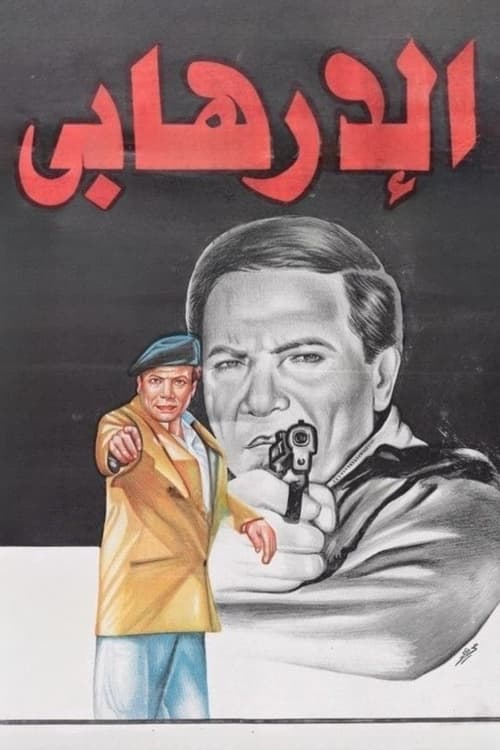
In the 1990s, Adel Emam maintained his dominance in the Egyptian film industry. He continued to take on socially relevant roles that reflected the political and social realities of Egypt. One of his most famous films from this era is Al-La'ib Ma'a Al-Kibar (Playing with the Big Boys, 1991) which is a black comedy in which Emam starred as an ordinary man who gets entangled with powerful individuals in a game of high stakes. The film's satirical tone was a commentary on the power dynamics and corruption within society. Another famous film is The Terrorist, which was one of Emam's most critically acclaimed works, combined humor with a profound social and political message. The movie focused on a terrorist who seeks redemption, and Emam's portrayal brought depth to a character who was tragic. In 1998, Emam took on the role of a man who becomes an unlikely hero after being asked to deliver an important letter to a corrupt governor in Risala Ela Al-Wali (1998).
Adel Emam earned the title of Al-Zaeem "The Leader" after mastering his role in the play Al-Zaeem (1993), in which he portrayed a role that resonated with themes of political power and leadership. Adel Emam was the number one actor in the Arab world during the 1980s and 1990s.
2000–2023: Continued prominence
The 2000s saw Adel Emam evolve into an elder statesman of Egyptian cinema. He continued to act in both films and television series, maintaining a strong presence in Egyptian entertainment. In 2003 he was main role in the film The danish experience. The film was considered to be an "enormous success. The danish experience was also the highest grossing film in Lebanon that year.
One of his key films from the 2000s was The Embassy in the Building (2005), where he took on the role of a man who gets caught up in a political thriller involving international intrigue. Adel Emam played a Cairene everyman inconvenienced when the Embassy of Israel moves into his apartment building. In the following year, Adel Emam was one of the ensemble cast of The Yacoubian Building, a film reputed to be the highest-budgeted in Egyptian cinema and adapted from the novel of the same name. The story is a sharp look at contemporary Egyptian life through the prism of a faded downtown Cairo apartment building. Emam portrays an aging roué whose misadventures form a central strand of the film's complex narrative.
Emam was an important national figure in Egypt largely because of the Egyptian political roles he took on in many of his films and plays, he always focused on Egypt's politics and religious problems. These roles, whether he intended it or not, often put him in a critical position vis-à-vis the president or the government, such as The Terrorist (1994) alongside Salah Zulfikar in Zulfikar's final film role. He has been cast several times by the producer Emad Adeeb in movies like Morgan Ahmed Morgan (2007), and Hassan and Marcus (2008) starring Omar Sharif.
He returned to TV drama in 2012 through " Fer’et Naji Atallah " (Naji Atallah’s group), continuing his annual presence in the Ramadan marathon every year through several successful series such as " El Araf” (The fortune teller), “Saheb el Canada” (His highness), “Afaret Adli Alam”(Adli Alam’s Ghosts), and "Awalem Khafeya” (Hidden Worlds) in 2018.
His last work was a tv series called Valentino released in 2020 making the actor the highest paid in Ramadan television series.
In celebration of Adel Imam's 88th birthday, his 2010 film "Alzheimer" was re-released in cinemas across Egypt and Arab countries from May 16 to 18, 2024. This move was part of a strategy to honor prominent artistic figures in the Arab world.
Retirement
On January 21, 2024, it was officially confirmed that Emam has retired, as his son, Rami Emam, stated that his father decided to step away from artistic endeavors to dedicate his time to family life. He retired from acting after a 60-year career.
Works
Societal and humanitarian contributions
Adel Emam has significantly influenced societal and humanitarian efforts beyond his career in the arts. Emam has also been an advocate for political and social progress in Egypt. He was an outspoken support for democratic principles and freedom of expression during periods of political upheaval. Furthermore, he has been active in charitable work, notably in healthcare and education. He has contributed to funding hospitals and educational initiatives aimed at improving the quality of life for marginalized communities. Adel Imam makes donations and provides assistance to those in need without publicizing them. He prefers these charitable acts to remain "private," away from the spotlight and media, without any fanfare.
In recognition of his humanitarian contributions, Emam was appointed as a Goodwill Ambassador for the United Nations High Commissioner for Refugees (UNHCR). This role allowed him to support the rights and needs of refugees and displaced individuals. By using his widespread fame, he participated in numerous campaigns and events to raise awareness about the plight of refugees. When Adel Emam became Goodwill Ambassador he said:In many of my films I fight against discrimination and raise awareness about poverty and social problems – issues that need to be addressed but which are often not discussed easily.
Emam’s political influence extends to his cinematic work. He has explored pressing local and regional issues. His films have addressed topics such as terrorism, sectarian violence, and the Israeli–Palestinian conflict. A prominent example is his 1994 film The Terrorist, which delved into the impact of extremism. The film’s release coincided with a notable incident: the attempted assassination of Adel Emam by Muhammad Kroum, a former member of an extremist group. Kroum revealed that he was tasked with assassinating Adel Imam because of his film The Terrorist, which raised awareness among young people about jihadist movements. This highlighted the controversial and impactful nature of Emam's work. Many of today's stars acknowledge Imam's credit for giving them golden opportunities at the beginning of their artistic careers, and it is said that he does not only offer advice and guidance, but also seeks to provide actual support by providing job opportunities and participating in artistic works. Randa Abu al-Azm, director of Al Arabiya’s office in Egypt, remarked during an interview on Al-Hekaya with Amr Adib on MBC Masr: "We could produce twenty successful documentaries about Adel Emam".
Legal challenges and controversies
In February 2012, Emam was sentenced (in absentia) to three months in jail for offending Islam. Emam said he would appeal the sentence. On September 12, 2012, Emam won his appeal when a Cairo misdemeanours court cleared him of defaming Islam in his films.
Awards and honours
Adel Emam has received numerous awards throughout his five-decade career. He won the Horus Award twice, for his leading roles in Omaret Yakobean and Al-irhabi, at the Cairo International Film Festival. Additionally, in 2014, a testament to his legacy he was honored with the Honorary Award at the Marrakech International Film Festival. His international acclaim continued as he received the International Jury Award at the São Paulo International Film Festival. Furthermore, in both 2005 and 2008, the Dubai International Film Festival awarded Adel Emam the Lifetime Achievement Award. In 2017, he was presented with the first-ever Career Achievement Award at the El-Gouna Film Festival. Most recently, in January 2024, he was honored with the Arab Art Leader Award at the Joy Awards.
Egyptian honours
Commander of the Order of Merit
Foreign honours
Knight (Achir) of the National Order of Merit ( Algeria, 2002)
Officer of the National Order of the Cedar ( Lebanon, 2003)
Commander of the Order of Intellectual Merit ( Morocco, 1997)
Grand Officier of the National Order of Merit of Tunisia ( Tunisia, 2016)