Historical accuracy
Although plot details and many of the characters in Aguirre come directly from Herzog's own imagination, historians have pointed out that the film fairly accurately incorporates some 16th-century events and historical personages into a fictional narrative.
Herzog's screenplay merged two expeditions: one led by Gonzalo Pizarro in 1541, which resulted in the discovery by Europeans of the Amazon River by Francisco de Orellana, and another one that occurred in 1560.
The expedition of Gonzalo Pizarro and his men left from the city of Quito and entered the Amazon basin in search of El Dorado. Various troubles afflicted the expedition and, sure that El Dorado was very close, Pizarro set up a smaller group led by Francisco de Orellana, to break off from the main group and forge ahead, then return with news of what they had found.
This group utilized a brigantine to journey down the river. After failing to find the legendary city, Orellana was unable to return because of the current, and he and his men continued to follow the Napo River until he reached the estuary of the Amazon in 1542. Accompanying Orellana was Gaspar de Carvajal, who kept a journal of the group's experiences.
The historic Gaspar de Carvajal (1500–1584) was a Spanish Dominican friar who had settled in Peru and dedicated himself to the conversion of the Indigenous peoples. His general attitude towards the local people was consistent with the benevolence of his better-known brother Dominican friar, Bartolomé de las Casas. This personality is at odds with the description in the film where Carvajal is portrayed as a cowardly priest who claimed that "the church was always on the side of the strong".
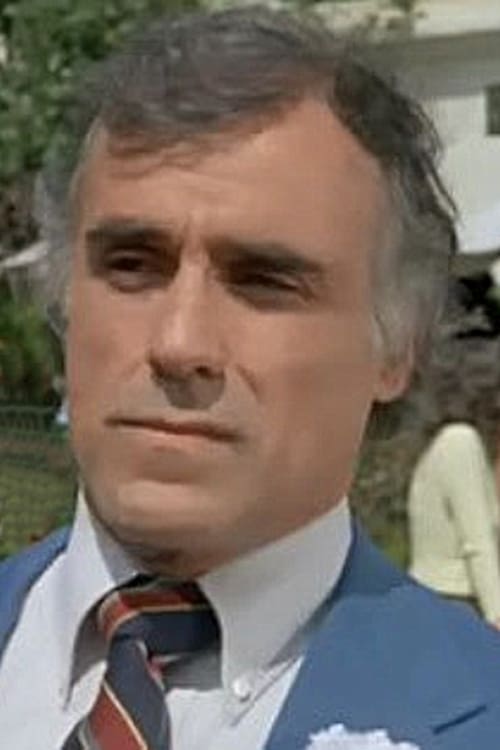
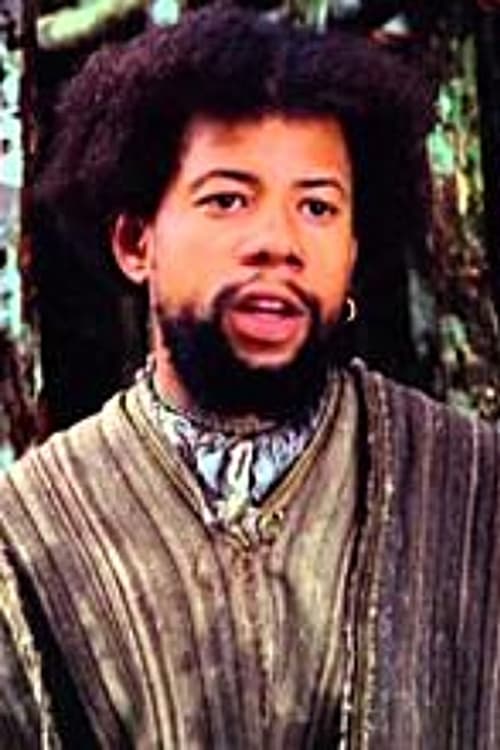
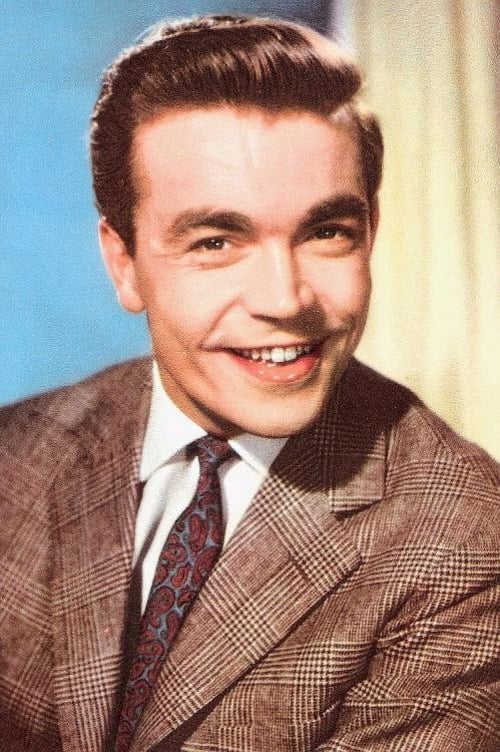
The film's major characters, Aguirre, Ursúa, Don Fernando, Inez and Flores, were involved in the second expedition, which left Peru in 1560 to find the city of El Dorado. Commissioned by Peru's governor, Ursúa organized an expeditionary group of 300 men to travel by way of the Amazon River. He was accompanied by his mixed-race mistress, Doña Inez. At one point during the journey, Aguirre, a professional soldier, decided that he could use the 300 men to overthrow the Spanish rule of Peru. Aguirre had Ursúa murdered and proclaimed Fernando as "The Prince of Peru".
Fernando himself was eventually murdered when he questioned Aguirre's scheme of sailing to the Atlantic, conquering Panama, crossing the isthmus and invading Peru. Many others who attempted to rebel against Aguirre were also killed. The surviving soldiers conquered Isla Margarita off the coast of Venezuela and made preparations to attack the mainland.
By that time, Spanish authorities had learned of Aguirre's plans. When the rebels arrived in Venezuela, government agents offered full pardons to Aguirre's men. All of them accepted the deal. Immediately prior to his arrest, Aguirre murdered his daughter Flores, who had remained by his side during the entire journey. He was then captured and dismembered.
Other Spanish expeditions outside the Amazon influenced the story. The conversation in which the local inhabitants refuse a Bible comes from events before the Battle of Cajamarca, in which Inca emperor Atahualpa allegedly rejected the Requerimiento (declaration by the Spanish monarchy in 1513 of its divine right to take New World territories). The chronicle of Álvar Núñez Cabeza de Vaca, La Relación ("The Account"), mentions the appearance of a boat in a treetop after a fierce tropical storm in Hispaniola:
Monday morning we went down to the port and did not find the ships. We saw their buoys in the water, from which we realized that they had been lost, and we went along the coast to see if we could find signs of them. Since we found nothing, we went into the woods, and a quarter of a league into them we found one of the ship's boats in some trees.
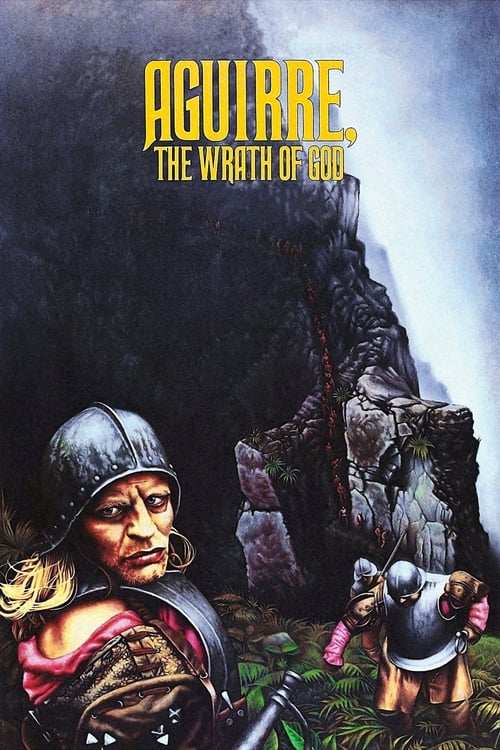
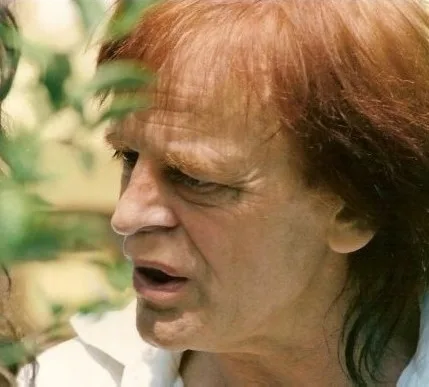
Kinski's crazed performance bore similarities to the real Aguirre, a "true homicidal megalomaniac". Many of his fellow soldiers considered his actions to be those of a madman. Kinski's use of a limp reflected a limp that Aguirre had, the result of a battle injury. Aguirre's frequent short but impassioned speeches to his men in the film were accurately based on the man's noted "simple but effective rhetorical ability". The South Atlantic Review observes the film's attitude toward historical accuracy as being similar to works of Shakespeare:Like Shakespeare, Herzog begins with chronicle accounts of events and personages, but then re-shapes and embroiders upon these historical chronicles, at once providing answers and revealing more puzzling questions, not only turning "history" into "art" (a tenuous distinction in any case), but meditating upon the makers and the making of history.
— Gregory A. WallerAdditionally noted is the juxtaposition of Spanish imperialism with that of Nazism, specifically citing Aguirre's deranged closing speech as "historical analogy with Hitler and German fascism".
Film Quarterly further expands on this point, marking the casting of Kinski as emblematic of this historical parallel:[Herzog] achieves this dimension by choosing an actor with typically Nordic coloring: Klaus Kinski, with his blond hair and blue eyes. According to historical accounts, Aguirre was "of short stature . . . sparely made, ill-featured, the face small and lean, [the] beard black. " Herzog's Aguirre is not of "short stature" but although he is not very tall, his deformity causes him to stand out. Unlike the historical Aguirre, this one has unusually large features and is beardless and blond. Through this blond Nordic knight, Herzog alludes to a much earlier age of expansionism: to medieval Germany with the religious imperialism of the Crusaders and the Teutonic Knights, and also to a more recent period: the 1930s, which combined the rebirth of the Nordic stereotype (seen in the light of racial superiority) with Hitler's attempts at imperialist conquest. Herzog's main character is more than a conquistador of one particular century; he is the embodiment of imperialism as such.
Seen in this light, Herzog's re-creation of a specific period in history, i.e., Spain's conquests in the New World, becomes a treatise on the evils of imperialism through the ages. It is not surprising then, that Herzog's film constitutes a great flight of fancy mostly leaving historical data behind and making instead a collage of fact and fiction.While film journalists acknowledge the various liberties taken within the film's depiction of historical events, these choices are observed as creative decisions on the part of the director, both in service of the narrative structure and also as reflections of imperialist and fascist manifestations occurring throughout history, both prior to and following the 16th-century conquest of South America. Kinski's manic performance combined with the film's blunt portrayal of violence toward the native population acts less as a literal portrayal of events and more as broad condemnation of both historical events and the concept of imperialist conquest.




_by_Erling_Mandelmann.jpg?width=400)