



America's Funniest Home Videos, also called America's Funniest Videos (AFV), is an American video clip television series on ABC, based on a recurring segment on the Japanese variety show Fun TV with Kato-chan and Ken-chan (1986–1992). The show features humorous home videos that are submitted by viewers. The most common videos feature unintentional physical comedy, pets or children and some staged pranks.
Originally airing as a special in 1989, it debuted as a regular weekly series in January 1990. The show was originally hosted by comedian Bob Saget for the 1989 special and the first eight seasons of the series incarnation. After Saget stepped down as host in 1997, John Fugelsang and Daisy Fuentes took over as co-hosts for its ninth and tenth seasons. After two years of being shown as occasional specials (hosted by various actors and comedians such as D. L. Hughley, Richard Kind, Stuart Scott and Steve Carell, with Mike Kasem and Kerri Kasem hosting international versions), ABC brought the series back on Friday nights in 2001 with Tom Bergeron taking over hosting duties; Bergeron is the longest-running host in the show's history to date, staying on AFV for fifteen seasons until he stepped down in 2015. Alfonso Ribeiro has hosted the program since 2015.
Contents
Premise
America's Funniest Home Videos is based on the 1986–1992 Tokyo Broadcasting System variety program Kato-chan Ken-chan Gokigen TV (also known as Fun TV with Kato-chan and Ken-chan), which featured a segment in which viewers were invited to send in video clips from their home movies; ABC, which holds a 50% ownership share in the program, pays a royalty fee to TBS Holdings, Inc. for the use of the format (although the original parent show is no longer in production). Contestants can submit their videos by uploading them on the show's official website, AFV.com; through its iOS or Android apps; on the show's official Facebook fan page; or by sending them via mail to a Hollywood, California post-office box address. The majority of the video clips are short (5–30 seconds) and organized according to topics mentioned in the host's monologues. Videos usually feature people and animals getting into humorous accidents or behaving amusingly on camera, while others include clever marriage proposals, people and animals displaying interesting talents (such as pets that sound like they speak certain words or phrases, or toddlers with the ability to name all past U.S. presidents), and practical jokes. As of 1989, the show's production process featured a group of screeners viewing the submitted tapes and grading them on a 1–10 scale based on how humorous they were. The videos graded the highest were sent to the show's producers, and then to Di Bona and another producer for final approval. Videos that feature staged accidents, people being seriously injured, the abuse of animals and children, or that otherwise do not meet ABC network standards and practices are generally not accepted for broadcast.
Every week, the producers choose three videos to compete in the qualifiers for a prize, with the studio audience voting for the winner. The first-place winner is awarded a $20,000 cash prize (previously $10,000 until Season 32), advancing to the season's semifinals and placed in the running for the $100,000 prize awarded during the middle and near the end of each season (each with its own corresponding eligibility period for the $10,000 winners selected from the block of episodes preceding each $100,000 prize telecast); the runner-up receives $6,000 (previously $3,000) and the third-place video receives $4,000 (previously $2,000). Starting in Season 12 (and awarded annually starting in Season 15), the winners of the $100,000 prize in the semifinals then advance to the grand finals and compete for a vacation prize package supplied by Disney Experiences (through its Disney Parks, Disney Cruise Line, Adventures by Disney or Disney Vacation Club arms), and the title of "America's Funniest Home Video". Since its inception as a weekly program, the series has included a regular call-to-action segment, "Assignment America”. Presented in the “B” block of each episode during the Saget and Fugelsang/Fuentes eras and the penultimate “E” block since the Bergeron era, the segment invites viewers to submit videos related to a specific theme, challenge, or prompt (such as birthdays, celebrity impressions and lookalikes, science experiments, or Halloween-themed videos). The program's studio segments are taped in front of a studio audience (although the specials that aired in 1999 and 2000 only featured pre-recorded audience responses, and episodes taped towards the end of Season 30 through Season 32 featured a "virtual" audience presented on set monitors through video conferencing due to local and state crowd restrictions put in place during the COVID-19 pandemic). Audience members are asked to dress in "business casual or nicer".
History
Development
Series creator Vin Di Bona had previously developed a similar concept to AFV in Animal Crack-Ups (1987–1990), a celebrity game show that aired primarily as part of ABC's Saturday morning lineup and was based on the Japanese series Wakuwaku Dōbutsu Land (or "Waku Waku Animal World"), a game in which contestants answered questions related to funny video clips involving animals (accompanied by narration that anthropomorphized the clips' subjects). Di Bona—who decided to form his eponymous production company following his stint as a line producer on the first season (1985–1986) of the ABC action-adventure series MacGyver—partnered with former CBS News executive Joe Bellon, whose distribution company, Bellon Enterprises (founded after Bellon left CBS in 1985), at the time had been struggling in its efforts to sell the international rights to programming concepts—like Wakuwaku—based on shows originally aired by the Tokyo Broadcasting System (TBS). The two soon developed a pitch for an American version of Wakuwaku, using the licensed animal footage from the program, eventually selling it to ABC.
In the spring of 1989, while Di Bona and his then-wife, Gina, attended the Monte-Carlo Television Festival, the latter passed a booth for a distributor showcasing a segment from the TBS variety program Kato-chan Ken-chan Gokigen TV (or Fun TV with Kato-chan and Ken-chan), in which hosts Ken Shimura and Cha Kato presented and provided comedic narration over a package of funny caught-on-tape moments sent in by viewers; at the end of each show, audience members voted for their favorite clip among those featured. At Gina's insistence, Di Bona contacted TBS about licensing the rights to the concept.
Di Bona, with Bellon's assistance in acquiring the clips from TBS, put together a presentation reel featuring footage from the Gokigen TV home video segment; ABC executives, immediately after seeing the reel (Di Bona has claimed in interviews that the network decided to buy the proposed show four minutes into the pitch), decided to place an order for the concept that would become America's Funniest Home Videos. However, the network intended for it to be a one-off special, unsure that a program showing other people's home movies would work as a weekly series. Di Bona enlisted most of the staff from Animal Crack-Ups—including among others, writer Todd Thicke (whose older brother, actor/host/songwriter Alan Thicke, hosted Crack-Ups in addition to his starring role in the ABC sitcom Growing Pains), producer Steve Paskay, creative consultant Gina Di Bona, coordinating producers Joe and (his son and business partner) Greg Bellon, and director Ron de Moraes—to work on the pilot special. Di Bona also borrowed the comedic narration style used in Gokigen TV and Wakuwaku, having the host provide voices to both humans and animals featured in the clips as well as exaggerated observational humor.
1989–1997: Bob Saget
The show debuted on November 26, 1989, as an hour-long special, produced by Di Bona and Steve Paskay, with Saget as host. Actress Kellie Martin, then the star of fellow ABC series Life Goes On (as Becca Thatcher), which would serve as the lead-in program to AFHV for the latter show's first four seasons, and A Pup Named Scooby-Doo (as the voice of Daphne Blake), served as a special guest and assisted Saget in hosting two segments during the special, including the announcement of the three grand prize finalists (for the special, the first-place winner was awarded a $5,000 cash prize, while the second and third-place winners each won an RCA camcorder). Married couple Helen and Bill Wholf of Thompson, Ohio were awarded the show's first grand prize for a clip titled "The Dishwasher Lady", in which Bill discovers Helen had gotten herself stuck inside their dishwasher after her hair became entangled in the machine's spray arm while attempting to retrieve a dropped utensil. The clip, the Panasonic OmniMovie HQ 1FX8-CCD camcorder that Bill Wholf used to record the video, and other artifacts from the series—including an annotated pilot script, an audience voting machine, and a presentation reel created to pitch the proposed special to ABC executives—were donated to the Smithsonian Institution's National Museum of American History in 2008.
America's Funniest Home Videos became an unexpected hit for ABC: the special's initial broadcast was watched by 32.8 million viewers, roughly double the network's average viewership in the Sunday 8:00 p.m. ET timeslot at the time. Ratings increased over the course of the show, with much of it coming from viewers in the Northeastern and Midwestern U.S. snowed in by a significant blizzard that hit those regions a few days earlier around the Thanksgiving holiday. Impressed by the viewer response to the special, ABC decided to turn it into a weekly prime time series and ordered 10 additional half-hour episodes (later increased to 15); it debuted as a regular series on January 14, 1990, serving as a replacement for the recently cancelled fantasy sitcom Free Spirit. Besides acting as host, Saget also served as a member of its writing staff, alongside Todd Thicke (who stayed with the series until the 2014–15 season, and also served as a producer starting with its eighth season in 1996) and Robert M. Arnott.
Ernie Anderson, the longtime voice of ABC, was the program's original announcer, although Charlie O'Donnell, then known mainly as the announcer for Wheel of Fortune, occasionally substituted for him during some Season 1 episodes. Anderson also made an on-camera cameo appearance during the third season's first grand prize episode, originally aired on November 17, 1991 (an excerpt from that episode—featuring Saget prodding Anderson into reciting the signature vocal delivery he used to promote The Love Boat—was featured during the February 16, 1997 episode in a brief segment paying tribute to Anderson, who died earlier in the month from lung cancer). He was replaced in 1995 by radio and television actor Gary Owens, who remained in that role until Saget's departure, although Anderson would briefly return via archived recordings. The show's theme song, "The Funny Things You Do", was performed by co-songwriter Jill Colucci (who also sung the themes for ABC's "Something's Happening" and "America's Watching" promotional campaigns between 1987 and 1990) for most of the Saget run; this was replaced midway through Season 8 by a funk rock duet rendition by Peter Hix and Terry Wood. (Colucci would make a cameo appearance during the show's second season to perform the song in the opening segment of the January 6, 1991 episode.) The set used throughout the Saget era was an open floorplan living room design (originally a papered three-wall design with a bay window for the first three seasons, then redesigned for the 1992–93 season as a translucent-walled flatter frame outline utilizing a similar floorplan, though the furniture from the original set remained), with two large video screens on either side of the main set.
1997–1999: John Fugelsang & Daisy Fuentes
After Saget's departure from the series, ABC sidelined America's Funniest Home Videos from the network's 1997–98 fall schedule; in the late fall of 1997, ABC decided to put the series on its Monday lineup as a replacement for the TV adaptation of Timecop, which had been pulled from the schedule after five episodes due to persistently poor viewership. The first two episodes of the ninth season aired as a "sneak peek" on November 21, 1997, as part of the TGIF lineup, before the remainder of the season began airing regularly in the show's new Monday slot on January 5, 1998. This season featured new hosts, an overhauled look (including new full-title and abbreviated logos, which were later modified in Season 15 and partially overhauled in Season 26, and a new set augmented by a balcony-linked, double-flight bent staircase surrounding a large center-stage monitor, ditching the living room set-up used throughout the Saget era), and a new ska instrumental rendition of the "Funny Things You Do" theme song composed by Dan Slider (which remained in use for the 2000–01 specials and the entirety of Bergeron's run as host as well as being featured in Alfonso Ribeiro's 2015 hosting audition tape). The show began to be alternately called AFV at this point, with references to the abbreviated name being used in most on-air parlance going forward (though America's Funniest Home Videos remained the show's official title).
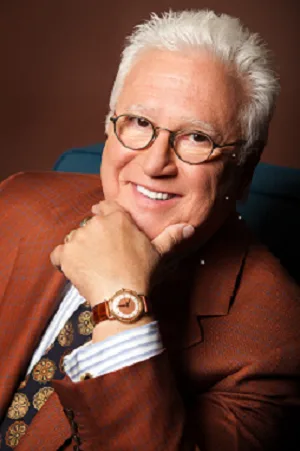
Comedian John Fugelsang and model-turned-television personality Daisy Fuentes took over as co-hosts of the show. Three new writers—among them, Mystery Science Theater 3000 alumni J. Elvis Weinstein and Trace Beaulieu—joined holdover scribe Thicke (assigned the newly created role of supervising writer) on the writing staff, replacing Saget and Arnott. Like Saget had done during his run in certain videos within clip packages, Fugelsang and Fuentes humorously narrated the clips shown (either observationally or by exaggerating certain circumstances leading to the comedic moment). Owens was succeeded by an unknown announcer, who was subsequently replaced for the tenth season by voice actor Jess Harnell, who still holds this position to this day. With ABC reserving the Sunday 7:00 p.m. ET slot for The Wonderful World of Disney beginning that season (ironically putting the anthology series—which returned to broadcast television after a six-year run on the Disney Channel—directly against Fox's new AFV-inspired series The World's Funniest!), the show changed timeslots several times over the next two seasons: after leading off ABC's Monday night lineup (at 8:00 p.m. ET) for Season 9, the network moved AFV to Saturday nights at the start of Season 10 (1998–99); the show was later moved to Thursday nights in March 1999, opposite the first hour of NBC's "Must See TV" comedy lineup and airing directly against the top-rated Friends. Alongside the 26 episodes picked up for Season 9, ten other episodes were produced with no contest winners and recycled clips from Season 8 with new John/Daisy voiceovers. They would sporadically air paired with other episodes back-to-back; the last to air premiered alongside the Season 10 premiere in October 1998. The ten episodes have never aired in reruns in syndication, and only two of the ten episodes are known to have rerun on ABC. One of the original 26 episodes was produced as a part one to one of the additional ten episodes, so that episode also never aired in syndication as a result.
1999–2000: Specials
In May 1999, ABC announced that it would discontinue America's Funniest Home Videos as a regular weekly series after its tenth season, but allowed the format to continue as a series of thematic specials hosted by various personalities, including ABC sitcom stars D. L. Hughley (of The Hughleys) and Richard Kind (of Spin City), and future AFV host Tom Bergeron. Concurrently, Vin di Bona Productions produced a season intended for selected international markets, with Kerri and Mike Kasem (both children of legendary radio DJ and voice actor Casey Kasem) as hosts. The show moved to a much smaller soundstage on a set that featured various video screens and monitors (resembling iMac computers) placed on shelves.
A home video-exclusive special, America's Funniest Home Videos: Deluxe Uncensored, was released on VHS and DVD in July 1999; hosted by Steve Carell and taped on the set used for the ninth and tenth seasons of the original series run, it featured somewhat more risqué content than that allowed on the television broadcasts (in a format similar to the 2019 Videos After Dark specials). A sports-themed special, AFV: The Sports Edition, hosted by ESPN anchor Stuart Scott, would later air on ABC in 2006 and was rebroadcast every New Year's Day along with occasional broadcasts before NBA playoff games (with a post 8:30 p.m. ET) tip-off until 2008. These specials (except for the special sports edition) were not taped in front of a live studio audience, with pre-recorded applause and laugh tracks were used during commercial bumpers and just before, during, and after video packages being used instead.
2001–2015: Tom Bergeron
In October 2000, ABC announced that America's Funniest Home Videos would return as a regular weekly series, ordering an eleventh season consisting of 13 episodes. On February 3, 2001, the show returned in its third format, this time with Bergeron (who was also hosting the syndicated Hollywood Squares at the time) serving as host. Episodes were expanded to a full hour (instead of the back-to-back half-hour episodic structure used from 1995 to 1999), and aired on Friday nights at 8:00 p.m. ET; however, it went on hiatus for two months during the 2001–02 season due in part to the September 11 attacks and also because of ABC's decision to fill the Friday lineup with specials and a new, but short-lived lineup of reality and drama series (The Mole II: The Next Betrayal, Thieves and Once and Again, of which Thieves was cancelled after only ten episodes, the first eight of which aired); AFV returned to the schedule (via reruns of the previous season) in December 2001, and began its twelfth season as a midseason replacement in February 2002. A new set (with a studio audience) was introduced—featuring a pillar with several monitors—when Bergeron's first season began.
With ABC moving The Wonderful World of Disney to Saturdays for the 2003–04 season, in September 2003, the show returned to its former Sunday 7:00 p.m. Eastern timeslot, still in its hour-long format (though special episodes occasionally aired on Friday nights until 2007). Unlike Saget, who provided voice-overs to the clips, Bergeron humorously narrated them, though he did lend comedic voiceovers similar to Saget's style to some clips from time to time during the eleventh season. Changes to the set for that season included the replacement of the round video wall by a curved video wall, the pillars being recolored to blue (sometimes other colors), the addition of curved light borders hanging through the set, and lights under the center stage with return of the abbreviated "AFV" logo.
For Season 18 (2007–08), the series began allowing viewers to upload their video submissions online at ABC.com; it would later direct viewers to submit their videos to a new standalone website, AFV.com, beginning with Season 23 (2012–13), in addition to the existing practice of submitting videos via standard mail. In Season 22 (2011–12), AFV released an iOS app on the App Store, allowing Apple mobile device users to record and directly upload videos for submission to the show; a version for Android devices was released the following season.
The final six seasons of Bergeron's run as host fell during two major milestones in the series' history. In 2009, in commemoration of its 20th season, the show started its "Funny Since 1989" campaign and broadcast a special 20th anniversary episode on November 29, featuring a guest appearance by Saget in his return to AFV for the first time since his 1997 departure. Both Saget and Bergeron ended that episode with a pinata party skit and a nod to the Star Wars lightsaber fight scenes during the closing credits (Disney, owner of show co-producer ABC Entertainment and its namesake network, would coincidentally later acquire the franchise through its 2011 purchase of Lucasfilm), with the design of the pinatas resembling the two hosts.
2015–present: Alfonso Ribeiro
On May 19, 2015, two days after Bergeron's final episode aired, ABC announced that Alfonso Ribeiro (known for his role as Carlton Banks on The Fresh Prince of Bel-Air) would take over as host of America's Funniest Home Videos starting with its 26th season (premiering on October 11 of that year). Bergeron formally introduced Ribeiro's new role as host during the latter's guest performance on the 20th season finale of Dancing with the Stars. (Ribeiro competed during and won the previous season; coincidentally, as Bergeron had done from the dance competition series' 2005 debut until his 2015 departure from AFV, Ribeiro would later begin co-hosting DWTS, in addition to his existing AFV duties, in 2022.) Prior to becoming host, Ribeiro appeared on the show's March 8, 2015 episode playing an audience participation game (called "Who's Makin' That Racket?") alongside then-host Bergeron.
Ribeiro continued Bergeron's concept of humorously narrating clips, sometimes making extensive use of rhymes in his voiceovers. While some of the Bergeron-era clip segments, the in-studio audience and background parts of the Bergeron-era set props remained intact and/or continued into the first five years of Ribeiro's hosting tenure, the stage was updated to feature a metal floor layout and stairway connected to a puzzle-style cube screen composed of smaller sized flat-panel TV screens, while new segments (developed especially for Ribeiro's run) were incorporated into the show. Audience participation games introduced during the Bergeron era were eliminated for the 27th season (2016–17). Additional set props such as arrow-styled flat-panel monitors and lit color-changing tables (where selected audience members not assigned to the bleacher areas sit) were added to the AFV set in 2019.
For its 28th season (premiering on October 8, 2017), AFV was displaced from its longtime 7:00 p.m. ET slot to make room for the reality competition series The Toy Box (which was in its second and final season), resulting in the former being moved to 8:00 p.m. ET. Periodically over the course of three months (between November 26, 2017 and February 4, 2018), the show employed a "repeat/new" episode scheduling format similar to that employed during the later Saget and Fugelsang/Fuentes eras, with new episodes in the 7:00 p.m. hour (occasionally reduced to a single hour block due to holiday movie presentations and specials airing in 8:00 p.m. slot during the holiday season), before permanently returning to the earlier slot on February 11, 2018. On October 29, 2018, ABC renewed AFV for two more seasons, extending the series for its 30th and 31st seasons (premiering on September 29, 2019 and October 18, 2020, respectively). On December 8, 2019 (following a new episode in its regular slot), ABC broadcast AFV: America, This is You!, a retrospective documentary commemorating AFV's 30th anniversary; the special featured appearances by creator/executive producer Vin di Bona and four of the five hosts—Ribeiro, Saget (in his final AFV appearance before his death in January 2022), Fuentes and Bergeron—and chronicled the show's development and pop culture status.
Seasonal contests
$100,000 show
After every half of the season, the winners from the preceding episodes are brought back to participate in a contest to win an additional $100,000 in the semifinals. (Previously, there would be three $100,000 shows per season, after runs of shows consisting of either 5, 6, or 7 episodes. Beginning with the 24th season, the format changed to two $100,000 shows, each one after a 9-or-10-episode run. This format was also used in season 9, as well as seasons 12–14.) Two $100,000 contests air each season (the final $100,000 episode originally aired as the season finale until the 15th season, at which point it begin airing as the episode before each season's final episode), though only one aired in the first and eleventh season. This format was used until 2002. Due to COVID-19, the 2020 season did not feature the traditional confetti, streamers, or live audience (although the virtual audience is shown instead; however a small amount of the live audience, now sitting in tables and not voting for the winner, and finalists standing up on the stage in a rock stone and gate, returned in Season 33), and the winner was chosen by remote video chat (the top three $20,000 winners in the $100,000 show, and the two $100,000 winners in the Grand Prize Spectacular are allowed to appear on stage in Season 33).
1989–1997 (Saget era): ABC stations (5 in season one, 3 from 1989 to 1993, and 2 from 1993 onward) around the country are joined via satellite to cast their votes along with the Los Angeles studio audience (the final $100,000 show of season two was decided by a telephone vote).
1997–present (post-Saget era): Three formats have been used at various times:
The Los Angeles studio audience votes to determine the winner.
Viewers log onto the show's website to cast their votes.
The show declares the winner by going to the Disney Parks and asking park-goers, as well inviting characters like Mickey Mouse, Minnie Mouse, Donald Duck and Goofy, to determine the $100,000 or the grand prize winning clip.
Grand Prize Spectacular
Beginning in Season 15, at the end of each season, the $100,000 winners from the preceding episodes are brought back to participate in a grand prize contest in the grand finals to determine which video earns the title of "America's Funniest Home Video", serving as the season finale (except in Seasons 16 and 20, in which it is the episode before the finale). Starting in Season 17, it became known as the "Grand Prize Spectacular", though it was known as the "Grand Prize Celebration" for Season 20.
Season 15 (2005) (Disney Dream Vacation): Dog Eat Dog: $100,000 and free vacations to all 11 Disney theme parks around the world
Season 16 (2006) (AFV Goes On Vacation): Dancing Machine: $100,000 and free vacations to 500+ places for 48 years
Season 17 (2007): Plugged in Pug: Disney Dream Vacation
Season 18 (2008): Not So Thrilled Ride: Adventures by Disney vacation to one of 10 places around the world
Season 19 (2009): Birthday Blowout: $100,000 and free vacations to 500+ places for 50 years
Season 20 (2010): The Great Escape: Trip to the Walt Disney World Resort with exclusive private time at Magic Kingdom Park
Season 21 (2011): Crying Camera Kid: Disney Vacation of a Lifetime
Season 22 (2012): Recovery Room Rambler: $100,000 Disney Vacation Club Membership for 40 years
Season 23 (2013): Accidental Cup Crime: Disney Theme Parks and Adventures by Disney
Season 24 (2014): Mail Slot Menace: Trip to Disneyland in California and Walt Disney World in Florida
Other contests
Season 12 (2002): "Battle of the Best": The Quad Squad: $25,000 and trip to Maui
Season 16 (2006): Top 20 Countdown: The Quad Squad: $250,000 and The Funniest Video of All Time
Season 20 (2010): Top 20 Videos that Changed the World: The Chainsaw Brothers: Disney Cruise Line vacation
Ratings
Season averages
America's Funniest Home Videos became an instant hit with audiences, with the original special in November 1989 averaging a 17.7 rating and 25 share, finishing at ninth place in the Nielsen ratings that week. When it debuted as a weekly Sunday night series in January 1990, the show averaged an 18.0 rating/27 share, finishing at 16th place. It placed within Nielsen's Top 5 highest-rated weekly series within weeks of its debut; by March 1990, AFHV became the No. 1 primetime series for a short time. AFHV finished the 1989–90 season in the Top 10 most watched shows, with an approximate average of 38 million viewers for each episode. AFHV finished the 2009–10 season in 55th place, with an approximate average of 7.52 million viewers, and finished in 69th in viewers 18–49, with 2.0/6. In 2016, a study by The New York Times of the 50 TV shows with the most Facebook Likes found that "if you could pick a safe show that appeals to almost everyone, this might be it".
Broadcast format
Beginning with the show's 21st-season premiere on October 3, 2010, America's Funniest Home Videos began broadcasting in high definition. Many viewer-submitted videos were recorded in standard definition and were subsequently stretched horizontally to fit 16:9 screens. Since the 2012–13 season, videos recorded in 4:3 standard definition are carried in their original format with side pillarboxing. This continued to be the case for videos recorded on mobile devices recorded at a vertical angle. Since the conversion to HD, the series features advisories to viewers to tilt their mobile devices horizontally when recording in order for clip submissions to fit 16:9 screens without reformatting.
In 2014, all Tom Bergeron-era episodes of the show originally produced in standard definition were remastered for widescreen and high definition broadcast compatibility, which involved cropping and stretching, with certain parts, such as the end credits switching to its original 4:3 aspect ratio after the first few seconds, and production logos, remaining in its original 4:3 aspect ratio. Video clips recorded in standard definition and airing since the show began broadcasting in high definition are also reformatted and stretched for widescreen compatibility. These remasters also have most of their music montages removed, due to music licensing issues. In 2025, most of the Bob Saget episodes received this same treatment, using the original 1995/1998 syndication prints as their basis. These episodes retain their music montages, but the songs are replaced with AI-generated music, again due to expired licenses of the original music. Several episodes are skipped as the music present in the nominees could not easily be removed and/or replaced. Both remasters often have editing mistakes in the conversion to widescreen, and the Saget remasters tend to have video and/or audio damage from the original syndication masters used.
Syndication
Repeats of the show began airing in broadcast syndication on September 11, 1995.
The initial off-network syndication package consisted of the entirety of seasons 1–3 and 5, the first 14 episodes of season 4 and the first 11 episodes of season 6, and was distributed by MTM Enterprises. This package aired on various local channels, TBS from October 2, 1995 – 1997, and USA Network from 1998 to 2001. 20th Television then assumed syndication rights from their purchase of MTM Enterprises in 1997, and continued on with the initial package, and issuing a new package with the remainder of season 4 and 6 through 8, which most local stations ran into September 2001. Hallmark Channel notably aired both packages from August 5, 2001 to 2002, and various other channels carried the new package as well, but most stuck to the initial 5 1/2 season deal. Seasons 6–8 aired on ABC Family (now Freeform) from January 2005 to September 2007, usually on Tuesday through Saturday mornings, and occasionally on Sunday nights if a movie was not shown, being the last to air said seasons. After 2001, Buena Vista Television began distributing the show, and with it came two revamped packages: seasons 1–5 and 6–8. The first 5 seasons aired among networks such as PAX TV (now Ion Television) every Monday through Thursday night (later Monday through Friday night) from October 6, 2003 to April 11, 2005, and Nick at Nite for a short time from April 30 to October 12, 2007. The Saget era continued in local syndication for some time, finally ending up again on Hallmark Channel beginning on January 4, 2010. They were due to air all 8 seasons of the Saget run, but due to constantly changing timeslots, they never got past the tail end of season 5. The Saget era originally ceased its syndication run on February 25, 2010.
Internationally, all 8 seasons aired on DTV in Russia, TVB Pearl in Hong Kong, Omni 2 in Canada and the 5 season package aired on other Canadian networks including Sun TV, Omni British Columbia and TVTropolis.
The John and Daisy seasons (seasons 9–10) aired on ABC Family from January 2002 to 2004, and on WGN America (now NewsNation) from 2006 to 2014. The guest specials from the 1999–2001 period are known to have aired on WGN as well. Both eras were never offered in off-network syndication, and the foreign market Kasem season was not syndicated abroad. Internationally, all 3 eras aired on various networks, including the Kasem season on TVNorge, and the John/Daisy seasons on DTV in Russia.
Related series
America's Funniest People
The success of America's Funniest Home Videos during its debut season quickly led ABC to order a pilot for a spinoff: America's Funniest... Part II aired on May 13, 1990 as a half-hour special that was hosted by Saget's Full House co-star, Dave Coulier (who played Joey Gladstone on the sitcom); as was the case with AFHV following its debut special, ABC immediately picked up America's Funniest... Part II as a weekly series for its 1990–91 fall schedule. Retitled America's Funniest People, it debuted as a series on September 9, 1990, with actress/producer Arleen Sorkin joining Coulier as co-host. (Sorkin was replaced by model Tawny Kitaen for the show's final two seasons.) The series focused on videos featuring people intentionally trying to be funny by doing celebrity impressions, committing pranks, and performing short amateur comedy routines, among other things. Despite changes to the format in its final two seasons (including the inclusion of new recurring segments, episode tapings relocating to Universal Studios Florida for Season 3 before returning to Los Angeles the following season, and the addition of celebrity guest co-hosts for Season 4), ABC canceled the series—retitled The New America's Funniest People to reflect the changes made for its fourth season—in May 1994 after four seasons amid declining ratings, with its final episode airing on June 5 of that year.
A proposed eight-episode revival of America's Funniest People, announced in May 2024 for a potential Summer 2025 debut, aired instead as a one-hour AFV special on June 15, 2025. Co-hosted by Alfonso Ribiero and Alyson Hannigan (who appeared together in 2023 on season 32 of Dancing with the Stars—Ribeiro’s second season as host, during which Hannigan competed and finished in fifth place), the special showcased comedic short-form social media videos featured on platforms like YouTube, TikTok and Instagram, and in-studio performances from comedic acts (similar in concept to the 1993–94 season format).
On September 14, 2026, VH1 ordered another revival of America's Funniest People to be produced by V10 Entertainment (which acquired the rights to the format through its 2023 purchase of a controlling interest in Vin Di Bona Productions) and hosted by comedian Ms. Pat; this version will be formatted as a "comedy competition" that will focus on comedic social media content in a similar manner to the 2025 special, and will feature a weekly contest in which three content creators compete for a cash prize.
World's Funniest Videos
A second spin-off, World's Funniest Videos, premiered on ABC on February 1, 1996. The series centered on humorous and amazing home videos submitted from around the world, in addition to featuring practical jokes produced for the Canadian-British video compilation series Just Kidding; many of the clips shown that originated from outside of the United States were originally broadcast on the various adaptations of AFHV—including ITV (U.K.)’s You've Been Framed!, TF1 (France)’s Vidéo Gag and Nine Network’s Australia's Funniest Home Video Show—airing internationally at the time. The weekly "Assignment America" segment originated on its parent series was also featured in each episode. Taped at Walt Disney World inside Epcot’s World Showcase exhibition, it was co-hosted by Coulier (who, compared to his run on America’s Funniest People, provided a broader range of comedic impressions and narrations accompanying many of the clips, stylistically similar to Saget’s narrations on AFHV) and actress Eva LaRue (who was playing Dr. Maria Santos on the ABC soap opera All My Children at the time). The series—which was paired with a weekly version of Before They Were Stars, originated as an eight-episode series of specials from 1994 to 1995, on Thursday nights—finished #90 among Nielsen-rated prime time network shows for the 1995–96 season, underperforming opposite NBC’s highly-rated sitcom Friends and stalwart CBS mystery-drama Murder, She Wrote (the latter, also due to it being placed against Friends, saw its ratings decline precipitously with its move to Thursday at the start of the season, forcing its conclusion after twelve seasons); ABC cancelled World's Funniest Videos after only one season in May 1996, with its final episode airing on June 20 of that year.
Videos After Dark
Originally developed as a weekly series, Videos After Dark aired on ABC as a one-hour special (consisting of two half-hour episodes) on March 12, 2019, promoted by the network as "a special first-look episode" of the proposed 12-episode series. The ten remaining episodes that were produced had been planned to air "later” in 2019; however, these episodes were never broadcast. The special (and unaired episodes) was hosted by original America's Funniest Home Videos host Bob Saget, and featured viewer-submitted clips culled from the Vin Di Bona Productions library featuring profanity and suggestive material intended for adult audiences that were considered to be inappropriate for AFV's more family-oriented target audience.
America's Funniest Home Videos: Animal Edition
America's Funniest Home Videos: Animal Edition, the fourth offshoot of the franchise and the first direct AFV spinoff to be produced for cable television, premiered on Nat Geo Wild (which was acquired by The Walt Disney Company as part of its 2019 acquisition of 21st Century Fox’s film, and entertainment and nonfiction cable television assets) on June 11, 2021. Hosted by Alfonso Ribeiro (in addition to his existing duties on the parent series), the show featured viewer-submitted videos focusing on animals involved in humorous situations, or displaying interesting talents or abilities caught on camera; animal facts, which often introduced video segments connected to a specific theme or presented as trivia questions bookending commercial breaks, were also incorporated into the show. In each episode, producers and show staff selected their favorite video submission to win a $1,000 prize in a non-tournament exhibition round. The hour-long series ran for two seasons, ending on July 18, 2022.
Merchandise
VHS/DVD
ABC, Shout! Factory, and Slingshot Entertainment have released numerous compilation releases of America's Funniest Home Videos on VHS and DVD in Region 1 (North America).
Games
Parker Brothers released a board game in 1990. Graphix Zone released a hybrid CD-ROM titled America's Funniest Home Videos: Lights! Camera! InterAction! in 1995. Imagination Games released a DVD game in 2007.
Toys
An America's Funniest Home Videos micro movie viewer was released in 1990.
International versions
AFV has been broadcast around the world from many countries. Here is a list of international versions: