
Andrey Petrovich Zvyagintsev (Russian: Андрей Петрович Звягинцев, pronounced [ˈzvʲæɡʲɪntsɨf]; born 6 February 1964) is a Russian filmmaker. His films usually explore Russian society and politics in the 21st century, featuring bleak atmosphere and neo-noir style.
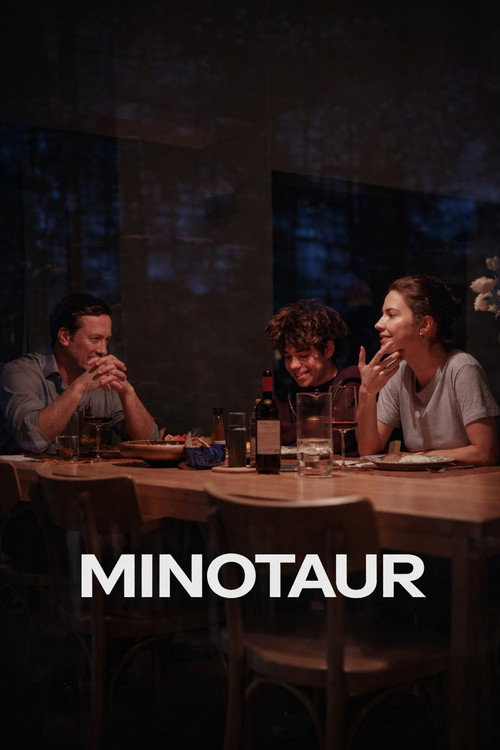
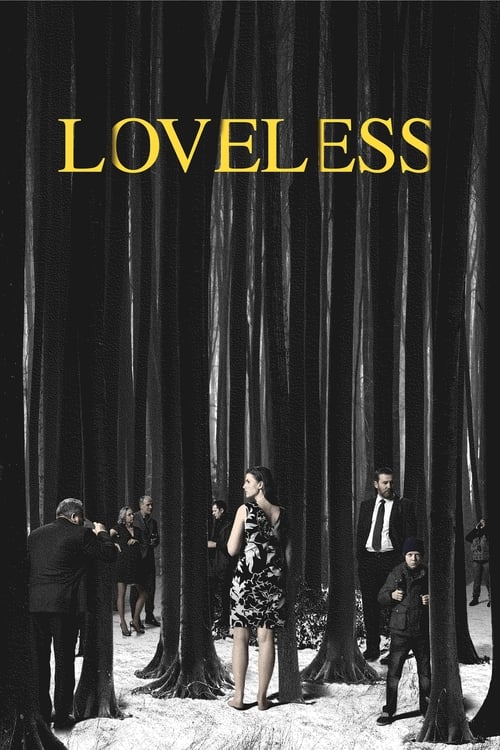
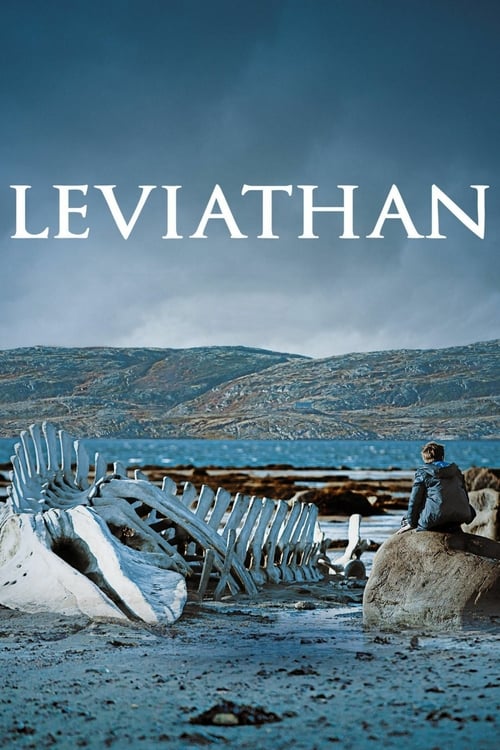
His debut film The Return (2003) won the Golden Lion at the Venice Film Festival. Leviathan (2014), Loveless (2017) and Minotaur (2026) won him the Best Screenplay, the Jury Prize and the Grand Prix at the Cannes Film Festival, respectively. Leviathan and Loveless were also nominated for the Academy Award for Best International Feature Film representing Russia.
Contents
Early years and education
Zvyagintsev was born in Novosibirsk, Siberia. At the age of 20 in 1984, he graduated from the theater school in Novosibirsk as an actor. From 1986 to 2022, he lived in Moscow, where he continued his studies at the Russian Institute of Theatre Arts until 1990. From 1992 to 2000, he worked as an actor for film and theater. In 2000, he began to work for the TV station REN TV and directed three episodes of the television series The Black Room.
Career
His directing debut feature film, The Return (2003), about two teenage boys and their estranged father, had its world premiere at the main competition of the 60th Venice International Film Festival, where it won the Golden Lion. It was nominated for the Golden Globe Award for Best Non-English Language Film. It was also selected as the Russian entry for the Best International Feature Film at the 76th Academy Awards, but was not nominated.
His second feature film, The Banishment (2007), had its world premiere at the main competition of the 2007 Cannes Film Festival, where it was nominated for the Palme d'Or and won the Best Actor award.
His 2011's Elena (2011), had its world premiere at the Un Certain Regard section of the 2011 Cannes Film Festival, where it won the Special Jury Prize. It also won the Grand Prix at Film Fest Gent.
His fourth feature film, Leviathan (2014), had its world premiere at the main competition of the 2014 Cannes Film Festival, where it was nominated for the Palme d'Or and won the Best Screenplay award. It was nominated for the Golden Globe Award for Best Non-English Language Film and the Academy Award for Best International Feature Film representing Russia. It also won the award for Best Film at the 8th Asia Pacific Screen Awards. In 2015, Zvyagintsev was a jury president of the 18th Shanghai International Film Festival.
His fifth feature film, Loveless (2017), had its world premiere at the main competition of the 2017 Cannes Film Festival, where it was nominated for the Palme d'Or and won the Jury Prize. It later won the Best Film at the 2017 London Film Festival, making him the second director to have won the award twice, having previously been honored for Leviathan. In November 2017, the film won three awards at The Golden Unicorn Awards in London: Best Film, Best Screenplay, Best Actress. It was also nominated for the Golden Globe Award for Best Non-English Language Film and the Academy Award for Best International Feature Film representing Russia. Zvyagintsev won the Achievement in Directing award at the 11th Asia Pacific Screen Awards for Loveless. In March 2018, it won the César Award for Best Foreign Film, making Zvyagintsev the first Russian director to win it. In 2018, Zvyagintsev was a jury member of the Cannes Film Festival.
Personal life
Andrei Zvyagintsev's first wife was the actress Irina Grinyova; the two divorced after six years of marriage. His second wife is the film editor Anna Matveeva. They have a son, Pyotr (born in 2009).
Zvyagintsev currently lives in exile in France since 2022. He is a vocal critic of the Russian invasion of Ukraine.
Illness and recovery
In June 2021, Zvyagintsev received the Sputnik V COVID-19 vaccine. He soon developed a high fever and was taken to a Moscow hospital, where he was admitted to intensive care. During his hospital stay he developed nosocomial sepsis from an antibiotic-resistant infection contracted while under Russian medical care. He was transferred to a German hospital, where he was placed into an artificial coma. After Zvyagintsev's coma was lifted he developed a polyneuropathy that caused him to lose the ability to walk. In addition to paraplegia, the director could neither sit up nor speak as his throat ligaments had been injured. At one point his lungs' capacity to exchange gasses had fallen by 92% and Zvyagintsev's circulatory system was diverted into an extracorporeal membrane oxygenation machine (ECMO). In all, Zvyagintsev was hospitalized for eleven months. He was discharged in May 2022 from a hospital in Wiesbaden, Germany.
Political beliefs
During the closing ceremony of the 2026 Cannes Film Festival, while accepting the second place prize for Minotaur which follows a Russian wealthy family during the beginning of the Russo-Ukrainian war in 2022, Zvyagintsev demanded directly to Russia's president Vladimir Putin to end “the butchery”, adding: “The only person who can stop this carnage is the President of the Russian Federation. Put an end to this slaughter; the whole world is waiting for it”.
In popular culture
In the Russian dark-comedy series The Last Minister (2020-2022), Alexander Gorchilin plays a fictional version of Zvyagintsev, who is kidnapped by a secret government agency and forced to make a sequel to Leviathan as part of a psyop to bolster Russia's reputation as world's bleakest and scariest country.
Filmography
Other credits
The Black Room (TV series, 2000)
New York, I Love You ("Apocrypha" segment, 2009) – segment cut from theatrical release
Experiment 5IVE ("Mystery" segment, 2011)