COVID-19 pandemic
According to The Washington Post, before the COVID-19 pandemic, Fauci was "mostly unknown outside the medical community". Fauci did not meet with Trump until three years after he was inaugurated as president. Fauci was a member of the White House Coronavirus Task Force established in late January 2020, under President Donald Trump, to deal with the COVID-19 pandemic. He was described as the administration's public health spokesperson during the pandemic, and a strong advocate for ongoing social distancing efforts in the United States. In interviews on January 21, January 26, and February 17, Fauci commented on COVID-19. He said that at the time of the interviews ("right now"), COVID-19 was not a "major threat" to the American public, with the risk to the American public being "low", but that it was "an evolving situation", and that "public health officials need to take [COVID-19] very seriously". In the latter interview, Fauci said that COVID-19 could become a "global pandemic which would then have significant implications for" the United States. In March 2020, he predicted that the infection fatality rate would likely be close to 1%, which was ten times more severe than the 0.1% reported rate for seasonal flu.
In a March 8, 2020, interview, Fauci stated that "right now in the United States, people [who are not infected] should not be walking around with masks", but "if you want to do it, that's fine". In the same interview, Fauci said that buying masks "could lead to a shortage of masks for the people who really need" them: "When you think masks, you should think of healthcare providers needing them". When Fauci made this comment, America's top surgical mask maker was struggling to produce enough masks to meet the increased demand. On April 3, the CDC reversed course, quoting recent studies that showed asymptomatic transmission of the virus, thus advocating for the public to wear non-surgical masks to reduce community transmission while Fauci advocated for wearing facial coverings in public. Fauci's shifting advice on wearing face masks drew criticism, which Fauci responded to by arguing that changes in policy were necessary as scientists learned more about COVID-19.
In mid-April, when asked about social distancing and stay-at-home measures, Fauci said that if the administration had "started mitigation earlier" more lives could have been saved, and "no one is going to deny that." He added that the decision-making for implementing mitigation measures was "complicated", and that "there was a lot of pushback about shutting things down back then." Fauci's comments were met with a hostile response from former Republican congressional candidate DeAnna Lorraine. Trump retweeted Lorraine's response, which included the call to "#FireFauci". "Fire Fauci" has also been chanted by anti-lockdown protesters in various locations, including Florida and Texas. As a result, the White House denied that Trump was firing Fauci, and blamed the media for overreacting.
Fauci was criticized by right-wing pundits and received death threats that necessitated a security detail. In an interview with 60 Minutes in 2020, he mentioned that other members of his family, including his wife and daughters, had been repeatedly harassed since the pandemic began. In June 2020, Fauci said that he was "very concerned" that the ongoing protests against police brutality would cause "surges" in COVID-19 cases, stating that the "large crowds" are a "perfect set-up" for the virus to spread. In July 2020, Fauci advised the public to "avoid crowds of any type".
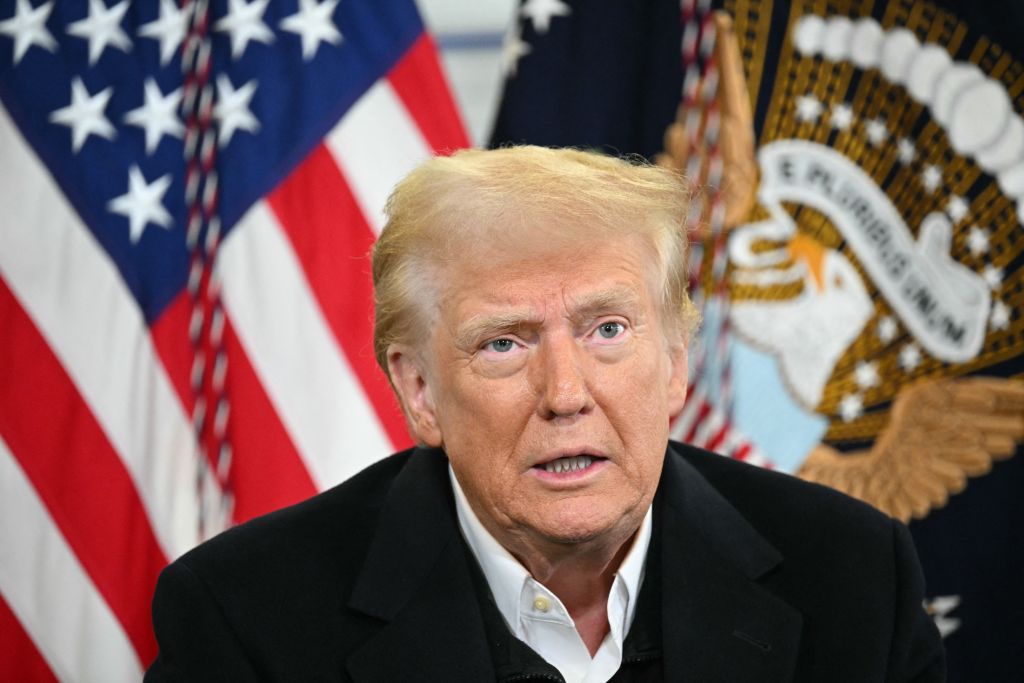
On July 6, 2020, Fauci spoke on a Facebook livestream, offering his opinion that the country's situation regarding COVID-19 "is really not good", pointing to more than 55,000 new cases on July 4, 2020. He said the United States was "still knee-deep in the first wave" of cases, and was experiencing a "resurgence of infections". On July 7, 2020, during a press conference, Fauci stated that it was a "false narrative to take comfort in a lower rate of death" for COVID-19 in the country: "There's so many other things that are very dangerous and bad about this virus, don't get yourself into false complacency." Both Trump and the White House had cited the falling death rate as proof of success of the Trump administration's response. After this appearance by Fauci, the White House canceled three media appearances that had been scheduled for him later that week. On July 7, 2020, Trump contradicted Fauci's comments describing a dire situation in the country, with Trump saying: "I think we are in a good place. I disagree with [Fauci]." While there were disagreements, Trump also at times praised Fauci.
On July 9, 2020, Trump publicly opined that Fauci "is a nice man, but he's made a lot of mistakes." By July 12, 2020, a White House official told media outlets that "several White House officials are concerned about the number of times Dr. Fauci has been wrong on things", passing to the media a list of purported mistakes made by Fauci during the outbreak. Included were statements Fauci made during a February 29, 2020, interview where he stated that "at this moment, there is no need to change anything that you're doing on a day-by-day basis." However, the White House list neglected to mention that in that same interview, Fauci had stated that the risk could change, "when you start to see community spread", and that the disease could morph into "a major outbreak" in the country.
As late as September 23, 2020, when U.S. coronavirus fatalities exceeded 200,000, conservatives continued to question Fauci's and the Centers for Disease Control and Prevention's (CDC) recommendations for responding to the pandemic. In a hearing before the Senate's Health, Education, Labor, and Pensions Committee, Kentucky's Senator Rand Paul asked him if he had "second thoughts" about his mitigation recommendations, including keeping six feet of distance from others and mask-wearing, claiming, "our death rate is essentially worse than Sweden's." Fauci stood by the guidelines, indicating Sweden's fatality rate exceeded those of other Scandinavian countries, and said the comparison between Sweden and the U.S. was not legitimate. Fauci said the recommendations remained valid. After Paul then asserted New York's high fatality rate showed that mitigation efforts were insufficient, Fauci replied, "You've misconstrued that, Senator, and you've done that repetitively in the past." Fauci explained further that New York State had succeeded in getting the virus under control by following the CDC's clinical guidelines. Paul had made numerous claims about herd immunity, Sweden's interventions to combat the pandemic, the contention that the populations of Asian countries have greater resilience against COVID-19, and statements about death rates due to the virus. Fauci would have several intense exchanges with Paul.
In October 2020, Fauci objected after his words, "I can't imagine that anybody could be doing more" were featured in an advertisement from the Trump campaign touting Trump's handling of the pandemic. Fauci said he did not consent to the ad, his words were taken out of context (he was actually referring to how hard the Coronavirus Task Force was working), and he had never made a political endorsement in his career. Also in October, Fauci criticized the Great Barrington Declaration's "focused protection" herd immunity strategy, calling it "total nonsense" and saying that it would lead to many avoidable deaths. Fauci said that 30 percent of the population had underlying health conditions that made them vulnerable to the virus and that "older adults, even those who are otherwise healthy, are far more likely than young adults to become seriously ill if they get COVID-19." He added, "This idea that we have the power to protect the vulnerable is total nonsense because history has shown that that's not the case. And if you talk to anybody who has any experience in epidemiology and infectious diseases, they will tell you that that is risky, and you'll wind up with many more infections of vulnerable people, which will lead to hospitalizations and deaths. So I think that we just got to look that square in the eye and say it's nonsense."
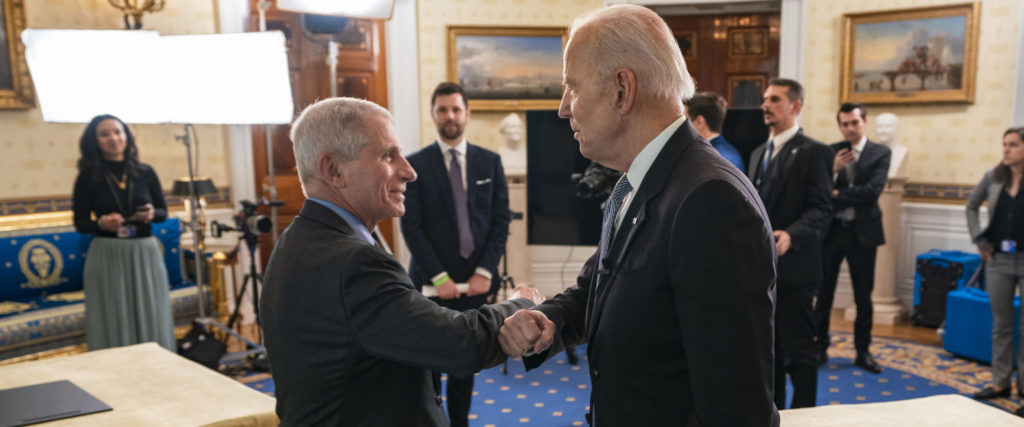
On October 18, 2020, Fauci mentioned that he "wasn't surprised" that Donald Trump contracted COVID-19. The next day, during a presidential call, Trump called Fauci "a disaster" and said that "people are tired of COVID." During a campaign rally in Phoenix, Arizona, on October 19, Trump launched attacks on his political rival Joe Biden, saying that Biden "wants to listen to Dr. Fauci" regarding the handling of the pandemic, upon which Biden merely replied "Yes" on Twitter. On October 31, The Washington Post published an extensive interview with Fauci, in which he voiced a candid assessment of the administration's COVID-19 policies and was critical of the influence of presidential advisor Scott Atlas.
Shortly after midnight on November 2, 2020, Trump insinuated he would fire Fauci "after the election" while on stage at a campaign rally at Miami-Opa Locka Executive Airport in Opa-locka, Florida. At the rally, he made false claims that the pandemic was "rounding the turn" and was met by audience chants of "Fire Fauci!", to which he responded, "Don't tell anybody, but let me wait until after the election ... I appreciate the advice." Despite the rhetoric, Fauci was not fired. On December 2, the United Kingdom became the first Western country to license a vaccine against the coronavirus (Pfizer-BioNTech). In response, Fauci said that the U.S. Food and Drug Administration (FDA) was proceeding "the correct way" and said the UK "really rushed through that approval". The next day Fauci apologized, telling the BBC "I have a great deal of confidence in what the UK does both scientifically and from a regulator standpoint. Our process is one that takes more time than it takes in the UK ... I did not mean to imply any sloppiness even though it came out that way."
On January 3, 2021, President Trump tweeted, "The number of cases and deaths of the China Virus is far exaggerated in the United States because of [the CDC's] ridiculous method of determination compared to other countries". That same morning, Fauci responded in an interview on NBC's Meet the Press, "The numbers are real. We have well over 300,000 deaths. We are averaging two- to three thousand deaths per day. All you need to do ... is go into the trenches, go into the hospitals, go into the intensive care units and see what is happening. Those are real numbers, real people, and real deaths." When asked if the 2021 United States Capitol attack was a COVID-19 superspreader event, Fauci stated: "I think for those people there, they probably put themselves at an increased risk because they essentially did not adhere to the fundamentals of public health and COVID-19 context which is universal wearing of masks, keeping physical distance, avoiding crowds in congregate settings. The fact that it was outdoors is a little bit better than if they were indoors completely. But you can still have a super spreader situation when you do things in a crowded way." On January 23, 2021, Fauci was quoted saying that letting the science speak on the pandemic got him "into a little bit of trouble" and got "push-back from people in the White House, including the president", during the Trump administration. Fauci was also reportedly blocked from appearing on The Rachel Maddow Show for some time because the Trump administration "didn't like the way [Maddow handles] things and they didn't want me on [the show]."