Career
Minghella's debut work was a stage adaptation of Gabriel Josipovici's Mobius the Stripper (1975) and it was his Whale Music (1985) that brought him notice. His double bill of Samuel Beckett's Play and Happy Days was his directorial debut and debut feature film as a director was A Little Like Drowning (1978). During the 1980s, he worked in television, starting as a runner on Magpie before moving into script editing the children's drama series Grange Hill for the BBC and later writing The Storyteller series for Jim Henson. He wrote three episodes of the ITV detective drama Inspector Morse and an episode of long-running ITV drama Boon. Made in Bangkok (1986) found mainstream success in the West End.
Radio success followed with a Giles Cooper Award for the radio drama Cigarettes and Chocolate first broadcast on BBC Radio 4 in 1988. It was revived on 3 May 2008 as a tribute to its author director following his death. His production starred Juliet Stevenson, Bill Nighy and Jenny Howe. His first radio play Hang Up, starring Anton Lesser and Juliet Stevenson, was revived on 10 May 2008 as part of the BBC Radio 4 Minghella season.
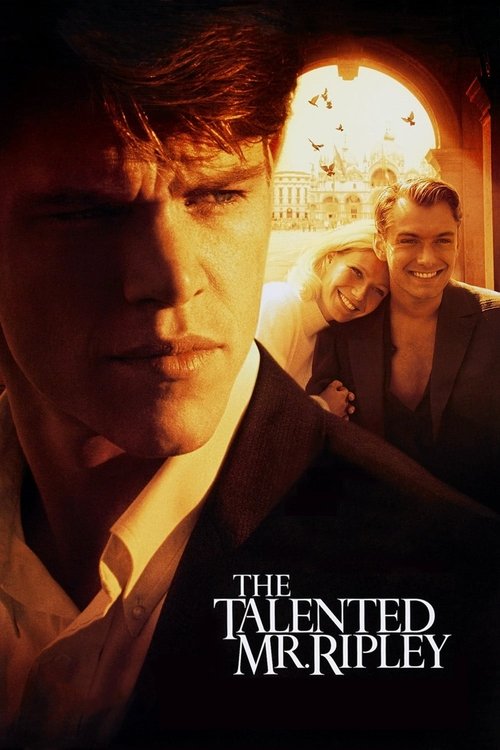
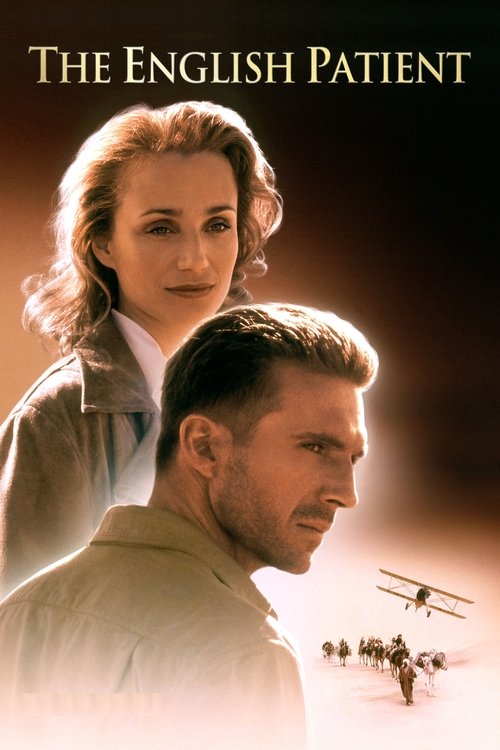
Truly, Madly, Deeply (1990), a feature drama written and directed for the BBC's Screen Two anthology strand, bypassed TV broadcast and instead had a cinema release. He turned down an offer to direct another Inspector Morse to do the project, even though he believed that the Morse episode would have been a much higher-profile assignment. The English Patient (1996) brought him two Academy Awards nominations, Best Director (which he won) and Adapted Screenplay. He also received an Adapted Screenplay nomination for The Talented Mr. Ripley (1999).
His adaptation of The No. 1 Ladies' Detective Agency, which he co-wrote and directed, was broadcast posthumously on BBC One (23 March 2008) as a TV movie; watched by 6.3 million viewers. He vocally supported I Know I'm Not Alone, a film of musician Michael Franti's peacemaking excursions into Iraq, Palestine and Israel. He directed a party election broadcast for the Labour Party in 2005. The short film depicted Tony Blair and Gordon Brown working together and was criticised for being insincere: "The Anthony Minghella party political broadcast last year was full of body language fibs", said Peter Collett, a psychologist at the University of Oxford. "When you are talking to me, I'll give you my full attention only if I think you are very high status or if I love you. On that party political broadcast, they are staring at each other like lovers. It is completely false."
With Samuel Beckett's 100th birthday celebrations, he returned to radio on BBC Radio 3 with Eyes Down Looking (2006), with: Jude Law, Juliet Stevenson and David Threlfall. An operatic directorial debut came with Puccini's Madama Butterfly. Premiered at the English National Opera (London, 2005), then at the Lithuanian National Opera and Ballet Theatre (Vilnius, March 2006) and at the Metropolitan Opera (New York City, September 2006). The latter was transmitted live into cinemas worldwide (7 March 2009) as part of the Met's HD series and is now available on DVD. The ENO work was to have led to other operatic projects, directing again at English National Opera and collaborating with Osvaldo Golijov on a new opera for the Met and ENO, writing the libretto and directing the production.
He was honoured with the naming of The Anthony Minghella Theatre at the Quay Arts Centre (Isle of Wight). He made an appearance in the 2007 film Atonement as a television host interviewing the novelist central to the story.
His last work was the screenplay of the film adaptation of the Tony Award-winning musical Nine (1982); Arthur Kopit (book) and Maury Yeston (score). It is based on the film 8½. He shared credit with Michael Tolkin on the screenplay.
The department of Film, Theatre & Television at the University of Reading, opened in 2012, was named in his honour.