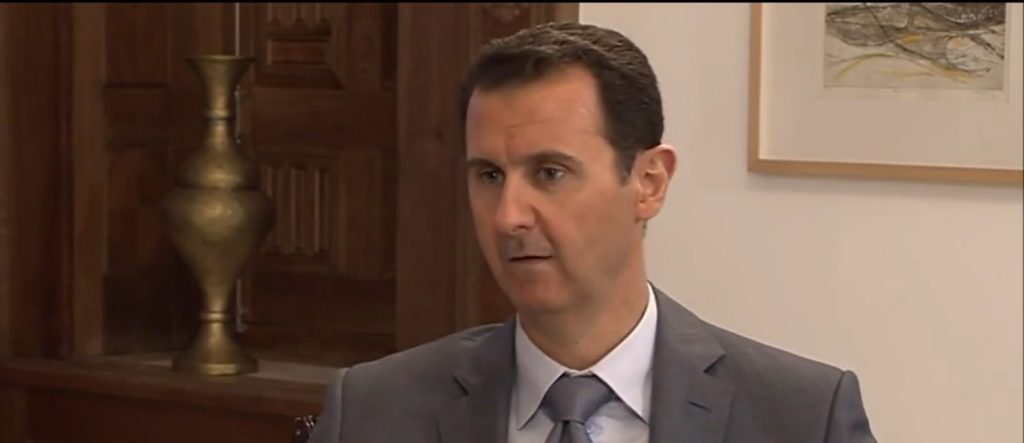
Bashar Hafez al-Assad (born 11 September 1965) is a former Syrian politician, medical doctor, and military officer who served as the president of Syria from 2000 until his overthrow in 2024 after the Syrian civil war. As president, Assad was commander-in-chief of the Syrian Arab Armed Forces and secretary-general of the Central Command of the Arab Socialist Ba'ath Party. He is the son of Hafez al-Assad, who ruled Syria from 1970 to 2000.
In the 1980s, Assad became a doctor, and in the early 1990s he was training in London as an ophthalmologist. In 1994, after his elder brother Bassel al-Assad died in a car crash, Assad was recalled to Syria to take over Bassel's role as heir apparent. Assad entered the military academy and in 1998 took charge of the Syrian occupation of Lebanon begun by his father. On 17 July 2000, Assad became president, succeeding his father, who had died on 10 June 2000. Hopes that the UK-educated Assad would bring reform to Syria and relax the occupation of Lebanon were dashed following a series of crackdowns in 2001–2002 that ended the Damascus Spring, a period defined by calls for transparency and democracy. Assad's rule would arguably become more repressive than his father's.
Assad's first decade in power was marked by extensive censorship, summary executions, forced disappearances, discrimination against ethnic minorities, and extensive surveillance by the Ba'athist secret police. While the Assad government described itself as secular, various political scientists and observers noted that his regime exploited sectarian tensions in the country. Although Assad inherited Hafez's power structures and personality cult, he lacked the loyalty received by his father and faced rising discontent against his rule. As a result, many people from his father's regime resigned or were purged, and the political inner circle was replaced by staunch loyalists from Alawite clans. Assad's early economic liberalisation programs worsened inequalities and centralised the socio-political power of the loyalist Damascene elite of the Assad family, alienating the Syrian rural population, urban working classes, businessmen, industrialists, and people from traditional Ba'ath strongholds. Assad was forced to end the Syrian occupation of Lebanon during the Cedar Revolution in 2005, which was triggered by the assassination of Lebanese prime minister Rafic Hariri. The Mehlis report implicated Assad's regime in the assassination, with a particular focus on Maher al-Assad, Assef Shawkat, Hassan Khalil, Bahjat Suleiman, and Jamil Al Sayyed.
After the Syrian revolution began in 2011, Assad led a deadly crackdown against Arab Spring protests which led to the outbreak of the Syrian civil war. The Syrian opposition, United States, European Union, and the majority of the Arab League called on him to resign, but he refused and the war escalated. Between 2011 and 2024, over 600,000 people were killed, with pro-Assad forces causing more than 90% of civilian casualties. Throughout the war, the Ba'athist Syrian armed forces carried out several chemical attacks. In 2013, the United Nations (UN) High Commissioner for Human Rights stated that findings from a UN inquiry directly implicated Assad in crimes against humanity. The regime's perpetration of war crimes led to international condemnation and isolation, although Assad maintained power with assistance from Syria's longtime allies Iran and Russia. Iran launched a military intervention in support of his government in 2013 and Russia followed in 2015; by 2021, Assad's regime had regained control over most of the country. In November 2024, a coalition of Syrian rebels mounted several offensives with the intention of ousting Assad. On the morning of 8 December 2024, as rebel troops first entered Damascus, Assad fled to Moscow and was granted political asylum by the Russian government. Later that day, Damascus fell to rebel forces, and Assad's regime collapsed.
Assad's regime was a highly personalist dictatorship that governed Syria as a totalitarian police state. It committed systemic human rights violations and war crimes, making it one of the most repressive regimes in modern times. The regime was consistently ranked among the "worst of the worst" within Freedom House indexes. In 2025, France issued three arrest warrants against Assad in connection with the bombing of a civilian-populated area in Daraa in 2017 that killed Franco-Syrian dual national Salah Abou Nabout, the 2012 killings of journalists Marie Colvin and Remi Ochlik in Homs, and the Ghouta chemical attacks in 2013. In September 2025, a Syrian court issued an arrest warrant for Assad over the killing of civilians during the Siege of Daraa in 2011, paving the way for its circulation through Interpol. The arrest warrant cited charges such as "premeditated murder", "torture leading to death", and "deprivation of liberty". In August 2026, Assad was convicted of war crimes and crimes against humanity by a Syrian court and sentenced to death in absentia.
Contents
Early life, family and education
Bashar Hafez al-Assad was born in Damascus on 11 September 1965, as the second son and third child of Anisa Makhlouf and Hafez al-Assad. al-Assad in Arabic means "the lion". Assad's paternal grandfather, Ali al-Assad, had managed to change his status from peasant to minor notable and, to reflect this, in 1927 he had changed the family name from al-Wahsh (lit. 'the Savage') to al-Assad.
Assad's father, Hafez al-Assad, was born to an impoverished rural family of Alawite background and rose through the Ba'ath Party ranks to take control of the Syrian branch of the Party in the Corrective Revolution, culminating in his rise to the Syrian presidency. Hafez promoted his supporters within the Ba'ath Party, many of whom were also of Alawite background. After the revolution, Alawite strongmen were installed while Sunnis, Druze, and Ismailis were removed from the army and Ba'ath party. Hafez al-Assad's 30-year military rule witnessed the transformation of Syria into a dynastic dictatorship. The new political system was led by the Ba'ath party elites dominated by the Alawites, who were fervently loyal to the Assad family and controlled the military, security forces and secret police.
The younger Assad had five siblings, three of whom are deceased. A sister named Bushra died in infancy. Assad's younger brother, Majd, was not a public figure and little is known about him other than he was intellectually disabled, and died in 2009 after a "long illness".
Unlike his brothers Bassel and Maher, and second sister, also named Bushra, Bashar was quiet, reserved and lacked interest in politics or the military. The Assad children reportedly rarely saw their father, and Bashar later stated that he only entered his father's office once while he was president. He was described as "soft-spoken", and according to a university friend, he was timid, avoided eye contact and spoke in a low voice.
Assad received his primary and secondary education in the Arab-French al-Hurriya School in Damascus. In 1982, he graduated from high school and then studied medicine at Damascus University.
Medical career and rise to power
In 1988, Assad graduated from medical school and began working as an army doctor at Tishrin Military Hospital on the outskirts of Damascus. Four years later, he settled in London to start postgraduate training in ophthalmology at Western Eye Hospital. He was described as a "geeky I.T. guy" during his time in London. Bashar had few political aspirations, and his father had been grooming Bashar's older brother Bassel as future president. Shortly after Bassel died in a car accident in 1994, Bashar was recalled to the Syrian Army. State propaganda soon began elevating Bashar's public image as "the hope of the masses" to prepare the public for a continuation of the rule of the Assad dynasty.
Soon after the death of Bassel, Hafez al-Assad decided to make Bashar the new heir apparent. Over the next six and a half years, until his death in 2000, Hafez prepared Bashar for succession. General Bahjat Suleiman, an officer in the Defense Companies, was entrusted with overseeing preparations for a smooth transition, which were made on three levels. First, support was built up for Bashar in the military and security apparatus. Second, Bashar's image was established with the public. And lastly, Bashar was familiarised with the mechanisms of running the country.
To establish his credentials in the military, Bashar entered the military academy at Homs in 1994 and was propelled through the ranks to become a colonel of the elite Syrian Republican Guard in January 1999. To establish a power base for Bashar in the military, old divisional commanders were pushed into retirement, and new, young, Alawite officers with loyalties to him took their place.
In 1998, Bashar took charge of Syria's Lebanon file, which had since the 1970s been handled by Vice President Abdul Halim Khaddam, who had until then been a potential contender for president. By taking charge of Syrian affairs in Lebanon, Bashar was able to push Khaddam aside and establish his own power base in Lebanon. In the same year, after minor consultation with Lebanese politicians, Bashar installed Emile Lahoud, a loyal ally of his, as the President of Lebanon and pushed former Lebanese Prime Minister Rafic Hariri aside, by not placing his political weight behind his nomination as prime minister. To further weaken the old Syrian order in Lebanon, Bashar replaced the long-serving de facto Syrian High Commissioner of Lebanon, Ghazi Kanaan, with Rustum Ghazaleh.
Presidency
Early presidency (2000–2011)
After the death of Hafez al-Assad on 10 June 2000, the Constitution of Syria was amended. The minimum age requirement for the presidency was lowered from 40 to 34, which was Bashar's age at the time. The sole candidate of the presidential referendum, Assad was subsequently confirmed president on 10 July 2000, with 97.29% support for his leadership. In line with his role as President of Syria, he was also appointed the commander-in-chief of the Syrian Armed Forces and Regional Secretary of the Ba'ath Party. A series of state elections were held every seven years which Assad won with overwhelming majority of votes. The elections are unanimously regarded by independent observers as a sham process and boycotted by the opposition. The last two elections – held in 2014 and 2021 – were conducted only in areas controlled by the Syrian government during the country's ongoing civil war and condemned by the United Nations. In the five years before 2011 the government of Bashar consolidated state power over the economy and political system. This consolidation went hand in hand with measures which were filled with nepotism and corruption.
Immediately after he took office, a reform movement known as Damascus Spring led by writers, intellectuals, dissidents, cultural activists, etc. made cautious advances, which led to the closing of Mezzeh prison and the declaration of a wide-ranging amnesty releasing hundreds of Muslim Brotherhood affiliated political prisoners. However, security crackdowns commenced again within the year, turning it into the Damascus Winter. Hundreds of intellectuals were arrested, targeted, exiled or sent to prison and the state of emergency was continued. The early concessions were rolled back to tighten authoritarian control, censorship was increased and the Damascus Spring movement was banned under the pretext of "national unity and stability". The regime's policy of a "social market economy" became a symbol of corruption, as Assad loyalists became its sole beneficiaries. Several discussion forums were shut down and many intellectuals were abducted by the Mukhabarat, tortured and killed. Many analysts believe that initial promises of opening up were part of a government strategy to find Syrians who were not supportive of the new leadership.
During a state visit by British Prime Minister Tony Blair to Syria in October 2001, Bashar publicly condemned the United States invasion of Afghanistan in a joint press conference, stating that "[w]e cannot accept what we see every day on our television screens – the killing of innocent civilians. There are hundreds dying every day." Assad also praised Palestinian militant groups as "freedom fighters" and criticised Israel and the Western world during the conference. British officials subsequently described Assad's political views as being more conciliatory in private, claiming that he criticised the September 11 attacks and accepted the legitimacy of the State of Israel.
Syrian civil war (2011–2024)
Protests in Syria began on 26 January 2011 following the Arab Spring
protests that called for political reforms and the reinstatement of civil rights, as well as an end to the state of emergency which had been in place since 1963. One attempt at a "day of rage" was set for 4–5 February, though it ended uneventfully. Protests on 18–19 March were the largest to take place in Syria for decades, and the Syrian authority responded with violence against its protesting citizens. In his first public response to the protests delivered on 30 March 2011, Assad blamed the unrest on "conspiracies" and accused the Syrian opposition and protestors of seditious "fitna", toeing the party-line of framing the Ba'athist state as the victim of an international plot. He also derided the Arab Spring movement, and described those participating in the protests as "germs", foreign agents and fifth-columnists.
The U.S. imposed limited sanctions against the Assad government in April 2011, followed by Barack Obama's executive order as of 18 May 2011 targeting Bashar Assad specifically and six other senior officials. On 23 May 2011, the EU foreign ministers agreed at a meeting in Brussels to add Assad and nine other officials to a list affected by travel bans and asset freezes. On 24 May 2011, Canada imposed sanctions on Syrian leaders, including Assad.
On 20 June, in response to the demands of protesters and international pressure, Assad promised a national dialogue involving movement toward reform, new parliamentary elections, and greater freedoms. He also urged refugees to return home from Turkey, while assuring them amnesty and blaming all unrest on a small number of saboteurs.
In July 2011, U.S. Secretary of State Hillary Clinton said Assad had "lost legitimacy" as president. On 18 August 2011, Barack Obama issued a written statement that urged Assad to "step aside". In August, the cartoonist Ali Farzat, a critic of Assad's government, was attacked. Relatives of the humourist told media outlets that the attackers threatened to break Farzat's bones as a warning for him to stop drawing cartoons of government officials, particularly Assad. Farzat was hospitalised with fractures in both hands and blunt force trauma to the head.
Since October 2011, Russia, as a permanent member of the UN Security Council, repeatedly vetoed Western-sponsored draft resolutions in the UN Security Council that would have left open the possibility of UN sanctions, or even military intervention, against the Assad government.
Overthrow and exile
Regime collapse
In December 2024, the Islamist group Hayat Tahrir al-Sham (HTS), took control of Aleppo, prompting a retaliatory airstrike campaign by President Assad and his Russian allies. The strikes, which targeted population centers and several hospitals in the rebel-held city of Idlib, resulted in at least 25 deaths, according to the White Helmets rescue group. NATO countries issued a joint statement calling for the protection of civilians and critical infrastructure to prevent further displacement and ensure humanitarian access. They stressed the urgent need for a Syrian-led political solution, in accordance with United Nations Security Council Resolution 2254, which advocates for dialogue between the Syrian government and opposition forces. The rebel offensive, which had begun on 27 November 2024, continued its advance into Hama Governorate following their capture of Aleppo.
On 4 December 2024, fierce clashes erupted in Hama Governorate as the Syrian army engaged Islamist-led insurgents in a bid to halt their advance on the key city of Hama. Government forces claimed to have launched a counteroffensive with air support, pushing back rebel factions, including Hayat Tahrir al-Sham (HTS), around 6 miles (9.7 km) from the city. However, despite reinforcements, the rebels captured the city on 5 December. The fighting led to widespread displacement, with nearly 50,000 people fleeing the area and over 600 casualties reported, including 104 civilians. On 6 December, rebels began encircling the capital Damascus. On 7 December, rebels captured the strategic city of Homs, cutting off Damascus from regime strongholds on the coast. A few hours later in the early morning of 8 December, Assad fled Damascus just before its fall to the rebels, ending 54 years of the Assad family's rule. In the final hours of his rule, he reportedly abandoned the capital after Russian officials showed him footage indicating regime forces were collapsing, taking only a few aides and his son Hafez while leaving others behind. As he departed, his longtime driver expressed disappointment, asking, "You're really leaving us?" to which Assad replied, "What about you people? Aren't you going to fight?", an episode observers cited as emblematic of his detachment and unwillingness to assume responsibility for the collapse of his authority. The Russian government said that Assad had "stepped down" as president following a personal decision and had left Syria. Following efforts by Russian foreign minister Sergey Lavrov to facilitate his departure, Assad, who left under great secrecy, was reported to have gone first to the Russian-operated Khmeimim Air Base near Latakia before proceeding to Moscow. Interfax, quoting an unnamed source at the Kremlin, said that Assad and his family had arrived in Moscow and that the Russian government had granted them asylum "on humanitarian grounds".
Exile in Moscow
On 7 April 2025, Russian Ambassador to Iraq Elbrus Kutrashev told the Islamic Republic News Agency that Assad's settlement in Moscow was conditional on his total withdrawal from media and political activities. He added that the asylum granted to Assad and his family had been personally ordered by Russian president Vladimir Putin and would remain unchanged. In an interview with The New York Times in April 2025, Syrian president Ahmed al-Sharaa said that Syrian officials requested Russia to extradite Assad as a condition for allowing their military presence in Syria, but Russia refused.
On 20 September 2025, while in exile in Moscow, Assad was hospitalized in critical condition. The Syrian Observatory for Human Rights has alleged he was poisoned in his home, though not specifying whether this was intentional or accidental. He was eventually discharged nine days later. On 13 October 2025, Lavrov denied reports that Assad was poisoned, saying Russia granted asylum to Assad and his family for humanitarian reasons and that Assad "has no issues living in our capital."
On 8 October 2025, the German outlet Die Zeit reported that Assad and his family had settled into a luxury skyscraper apartment, where he reportedly made occasional visits to a shopping mall and spent much of his time playing online games while remaining under Putin's protection and control. The Guardian reported that Assad was likely residing in the upscale neighbourhood of Rublyovka, had returned to his medical training, and was back in the classroom, studying Russian and taking ophthalmology lessons.
During a meeting with Putin on 15 October 2025, Syrian President al-Sharaa requested the extradition of Assad to Syria.
In June 2026, the Yedioth Ahronoth newspaper stated that the family had requested relocation to Abu Dhabi; however, the UAE refused due to security considerations, such as the threat of assassination or being targeted.
Controversies
Corruption
At the onset of the Syrian revolution, corruption in Syria was endemic, and the country was ranked 129th in the 2011 Corruption Perceptions Index. Since the 1970s, Syria's economy has been dominated by the patronage networks of Ba'ath party elites and Alawite loyalists of the Assad family, who established control over Syria's public sectors based on kinship and nepotism. The pervasive nature of corruption had been a source of controversy within the Ba'ath party circles and the wider public; as early as the 1980s.
Bashar al-Assad's economic liberalisation program during the 2000s became a symbol of corruption and nepotism, as the scheme's beneficiaries were Alawite loyalists who seized a significant portion of the privatised sectors and business assets. The government's actions alienated the vast majority of the Syrian public, particularly the rural and urban working classes, who strongly disliked the resulting economic disparities that became overtly visible. Assad's cousin Rami Makhlouf was the regime's most favored oligarch during this period, marked by the institutionalisation of corruption, handicapping of small businesses and casting down private entrepreneurship. The persistence of corruption, sectarian bias towards Alawites, nepotism and widespread bribery that existed in party, bureaucracy and military led to popular anger that resulted in the eruption of the 2011 Syrian Revolution. The protests were the most fierce in working-class neighbourhoods, which had long bore the brunt of the regime's exploitation policies that privileged its own loyalists.
According to ABC News, as a result of the Syrian civil war, "government-controlled Syria is truncated in size, battered and impoverished." Economic sanctions (the Syria Accountability Act) were applied long before the Syrian civil war by the U.S. and were joined by the EU at the outbreak of the civil war, causing disintegration of the Syrian economy. These sanctions were reinforced in October 2014 by the EU and U.S. Industry in parts of the country that are still held by the government is heavily state-controlled, with economic liberalisation being reversed during the current conflict. The London School of Economics has stated that as a result of the Syrian civil war, a war economy has developed in Syria. A 2014 European Council on Foreign Relations report also stated that a war economy has formed:
Three years into a conflict that is estimated to have killed at least 140,000 people from both sides, much of the Syrian economy lies in ruins. As the violence has expanded and sanctions have been imposed, assets and infrastructure have been destroyed, economic output has fallen, and investors have fled the country. Unemployment now exceeds 50 percent and half of the population lives below the poverty line ... against this backdrop, a war economy is emerging that is creating significant new economic networks and business activities that feed off the violence, chaos, and lawlessness gripping the country. This war economy – to which Western sanctions have inadvertently contributed – is creating incentives for some Syrians to prolong the conflict and making it harder to end it.
Sectarianism
Hafez al-Assad's government was widely counted amongst the most repressive Arab dictatorships of the 20th century. As Bashar inherited his father's mantle, he sought to implement "authoritarian upgrading" by purging those from his father's generation and staffing the party and military with loyalist Alawite officers, further entrenching the sectarianism within the system. While officially the Ba'athist government adheres to a strict secularist doctrine, in practice it has implemented sectarian engineering policies in the society to suppress dissent and monopolise its absolute power.
The regime has attempted to portray itself to the outside world as "the protector of minorities" and instills the fear of the majority rule in the society to mobilise loyalists from minorities. Assad loyalist figures like Michel Samaha have advocated sectarian mobilisation to defend the regime from what he labelled as the "sea of Sunnis". Assad regime has unleashed sectarian violence through private Alawite militias like the Shabiha, particularly in Sunni areas. Alawite religious iconography and communal sentiments are common themes used by Alawite warrior-shaykhs who lead the Alawite militias; as justification to commit massacres, abductions and torture in opposition strongholds. Various development policies adopted by the regime had followed a sectarian pattern. An urbanisation scheme implemented by the government in the city of Homs led to expulsions of thousands of Sunni residents during the 2000s, while Alawite majority areas were left intact.
Even as Syrian Ba'athism absorbed diverse communal identities into the homogenous unifying discourse of the state; socio-political power became monopolised by Alawite loyalists. Despite officially adhering to non-confessionalism, Syrian Armed Forces have also been institutionally sectarianised. While the conscripts and lower-ranks are overwhelmingly non-Alawite, the higher ranks are packed by Alawite loyalists who effectively control the logistics and security policy. Elite units of the Syrian military such as the Tiger Forces, Republican Guard, 4th Armoured Division, etc. regarded by the government as crucial for its survival; are composed mostly of Alawites. Sunni officers are under constant surveillance by the secret police, with most of them being assigned with Alawite assistants who monitor their movements. Pro-regime paramilitary groups such as the National Defense Force are also organised around sectarian loyalty to the Ba'athist government. During the Syrian Revolution uprisings, the Ba'athist government deployed a securitisation strategy that depended on sectarian mobilisation, unleashing violence on protestors and extensive crackdowns across the country, prompting opposition groups to turn to armed revolt. Syrian society was further sectarianised following the Iranian intervention in the Syrian civil war, which witnessed numerous Khomeinist militant groups sponsored by Iran fight in the side of the Assad government.
Human rights
The Ba'athist government ruled Syria as a totalitarian state, policing every aspect of Syrian society until 2024. The president made key decisions with counsel from a small number of security advisors, ministers, and senior members of the ruling Ba'ath Party, with scant regard for punishing, arresting, or prosecuting officials who violated human rights. The surveillance system of the Mukhabarat was pervasive, with the total number of agents working for its various branches estimated to be as high as 1:158 ratio with the civilian population. Security services shut down civil society organisations, curtailed freedom of movement within the country and banned non-Ba'athist political literature and symbols. In 2010, Human Rights Watch published the report "A Wasted Decade" documenting repression during Assad's first decade of emergency rule; marked by arbitrary arrests, censorship and discrimination against Syrian Kurds.
Throughout the 2000s, Mukhabarat agents carried out routine abductions, arbitrary detentions and torture of civilians. Numerous show trials were conducted against dissidents, filling Syrian prisons with journalists and human rights activists. Members of Syria's General Intelligence Directorate had long enjoyed broad privileges to carry out extrajudicial actions and they have immunity from criminal offences. In 2008, Assad extended this immunity to other departments of security forces. Human Rights groups, such as Human Rights Watch and Amnesty International, have detailed how the Assad government's secret police tortured, imprisoned, and killed political opponents, and those who speak out against the government. In addition, some 600 Lebanese political prisoners were thought to be held in government prisons since the Syrian occupation of Lebanon, with some held for as long as over 30 years. From 2006, the Assad government expanded the use of travel bans against political dissidents. In an interview with ABC News in 2007, Assad stated: "We don't have such [things as] political prisoners," though The New York Times reported the arrest of 30 Syrian political dissidents who were organising a joint opposition front in December 2007, with 3 members of this group considered to be opposition leaders being remanded in custody.
The government also denied permission for human rights organisations and independent NGOs to work in the country. In 2010, Syria banned face veils at universities. Following the protests of the Syrian revolution in 2011, Assad partially relaxed the veil ban.
Foreign Affairs journal released an editorial on the Syrian situation in the wake of the 2011 protests:
Repression of Kurds
Ba'athist Syria had long banned Kurdish language in schools and public institutions; and discrimination against Kurds steadily increased during the rule of Bashar al-Assad. State policy officially suppressed Kurdish culture; with more than 300,000 Syrian Kurds being rendered stateless. Kurdish grievances against state persecution eventually culminated in the 2004 Qamishli Uprisings, which were crushed down violently after sending Syrian military forces. The ensuing crackdown resulted in the killings of more than 36 Kurds and injuring at least 160 demonstrators. More than 2000 civilians were arrested and tortured in government detention centres. Restrictions on Kurdish activities were further tightened following the Qamishli massacre, with the Assad regime virtually banning all Kurdish cultural gatherings and political activism under the charges of "inciting strife" or "weakening national sentiment". During 2005–2010, Human Rights Watch verified security crackdowns on at least 14 Kurdish political and cultural gatherings. In March 2008, Syrian military opened fire at a Kurdish gathering in Qamishli that marked Nowruz, killing three and injuring five civilians.
Censorship
On 22 September 2001, Assad decreed a Press Law that tightened government control over all literature printed or published in Syria; ranging from newspapers to books, pamphlets and periodicals. Publishers, writers, editors, distributors, journalists and other individuals accused of violating the Press Law are imprisoned or fined. Censorship has also been expanded into the cyberspace, and various websites are banned. Numerous bloggers and content creators have been arrested under various "national security" charges.
A 2007 law requires internet cafés to record all the comments users post on chat forums. Another decree in 2008 obligated internet cafes to keep records of their customers and report them routinely to the police. Websites such as Arabic Wikipedia, YouTube, and Facebook were blocked intermittently between 2008 and February 2011. Committee to Protect Journalists (CPJ) ranked Syria as the third dangerous country to be an online blogger in 2009. Individuals are arrested based on a wide variety of accusations; ranging from undermining "national unity" to posting or sharing "false" content.
Syria was ranked as the third most censored country in CPJ's 2012 report. Apart from restrictions for international journalists that prohibit their entry, domestic press is controlled by state agencies that promote Ba'athist ideology. From 2011, the Syrian government has issued a complete media blackout and foreign correspondents were quickly detained, abducted or tortured. As a result, the outside world is able to know of situations happening inside Syria only through videos of independent civilian journalists. The Assad government has shut down internet coverage, mobile networks as well as telephone lines in areas under its control to prevent any news that has its attempts to monopolise information related to Syria.
Crackdowns, ethnic cleansing, and forced disappearances
The crackdown ordered by Bashar al-Assad against Syrian protesters was the most ruthless of all military clampdowns in the entire Arab Spring. As violence deteriorated and death toll mounted to the thousands; the European Union, Arab League and United States began imposing wide range of sanctions against Assad regime. By December 2011, United Nations had declared the situation in Syria to be a "civil war". By this point, all the protestors and armed resistance groups had viewed the unconditional resignation of Bashar al-Assad as part of their core demands. In July 2012, Arab League held an emergency session demanding the "swift resignation" of Assad and promised "safe exit" if he accepted the offer. Assad rebuffed the offers, instead seeking foreign military support from Iran and Russia to defend his embattled regime through scorched-earth tactics, massacres, sieges, forced starvations, ethnic cleansing, etc.
The crackdowns and extermination campaigns of Assad regime resulted in the Syrian refugee crisis; causing the forced displacement of 14 million Syrians, with around 7.2 million refugees. This has made the Syrian refugee crisis the largest refugee crisis in the world; and UNHCR High Commissioner Filippo Grandi has described it as "the biggest humanitarian and refugee crisis of our time and a continuing cause for suffering."
Ethnic cleansing
Eva Koulouriotis has described Bashar al-Assad as the "master of ethnic cleansing in the 21st century". During the course of the civil war, Assad ordered depopulation campaigns throughout the country to re-shape its demography in favor of his regime and the military tactics have been compared to the persecutions of the Bosnian war. Between 2011 and 2015, Ba'athist militias are reported to have committed 49 ethno-sectarian massacres for the purpose of implementing its social engineering agenda in the country. Alawite loyalist militias known as the Shabiha have been launched into Sunni villages and towns, perpetrating numerous anti-Sunni massacres. These include the Houla, Bayda and Baniyas massacres, Al-Qubeir massacre, Al-Hasawiya massacre, and others which have resulted in hundreds of deaths with hundreds of thousands of residents fleeing under threats of regime persecution and sexual violence. Pogroms and deportations were pronounced in central Syrian regions and Alawite majority coastal areas where the Syrian military and Hezbollah prioritise the establishment of strategic control by expelling Sunni residents and bringing in Iran-backed Shia militants. In 2016, UN officials criticised Bashar al-Assad for pursuing demographic engineering and ethnic cleansing in Darayya district in Damascus under the guise of de-escalation deals.
War crimes
Syrian government forces have pursued mass-killings of civilian populations as part of its war strategy throughout the conflict and is responsible for inflicting more than 90% of the total civilian deaths in the Syrian civil war. The UN estimates a minimum of 306,000 civilian deaths occurred between 2011 and 2021. As of 2022, the total death toll has risen to approximately 580,000. An additional 154,000 civilians have been forcibly disappeared or subject to arbitrary detentions across Syria between 2011 and 2023. As of 2023, more than 135,000 individuals are being tortured, incarcerated or dead in Ba'athist prison networks, including thousands of women and children.
In a December 2024 summary, the Syrian Network for Human Rights said that it had documented at least 202,000 civilians killed by Syrian government forces since March 2011, including more than 23,000 children. It also recorded 96,321 enforced disappearances and 15,102 deaths under torture during the same period.
Since 2011, the Assad regime has arrested and detained children without trial until the age of 18, after which they are transferred to Syrian military field courts and killed. A 2024 investigative report by the Syrian Investigative Journalism Unit (SIRAJ) identified 24 Syrian children who were forcibly disappeared, had their assets confiscated, detained and later killed after they reached the age of 18. The report, based on inside sources within the Assad government, interviews with victims' families, and public sources, estimated that more than 6,000 detainees under the age of 18 were sentenced to death in the Sednaya Prison and an Assadist military field court in Al-Dimas between 2014 and 2017, citing eyewitness accounts of an insider within the Ba'athist military police.
Numerous politicians, dissidents, authors and journalists have nicknamed Assad as the "butcher" of Syria for his war-crimes, anti-Sunni sectarian mass-killings, chemical weapons attacks and ethnic cleansing campaigns. The Federal Bureau of Investigation has stated that at least 10 European citizens were tortured by the Assad government while detained during the Syrian civil war, potentially leaving Assad open to prosecution by individual European countries for war crimes. UN High Commissioner for Human Rights Navi Pillay stated in December 2013 that UN investigations directly implicated Bashar al-Assad in perpetrating crimes against humanity and pursuing an extermination strategy developed "at the highest level of government, including the head of state."
2023–2026 arrest warrant, legal proceedings and death sentence in absentia
On 15 November 2023, France issued an arrest warrant against Assad over the use of banned chemical weapons against civilians in Syria. In May 2024, French anti-terrorism prosecutors requested the Paris appeals court to consider revoking Assad's arrest warrant, asserting his absolute immunity as a serving head of state. On 26 June 2024, the Paris appeals court determined that the international arrest warrant issued by France against Assad for alleged complicity in war crimes during the Syrian civil war remains valid. This decision was confirmed by attorneys involved in the case, who said the ruling marked the first instance where a national court acknowledged that the personal immunity of a serving head of state is not absolute. On 25 July 2025, the French Court of Cassation annulled Assad's arrest warrant, saying that he enjoyed presidential immunity at the time of the attack, but allowed the investigations against him to continue and new warrants to be issued against him.
On 20 January 2025, a French court issued an arrest warrant against Assad for the 2017 killing of 59-year old dual French-Syrian national Salah Abou Nabout in a bombing in Deraa. On 2 September 2025, a French court issued an arrest warrant against Assad for the 2012 killings of journalists Marie Colvin and Remi Ochlik in Homs. On 27 September 2025, a Syrian court issued an arrest warrant for Assad over the 2011 Daraa incidents, paving the way for its circulation through Interpol and international prosecution. The arrest warrant cited charges such as premeditated murder, torture leading to death, and deprivation of liberty, and was based on lawsuits submitted by the families of victims in Daraa governorate over events that occurred in November 2011.
On 11 August 2026, the Fourth Criminal Court in Damascus sentenced Bashar al-Assad, his brother Maher al-Assad, former defense minister Fahd Jassem al-Freij and five other officials to death in absentia—except for former head of the Political Security Directorate in Daraa and his first cousin Atef Najib, who was put in trial. They were convicted of premeditated murder, torture and crimes against humanity committed during the Syrian Civil War.
Following the ruling, a crowd gathered outside the court buildings, holding images of some of the people who had been killed under the Assad regime. There were spontaneous scenes of applause and chanting, while cars driving past, sounded their vehicle horns in support of the court's verdict.
Chemical attacks
The Syrian military has deployed chemical warfare as a systematic military strategy in the Syrian civil war, and is estimated to have committed over 300 chemical attacks, targeting civilian populations throughout the course of the conflict. Investigation conducted by the GPPi research institute documented 336 confirmed attacks involving chemical weapons in Syria between 23 December 2012 and 18 January 2019. The study attributed 98% of the total verified chemical attacks to the Assad's regime. Almost 90% of the attacks had occurred after the Ghouta chemical attack in August 2013.
Syria joined the Chemical Weapons Convention and OPCW member state in October 2013, and there are currently three OPCW missions with UN mandates to investigate chemical weapons issues in Syria. These are the Declaration Assessment Team (DAT) to verify Syrian declarations of CW Programme; OPCW Fact-Finding Mission (FFM) tasked to identify the chemical attacks and type of weapons used; and the Investigation and Identification Team (IIT) which investigates the perpetrators of the chemical attacks. The conclusions are submitted to the United Nations bodies.
In April 2021, Syria was suspended from OPCW through the public vote of member states, for not co-operating with the body's Investigation Identification Team (IIT) and violating the Chemical Weapons Convention. Findings of another investigation report published the OPCW-IIT in July 2021 concluded that the Syrian regime had engaged in confirmed chemical attacks at least 17 times, out of the reported 77 chemical weapon attacks attributed to Assadist forces. As of March 2023, independent United Nations inquiry commissions have confirmed at least nine chemical attacks committed by forces loyal to the Assad government.
The deadliest chemical attack have been the Ghouta chemical attacks, when Assad government forces launched the nerve agent sarin into civilian areas during its brutal Siege of Eastern Ghouta in early hours of 21 August 2013. Thousands of infected and dying victims flooded the nearby hospitals, showing symptoms such as foaming, body convulsions and other neurotoxic symptoms. An estimated 1,100–1,500 civilians; including women and children, are estimated to have been killed in the attacks. The attack was internationally condemned and represented the deadliest use of chemical weapons since the Iran-Iraq war. On 21 August 2022, United States government marked the ninth anniversary of Ghouta Chemical attacks stating: "United States remembers and honors the victims and survivors of the Ghouta attack and the many other chemical attacks we assess the Assad regime has launched. We condemn in the strongest possible terms any use of chemical weapons anywhere, by anyone, under any circumstances... The United States calls on the Assad regime to fully declare and destroy its chemical weapons program... and for the regime to allow the Organisation for the Prohibition of Chemical Weapons' Declaration Assessment Team."
Holocaust denial
In a speech delivered at the Ba'ath party's central committee meeting in December 2023, Bashar al-Assad claimed that there was "no evidence" of the killings of six million Jews during the Holocaust. Emphasising that Jews were not the sole victims of Nazi extermination campaigns, Assad alleged that the Holocaust was "politicized" by Allied powers to facilitate the mass-deportation of European Jews to Palestine, and that it was used as an excuse to justify the creation of Israel. Assad also accused the U.S. government of financially and militarily sponsoring the rise of Nazism during the inter-war period.
Post-presidency revelations
In December 2025, leaked footage, originally filmed during a 2018 car tour in Eastern Ghouta, obtained by Al Arabiya showed Assad reportedly saying "to hell with Ghouta" while speaking with Luna al-Shibl, a senior Syrian media adviser and former presidential spokesperson, which drew renewed outrage over the regime's record.
According to a 2026 report in The Atlantic, former associates described him in later years as leading an increasingly insular life, spending time playing video games such as Candy Crush and engaging in extramarital relationships, including wives of former Syrian government officials. The article described him as stubborn and resistant to lifelines from allies, with his reliance on a small circle of confidants contributing to strategic misjudgments and a leadership disconnected from much of the Syrian population.
Public image
Domestic opposition and support
The secular resistance to Assad rule is mainly represented by the Syrian National Council and National Coalition of Syrian Revolutionary and Opposition Forces, two political bodies that constitute a coalition of centre-left and right-wing conservative factions of the Syrian opposition. Military commanders and civilian leaders of Free Syrian Army militias are represented in these councils. The coalition represents the political wing of the Syrian Interim Government and seeks the democratic transition of Syria through grass-roots activism, protests and armed resistance to overthrow the Ba'athist dictatorship. A less influential faction within the Syrian opposition is the National Coordination Committee for Democratic Change (NCC), a coalition of left-wing socialist parties that seek to end the rule of Assad family but without foreign involvement. Established in June 2011, major parties in the NCC coalition are the Democratic Arab Socialist Union, Syrian Democratic People's Party and the Communist Labour Party.
National Democratic Rally (NDR) was an older left-wing opposition coalition of socialist parties formed in 1980, but banned by the Baathist government. NDR was active during the nationwide protests of the 1980s and the Damascus Spring of the 2000s. During the early years of the civil war, the Druze in Syria primarily sought to remain neutral, "seeking to stay out of the conflict". Druze-Israeli politician Majalli Wahabi claimed in 2016 that over half support the Assad government despite its relative weakness in Druze areas. The "Men of Dignity" movement, which had sought to remain neutral and to defend Druze areas, blamed the government after its leader Sheikh Wahid al-Balous was assassinated and organised large scale protests which left six government security personnel dead. Druze community became fervently opposed to the Assad government over time and has been vocal about its opposition to increasing Iranian interference in Syria. In August 2023, mass protests against Assad regime erupted in the Druze-majority city of Suweida, which eventually spread to other regions of Southern Syria. Druze cleric Hikmat al-Hajiri, religious leader of Syrian Druze community, has declared war against "Iranian invasion of the country". Syrian Sufi scholar Muhammad al-Yaqoubi, a fervent opponent of both the Ba'athist regime and Islamic State group, has described Assad's rule as a "reign of terror" that wreaked havoc and enormous misery on the Syrian populace.
The regime's support base consisted of Ba'athist loyalists who dominate Syrian politics, trade unions, youth organisations, students unions, bureaucracy and armed forces. Ba'ath party institutions and its political activities form the "vital pillars of regime survival". Family networks of politicians in the Ba'ath party-led National Progressive Front (NPF) and businessmen loyal to the Assad family form another pole of support. Electoral listing is supervised by Ba'ath party leadership which expels candidates not deemed "sufficiently loyal". Although it has been reported at various stages of the Syrian civil war that religious minorities such as the Alawites and Christians in Syria favour the Assad government because of its secularism, opposition exists among Assyrian Christians who have claimed that the Assad government seeks to use them as "puppets" and deny their distinct ethnicity, which is non-Arab. Although Syria's Alawite community forms Bashar al-Assad's core support base and dominate the military and security apparatus, in April 2016, BBC News reported that Alawite leaders released a document seeking to distance themselves from Assad.
International opposition
Foreign journalists and political observers who travelled to Syria have described it as the most "ruthless police state" in the Arab World. Assad's violent repression of Damascus Spring of the early 2000s and the publication of a UN report that implicated him in the assassination of Lebanese Prime Minister Rafic Hariri, exacerbated Syria's post-Cold War isolation. Following global outrage against Assad regime's deadly crackdown on the Arab Spring protestors which led to the Syrian civil war, scorched-earth policy against the civilian populations resulting in more than half a million deaths, mass murders and systematic deployment of chemical warfare throughout the conflict; Bashar al-Assad became an international pariah and numerous world leaders have urged him to resign.
Since 2011, Bashar al-Assad has lost recognition from several international organisations such as the Arab League (in 2011), Union for the Mediterranean (in 2011) and Organisation of Islamic Co-operation (in 2012). United States, European Union, Turkey, Arab League and various countries began enforcing broad sets of sanctions against Syrian regime from 2011, with the objective of forcing Assad to resign and assist in a political solution to the crisis. International bodies have criticised one-sided elections organised by Assad government during the conflict. In the 2014 London conference of countries of the Friends of Syria group, British Foreign Secretary William Hague characterised Syrian elections as a "parody of democracy" and denounced the regime's "utter disregard for human life" for perpetrating war-crimes and state-terror on the Syrian population. Assad's policy of holding elections under the circumstances of an ongoing civil war were also rebuked by the UN Secretary-General Ban Ki-moon.
Georgia suspended all relations with Syria following Bashar al-Assad's recognition of Abkhazia and South Ossetia, condemning his government as a "Russian-manipulated regime" that supported Russian occupation and "ethnic cleansing". Following Assad's strong backing of Russian invasion of Ukraine and recognition of the breakaway separatist republics, Ukraine cut off all diplomatic relations with Syria in June 2022. Describing Assad's policies as "worthless", Ukrainian President Volodymyr Zelenskyy pledged to expand further sanctions against Syria. In March 2023, National Security and Defense Council of Ukraine put into effect a range of sanctions targeting 141 firms and 300 individuals linked to Assad regime, Russian weapons manufacturers and Iranian dronemakers. This was days after Assad's visit to Moscow, wherein he justified Russian invasion of Ukraine as a fight against "old and new Nazis". Bashar al-Assad, Prime Minister Hussein Arnous and Foreign Minister Faisal Mikdad were amongst the individuals who were sanctioned. Sanctions also involved freezing of all Syrian state properties in Ukraine, curtailment of monetary transactions, termination of economic commitments and recision of all official Ukrainian awards. Syria formally broke its diplomatic ties to Ukraine on 20 July, citing the principle of reciprocity.
International support
In 2017, then-Democratic congresswoman Tulsi Gabbard met with then-president Bashar al-Assad on an unannounced visit to Syria. The visit was the first by a U.S. lawmaker since 2011, and made under a travel warning issued by the United States Department of State, which continues to warn U.S. citizens against all travel to the country. Gabbard did not consult with the House speaker or State Department before meeting with Assad. The meeting came after Gabbard introduced legislation that would, in her words, "end our country's illegal war to overthrow the Syrian government." She said that Assad is "a brutal dictator. Just like Saddam Hussein. Just like Gadhafi in Libya. The reason that I'm so outspoken on this issue of ending these wasteful regime-change wars is because I have seen firsthand this high human cost of war and the impact that it has on my fellow brothers and sisters in uniform." Following her visit to Syria, Gabbard expressed doubts that the Assad regime was behind chemical weapons attacks in Syria. Gabbard has continued to defend her comments, and in 2019 stated that Assad was "not the enemy of the United States because Syria does not pose a direct threat to the United States".
Left-wing support for Assad had been split since the start of the Syrian civil war; the Assad government was accused of cynically manipulating sectarian identity and anti-imperialism to continue its worst activities.
Some heads of state or governments declared their support for Assad, including North Korean leader Kim Jong Un. After declaring victory in the 2014 elections, Assad received congratulations from President of Venezuela Nicolás Maduro, President of Algeria Abdelaziz Bouteflika, President of Guyana Donald Ramotar, President of South Africa Jacob Zuma, President of Nicaragua Daniel Ortega, and Mahmoud Abbas, the leader of Fatah and President of the State of Palestine. Palestinian Marxist–Leninist militant group Popular Front for the Liberation of Palestine (PFLP) supported Assad during the Syrian civil war. As a result of this stance, the Iranian government increased its military and financial funding to the PFLP.
Bashar al-Assad's regime has received support from prominent white nationalist, neo-Nazi and far-right figures in Europe, who were attracted by his "war on terror" discourse against Islamists during the period of European refugee crisis. Assad's bombings of Syrian cities are admired in the Islamophobic discourse of far-right circles, which considers Muslims as a civilisational enemy. American white supremacists often praise Assad as an authoritarian bulwark against what they view as the forces of "Islamic extremism" and globalism; and several pro-Assad slogans were chanted in the neo-Nazi Unite the Right rally held in Charlottesville in 2017.
International public relations
In order to promote their image and media-portrayal overseas, Bashar al-Assad and his wife Asma al-Assad hired U.S. and UK based PR firms and consultants. In particular, these secured photoshoots for Asma al-Assad with fashion and celebrity magazines, including Vogue's March 2011 "A Rose in the Desert". These firms included Bell Pottinger and Brown Lloyd James, with the latter being paid $5,000 a month for their services.
At the outset of the Syrian civil war, Syrian government networks were hacked by the group Anonymous, revealing that an ex-Al Jazeera journalist had been hired to advise Assad on how to manipulate the public opinion of the U.S. Among the advice was the suggestion to compare the popular uprising against the regime to the Occupy Wall Street protests. In a separate email leak several months later by the Supreme Council of the Syrian Revolution, which were published by The Guardian, it was revealed that Assad's consultants had coordinated with an Iranian government media advisor. In March 2015, an expanded version of the aforementioned leaks was handed to the Lebanese NOW News website and published the following month.
After the Syrian civil war began, the Assads started a social media campaign which included building a presence on Facebook, YouTube, and most notably Instagram. A Twitter account for Assad was reportedly activated; however, it remained unverified. This resulted in much criticism, and was described by The Atlantic Wire as "a propaganda campaign that ultimately has made the [Assad] family look worse". The Assad government has also allegedly arrested activists for creating Facebook groups that the government disapproved of, and has appealed directly to Twitter to remove accounts it disliked. The social media campaign, as well as the previously leaked emails, led to comparisons with Hannah Arendt's A Report on the Banality of Evil by The Guardian, The New York Times and the Financial Times.
In October 2014, 27,000 photographs depicting torture committed by the Assad government were put on display at the U.S. Holocaust Memorial Museum. Lawyers were hired to write a report on the images by the British law firm Carter-Ruck, which in turn was funded by the Government of Qatar.
In November 2014, the Quilliam Foundation reported that a propaganda campaign, which they claimed had the "full backing of Assad", spread false reports about the deaths of Western-born jihadists in order to deflect attention from the government's alleged war crimes. Using a picture of a Chechen fighter from the Second Chechen War, pro-Assad media reports disseminated to Western media outlets, leading them to publish a false story regarding the death of a non-existent British jihadist.
Personal life
Assad is an Alawite Muslim. He has performed the hajj pilgrimage twice, in 1999 and in 2000. He speaks fluent English and conversational French, having studied at the Franco-Arab al-Hurriyah school in Damascus.
Assad's sister, Bushra al-Assad, and mother, Anisa Makhlouf, left Syria in 2012 and 2013, respectively, to live in the United Arab Emirates. Makhlouf died in Damascus in 2016.
In December 2000, Assad married Asma Akhras, a British citizen of Syrian origin from Acton, London. In 2001, Asma gave birth to their first child, a son named Hafez. Hafez graduated from Moscow State University in the November 2024 with a doctorate in number theory. Their daughter Zein was born in 2003, followed by their son Karim in 2004. On 23 December 2024, it was reported that Asma al-Assad had filed for divorce; the Russian government denied this.
Assad is under 24-hour protection from the FSB. He reportedly lived in apartments under the Four Seasons Hotel, and in the Federation Tower, before being moved to Rublyovka.
Awards and honours
Revoked and returned awards and honours.