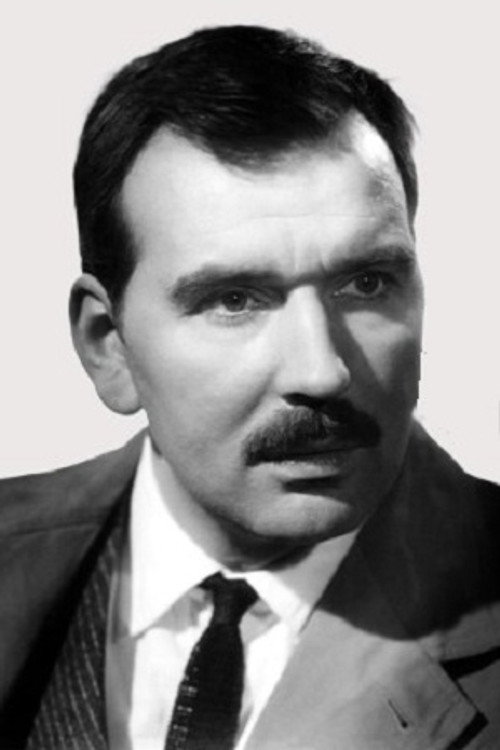
Bernhard Wolfgang Wicki (28 October 1919 – 5 January 2000) was an Austrian-Swiss actor, film director and screenwriter. He was a key figure in the revitalization of post-war German-language cinema, particularly in West Germany, and also directed several Hollywood films.
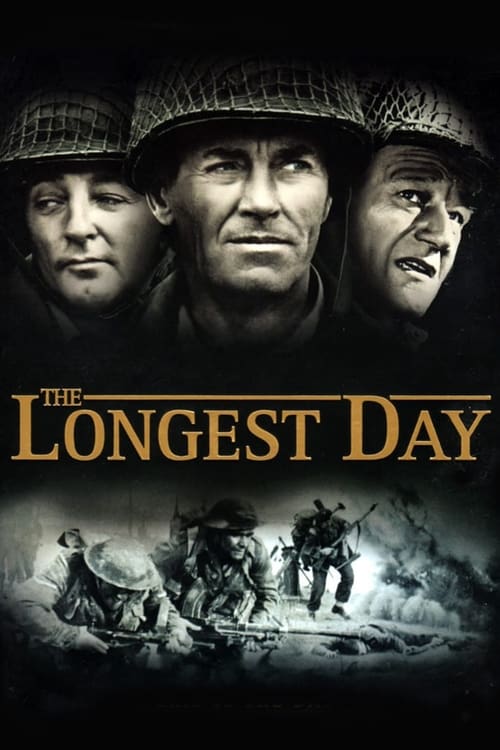
His works as a director include his debut 1959 anti-war film Die Brücke, the religious drama The Miracle of Father Malachia (1961), the Friedrich Dürrenmatt adaptation The Visit (1964), and the German segments of the World War II epic The Longest Day (1962). He won four German Film Awards for Best Direction.
Contents
Life and career
Wicki studied in the city of Breslau such topics as art history, history and German literature. In 1938, he transferred to the drama school of the Staatliches Schauspielhaus in Berlin. In 1939, because of his membership in the Bündische Jugend, he was imprisoned for many months in the Sachsenhausen concentration camp. After his release, he moved to Vienna, then in 1944 to Switzerland.
After World War II, he starred in many films, including Die letzte Brücke (1953) and Es geschah am 20. Juli (1955). He was also a photographer. His first attempt at directing came three years later with the documentary Warum sind sie gegen uns? (1958). He became internationally famous with his 1959 anti-war film Die Brücke, which was nominated for the Academy Award for Best Foreign Language Film. In 1961 he won the Silver Bear for Best Director at the 11th Berlin International Film Festival for his film The Miracle of Father Malachia. His break in Hollywood came shortly thereafter when he was chosen to direct Marlon Brando and Yul Brynner in the highly acclaimed World War II espionage thriller, Morituri in 1965.
Wicki was a patron of the International Film Festival in Emden-Norderney, which first started in 1990.
Wicki first married Agnes Fink, a fellow acting colleague, and later married Elisabeth Endriss, also a colleague. In the documentary Verstörung – und eine Art von Poesie (June 2007), Elisabeth Wicki-Endriss portrayed Wicki's life and work.
Wicki is buried at the Nymphenburger cemetery in Munich (grave number 4-1-23).
In 2001, the Bernhard Wicki Memorial Fund was established in Munich. Since 2002, it has awarded a yearly prize, The Bridge, to selected films that promote peace. A further prize of 15,000 euros, endowed in 2006, is presented in his name in the city of Emden.
Selected filmography
Director
Warum sind sie gegen uns? (1958)
Die Brücke (1959)
The Miracle of Father Malachia (1961)
The Longest Day (with Ken Annakin and Andrew Marton) (1962)
The Visit (1964)
Morituri (1965)
Das falsche Gewicht (1971)
Karpfs Karriere (1971)
The Conquest of the Citadel (1977)
Grünstein's Clever Move (1984)
Sansibar oder der letzte Grund (1987)
Spider's Web (1989)
Actor
Decorations and awards
1958: Film Award in Silver (documentary) for Warum sind sie gegen uns? (Why they are against us?)
1960: The Golden Bowl, Film Award (Director), German Film Critics Award, German Youth Film Award, Golden Globe and an Academy Award nomination (Best Foreign Film) for Die Brücke (The Bridge)
1960: United Nations award for contribution to peace
1961: Silver Bear at the Berlin Film Festival (Best Director) for The Miracle of Father Malachia
1962: Bambi
1972: Golden Camera (Director) and Film Award (Director) for Das falsche Gewicht (The wrong weight)
1976: Film Award for many years of excellent work in the German film industry
1977: Film Award in Silver for The Conquest of the Citadel
1979: St. Jakob Prandtauer Prize for Science and Art of the city of St Pölten
1982: Great Cross of Merit of the Federal Republic of Germany
1985: Film Award (Director) for Die Grünstein-Variante (The greenstone variant)
1986: Helmut Käutner Award
1986: Critics Award for Die Grünstein-Variante
1988: Adolf Grimme Award for Sansibar oder Der letzte Grund (Zanzibar or The last Reason)