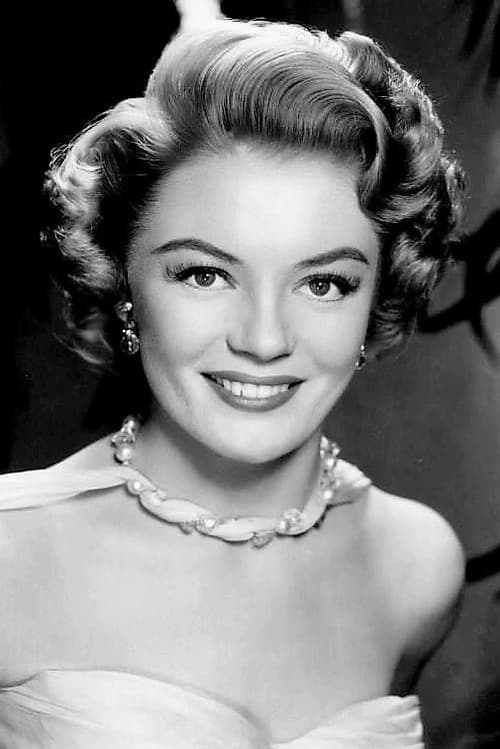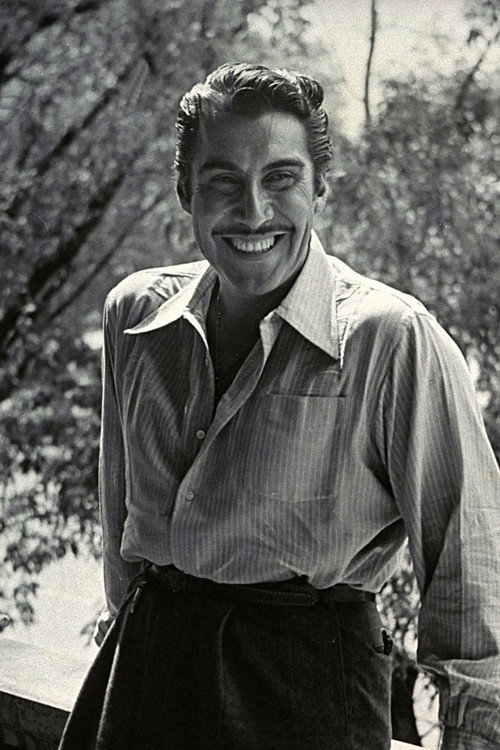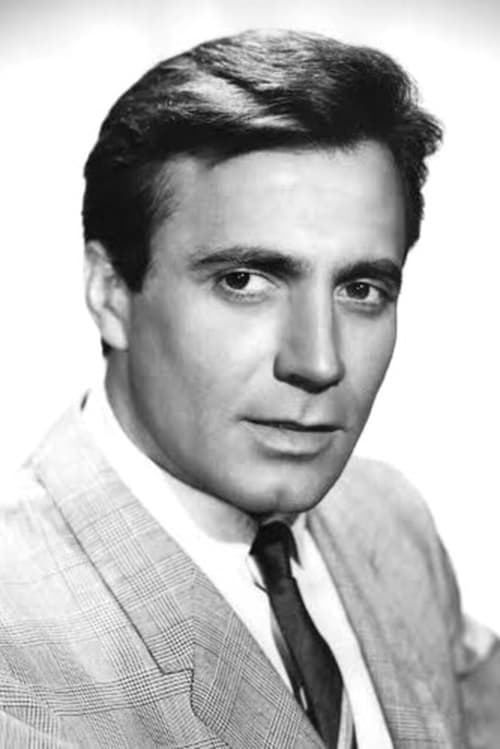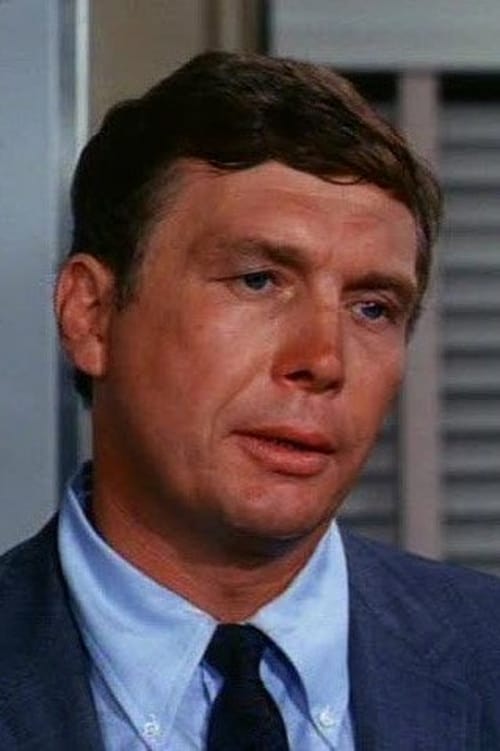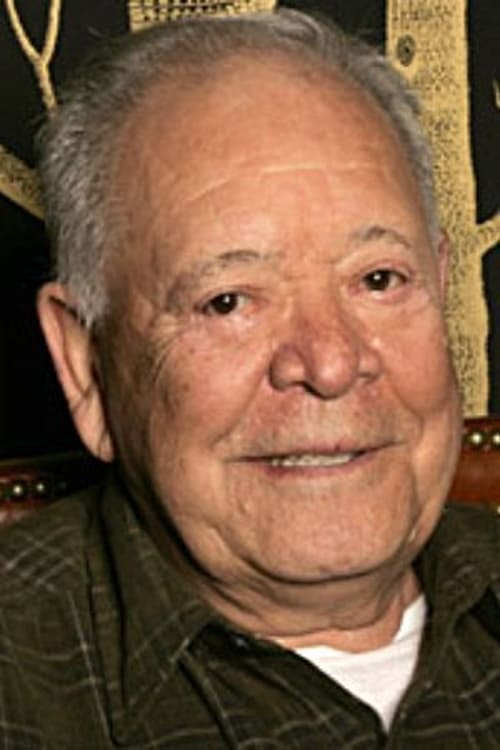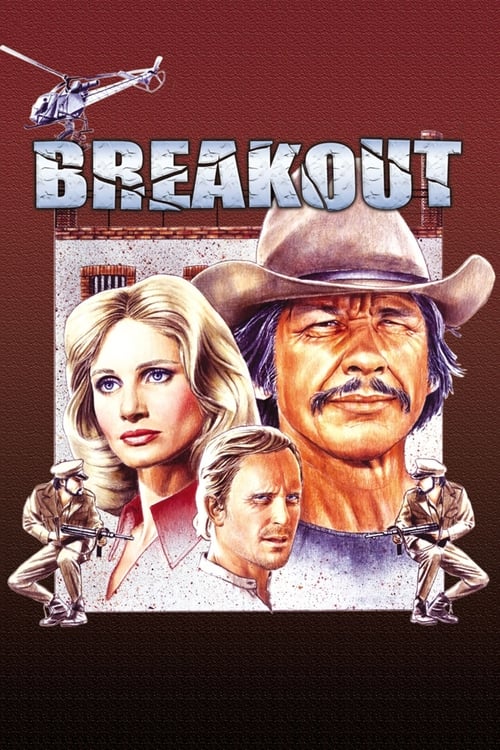
Breakout is a 1975 action film from Columbia Pictures starring Charles Bronson, Jill Ireland, Robert Duvall, John Huston, Sheree North and Randy Quaid. Bronson and Ireland, the lead actor and actress, were married in real life. The film is notable for giving the usually serious Bronson a more comedic, lighthearted role.
It was based on the non-fiction book The 10-second Jailbreak: The Helicopter Escape of Joel David Kaplan, co-authored by William W. Turner, Warren Hinckle and Eliot Asinof.
Contents
Plot
Harris Wagner is suspicious that his grandson, Jay Wagner, is causing trouble for his nefarious business schemes, which also involve the CIA. Harris has CIA-operative Cable arrange a murder in Mexico for which Jay is framed. Harris does not want Jay killed, only silenced, so Jay is incarcerated in a Mexican prison.
Jay's wife Ann is unhappy at this turn of events and hires a Texas bush pilot in Brownsville, Texas, Nick Colton and his partner Hawk Hawkins, to fly into the prison and rescue her husband. The first attempts do not work, so Colton quickly learns how to pilot a helicopter.
While Hawk and accomplice Myrna feign a rape to distract the prison guards, Colton pilots a helicopter into the prison complex, Wagner boards the helicopter, and they escape. The group return to Texas in a four-passenger light aircraft. Alerted to the escape, Harris orders his agent Cable to Texas to intercept the group. Cable, driving a Citroën SM with Washington, D.C. license plates, locates Ann and follows her Chevrolet Impala convertible, knowing she will lead him to Jay Wagner.
Cable uses false identification to lure Jay Wagner away from the group when they land. Cable nearly succeeds in kidnapping Wagner, but Colton becomes suspicious and pursues them. The film ends with a runway incursion as Cable and Colton fight among departing airplanes at Brownsville Airport.
Production
The prison scenes were filmed at Fort de Bellegarde, France. Romani people local to Southern France stood in for many of the Mexicans.
The original director was Michael Ritchie, but he did not like the idea of the female lead Ann Wagner being played by Charles Bronson's wife Jill Ireland. Bronson threatened to leave the project if Ireland was not cast so Tom Gries came in as director. Producer Irwin Winkler was not a great admirer of the final film.
The film featured a French Aérospatiale Alouette II turbine helicopter, the type of helicopter used in the 1973 Mountjoy Prison helicopter escape. The actual 1971 Mexico event where Joel David Kaplan broke out of prison featured a Bell Helicopter.
Actual event
The film was loosely based on an actual event that took place in August, 1971 (see List of helicopter prison escapes).
Joel David Kaplan was a New York businessman and nephew of molasses tycoon Jacob Merrill Kaplan. The elder Kaplan earned his fortune primarily through operations in Cuba and the Dominican Republic.
The J.M. Kaplan Fund (named after the elder of the two) was found in a 1964 Congressional investigation to be a conduit for funneling CIA money to Latin America, including through the Institute of International Labor Research (IILR) headed by Norman Thomas, six-time presidential candidate for the Socialist Party of America. These funds were used in Latin America by figures like José Figueres Ferrer, Sacha Volman, and Juan Bosch.
The CIA gave Figures money to publish a political journal, Combate, and to found a left-wing school for Latin American opposition leaders. Funds passed from a shell foundation to the Kaplan Fund, next to the IILR, and finally to Figures. Sacha Volman, treasurer of the IILR, was a CIA agent.
Cord Meyer, a CIA official, was chief of International Organizations Division, a CIA sponsored front for manipulating international groups. It served as part of the covert arsenal to engineer the New World Order. He used the contacts with Bosch, Volman, and Figueres for a new purpose — as the United States moved to rally the hemisphere against Cuba's Fidel Castro, Rafael Trujillo, the strongman (caudillo) that ran the Dominican Republic for 30 years had become expendable. The United States needed to demonstrate that it opposed all dictators, not just those on the left.
For over a year, the CIA had been in contact with dissidents inside the Dominican Republic who argued that assassination was the only certain way to remove Trujillo.
According to Chester Bowles, the Undersecretary of State, internal Department of State discussions in 1961 on the topic were vigorous. Richard N. Goodwin, Assistant Special Counsel to the President, who had direct contacts with the rebel alliance, argued for intervention against Trujillo. Quoting Bowles directly: "The next morning I learned that in spite of the clear decision against having the dissident group request our assistance Dick Goodwin following the meeting sent a cable to CIA people in the Dominican Republic without checking with State or CIA; indeed, with the protest of the Department of State. The cable directed the CIA people in the Dominican Republic to get this request at any cost. When Allen Dulles found this out the next morning, he withdrew the order. We later discovered it had already been carried out."
Release
Theatrical
The film opened internationally before opening in the United States and Canada on May 21, 1975.
Reception
Box office
Breakout earned $16.0 million in theatrical rentals in the United States and Canada, and was the 21st most popular film of 1975. By the time of its second week of US release, it had already grossed $5 million internationally.
The film was reported to have been successful with Philippines audiences.
Saturation booking
Part of its box-office success was due to the then-novel strategy of "saturation booking", in which Columbia released 1,350 prints simultaneously, combined with a heavy advertising campaign costing $3.6 million on the opening week. This was one of the first major studio films to use this method of release. It grossed $12.7 million in its first two weeks of saturation release. Inspired by the success of Breakout, Universal Pictures used the same technique to promote Jaws. After Jaws became the highest-grossing movie of all time, saturation booking became the standard method of releasing major films.
Critical response
TV Guide writes of Breakout: "It's one of those vigilante, simplistic stories that has audiences not mistaking the good guys for the bad guys at all. Unmotivated, often plodding, and singularly without humor, this film could have been terrific."
On the review aggregator website Rotten Tomatoes, 64% of 14 critics' reviews are positive.

_(cropped).jpg?width=400)