Acting
All my life I've been on the verge of something. I'm almost becoming a concert violinist and I run away to the races. I'm almost a good jockey and I go overweight. I'm almost a champion prizefighter and my eyes go bad. Now I've got it, now I've got what I'm going to be.
Lee discovered a love for Broadway theatre during his years as a prizefighter. He remembered Show Boat as the first stage production he ever saw: "A big, tough fighter, all muscle, just sobbing," he recalled.
His acting career began by accident in 1934. While at a YMCA to apply for a job as a laborer, Lee stumbled upon an audition in progress and was recognized by playwright Augustus Smith. Lee was invited to try out, and won a supporting role in Brother Mose, directed by Frank H. Wilson. Sponsored by New York's Civil Works Administration, the show toured the boroughs, playing at community centers and city parks into the fall of the year. In October 1934, Lee succeeded Rex Ingram in the Theatre Union's revival of Stevedore, which toured to Chicago, Detroit and other U.S. cities after its run on Broadway. It was his first professional role.
Lee then was cast in his first major role, Banquo, in the legendary Federal Theatre Project production of Macbeth (1936), adapted and directed by Orson Welles.
"I never would have amounted to anything in the theatre if it hadn't been for Orson Welles," Lee recalled. "The way I looked at acting, it was interesting and it was certainly better than going hungry. But I didn't have a serious approach to it until … I bumped into Orson Welles. He was putting on a Federal Theatre production of Macbeth with Negro players and, somehow, I won the part of Banquo. He rehearsed us for six solid months, but when the play finally went on before an audience, it was right—and it was a wonderful sensation, knowing it was right. Suddenly, the theatre became important to me. I had a respect for it, for what it could say. I had the ambition—I caught it from Orson Welles—to work like mad and be a convincing actor."
Macbeth was sold out for ten weeks at the Lafayette Theatre. After an additional two weeks on Broadway it toured the nation, including performances at the Texas Centennial Exposition in Dallas.
After five months in a supporting role, Lee succeeded Rex Ingram as the lead in the stage production Haiti (1938), portraying Haitian slave turned emperor Henri Christophe. One of the Federal Theatre Project's most popular productions, Haiti was seen by some 90,000 people at the Lafayette Theatre in Harlem and at Boston's Copley Theatre.
In January 1939, with the end of the Federal Theatre Project, Lee gained a role in Mamba's Daughters (based on DuBose Heyward's 1929 novel), a Broadway success that toured North America and returned to Broadway for another brief run in 1940. Lee took a break from the road tour to make his motion picture debut in Keep Punching (1939), a film about boxing. He made his radio debut as narrator of the weekly CBS jazz series Flow Gently, Sweet Rhythm (1940–41). As that regular series came to an end, he opened a restaurant at 102 West 136th Street, Canada Lee's Chicken Coop, which offered authentic South Carolina cuisine, jazz and blues. Lee kept it going despite chronic financial difficulties.
Lee played the lead role in the 1940 revival of Theodore Ward's Big White Fog. A 1938 Federal Theatre Project production, the play was remounted by the newly created Negro Playwrights Company, founded in New York by Ward, Langston Hughes, Paul Robeson, Theodore Browne, Richard Wright and Alain Locke.
Lee became a star overnight in his ultimate stage success, Native Son (1941), an adaptation of Richard Wright's novel staged on Broadway by Orson Welles. The show was a spectacular hit for both Welles and Lee, who starred in the initial New York run, a 19-month national tour, and a second run on Broadway with accessible ticket prices. "Mr. Lee's performance is superb," wrote Brooks Atkinson of The New York Times, who called him "certainly the best Negro actor of his time, as well as one of the best actors in this country." Wright also applauded the performance, noting the contrast between Lee's affable personality and his intensity as Bigger Thomas. The sympathetic portrayal of a black man driven to murder by racial hatred brought much criticism however, especially from the Catholic Diocese of Brooklyn and the Legion of Decency, and the ensuing pressure forced the play to close.
During World War II, Lee continued to act in plays and in films. In 1942, he played in two comedies by William Saroyan, and earned approving reviews despite the generally negative response to these plays. In 1943, his name was above the title on the marquee for South Pacific, a race-themed drama directed by Lee Strasberg that again was panned by critics but won Lee critical praise.
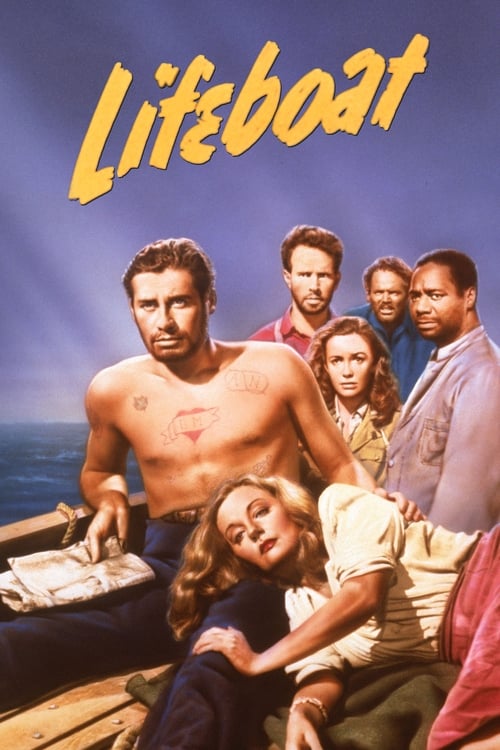
Perhaps Lee's best known film role was in Alfred Hitchcock's Lifeboat (1944), in which he played ship's steward Joe Spencer, one of 8 men and women who survive the sinking of the freighter carrying them from New York to London and are joined in their lifeboat by a survivor of the crew of the U-boat that destroyed their vessel.
According to a June 22, 1943, Hollywood Reporter news item, Lee was the first actor cast for the film. The script was criticized for making Joe "too stereotypical". Lee testified that he attempted to round out the character by revising dialogue, primarily eliminating repeated "yessir"s and "nossir"s that sounded subservient, and cutting some actions. An NAACP critique of the film condemned the role of Joe and praised Lee's performance. The Baltimore Afro-American's review, while commenting on the character's shortcomings, praised Lee's portrayal. Historian Rebecca Sklaroff, while writing in 2009 that Joe's role was more "tokenistic" than black roles in the wartime films Sahara and Bataan, wrote that Joe was depicted as compassionate, dependable and heroic. He is the only one who resists the impulse of mob fury that leads the other characters to kill the German. He is the only character who steps forward to disarm the wounded German sailor rescued at the end of the film.
Lee's successful radio career continued with New World A-Comin', which made its debut in March 1944. He narrated the first two seasons of the groundbreaking WMCA radio series that presented Negro history and culture to mainstream American audiences.
He became the first African American to play Caliban, in Margaret Webster's 1945 Broadway production of The Tempest. Lee had admired Shakespeare since his turn in Macbeth; indeed, at the time of his death he was preparing to play Othello on film.
In 1946, Lee played a principal role in On Whitman Avenue, a drama by Maxine Wood about racial prejudice directed by Margo Jones. Lee produced the play, making him the first African-American producer on Broadway. The play spoke directly to the need for interracial housing following World War II and won the praise of former First Lady Eleanor Roosevelt, who wrote weekly columns encouraging readers to see it.
In the autumn of 1946, Lee made American theatre history when he portrayed the villain Daniel de Bosola in John Webster's The Duchess of Malfi. Presented in Boston and on Broadway, the production marked the first time a black actor had played a white role on the stage. Lee wore a special white paste that had been used medically, to cover burns and marks, but had never before been used in the theatre. He had a supporting role in Robert Rossen's Body and Soul (1947), another boxing picture.
In 1948, Lee played his last stage role, that of a devoted slave in Set My People Free, Dorothy Heyward's drama based on the aborted 1822 slave revolt led by Denmark Vesey.
In 1949, he took a supporting role in Lost Boundaries, a drama based on William Lindsay White's book of the same title, a nonfiction account of Dr. Albert C. Johnston and his family, who passed for white while living in New England in the 1930s and 1940s.
Lee's last film appearance was the starring role of minister Stephen Kumalo in Cry, the Beloved Country (1951).