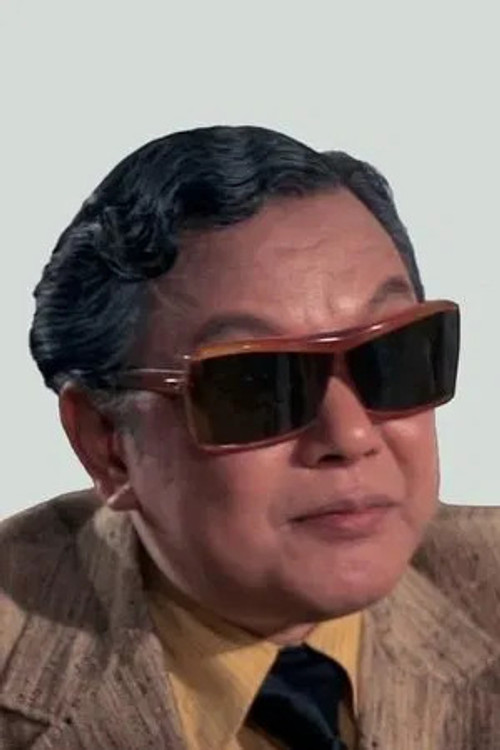
Chang Cheh (Chinese: 張徹; pinyin: Zhāng Chè; 17 January 1924 – 22 June 2002) was a Chinese filmmaker, screenwriter, lyricist and producer active in the 1960s, 1970s and 1980s. Chang directed more than 90 films in Hong Kong and Taiwan, the majority of them with the Shaw Brothers Studio in Hong Kong. Most of his films are action films, especially wuxia and kung fu films filled with violence.
Contents
Early life
Born to a military family in Hangzhou and raised in Shanghai Chang studied politics at the Faculty of Law of the Central University of Chongqing but dropped out to join a social education troupe. After World War II ended, he attracted the notice of Chang Tao-fan a high-ranking KMT official who appointed him secretary of the Cultural Movement Committee (CMC), Shanghai. His first contact with the film industry came when he took up the cause of the "Twelve Filmmakers Collaboration Case" in which twelve Chinese filmmakers who worked for the Japanese-owned China United Film Company during the war were accused of collaborating with Japanese forces.
At this time, Chang ran a KMT-operated theater in Shanghai's Hongkou district and had difficulty securing films until he befriended the Liu Brothers (Liu Zhongliang and Liu Zhonghao) who ran the Jincheng Grand, now the Lyric, and Jindu Theaters. The Liu Brothers also produced films and as political tensions grew between Nationalists and socialists, Chang suggested that they movie equipment and personnel to Taiwan as a safeguard. To mask the move, they arranged to film a movie in Taiwan and Chang appointed himself its director. Happenings in Ali Shan (1949) became Taiwan's first locally-produced Mandarin-language film, and the song Chang wrote for it, "Over the Green Hill", became a popular hit.
After this experience, Chang caught the eye of Chiang Ching-kuo, the oldest son of President Chiang Kai-shek, and became a member of his newly-established "Chief Political Department" and through that he became an official in the only film studio in Taiwan at the time, the KMT-run Central Motion Picture Corporation. However, Chang got caught in the middle of a political struggle and when he received an invitation from the MP&GI star Helen Li Mei to come to Hong Kong and direct her film Wild Fire (1957) he leapt at the chance to escape. Li produced the film herself and wanted a younger director who collaborate with her, but because Chang was unknown in Hong Kong rumors spread that the two were having an affair, and MP&GI persuaded her to remove Chang and finish shooting the film with an assistant.
After that, Chang became a movie critic writing reviews for New Life Evening Post and columns for Taiwan's United Daily News, which caught the eye of MP&GI's Stephen Soong, who recommended him for a contract as a screenwriter for the company. Chang was unhappy there and within a year he had been recommended by his bridge partner, Raymond Chow, to Shaw Brothers as a screenwriter and took a contract with Shaw Brothers that began the day his MP&GI contract ended.
Early years at Shaw Brothers
Shaw Brothers' enormous Movietown film studio opened in 1961, around the same time Chang started working there, and he successfully convinced the company's head, Sir Run Run Shaw, not to soundproof the studios and instead shoot films without sound and dub them later. As a result, Chang became head of the dubbing department as well as a screenwriter. In 1965 he received his first directing credit at Shaw alongside Yuan Qiu-feng for the huangmei opera movie, The Butterfly Chalice.
In 1965, Shaw Brothers' magazine, Southern Screen, published an article called "Shaw Launches Colour Wuxia Century" in which it announced seven new films that were either completed or in production, claiming, “Shaws will break with tradition...Creating a new vista for martial arts films. The fake, fantastical, and theatrical fighting and the so-called special effects
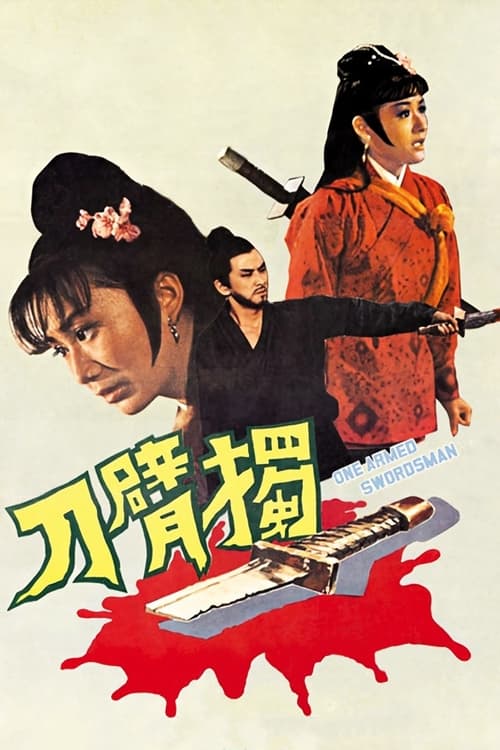
of the past will be replaced by realistic action and fighting that immediately decides life or death.” The films were Temple of the Red Lotus (1965) and The Twin Swords (1965), which were both supervised by Chang and starred Jimmy Wong Yu; Tiger Boy (1966), a black and white low-budget film written and directed by Chang, also starring Jimmy Wong Yu; Come Drink With Me (1966) directed by King Hu and starring Cheng Pei-pei; Knight of Knights (1966) written by Chang; and One-Armed Swordsman (1967), written and directed by Chang, starring Jimmy Wong Yu, and featuring action choreography by Tong Kai and Lau Kar-leung. It became a massive hit, often heralded as the Hong Kong movie to earn one million dollars at the box office, although in reality that barrier had been broken by The Golden Eagle (1964) three years previously. The success of One-Armed Swordsman heralded a new wave of martial arts movies at Shaw, shot in color, featuring more violent and realistic action choreography, and focusing on male, rather than female, leads who were Hong Kong's biggest box office draws at the time. The other two movies in the "Colour Wuxia Century" met less auspicious fates. The Sword and the Lute was shelved for two years until 1967, and Red Maiden was never released.
That same year, Chang also wrote and directed the Jimmy Wong Yu movie, The Assassin, another hit with action choreography by Lau Kar-leung and Tong Kai. Together, this team would go on to make Golden Swallow (1968) a sequel to King Hu's classic wuxia picture Come Drink With Me co-starring Cheng Pei-pei and Return of the One-Armed Swordsman (1969), both of which became box office hits.
The Iron Triangle
In late 1969/early 1970, Jimmy Wong Yu broke his contract with Shaw Brothers and the ensuing legal conflict saw him barred from making films in Hong Kong for three years. Without his leading man and feeling like his movies were simply recycling previous films Chang made a musical, The Singing Thief (1969), and hired its screenwriter, Chiu Kang-chien, to write Dead End (1969), a semi-experimental "youth gone wild" thriller which he believed would represent a new direction for his work. However, the movie ran afoul of local censors, and Chang felt he needed to return to wu xia films.
Chang took two young actors he had been working with and successfully paired them together as action leads in Have Sword Will Travel (1969). David Chiang came from a film family and he had been working as a stuntman at Shaw. Noting his good Mandarin, Chang began giving him lines, leading to bigger roles. Ti Lung had entered Shaw's Actor Training Program and after impressing Chang in a minor role in Return of the One-Armed Swordsman (1969), Chang had offered him the lead in Dead End. In 1970, Chang paired them in his movie Vengeance! which represented a new direction for him as a filmmaker. He abandoned the Qing Dynasty setting of most wu xia movies for a movie set in the early Republican era, and he abandoned wu xia swordplay for kung fu. The movie was an enormous hit, and won Chang "Best Director" and David Chiang (billed as John Chiang) "Best Actor" at the 16th Asian Film Festival, the first time a Hong Kong film had won these two categories.
One year later, Chang delivered another David Chiang/Ti Lung action picture set in the early Republican era, The Duel (1971), which became the second martial arts movie to be dubbed into English and receive a general release in the United States. Now linked firmly in the public's mind, Chang, Ti Lung, and David Chiang became known as the "Iron Triangle" and would go on to make 19 movies together, not counting Vengeance! and the five films they made before it.
Chang's Film Company & the Shaolin Cycle
Around 1974, Shaw Brothers encouraged Chang to start his own production company, which he called Chang's Film Co. (in Chinese 長弓電影公司, or Longbow Film Co.). Shaw had funds in Taiwan that could not be transferred out of the country due to financial controls and they wanted Chang to use these funds to make Taiwan-based productions. Shaw received all the profit from these movies, but because Chang was in charge of production he had more freedom.
While checking into a hotel in Taipei, Chang ran into popular Hong Kong comedian Michael Hui. During their conversation, Hui told Chang that Taiwanese and Hong Kong films should focus on the folklore and traditions of Southern China, including their martial arts. When Chang returned to Hong Kong he met with Lau Kar-leung and Tong Kai to discuss how to make authentic Southern Chinese style martial arts movies and Lau Kar-leung suggested focusing on the legends of Shaolin Temple.
Their first Shaolin movie, Heroes Two (1974), started with the burning of Shaolin Temple and focused on the Southern Chinese folk hero, Fong Sai-yuk, played here by Alexander Fu Sheng, a charismatic 20 year old graduate of Shaw's Southern Drama School. The movie emphasized the realism of Southern Chinese martial arts styles and in theaters it was preceded by a 9-minute short film called "Three Styles of Hung School's Kung Fu" in which stars Alexander Fu Sheng, Chen Kuan-tai, and fellow Shaw's actor, Chi Kuan-chun demonstrate authentic Southern style kung fu. It was the first movie for Chang's Film Company and became a box office success. Chang had enormous confidence in Alexander Fu Sheng's potential and cast him in the youth drama Friends (1974) that same year for which he won "Best Newcomer" at the 20th Asian-Pacific Film Festival.
Fu Sheng went on to play one of the leads in all of Chang's follow-up Shaolin movies, including Men From the Monastery (1974), Shaolin Martial Arts (1974), and the epic Five Shaolin Masters, which Chang claimed drained the last of Shaw's money captured in Taiwan. It was also the first of these movies to be fully filmed in Taiwan, and because Tong Kai did not want to travel, Lau Kar-leung choreographed it with his brother, Lau Kar-wing. Fu Sheng also starred in Disciples of Shaolin (1975) but during the filming of this movie Chang and Lau Kar-leung fell out over artistic differences and it would be the last movie they completed together. Reportedly, Lau would work for a few days on Chang's historical epic, Marco Polo (1975), before walking off the set, vowing to quit the film industry and movie to America to open his own martial arts schools. Mona Fong, Run Run Shaw's mistress and then head of production at Shaw Brothers, persuaded him to come back to Hong Kong instead and make his directorial debut, Spiritual Boxer (1975).
Venoms Mob and later career
Before he left Taiwan, Chang had started working with several young stunt performers. Philip Kwok had attended to the National Taiwan College of Performing Arts and gotten a job doing stunts on Shaolin Avengers (1976). Lau Kar-leung pointed him out as being particularly impressive, so Chang asked screenwriter Ni Kuang to write a role for him in Marco Polo (1975). Lu Feng and Chiang Sheng also studied Chinese Opera in Taiwan, but at a different school than Kwok. However, the three of them knew each other and soon Lu Feng was working with Lau Kar-leung as an assistant choreographer, and Chiang Sheng came with them as a stunt performer. When Chang returned to Hong Kong he took them with him. There he decided to team them up with Alexander Fu-sheng on a movie he had in production called Chinatown Kid (1977), a showcase for a lot of his Taiwanese talent including Robert Tai and Johnny Wang Lung-wei. Philip Kwok would co-star with Alexander Fu-sheng, alongside a 22 year old newcomer who had beaten 1,000 candidates for the role, Sun Chien, and an accomplished Mantis Fist boxer, and the accountant at Chang's production company, Lo Meng. Lu Feng and Chiang Sheng appeared in small parts doing stunts.
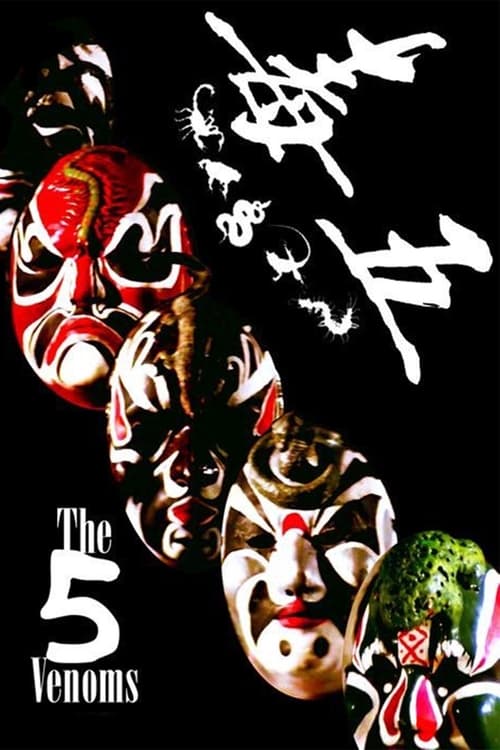
Sensing he had something, Chang asked Ni Kuang to write a script using these five newcomers and the resulting film The Five Venoms (1978) became a hit in Hong Kong and Taiwan and the actors became collectively known in the West as the Venoms Mob. Even though Chang Cheh dismissed the movies he made on his return to Shaw Brothers as the "recycling of tired, worn-out wuxia and fist-and-kick action films" he would make 25 movies featuring either the full Venoms Mob or some combination thereof. After making Ode to Gallantry (1982) the Venoms disbanded and returned to Taiwan, where Philip Kwok directed his only movie, Ninja in the Deadly Trap (1982). The following year, Chang's final film for Shaw Brothers was released, The Weird Man (1983), and his contract was not renewed.
Seeing the great success of the Mainland China-shot Shaolin Temple (1982), Chang made it known that he would like to try the same. He shot The Dancing Warrior (1985) partially in New York City, which co-starred Shaolin wu shu instructor, Dennis Brown, and later that year the Chinese Ministry of Culture invited him to shoot a movie in Mainland China. Chang relocated his career again and filmed Great Shanghai 1937 (1986) followed by Cross the River (1988) as well as four more Mainland-set movies, some in association with various regional studios across Mainland China, including Slaughter in Xi'An (1990), which was filmed with the famed Xi'An Film Studio, birthplace of the Fifth Generation of Chinese filmmakers.
Themes and techniques
Chang is most closely associated with two terms he popularized. The first is yanggang or “masculinity” which appears in his films starting with 1967's One-Armed Swordsman. Frustrated by the fact that most of Hong Kong's major stars were women while the biggest cinematic icons around the world were men like John Wayne and Steve McQueen he believed Hong Kong movies could find a bigger audience by promoting male stars. After all, he reasoned, good-looking young men would appeal to both male and female audiences. As a result, his films focus on the friendship between men and the code of brotherhood, with their lead characters often men who are either angry young swordsmen, martyrs, or other outsiders who defy authority.
These characters are bold, love to fight, and are willing to die for their causes. In his early films, many of his main characters have been wronged by either the system or love, and their send of self-respect and yanggang is only reborn through training and the loyalty of their friends. As a result, they are willing to fight and die for these friends.
The second term associated with Chang's work is xiaozi which he first used as part of the Chinese title for 1975's Disciples of Shaolin aka (洪拳)Shaolin (小子)Xiaozi which would loosely translate into Shaolin Boxing Punk. Xiaozi or "boxing punk" is Northern Chinese Mandarin slang that made its way into Southern Chinese Cantonese vocabulary through Chang's films and it means a young, good-looking kid who doesn't respect anyone and who's a good fighter. As Chang himself describes it, "Xiaozi was that brash image of youth, a combination of liveliness and rebelliousness with good physique and good humor."
Alexander Fu Sheng embodied the avatar of xiaozi cool in Chang's Shaolin Cycle, and the xiaozi image continued in Jackie Chan’s breakthrough portrayal of a young, brash Wong Fei-hung in Drunken Master (1978) and in Jet Li’s performance of the Southern Chinese folk hero Fong Sai-yuk in Fong Sai-yuk (1993), although shades of it are also present in Gordon Liu’s portrayal of a young Wong Fei-hung in Lau Kar-leung’s second feature, Challenge of the Masters (1976) and in Yuen Biao’s portrayal of real-life wing chun practitioner, Leung Jan, in Sammo Hung's The Prodigal Son (1981).
Chang targeted his action movies at young people, writing, "They are energetic and thus more prone to pugnacious, aggressive behavior than adults…Films that favour action and excitement are born as a response." In particular, he believed that the times in which he began his career deeply influenced his movies, writing, "The 60s and 70s were the most energetic periods of Hong Kong — the period when young people exerted themselves. The age of love tales was the past. The masses were striving ahead in a rebellious mood and the colonial administration was receiving a shock to the system." 1967 saw Hong Kong wracked by civil disobedience and a terrorist bombing campaign and the same week that One-Armed Swordsman was released was the same week as the Shau Tau Kok Incident that saw five Hong Kong police officers machine-gunned on the border between Hong Kong and China, and while he was shooting The Assassin, riots broke out in Hong Kong. Chang wrote, "My wuxia films were often tinted with the passions of the times."
Influence
Although he was often dismissed by critics at the time, it would be hard to overestimate the influence of Chang on Hong Kong cinema. His One-Armed Swordsman (1967) turned wuxia movies from tales of refinded silk-robed scholars into violent, fast-paced, spectacles where angry young men hacked their way through their enemies and is generally considered the first truly modern action movie in Hong Kong cinema. His Boxer From Shantung (1972) is considered the first modern gangster movie in Hong Kong cinema, Vengeance! (1970) and The Duel (1971) were marked the first time the early Republican era had been used as a setting for a martial arts film, and Heroes Two (1974) became the first movie to popularize putting the legend of Shaolin Temple onscreen.
Chang defined the image of his actors, according to Chen Kuan-tai. Chang and his preferred screenwriter Ni Kuang carefully detailed every aspect of their onscreen personae, and as a result a number of his discoveries became major stars across Asia, including Jimmy Wang Yu, Lo Lieh, Chen Kuan-tai, David Chiang, Ti Lung, and Alexander Fu Sheng. Lau Kar-leung would go on to become one of the great martial arts film directors after working with Chang for years, and he would co-direct or produce numerous films with up-and-coming talents who he considered part of his stable like Kuei Chih-hung, who would go on to become a well-respected director in Hong Kong. John Woo was his assistant director, mostly handling post-production, on four features in the early '70s and credits him as an influence. Director Peter Chan cites him as an influence on his 2007 movie The Warlords, and Tsui Hark remade his One-Armed Swordsman as The Blade. Quentin Tarantino cites Chang as an influence of Kill Bill (2003).
As lyricist
Chang wrote the lyrics of more than 70 Chinese songs that have appeared in his films. The theme song of his directorial debut, Happenings in Ali Shan (Chinese: 阿里山的姑娘; pinyin: Ālǐ shān de gūniáng; lit. 'Alishan Range's Girls'), also known as "Gao Shan Qing" (高山青; "The High Green Mountain"), is a particularly famous song in the Sinophone world.
Filmography
TV series
In 1992, Chang produced Taiwan Television's Ma's Assassination (刺馬), which tells the same story as his 1973 film The Blood Brothers. The series is directed by Lu Feng and stars, among other actors, David Chiang.