Stage persona
Billing himself as Chico (pronounced as "CHICK-oh"), he used an Italian persona for his onstage character. Stereotyped ethnic characters were common with vaudevillians. His questionable Italian ethnicity was specifically referred to twice on film: in their second feature, Animal Crackers, he recognizes someone he knows to be a fish peddler from Czechoslovakia impersonating a respected art collector:
Ravelli (Chico): How is it you got to be Roscoe W. Chandler?Chandler: Say, how did you get to be an Italian?Ravelli: Never mind—whose confession is this?
In A Night at the Opera, which begins in Italy, his character, Fiorello, claims not to be Italian, eliciting a surprised look from Groucho:
Driftwood (Groucho): Well, things seem to be getting better around the country.Fiorello (Chico): I don't know, I'm a stranger here myself.
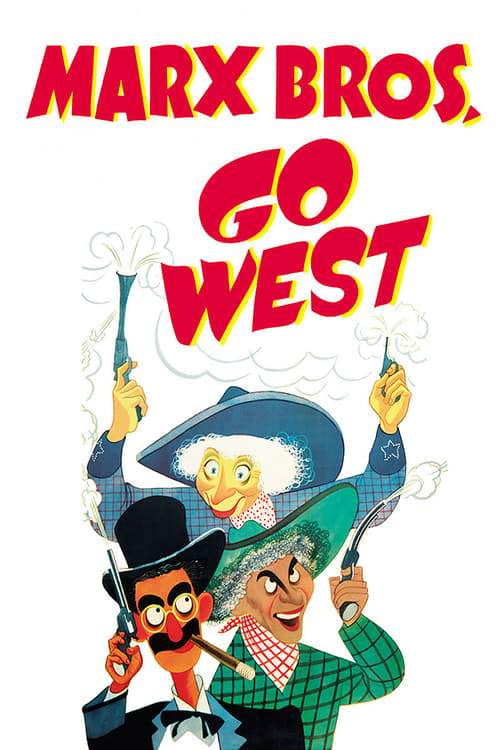
A scene in the film Go West, in which Chico attempts to placate an Indian chief of whom Groucho has run afoul, has a line that plays a bit on Chico's lack of Italian nationality, but is more or less proper Marxian wordplay:
S. Quentin Quale (Groucho): Can you talk Indian?Joe Panello (Chico): I was born in Indianapolis!
There are moments, however, where his characters appear to be genuinely Italian; examples include the film The Big Store, in which his character Ravelli runs into an old friend he worked with in Naples (after a brief misunderstanding due to his accent), the film Monkey Business, in which Chico claims his grandfather sailed with Christopher Columbus, and their very first outing The Cocoanuts, where Mr. Hammer (Groucho) asks him if he knew what an auction was, in which he responds "I come from Italy on the Atlantic Auction [Atlantic Ocean]!" Chico's character is often assumed to be dim-witted, as he frequently misunderstands words spoken by other characters (particularly Groucho). However, he often gets the better of the same characters by extorting money from them, either by con or blackmail; again, Groucho is his most frequent target.
Chico was a talented pianist. He originally started playing with only his right hand and fake playing with his left, as his teacher did so herself. Although he took lessons, Chico was a largely self-taught pianist. As a young boy, he gained jobs playing piano to earn money for the Marx family. Sometimes Chico even worked playing in two places at the same time. He would acquire the first job with his piano-playing skills, work for a few nights, and then substitute Harpo on one of the jobs. (During their boyhood, Chico and Harpo looked so much alike that they were often mistaken for each other.)
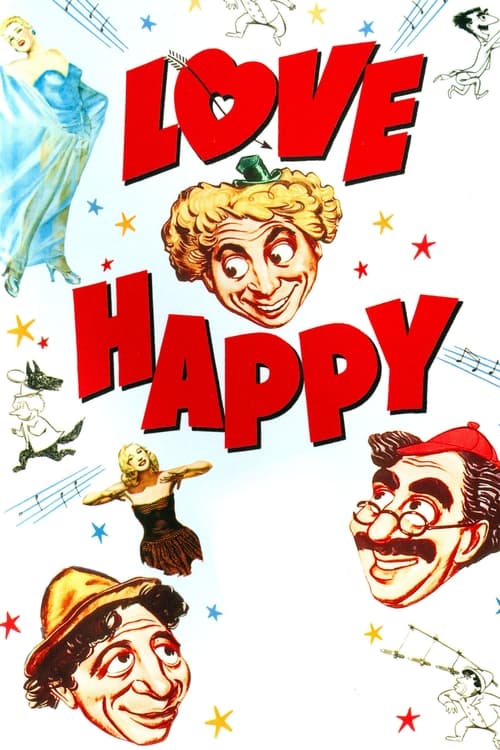
In the brothers' last film, Love Happy, Chico plays a piano and violin duet with 'Mr. Lyons' (Leon Belasco). Lyons plays some ornate riffs on the violin; Chico comments, "Look-a, Mister Lyons, I know you wanna make a good impression, but please don't-a play better than me!"
In a record album about the Marx Brothers, narrator Gary Owens stated that "although Chico's technique was limited, his repertoire was not." The opposite was true of Harpo, who reportedly could play only two tunes on the piano, which typically thwarted Chico's scam and resulted in both brothers being fired.
Groucho Marx once said that Chico never practiced the pieces he played. Instead, before performances he soaked his fingers in hot water. He was known for 'shooting' the keys of the piano. He played passages with his thumb up and index finger straight, like a gun, as part of the act. Other examples of his keyboard flamboyance are found in Go West (1940), where he plays the piano by rolling an apple over the keys and A Night in Casablanca (1946), where he performs a rendition of "The Beer Barrel Polka".