William Clark Gable (February 1, 1901 – November 16, 1960) was an American actor often referred to as the "King of Hollywood ". He appeared in more than 60 motion pictures across a variety of genres during a 37-year career, three decades of which he spent as a leading man. In 1999, the American Film Institute ranked Gable as the seventh-greatest male screen legend of classical Hollywood cinema.
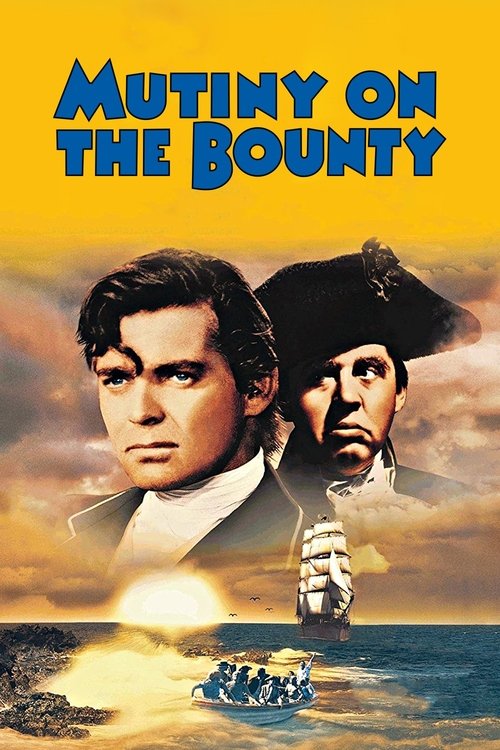
Gable won the Academy Award for Best Actor for his role in Frank Capra's It Happened One Night (1934) and earned nominations in the same category for portraying Fletcher Christian in Frank Lloyd's Mutiny on the Bounty (1935) and Rhett Butler in Victor Fleming's Gone with the Wind (1939). For his comedic performances in George Seaton's Teacher's Pet (1958) and Walter Lang's But Not for Me (1959), Gable received nominations for the Golden Globe Award for Best Actor in a Motion Picture – Musical or Comedy. His other notable films include William A. Wellman's Call of the Wild (1935), George Sidney's Key to the City (1950), and John Ford's Mogambo (1953). His final onscreen role was as an aging cowboy in John Huston's The Misfits (1961).
Gable was one of the most consistently bankable stars in the history of Hollywood, appearing 16 times on Quigley Publishing's annual Top Ten Money Making Stars Poll. He appeared opposite many of the most popular actresses of their time. He died of a heart attack in 1960 at age 59.
Contents
Early life
1901–1919: Family and upbringing
William Clark Gable was born on February 1, 1901, in Cadiz, Ohio, to William Henry "Will" Gable (1870–1948), an oil-well driller, and his wife Adeline (née Hershelman). His father was a Protestant and his mother a Catholic. Gable was named William after his father, but he was almost always called Clark, and referred to as "the kid" by his father.
Gable was six months old when he was baptized at a Roman Catholic church in Dennison, Ohio. When he was ten months old, his mother died. His father refused to raise him in the Catholic faith, which provoked criticism from the Hershelman family. Gable and his father were active in the Methodist church where his father was a Sunday School teacher. The dispute was resolved when his father agreed to allow him to spend time with his maternal uncle Charles Hershelman and his wife on their farm in Vernon Township, Pennsylvania. In April 1903, Gable's father married Jennie Dunlap (1874–1920).
Gable's stepmother raised the tall, shy child with a loud voice to be well-dressed and well-groomed. She played the piano and gave him lessons at home. He later took up brass musical instruments, becoming the youngest member of the Hopedale Men's town band at age 13. Gable was mechanically inclined and loved to repair cars with his father, who insisted that he engage in masculine activities such as hunting and hard physical work. Gable also loved literature; he would recite Shakespeare among trusted company, particularly the sonnets.
His father had financial difficulties in 1917 and decided to try his hand at farming, and moved the family to Palmyra Township, near Akron, Ohio. He insisted that Gable work the farm, but the latter soon left to work in Akron for the Firestone Tire and Rubber Company.
1920–1923: Early career
Gable was inspired to become an actor after seeing the play The Bird of Paradise at age 17, but he was unable to make a start in acting until he turned 21 and received his $300 inheritance (equivalent to $5,770 in 2025) from a Hershelman trust. After his stepmother died in 1920, his father moved to Tulsa, Oklahoma, going back into the oil business. He worked with his father for some time wildcatting and sludge removing in the oil fields of Oklahoma before traveling to the Pacific Northwest.
Gable toured in second-class stock companies, finding work with traveling tent shows, lumber mills, and other odd jobs. He made his way across the Midwest to Portland, Oregon, where he worked as a necktie salesman in the Meier & Frank department store. Also working there was local stage actor Earle Larimore (the nephew of Laura Hope Crews, who portrayed Aunt Pittypat alongside Gable in Gone with the Wind), who encouraged Gable to return to acting. Though Larimore didn't invite him to join his theater group The Red Lantern Players, he did introduce Gable to one of its members, Franz Dorfler, and they started dating. After the couple's audition for The Astoria Players, Gable's lack of training was evident, but the theater group accepted him after cajoling from Larimore. Gable and Dorfler moved to Astoria, Oregon, touring with the group until its bankruptcy, and then moved back to Portland where Gable obtained a day job with Pacific Telephone and started receiving dramatic lessons in the evening.
Gable's acting coach, Josephine Dillon, was a theater manager in Portland. She paid to have his teeth fixed and his hair styled. She guided him in building up his chronically undernourished body, and taught him better body control and posture. He slowly managed to lower his naturally high-pitched voice, his speech habits improved, and his facial expressions became more natural and convincing. After a long period of her training, Dillon considered Gable ready to attempt a film career.
Career
1924–1930: Stage and silent films
Gable and Dillon traveled to Hollywood in 1924. Dillon became his manager and also his wife; she was 17 years his senior. He changed his stage name from W. C. Gable to Clark Gable and appeared as an extra in such silent films as Erich von Stroheim's The Merry Widow (1925), The Plastic Age (1925) starring Clara Bow, and Forbidden Paradise (1924) starring Pola Negri. He appeared in a series of two-reel comedies called The Pacemakers and in Fox's The Johnstown Flood (1926). He also appeared as a bit player in a series of shorts. However, he was not offered any major film roles, so he returned to the stage in What Price Glory? (1925).
He became lifelong friends with Lionel Barrymore, who initially scolded Gable for what he deemed amateurish acting but nevertheless urged him to pursue a stage career. During the 1927–28 theater season, he acted with the Laskin Brothers Stock Company in Houston, Texas; while there, he played many roles, gained considerable experience, and became a local matinee idol. He then moved to New York City, where Dillon sought work for him on Broadway. He received good reviews in Machinal (1928), with one critic describing him as "young, vigorous, and brutally masculine".
Gable and Dillon separated, filing for divorce in March 1929, while he began working on the play Hawk Island in New York, which ran for 24 performances. In April 1930, Gable's divorce became final, and a few days later he married Texas socialite Maria Franklin Prentiss Lucas Langham, nicknamed "Ria". After moving to California, they were married again in 1931, possibly due to differences in state legal requirements.
1930–1935: Early success
In 1930, after his impressive appearance as the seething and desperate character Killer Mears in the Los Angeles stage production of The Last Mile, Gable was offered a contract with Pathé Pictures. His only film for them and first role in a sound picture was as the unshaven villain in their low-budget William Boyd western, The Painted Desert (1931). The studio experienced financial problems after the film's delayed release, so Gable left for work at Warner Bros.
The same year in Night Nurse, Gable played a villainous chauffeur who knocked Barbara Stanwyck's character unconscious for trying to save two children whom he was methodically starving to death. The supporting role was originally slated for James Cagney until the release of The Public Enemy catapulted him to star status. "His ears are too big and he looks like an ape", said Warner Bros. executive Darryl F. Zanuck about Gable, after testing him for the second male lead in the studio's gangster drama Little Caesar (1931). After his failed screen test for Zanuck, Gable was signed in 1930 by MGM's Irving Thalberg for $650 per week (equivalent to approximately $13,761 in 2025). He hired the well-connected Minna Wallis, a sister of producer Hal Wallis, as his agent, whose clients included actresses Claudette Colbert, Myrna Loy and Norma Shearer.
Gable's arrival in Hollywood occurred when MGM was looking to expand its stable of male stars, and he fit the bill. He made two pictures in 1931 with Wallace Beery. In the first, he had a seventh-billed support role in The Secret Six, although his role was much larger than the billing would indicate. Then he achieved second billing in a part almost as large as the film's star Beery in the naval aviation film Hell Divers. MGM's publicity manager Howard Strickling started developing Gable's studio image with Screenland magazine playing up his "lumberjack-in-evening-clothes" persona.
To increasing popularity, MGM frequently paired him with well-established female stars. Joan Crawford asked for him to appear with her in Dance, Fools, Dance (1931). The electricity of the pair was recognized by studio executive Louis B. Mayer, who would not only put them in seven more films but also began reshooting Complete Surrender, replacing John Mack Brown as Crawford's leading man and retitling the film Laughing Sinners (1931). His fame and public visibility after A Free Soul (1931), in which he played a gangster who shoved the character played by Norma Shearer, ensured that Gable never played a supporting role again. He received extensive fan mail as a result of his performance; the studio took notice. The Hollywood Reporter wrote "A star in the making has been made, one that, to our reckoning, will outdraw every other star ... Never have we seen audiences work themselves into such enthusiasm as when Clark Gable walks on the screen."
1936–1939: Tracy collaborations and Gone with the Wind
Gable made three pictures with Spencer Tracy, which boosted Tracy's career and permanently cemented them in the public mind as a team. San Francisco (1936), with Jeanette MacDonald, featured Tracy for only 17 minutes in an Oscar-nominated portrayal of a Catholic priest who knocks Gable down in a boxing ring. The film was a box office hit and remains the third-highest-grossing film of Gable's career. Their next film together was the Academy Award–nominated box office success Test Pilot (1938), with Myrna Loy, who made seven pictures with Gable. He plays Jim Lane, the test pilot of the title; Tracy is his sidekick mechanic, Gunner Morse.
For their final film, 1940's Boom Town, Tracy would play a larger role, with billing directly under Gable and above Claudette Colbert and Hedy Lamarr. The picture, a lavish epic about two oil wildcatters who become partners then rivals, was a box office success, earning $5 million. Gable and Tracy were off-screen friends; Tracy was one of the few Hollywood industry luminaries who attended Lombard's private funeral. After Boom Town no more Gable-Tracy partnerships were possible; Tracy's success led to a new contract and both stars had conflicting stipulations requiring top billing in MGM movie credits and on promotional posters.
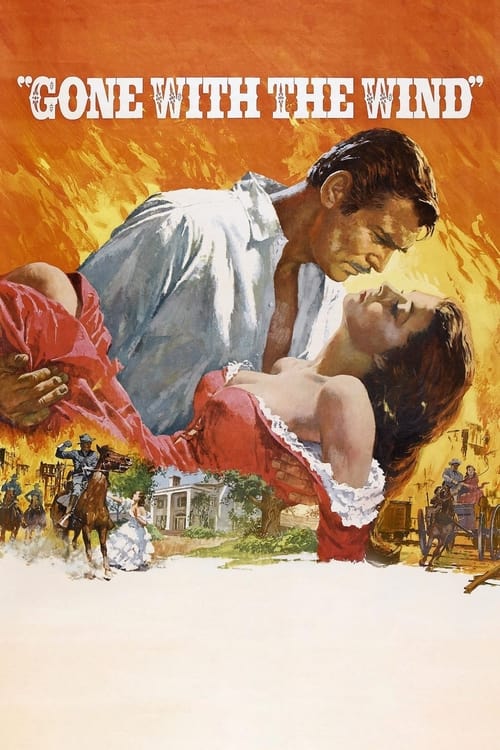
Despite his reluctance to play the role, Gable is best known for his Oscar-nominated performance in the Academy Award-winning best picture Gone with the Wind (1939). Carole Lombard may have been the first to suggest that he play Rhett Butler (and she play Scarlett) when she bought him a copy of the best-seller, which he refused to read. His total salary was $117,917 for the film ($2,729,299 in 2025).
Butler's last line in Gone with the Wind, "Frankly, my dear, I don't give a damn", is one of the most famous lines in movie history. Gable was an almost immediate favorite for the role of Rhett with both the public and producer David O. Selznick. Since Selznick had no male stars under long-term contract, he needed to negotiate with another studio to borrow an actor. Gary Cooper was Selznick's first choice. When Cooper turned down the role of Butler, he was quoted as saying, "Gone With the Wind is going to be the biggest flop in Hollywood history. I'm glad it'll be Clark Gable who's falling flat on his nose, not me." By then, Selznick had become determined to hire Gable, and set about finding a way to borrow him from MGM. Gable was wary of potentially disappointing an audience that had decided that no one else could play the part. He later conceded, "I think I know now how a fly must react after being caught in a spider's web."
1939–1942: Established star
Between his marriage to Lombard and her death, Gable again costarred with Norma Shearer in the World War II romantic intrigue film, Idiot's Delight (1939). He plays a nightclub singer that doesn't recognize former love (Shearer) while Nazis are closing in on guests at a hotel on the brink of war. The film is memorable for Gable's song and dance routine, "Puttin' on the Ritz" and an alternative ending.
Gable also starred in Strange Cargo (1940), a romantic drama with Joan Crawford, costarring Peter Lorre and Ian Hunter. The film's focus is on Gable and French Devil's Islands convicts in an escape from the penal colony, who on the way pick up a local entertainer (Crawford) whom Gable had met earlier in the movie. In their eighth and last film together, Gable and Crawford "again demonstrated their on-screen magic" and the film was among the top ten grossing films for the year.
Gable then made his first film with 20-year old Lana Turner, a newcomer whom MGM saw as a successor for both Crawford and the now-deceased Jean Harlow. Honky Tonk (1941) is a western where Gable's con-man/gambler character romances Turner, a prim, young judge's daughter.
, Gable had been reluctant to act opposite the younger Turner in the required romantic scenes. But their chemistry served them well in this and three later films, with Honky Tonk finishing third at the box office that year.
Since the couple had been popular with the public, Gable and Turner were quickly paired again in Somewhere I'll Find You (1941) as war correspondents who travel to the Pacific theatre and get caught up in a Japanese attack. The movie was another hit finishing No. 8 at the box office for 1942. From 1934 until 1942, when World War II interrupted his movie career, he was the top of the box office money-makers lists. Film historian David Thomson wrote the quality of his movies after Gone With the Wind "hardly befitted a national idol" and began a career decline for Gable.
1942–1944: World War II
On August 12, 1942, following Lombard's death and his completion of the film Somewhere I'll Find You, Gable joined the United States Army, under the Army Air Forces. Lombard had suggested that Gable enlist as part of the war effort, but MGM was reluctant to let him go. Commanding General of the U.S. Army Air Forces Henry H. "Hap" Arnold offered Gable a "special assignment" with the First Motion Picture Unit following basic training. The Washington Star reported that Gable took a physical examination at Bolling Field on June 19, preliminary to joining the service.
"Mr. Gable, it was learned from a source outside the war department, conferred with Lieutenant General H. H. Arnold, head of the air forces yesterday." The Star continued, "It was understood that Mr. Gable, if he is commissioned, will make movies for the air forces. Lieutenant Jimmy Stewart, another actor in uniform, has been doing this."
Gable had expressed an earlier interest in officer candidate school, with the intention of becoming an aerial gunner upon enlisting in bomber training school. MGM arranged for his studio friend, the cinematographer Andrew McIntyre, to enlist with him and accompany him through training.
On August 17, 1942, shortly after his enlistment, he and McIntyre were sent to Miami Beach, Florida, where they entered USAAF OCS Class 42-E. Both completed training on October 28, 1942, and were commissioned as second lieutenants. His class of about 2,600 students (of which he ranked about 700th) selected Gable as its graduation speaker. General Arnold presented the cadets with their commissions. Arnold then informed Gable of his special assignment: to make a recruiting film in combat with the Eighth Air Force to recruit aerial gunners. Gable and McIntyre were immediately sent to Flexible Gunnery School at Tyndall Field, Florida, followed by a photography course at Fort George Wright, Washington State and promoted to first lieutenants upon its completion.
On January 27, 1943, Gable reported to Biggs Army Airfield, Texas to train with and accompany the 351st Bomb Group to England as head of a six-man motion picture unit. In addition to McIntyre, he recruited the screenwriter John Lee Mahin, camera operators Sgts. Mario Toti and Robert Boles, and the sound man Lt. Howard Voss, to complete his crew. Gable was promoted to captain while he was with the 351st Bomb Group at Pueblo Army Air Base, Colorado, a rank commensurate with his position as a unit commander. (Prior to this, he and McIntyre were both first lieutenants.)
1945–1953: After World War II
Immediately after his discharge from the service, Gable returned to his ranch and rested. Personally, he resumed a pre-war relationship with Virginia Grey, a co-star from Test Pilot and Idiot's Delight, that newspapers reported might be the next Mrs. Gable. Professionally, Gable's first movie after World War II was Adventure (1946), with Greer Garson, by then the leading female star at MGM. Given the famous teaser tagline "Gable's back, and Garson's got him", the film was a commercial hit, earning over $6 million, but a critical failure.
Gable was acclaimed for his performance in The Hucksters (1947), a satire of post-war Madison Avenue corruption and immorality, which co-starred Deborah Kerr and Ava Gardner. The film was popular with audiences, placing 11th at the box office, but both Variety and The New York Times reviewed it as a sanitized version of the novel with script issues, that was heavy on Gable screentime, who struggled in the role. Gable followed this up with Homecoming (1948), where he played a married doctor enlisting in World War II and meeting Lana Turner's army surgical nurse character with a romance unfolding in flashbacks. After that he made the war film Command Decision (1948), a psychological drama with Walter Pidgeon, Van Johnson, Brian Donlevy, and John Hodiak. It was a hit with audiences, but it lost MGM money due to the high cost of the all-star cast. Variety said, "[Gable's] is a believable delivery, interpreting the brigadier-general who must send his men out to almost certain death with an understanding that bespeaks his sympathy with the soldier... ".
A very public and brief romance with Paulette Goddard occurred after that. In 1949, Gable married Sylvia Ashley, a British model and actress previously married to Douglas Fairbanks Sr. The relationship was profoundly unsuccessful; they divorced in 1952. Gable did a series of films with female co-stars: Any Number Can Play (1950) with Alexis Smith, Key to the City (1950) with Loretta Young, and To Please a Lady (1950) with Barbara Stanwyck. They were reasonably popular, but he had more success with two Westerns: Across the Wide Missouri (1951), and Lone Star (1952). He then made Never Let Me Go (1953) opposite Gene Tierney. Tierney was a favorite of Gable's, and he was very disappointed when her mental health problems caused her to be replaced in Mogambo by Grace Kelly.
Mogambo (1953), directed by John Ford, was a somewhat sanitized and more action-oriented remake of Gable's hit pre-Code film Red Dust, with Jean Harlow and Mary Astor. Ava Gardner, in her third and final pairing with Gable, was well received in Harlow's leading lady role, as was Kelly in Astor's role, with both receiving Academy Award nominations, Gardner for Lead Actress and Kelly for Supporting Actress. While on location in Africa, reports of an affair between Gable and Kelly began to surface (the result of private dinners the stars were having), but their relationship was an intense friendship according to costar Gardner, with Kelly herself later commenting on the lack of any sexual aspect, "maybe because of the age difference". The publicity only helped ticket sales as the film finished No. 7 at the box office, grossing 8.2 million for the year, easily his most popular hit since he returned to MGM after the war.
1954–1957: Leaving MGM
Despite the positive critical and public response to Mogambo, Gable became increasingly unhappy with what he considered mediocre roles offered by MGM, while the studio regarded his salary as excessive. Studio head Louis B. Mayer was fired in 1951, amid slumping revenue and increased Hollywood production costs, due in large part to the rising popularity of television. The new studio head, former production chief Dore Schary, struggled to maintain profits for the studio. Many long-time MGM stars were fired, or their contracts were not renewed, including Greer Garson and Judy Garland. Gable refused to renew his contract. His last film at MGM was Betrayed (1954), an espionage wartime drama with Turner and Victor Mature. Critic Paul Mavis wrote, "Gable and Turner just don't click the way they should here...poor plots and lines never stopped these two pros from turning in good performances in other films." In March 1954, Gable left MGM.
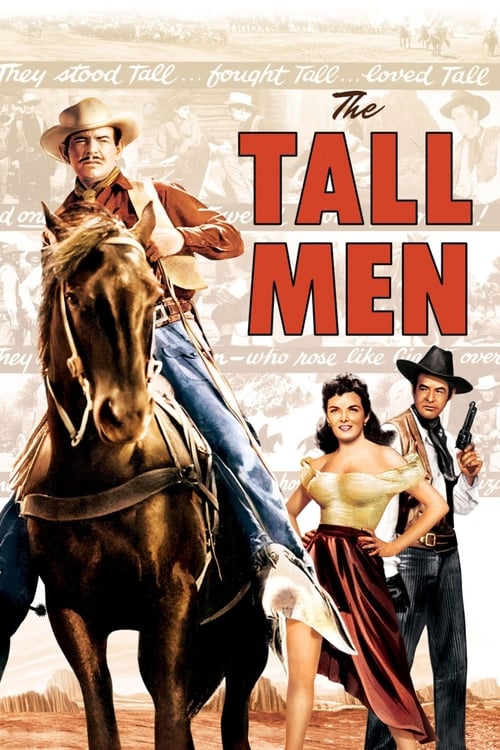
His next two films were made for 20th Century Fox: Soldier of Fortune, an adventure story in Hong Kong with Susan Hayward, and The Tall Men (1955), a Western with Jane Russell and Robert Ryan. Both were profitable, although only modest successes, earning Gable his first profit sharing royalties. In 1955, Gable would be 10th at the box office – the last time he was in the top ten. That same year, Gable married fifth wife Kay Spreckels (née Kathleen Williams). A former fashion model and actress, she had previously been married three times: first to Charles Capps (1937–39), then to Argentinian cattle tycoon Martín de Alzaga (1942–43), and to sugar-refining heir Adolph B. Spreckels Jr. (1945–52). Gable became stepfather to her son Bunker Spreckels, who went on to live a notorious celebrity lifestyle in the late 1960s and early 1970s surfing scene, ultimately leading to his early death in 1977.
Gable also formed Russ-Field-Gabco in 1955, a production company with Jane Russell and her husband Bob Waterfield, and they produced The King and Four Queens (1956), a film Gable thought would also star Russell to capitalize on The Tall Men's moderate success. That role instead went to Jo Van Fleet. It was Gable's only time as producer. He found producing and acting to be too much work and this Raoul Walsh western was the only film made. After turning down the lead role in Universal-International's Away All Boats, his next project was the Warner Bros. production Band of Angels (1957), co-starring Yvonne De Carlo and featuring relative newcomer Sidney Poitier; it was not well received, despite Gable's role's similarities to Rhett Butler. Newsweek said, "Here is a movie so bad that it must be seen to be disbelieved."
1958–1961: Paramount and The Misfits
Next, he paired with Doris Day in Teacher's Pet (1958), shot in black and white at Paramount. He did Run Silent, Run Deep (also 1958), with co-star and producer Burt Lancaster, which featured his first on-screen death since 1937, and which garnered good reviews. Gable started to receive television offers, but rejected them outright. At 57, Gable finally acknowledged, "Now it's time I acted my age". His contracts began including a clause that his filming and work days ended at 5 p.m.
His next two films were light comedies for Paramount: But Not for Me (1959) with Carroll Baker, and It Started in Naples (1960) with Sophia Loren. Naples was written and directed by Melville Shavelson and it mainly showed the beauty of Loren and the Italian island Capri. It was a box-office success and was nominated for an Academy Award for Art Direction and two Golden Globes, one for Picture, Comedy/Musical and Loren for Actress, Comedy. Filmed mostly on location in Italy, it was Gable's last film released in color. While there Gable's weight had increased to 230 pounds (100 kg), something he credited to pasta, and he started on a crash diet to achieve a goal weight of 195, along with briefly quitting drinking and smoking, to pass a required physical for his next movie.
On February 8, 1960, Gable received a star on the Hollywood Walk of Fame for his work in motion pictures, located at 1608 Vine Street.
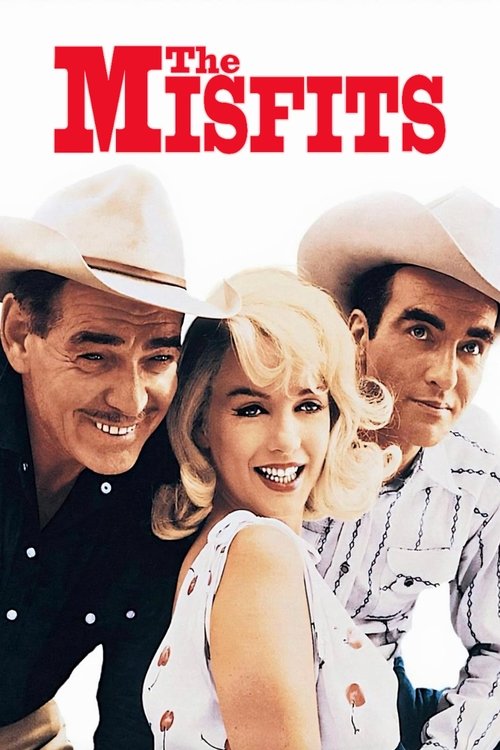
Gable's last film was The Misfits (1961), with a script by Arthur Miller and directed by John Huston. Co-starring with Gable were Marilyn Monroe, Montgomery Clift, Eli Wallach, Thelma Ritter and Rex Bell. Many critics regard Gable's performance to be his finest, and Gable, after seeing the rough cuts, agreed, although the film did not receive any Oscar nominations. Miller wrote the screenplay for his wife Monroe; it was about two aging cowboys and a pilot that go mustanging in Reno, Nevada, who all fall for a blonde. In 1961, it was a somewhat disconnected film with its antihero western themes, but it has since become a classic.
Portraitist Al Hirschfeld created a drawing, and then a lithograph, portraying the film's stars Clift, Monroe, and Gable with screenwriter Miller, in what is suggested as a typical "on-the-set" scene during the troubled production. In a 2002 documentary Eli Wallach recalled the mustang wrangling scenes Gable insisted on performing himself, "You have to pass a physical to film that" and "He was a professional going home at 5 p.m. to a pregnant wife". The New York Times found "Mr. Gable's performance as a leathery old cowboy with a realistic slant on most plain things" ironically vital, with his death before the film's release.
Critical reception and commentary
Film critic Pauline Kael wrote of Gable: his was a "bold open challenge to women" and his unspoken question was "Well sister, what do you say?" with the idea that "if she said no, she was failing what might almost be nature's test. She'd become overcivilized, afraid of her instincts, afraid of being a woman." Kael goes on to describe Gable's sex scenes as "violent and primal."
Filmography
Gable is known to have appeared as an "extra" in 13 films between 1924 and 1930. He then appeared in a total of 67 theatrically released motion pictures, as himself in 17 "short subject" films, and he narrated and appeared in a 1945 World War II propaganda film entitled Combat America, produced by the United States Army Air Forces.
Gable was one of the most consistent box-office performers in the history of Hollywood, appearing on Quigley Publishing's annual Top Ten Money Making Stars Poll sixteen times. He appeared opposite many of the most popular actresses of their time. Joan Crawford was a favorite actress of his to work with, and he partnered with her in eight films. Myrna Loy worked with him seven times, and he was paired with Jean Harlow in six productions. He also starred with Lana Turner in four features, and in three each with Norma Shearer and Ava Gardner. Gable died of a heart attack at the age of 59; his final on-screen appearance was as an aging cowboy in The Misfits, released posthumously in 1961.
Personal life
Marriages and children
Gable married five times and was linked romantically to many other women. His first engagement was to actress Franz Dorfler when he was about 21. Dorfler introduced Gable to Josephine Dillon, who would become his acting coach, manager, and then his wife. When Gable and Dillon married on December 13, 1924, in California, Gable was 23 and Dillon was 40; the couple divorced in 1930. His second wife was Texas socialite Maria Franklin Prentiss Lucas Langham Gable (nicknamed "Ria"). The couple married on June 19, 1931, in California and divorced on March 7, 1939. Thirteen days after his divorce from Maria, Gable married actress Carole Lombard during a production break on Gone with the Wind.
Gable's relationship with and marriage in 1939 to his third wife, actress Carole Lombard (1908–1942), was one of the happiest periods of his personal life. They met while filming 1932's No Man of Her Own, when Lombard was still married to actor William Powell. A Gable and Lombard romance did not take off until 1936, after becoming reacquainted at a party. They were soon inseparable, with fan magazines and tabloids citing them as an official couple.
Gable thrived being around Lombard's youthful, charming, and frank personality, once stating: You can trust that little screwball with your life or your hopes or your weaknesses, and she wouldn't even know how to think about letting you down.
Gable was still legally married, having prolonged an expensive divorce from his second wife, Ria Langham, until his salary from Gone with the Wind enabled him to reach a divorce settlement with her on March 7, 1939. On March 29, during a production break on Gone with the Wind, Gable and Lombard were married in Kingman, Arizona, and honeymooned in room 1201 of the Arizona Biltmore Hotel. They purchased a ranch previously owned by director Raoul Walsh in Encino, California, for $50,000, making it their home. The couple, who lovingly referred to each other as "Ma and Pa", owned a menagerie of animals and raised chickens and horses there. With the bombing of Pearl Harbor many Hollywood stars joined the war effort, some such as James Stewart signing up for active duty. Carole Lombard sent a telegram to President Roosevelt on behalf of Gable expressing his interest in doing so, but F.D.R. thought the 41-year-old actor could best serve by increased patriotic roles in movies and bond drives, which Lombard tirelessly began.
Politics
Gable was a conservative Republican. In 1944, Gable became an early member of the conservative Motion Picture Alliance for the Preservation of American Ideals, a group explicitly created to help root out communists from the film industry. In addition to Gable, its members included such industry figures as Walt Disney, Ayn Rand, Ronald Reagan, and John Wayne; they helped create and enforce the Hollywood blacklist, often by testifying under oath before the House Un-American Activities Committee.
In 1933, Gable was initiated into Freemasonry at the Beverly Hills Lodge No. 528 California.
Illness and death
On November 6, 1960, Gable was sent to Hollywood Presbyterian Medical Center in Los Angeles, where doctors found that he had suffered a heart attack. Newspaper reports the following day listed his condition as satisfactory. By the morning of November 16, he seemed to be improving, but he died that evening at the age of 59 from a second heart attack caused by an infection. Medical staff did not perform cardiopulmonary resuscitation for fear that the procedure would rupture Gable's heart, and a defibrillator was not available.
Gable is interred in the Great Mausoleum, Memorial Terrace, at Glendale's Forest Lawn Memorial Park next to Carole Lombard and her mother. An honor guard and pallbearers Spencer Tracy and James Stewart were in attendance. Twenty-two years later Kay Gable died and was interred there as well.
Style and reception
In a photo essay of Hollywood film stars, Life magazine called Gable, "All man ... and then some."
Doris Day summed up Gable's unique personality: "He was as masculine as any man I've ever known, and as much a little boy as a grown man could be—it was this combination that had such a devastating effect on women."
Joan Crawford—Gable's eight-time co-star, longtime friend, and on-again, off-again girlfriend—stated on David Frost's TV show in January 1970 that Gable "was a king wherever he went. He earned the title. He walked like one, he behaved like one, and he was the most masculine man that I have ever met in my life. Gable had balls".
Robert Taylor said Gable "was a great, great guy, and certainly one of the great stars of all times, if not the greatest. I think that I sincerely doubt that there will ever be another like Clark Gable; he was one of a kind."
In his memoir Bring on the Empty Horses, David Niven states that Gable, a close friend, was extremely supportive after the sudden, accidental death of Niven's first wife, Primula (Primmie), in 1946. Primmie had supported Gable emotionally after Carole Lombard's death four years earlier: Niven recounts Gable kneeling at Primmie's feet and sobbing while she held and consoled him. Niven also states that Arthur Miller, the author of The Misfits, had described Gable as "the man who did not know how to hate."
Gable has been criticized for altering aspects of a script he felt were in conflict with his image. Screenwriter Larry Gelbart, as quoted in James Garner's biography stated that Gable, "refused to go down with the submarine, because Gable doesn't sink". (In reference to Gable's film Run Silent, Run Deep). The novel's author, Capt. Beach, noted changes should be made among the crew to get a Hollywood audience and where a subsequent battle sequence was altered when he should have had script approval, feeling his book was bought by United Artists for its title.
Eli Wallach recalls in his 2006 autobiography The Good, The Bad and Me, that what he felt was one of his best dramatic scenes in The Misfits was cut from the script. Wallach's character is emotionally crushed when he visits Roslyn (Marilyn Monroe), and instead runs into Gable's character and realizes any hope with Roslyn is dashed. Gable asked (within his contractual rights) that the scene be removed, and when Wallach spoke to him, Gable explained he felt that "his character would never steal a woman from a friend."
In popular culture
Warner Bros. cartoons sometimes caricatured Gable. Examples include: Have You Got Any Castles? (in which his face appears seven times inside the novel The House of the Seven Gables), The Coo-Coo Nut Grove (in which his ears flap on their own), Hollywood Steps Out (in which he follows an enigmatic woman), Cats Don't Dance (in which he appears on a billboard promotion for Gone with the Wind and on the backlot of MGM), and Jungle Jitters (where the queen of a village imagines a traveling salesman as Gable).
He also appears in Disney cartoons like Mickey's Polo Team, where he is flirting with Clarabelle Cow, and The Autograph Hound.
Bugs Bunny's nonchalant carrot-chewing standing position, as explained by Chuck Jones, Friz Freleng, and Bob Clampett, originated in a scene in the film It Happened One Night (1934), in which Clark Gable's character leans against a fence, eating carrots rapidly and talking with his mouth full to Claudette Colbert's character. This scene was well known while the film was popular, and viewers at the time likely recognized Bugs Bunny's behavior as parody.
In January 1937, Gable was honored with a block in the forecourt of Grauman's Chinese Theatre.
Along with actor Kent Taylor, Clark Gable served as the inspiration behind the name of Superman's alter-ego Clark Kent.
In the 1937 film Broadway Melody of 1938, Judy Garland (aged 15) sings "You Made Me Love You" while looking at a composite picture of Gable. The opening lines are: "Dear Mr Gable, I am writing this to you, and I hope that you will read it so you'll know, my heart beats like a hammer, and I stutter and I stammer, every time I see you at the picture show, I guess I'm just another fan of yours, and I thought I'd write and tell you so. You made me love you, I didn't want to do it, I didn't want to do it ..."
The 1948 Cole Porter tune "Always True to You in My Fashion" contains the lyrics "Mister Gable, I mean Clark / Wants me on his boat to park".