Development
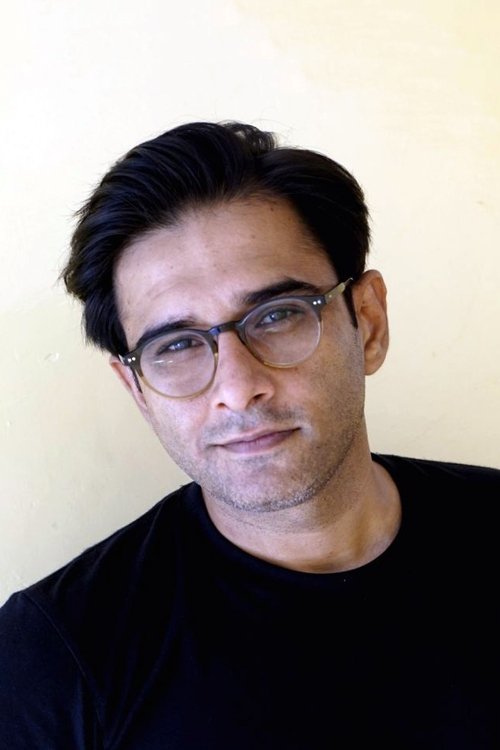
Director Chaitanya Tamhane made a short film called Six Strands at the age of twenty three, which was well received at several international film festivals. The project left him "broke and jobless" and under pressure to earn money, but he did not want to assist another director. Tamhane was watching a "typical" conventional courtroom drama on Doordarshan one day when he thought of making a real courtroom drama and started developing the idea for Court.
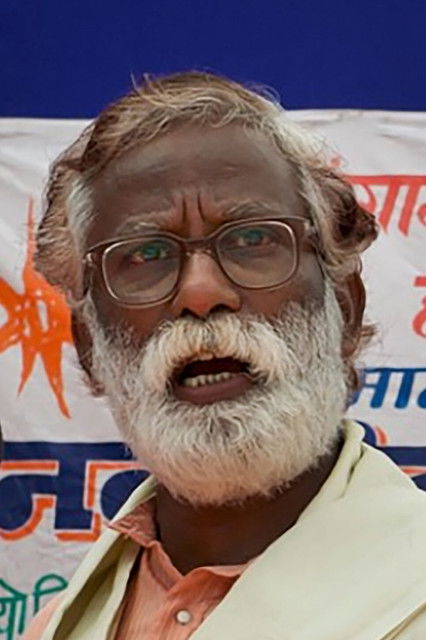
Tamhane wanted to explore the "judicial nightmare" in an Indian setting after coming across the case of Jiten Marandi, a cultural activist from Jharkhand. Marandi was arrested as a suspect in the Chilkari massacre, which occurred on 26 October 2007, where nineteen people were killed by Naxalites at a public function. Marandi became a suspect because his name was similar to the actual suspect whom the police could not find. He was arrested and tried, but was released in 2016 after proven not guilty. The action against activist singers of the cultural organisation, Kabir Kala Manch on allegations of links with the left wing also inspired the film's narrative. Tamhane was curious by the idea of a realistic court trial unfolding in a lower court of Mumbai after attending some of them, recalling:
It felt like the complete opposite of what I, as an audience, would expect from a courtroom film; the lawyers were not good orators, the documents were misplaced, the arguments were technical and redundant. I was amused by this setting, and decided to probe further.
Tamhane found the incidents that occur in a lower court to be "bizarre" and saw the potential for drama and humour. Another incident which prompted Tamhane to make the film was when a friend had gone to a police station for document submission and had to wait two hours for a printout because the constable did not know how to connect the cable of the printer.
In 2011, Tamhane met with his friend Vivek Gomber, who he had directed in a theatrical play called Grey Elephants in Denmark in 2009. Tamhane told Gomber that he wanted to write a courtroom drama but did not have the money to finance his project. Gomber then expressed his interest in producing the film and offered to pay him ₹15,000 (US$160) a month to write the script. Tamhane wrote the script in a year after interviewing several lawyers, academics and activists, reading books and newspaper clippings, and discovering "the world of protest music and the legal world". Gomber found the script "very funny", he also mentioned that visiting courts for the film was "quite sad and disheartening".
While Tamhane was writing the script, the character of the public prosecutor was male for a long time and he felt the film was "too male", with all main characters being men. Later, he changed that character to a woman. Tamhane saw Anand Patwardhan's documentary Jai Bhim Comrade (2011), when he was about to finish writing the script and cited it as an "invaluable resource" for the reference of the film. Tamhane had written all the scenes outside the courtroom but lacked the main case until he read about the condition of manhole workers in a Tehelka book, which he incorporated into the script. He also read books of Fali Sam Nariman, V. R. Krishna Iyer and watched Krzysztof Kieślowski's 1966 short film The Office for reference. Tamhane wrote scenes about the domestic lives of the lawyers in the film as he was interested in depicting the kind of life they lived outside the courtroom while also juxtaposing their professional lives with their personal one.
In 2012, Tamhane submitted the script of Court to the National Film Development Corporation of India for financing, but it was rejected. He applied for the Hubert Bals Fund in 2012, given by the International Film Festival Rotterdam where his short film Six Strands was screened in 2011. He received a sum of ₹670,000 (US$7,000) for script and project development. Gomber invested his own money for the remainder of the budget.