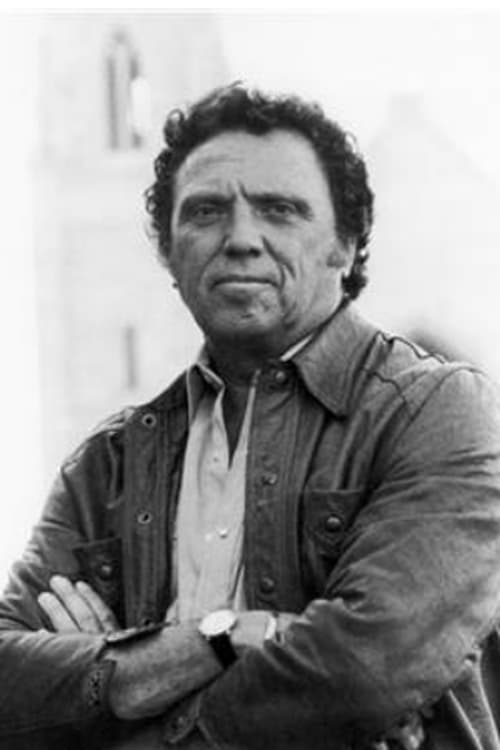
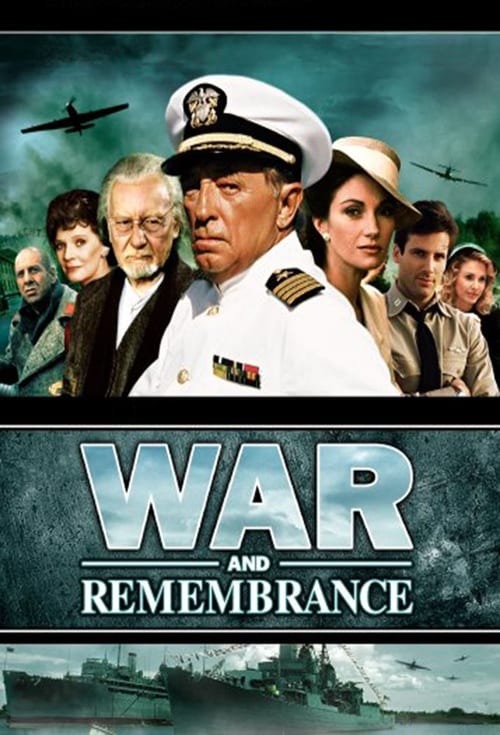
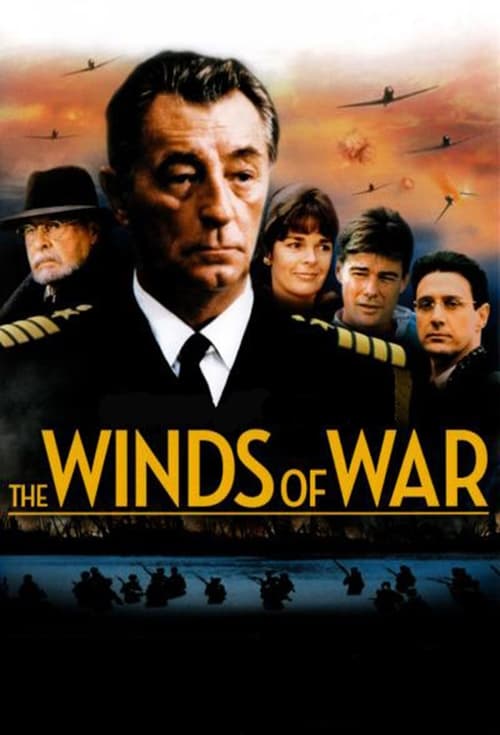

Daniel Mayer Cherkoss (August 12, 1927 – March 27, 2006), known by his pen name Dan Curtis, was an American television and film director, screenwriter, and producer. He was best known as the creator of the gothic soap opera Dark Shadows (1966–71), and for directing the epic World War II miniseries The Winds of War (1983) and War and Remembrance (1988).
Curtis is also known to horror film fans for his work on several horror-themed television series and films, including The Night Stalker (1972) and its sequel The Night Strangler (1973), Bram Stoker's Dracula (1974) and Trilogy of Terror (1975). He also directed three feature films – the Dark Shadows spinoffs House of Dark Shadows (1970) and Night of Dark Shadows (1971), and the supernatural horror Burnt Offerings (1976).
Curtis was nominated for five Primetime Emmy Awards, winning Outstanding Limited Series for War and Remembrance at the 41st Primetime Emmy Awards, for which he also won the Directors Guild of America Award for Outstanding Directorial Achievement in Dramatic Specials at the 42nd Directors Guild of America Awards. He also won the Saturn Award for Best Director for Burnt Offerings.
Contents
Early life
Curtis was born Daniel Mayer Cherkoss to a Jewish parents in Bridgeport, Connecticut. His father, Edward Cherkoss, was a dentist. His mother, Mildred, died when he was a 13-years-old. He studied Sociology at Syracuse University, where he met his wife Norma Mae Klein. After graduating in 1950, he worked as a syndicated television show salesman, before landing at NBC.
Career
Curtis formed his own production company, and achieved his first notable success with the Emmy-winning golf program CBS Match Play Classic.
In 1966, he created the gothic soap opera Dark Shadows, which became a cult hit and ran until 1971. Curtis's series of macabre films include House of Dark Shadows, Night of Dark Shadows, The Night Stalker (for many years holding the record ratings of the most-watched TV movie—and inspired the series Kolchak: The Night Stalker), Intruders, The Night Strangler, Burnt Offerings, Trilogy of Terror and its belated sequel Trilogy of Terror II, The Norliss Tapes (a 1973 pilot for an unproduced series starring Roy Thinnes), Curse of the Black Widow, Dead of Night (1977), and Scream of the Wolf. He worked frequently with sci-fi/horror writers Richard Matheson and William F. Nolan.
Curtis was producer and/or director of several television adaptations of classic horror texts including The Strange Case of Dr. Jekyll and Mr. Hyde (1968), Frankenstein (1973), The Picture of Dorian Gray (1973), Dracula (1974), and The Turn of the Screw (1974).
In 1978, Curtis made a departure from his usual macabre offerings, when he wrote, produced, and directed the sentimental NBC television film When Every Day Was the Fourth of July. Although fictionalized, the film was semi-autobiographical, based on his childhood growing up in Bridgeport, Connecticut, in the 1930s. The film was originally intended to be a pilot for a potential series, but when the series was not picked up by the NBC network, Curtis produced and directed the 1980 television movie sequel The Long Days of Summer, this time airing on the ABC network. His 1983 miniseries The Winds of War, the most watched miniseries in American television history, was nominated for four Emmy Awards at the 35th Primetime Emmy Awards.
Curtis also directed the War and Remembrance miniseries, which was the continuation of The Winds of War. The program was 30 hours in length, split into two segments. Chapters I-VII aired in November 1988. The remaining five parts, Chapters VIII-XII, were billed as "The Final Chapter", and aired in May 1989. The miniseries received 15 Emmy Award nominations at the 41st Primetime Emmy Awards, including for Best Actor (John Gielgud), Best Actress (Jane Seymour), Supporting Actor (Barry Bostwick), and Supporting Actress (Polly Bergen). The show won Emmys for Best Miniseries, Special Effects, and Single-Camera Production Editing. The New York Times profiled Curtis while in post-production on War and Remembrance.
Personal life
Curtis and his wife Norma had three daughters – Cathy, Tracy and Linda (died 1975).
Death
Curtis died of a brain tumor on March 27, 2006 at age 78, at his home in Brentwood, Los Angeles, California, 20 days after the death of his wife by Alzheimer's disease. He was buried at Eden Memorial Park Cemetery.