Plot
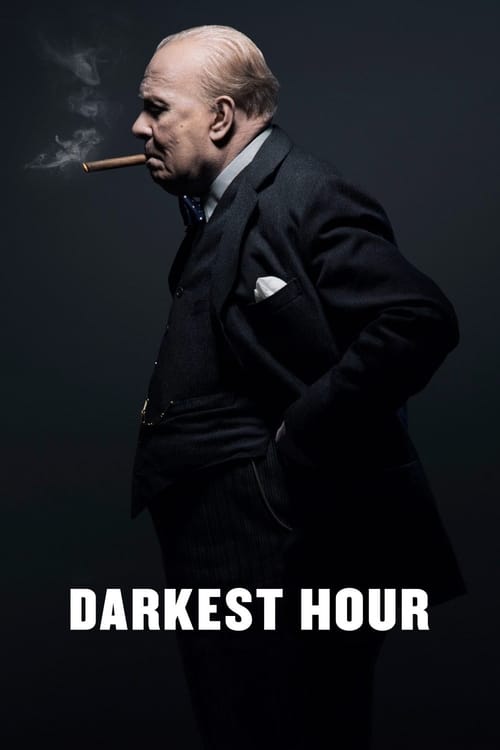
In May 1940, the opposition Labour Party in Parliament demands the resignation of British prime minister Neville Chamberlain for being too weak in the face of the Nazi onslaught. Conservative Party colleagues want Lord Halifax as his successor, but Halifax does not feel it is his time. Chamberlain chooses the only man whom the opposition will accept as leader of a national government: Winston Churchill, who had correctly predicted the danger from Adolf Hitler before the war but has a poor reputation in Parliament.
As Germany invades the Low Countries, Churchill is brusque with his new secretary Elizabeth Layton for mishearing him, which earns him a rebuke from his wife Clementine. King George VI, who is sceptical of Churchill due to his actions during the abdication crisis, reluctantly invites him to form a government. Churchill includes Chamberlain as Lord President of the Council and Halifax as Foreign Secretary.
Parliament reacts coolly to Churchill's first speech promising "Blood, toil, tears and sweat". Chamberlain and Halifax are appalled by Churchill's refusal to negotiate for peace, and plan to resign from the government to force a vote of no confidence and create a situation in which Halifax would likely become prime minister. Churchill visits French prime minister Paul Reynaud, who thinks that Churchill is delusional for not admitting that the Allies are losing the Battle of France, while Churchill is furious that the French do not have a plan to counterattack. Although US president Franklin Roosevelt is sympathetic to Churchill's plight, his actions are limited by an isolationist Congress and the Neutrality Acts.
Churchill draws ire from his cabinet and advisers for delivering a radio address in which he falsely implies the Allies are advancing in France, earning him a rebuke from the king. Halifax and Chamberlain continue to push to use Italian Ambassador Giuseppe Bastianini as an intermediary with Germany.
The British Expeditionary Force is trapped at Dunkirk and Calais, and Britain begins preparing for a German invasion. Against the advice of the War Cabinet, Churchill orders Brigadier Nicholson in Calais to lead the 30th Infantry Brigade to distract the enemy and buy time for the evacuation of soldiers from Dunkirk. The debacle in France causes the War Cabinet to support negotiating with Germany. Under heavy pressure, Churchill agrees to consider a negotiated peace but chokes on the words as he tries to dictate a letter requesting talks.
George VI unexpectedly visits Churchill, explaining that he has come to support Churchill to continue the war. Churchill's idea to have civilian boats evacuate troops from Dunkirk (Operation Dynamo) is initiated. Still uncertain, Churchill impulsively rides the London Underground (for the first time in his life) and asks startled passengers for their opinions: they all want to continue to fight. Churchill addresses the Outer Cabinet and other members of Parliament and finds that they, too, have little desire to surrender.
As Churchill prepares to address Parliament, Halifax asks Chamberlain to continue with their plan to resign, but Chamberlain decides to first listen to the address. Finishing his speech, Churchill proclaims "we shall fight on the beaches", should the Germans invade, to resounding support from the opposition, while the Conservative MPs behind him sit in silence until Chamberlain mops his brow with his handkerchief; a prearranged signal that they should support the PM. Churchill exits to cheers and enthusiastic waving of Order Papers.
An epilogue reveals that almost all of the soldiers trapped at Dunkirk were successfully evacuated; Chamberlain died six months later; Halifax was reassigned to a posting in Washington, D.C., and Churchill was voted out of office after the end of World War II in Europe.