Freelance
O'Brien returned to film noir, where he was a frequent player, and made one of his most famous movies, D.O.A., where he portrays a man investigating his own murder. He followed this with the lead in the noir 711 Ocean Drive (1950). Next was a starring role in the comedy The Admiral Was a Lady, co-starring roles in the noir Between Midnight and Dawn (1950) and the Western The Redhead and the Cowboy (1951), then the leads in the crime film Two of a Kind and the Westerns Warpath and Silver City, all in 1951. These were followed by the lead in the Western Denver and Rio Grande, and second lead in the noir The Turning Point.
However, even though O'Brien still managed to command leading-man roles, the prestige of his pictures and casts had begun to diminish and his career hit a slump. According to TCM, "In the early '50s, O'Brien started struggling with his weight, which could change significantly between films. He had no problems if that relegated him to character roles, but for a few years, "it was hard to come by anything really first rate."
"The funny thing about Hollywood is that they are interested in having you do one thing and do it well and do it ever after," said O'Brien. "That's the sad thing about being a leading man – while the rewards may be great in fame and finances, it becomes monotonous for an actor. I think that's why some of the people who are continually playing themselves are not happy."
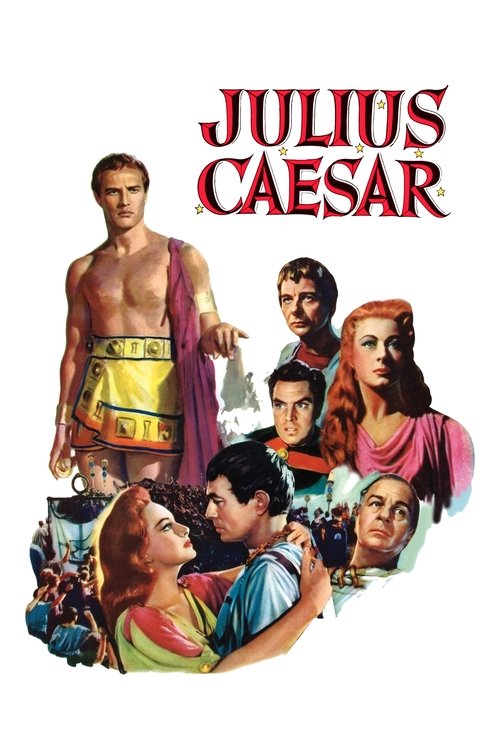
He still made some notable movies, including the lead in two for Ida Lupino, The Hitch-Hiker and The Bigamist, and as a featured player as Casca in Joseph L. Mankiewicz's ensemble film of Julius Caesar (1953). And the leads again in, China Venture (1953), Shield for Murder (1954), and The Shanghai Story (1954).
O'Brien also worked heavily in television at this time, on such shows as Pulitzer Prize Playhouse, Lux Video Theatre and Schlitz Playhouse of Stars. He announced plans to direct his own films.
In 1951, he was in a well-publicized brawl with Serge Rubinstein at a cafe.
In spite of the ups and downs of his Hollywood career, O'Brien was still capable of greatness, both on the stage and on film. In 1954, Mankiewicz cast O'Brien as press agent Oscar Muldoon in The Barefoot Contessa, earning him an Academy Award for Best Supporting Actor.
O'Brien followed this with a number of important roles, including the second lead in the musical crime film Pete Kelly's Blues, the lead in the dystopian political movie 1984 and the noir A Cry in the Night (1956), co-lead in the World War II drama D-Day the Sixth of June (all 1956).
That same year, he had a refreshing change of pace as the comedy lead (a Runyonesque gangster who stumbles into rock-and-roll) in The Girl Can't Help It, alongside Tom Ewell and Jayne Mansfield.
In 1957, O'Brien earned the second lead in the Western The Big Land, film noir Stopover Tokyo, and the second lead in the musical drama Sing, Boy, Sing and lead in the drama The World Was His Jury in 1958. In 1959, he co-starred in the World War II drama Up Periscope and the French-Australian melodrama The Restless and the Damned.