Career as director
Petri made his feature film debut as a director with The Assassin (also titled The Lady Killer of Rome, 1961), starring Marcello Mastroianni as an egotistical social careerist accused of the murder of his former mistress. It was the first of four scenarios/screenplays written together with Tonino Guerra, and the first of Mastroianni's repeated appearances in Petri's films. The Assassin marked a deliberate departure from neorealism, examining his protagonist's psychology: "The protagonist of Bicycle Thieves today must face not only the society he lives in but also his own consciousness", Petri stated in an interview the following year. The film was a success both with the audience and the critics, enabling the financing of Petri's second film, His Days Are Numbered (1962), again co-written with Guerra. Other than The Assassin, His Days Are Numbered, the story of a plumber who becomes aware of his own mortality and stops going to work, was not a success.
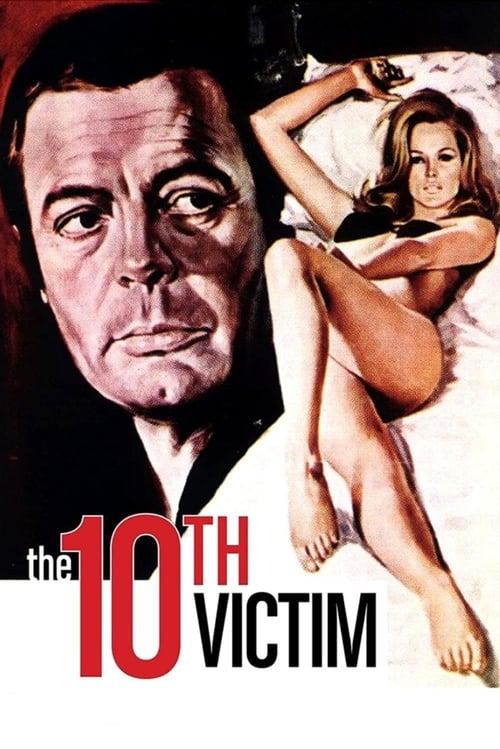
Petri's next two directorial efforts, The Teacher from Vigevano (1963), a comedy drama about the troubles of a provincial school teacher, and Peccato nel pomeriggio, his contribution to the anthology film High Infidelity (1964), are regarded as lesser works by film historians. While preparing The 10th Victim, he participated in the sexy mondo film Nudi per vivere (1964), working under a pseudonym. The 10th Victim (1965), a satirical look at a future society finding distraction in a televised manhunt, met with reservations by some critics for being a commercial "compromise" by its director, but was successful with the audience.
We Still Kill the Old Way (1967), a crime drama following a murder investigation hindered by local power structures in rural Sicily, was adapted from the novel To Each His Own by Leonardo Sciascia and received the Best Screenplay Award at the 1967 Cannes Film Festival. The film marked the beginning of Petri's collaboration with screenwriter Ugo Pirro, which was to last until 1973, and was the first of four feature films by Petri to star Gian Maria Volontè. A Quiet Place in the Country (1968), a giallo thriller about an artist's deterioration into madness, won a Silver Bear award at the 19th Berlin International Film Festival, but was also dismissed by some critics as "kitsch" and "nonsense".