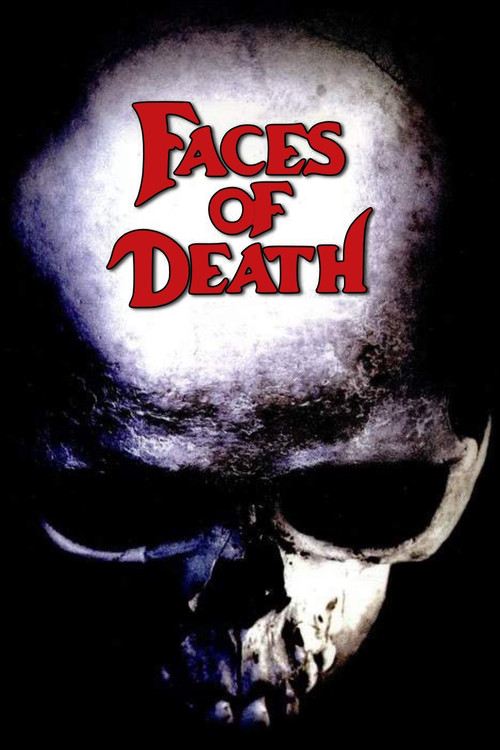



Faces of Death (later re-released as The Original Faces of Death) is a 1978 American mondo horror film written and directed by John Alan Schwartz, credited under the pseudonyms "Conan Le Cilaire" and "Alan Black" respectively.
The film, presented as if it were an actual documentary, centers on pathologist Francis B. Gröss, played by actor Michael Carr, who presents the viewer with footage showing different gruesome ways of dying from a variety of sources. Many scenes were faked for the film, but most portions include pre-existing video footage of real deaths and their aftermath.
Faces of Death received generally negative reviews from critics but was a success at the box office, reportedly grossing over $35 million worldwide. It gained a cult following and spawned several sequels, the first of which, Faces of Death II, was released in 1981.
Contents
Plot
After performing an autopsy, pathologist Francis B. Gröss tells the viewer that he is interested in the transitional periods of life and death thanks to a recurring dream. At the same time, his experience as a pathologist has desensitized him to grotesque deaths. He has compiled footage to understand the many "faces of death."
Footage is played of various deaths, including a man killed by an alligator, which Gröss calls a "violent retaliation from a creature who has suffered continued abuse from mankind". Gröss next narrates over recordings of assassinations, stating that humans are the only species to kill for greed. Assassin François Jordan is interviewed and admits that he kills solely for payment, not for political or social value. If there were a case on which he had thoughts, he would immediately, but respectfully, decline the mission. Gröss introduces another type of killer, "the one who kills for no apparent reason." A gunfight ensues between a SWAT team and an armed murderer. During the gunfight, the SWAT team throws tear gas into the house of the murderer, who is later shot, after which the team enters the killer's house to find his family stabbed to death; Gröss questions whether the man's actions were caused by society. As criminal Larry DeSilva is executed by electric chair, Gröss questions "if two wrongs make a right."
Gröss visits the Los Angeles County coroner's office, where Dr. Thomas Noguchi is embalming multiple corpses after their autopsies. One cadaver is a horrifically bloated drowned woman; the other is a decapitated man whose skin is peeled off his skull for examination. Gröss asks Noguchi for his thoughts on his own embalming process after he dies, to which he replies: "life is purely a transitory state."
One man, Samuel Berkowitz, has his body subjected to cryopreservation after death; his bodily fluids are replaced with a liquid with a low freezing point, then he is stored in a freezer to preserve his body for future science to revive him. The "theater of preservation" transitions to a brief discussion on suicide with footage of a woman jumping from a building; Gröss admits this was "a face of death he wishes never to face again."
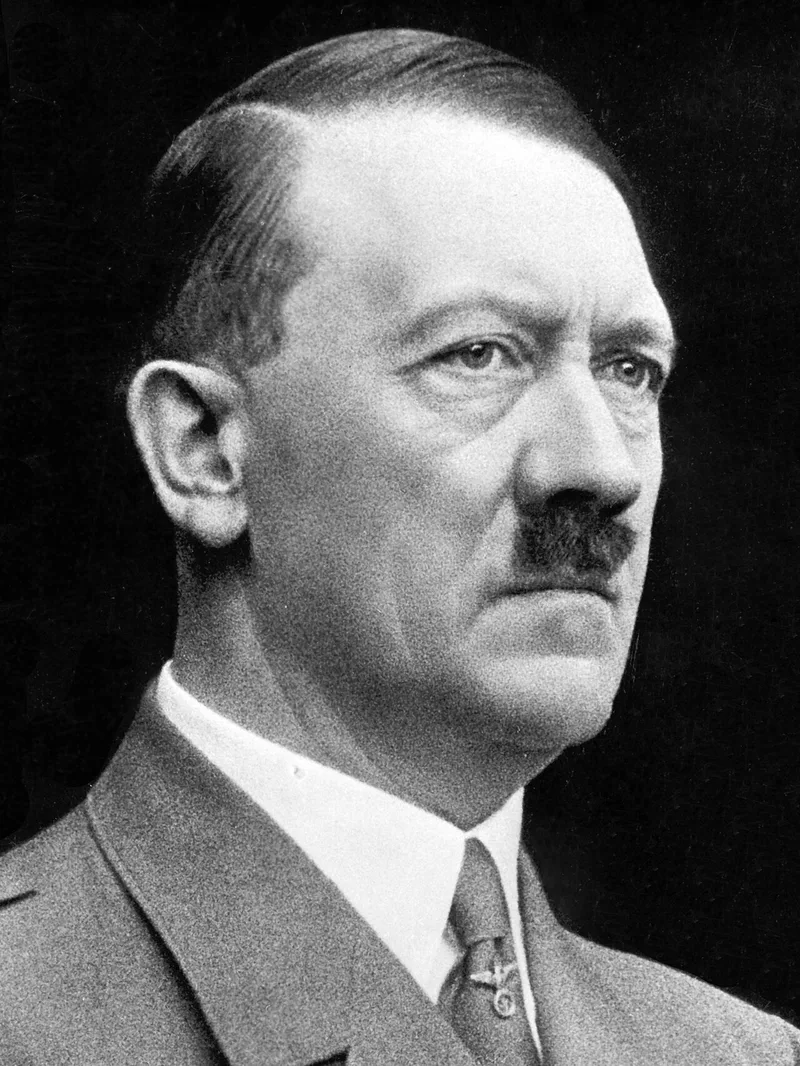
The next segment displays war and atrocities in history, including the Holocaust. Footage of German forces slaughtering enemy forces is shown, as they were becoming more desperate in the latter years of the war. The segment ends with footage of Nazis being obliterated in battle and symbols of Nazism destroyed, with Gröss saying that Hitler "lost control not only of his army but of his mind."
Cast
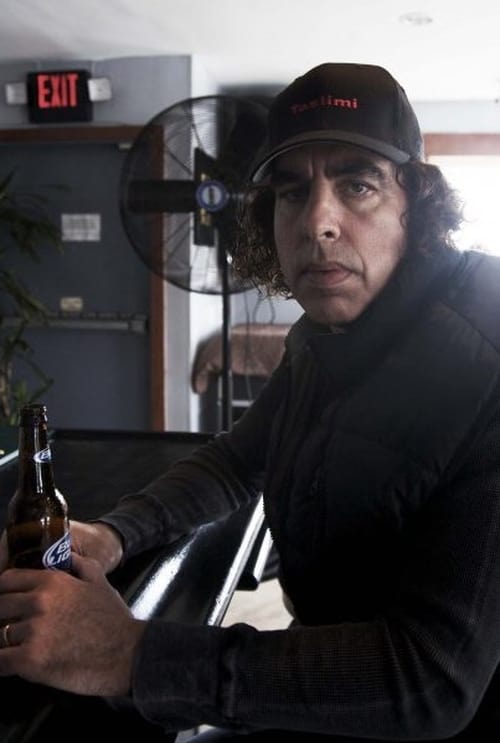
Michael Carr as Francis B. Gröss
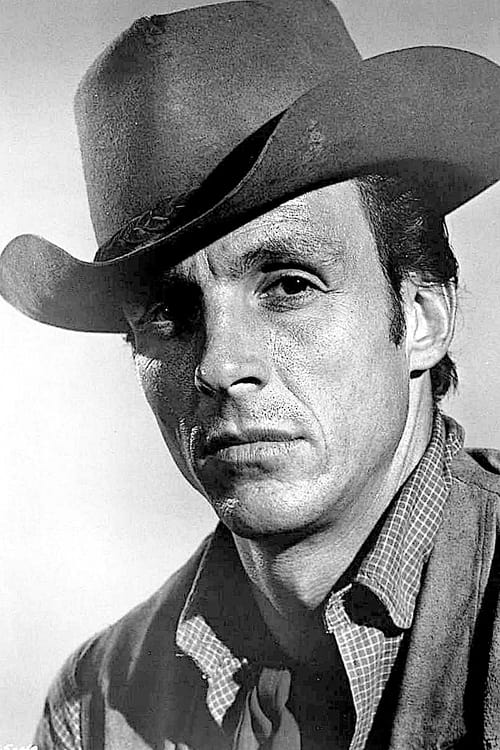
Samuel Berkowitz as Victim (uncredited)
Mary Ellen Brighton as Suicide Victim (uncredited)
Thomas Noguchi as Chief Medical Examiner Coroner (uncredited)
John Alan Schwartz as Cult Leader (uncredited)
Vern Stierman as Narrator (uncredited)
Production
The film was written and directed by John Alan Schwartz (credited as "Alan Black" for writing and as "Conan Le Cilaire" for directing). Schwartz also took credit as second unit director, this time as "Johnny Getyerkokov". He also appears in one of the film's segments as the leader of the alleged flesh-eating cult in San Francisco, and has brief appearances in several other movies in this series. Schwartz wanted to depict very real death with "an analytical view, rather than a purely exploitive purpose", but the film's inclusion of fake scenes makes this debatable. The movie features Michael Carr as the narrator, and 'creative consultant' called "Dr. Francis B. Gröss", whose voice is reminiscent of Leonard Nimoy in the popular TV show In Search of... (which Schwartz worked on). Schwartz states that the movie's budget was $450,000, and there are estimates that it has grossed more than $35 million worldwide in theatrical releases, not including rentals.
Approximately 60% of the film was real footage purchased from news stations, medical researchers, witnesses to the Flight 182 crash, graphic war footage, graphic autopsies, deleted footage from other documentaries, and/or footage filmed by the actual crew in morgues or on a beach.
Many sequences in the film were recreations of news footage; special effects artist Douglas White stated the producers watched hundreds of hours of news footage and studied crime scene photos to determine whether their effects looked realistic. Editor Glenn Turner stated the initial version of the movie consisted of gruesome newsreel footage bought and compiled, but the lack of narrative made it "difficult to watch", leading to the decision to recreate some of the footage instead.
With the exception of the slaughterhouse sequence (which uses methods of killing that are long outdated), chicken beheading and African tribe butchering a cow, several scenes of animals were inauthentic: a seal clubbing which featured choreographed clubbing to avoid harming the seals, and a "violent dog fight" that was simply two dogs covered in theater blood playing with dramatic editing and music, whilst a scene showing a monkey being "killed and having its brains eaten" used cauliflower and theater blood for "brains".
The electric chair execution was achieved by building a fake chair, using toothpaste to emulate saliva, and adding electricity sounds in post-production. Schwartz was inspired to make the scene after reading about electric execution in the southern USA, and was surprised to find it still in practice. He wanted to find a way to film a real chair execution, but none were available during production.
Censorship
Due to its graphic content, Faces of Death was banned and censored in many countries. The movie is often billed as "Banned in 46 Countries", but this claim was exaggerated for marketing purposes. In the United Kingdom, the film was prosecuted and added to the "video nasty" list, as it was deemed to violate the Obscene Publications Act 1959. In 2003, the film was allowed to be released on DVD in the UK; however, cuts of 2 minutes and 19 seconds were required by the BBFC to remove scenes of "fighting dogs and [a] monkey being cruelly beaten to death in accordance with Cinematograph Films (Animals) Act 1937 and BBFC Guidelines." In 1980, Faces of Death was refused classification by the ACB. Despite the ban, several bootleg VHS tapes were released in the country, and the film was unbanned and released uncut on DVD in 2007. However, its sequels remain banned in the country. The film was also banned in New Zealand in 1989. In Germany, the film was edited for a VHS release, with the removal of some graphic scenes. The ban in Germany was lifted in 2022.
Reception
The film was received relatively poorly by critics, both retrospective and contemporary. Review aggregator website Rotten Tomatoes reports that Faces of Death received a 23% critical approval rating of 13 surveyed critics. Writing for the Kansas City Kansan, reviewer Steve Crum denounced the film as "crude, tasteless exploitation footage. Filmed carnage." He ended his review urging the viewer to "be ashamed to watch this garbage."
Joshua Siebalt of Dread Central had mixed feelings about the film: "as a curiosity piece, Faces of Death is well worth a look, especially if you've not seen it in a very long time. As for its place in horror cinema history, well, that remains to be seen. As I said it's not a film that holds up very well at all, but considering how groundbreaking it was for its time, I doubt anyone will ever forget it. And while it is nice to have all of the myths about Faces finally addressed by the people who created it, it also takes some of the fun out if it, too."
Christopher Kulik of DVD Verdict wrote, "The YouTube generation will be unable to comprehend what purpose the film served thirty years ago, and thus it's difficult to ignore how hopelessly dated Faces of Death really is. In short, it's a cinematic experiment which has long outlived its effects, although it remains compelling for film and horror buffs viewing the film in the proper perspective. For the curious virgins, I say give it a shot only if you can handle what has been described up until this point; if you can get through Faces of Death, then you can get through just about anything. Feel free to judge for yourself."
In his review, Screen Anarchy's Ard Vijn was dismissive of the film, remarking that "many of the segments have lost their ability to shock, or can easily be recognized as fake by today's more media-savvy audience. Interesting as a curious bit of film history, but nothing more."
It was ranked #50 on Entertainment Weekly's "Top 50 Cult Films of All Time" in 2003.
Legacy
Sequels
A number of straight to video sequels were made. Some contained almost exclusively authentic footage, while some were almost exclusively staged. Faces of Death II, Faces of Death III - The Final Assault, The Worst of the Faces of Death, and Faces of Death IV, as well as Faces of Death: Fact or Fiction? (a documentary on the making of the series) were written and directed by John Alan Schwartz (as Conan Le Cilaire).
Originally released in theaters on November 10, 1978 by Aquarius Releasing, Faces of Death was released on VHS and Betamax in October 1983, although a heavily edited version (running at 73 minutes) was released in the United Kingdom by "Atlantis Video Productions LTD" in 1982, only to later get banned and placed on the "video nasty" list.
Originally released in theaters in late 1981 (May 1981 in Japan), Faces of Death II was later released on VHS and Betamax on May 22, 1985. It contained real footage of a dead body being pulled from under a pier, Guerrilla death squads in El Salvador, napalm bombings in Vietnam, Buddhist self-immolations, the drugging of a monkey, a dolphin slaughter, a train disaster in India, Cambodian patients with leprosy, a death museum featuring Joaquin Murrieta's preserved head, a driver high on PCP and boxer Johnny Owen going down for his "final" count. The gas station robbery is the only scene outside of the narration to have been faked. Much like the PSA Aircraft crash, the assassination attempt on US President Ronald Reagan occurred recently before the film's completion, and was included as well.
Faces of Death III was released on VHS in mid-August 1986, with the earliest known date being August 20 (March 10, 1985 in Japan). It was originally planned to be released on November 1, 1985, but was withheld from purchase due to concerns of its content, and protests from a number of animal rights groups, in which resulted in "National Video Inc." banning the first two movies from over 550 video rental stores. It featured real footage of the German Autobahn, drug smugglers getting killed away by the Coast Guard, a parachutist landing in a crocodile pit, a videotaped rape/murder (the killer being played by Schwartz), and a car thief getting ripped apart by two junkyard dogs.
The Worst of the Faces of Death was released on VHS in the Fall of 1991 as a 60-minute compilation film featuring the "worst" of the previous three movies, which included some new footage as well. It was originally planned to be released on February 28, 1990, but would be delayed for unknown reasons. This compilation film was likely produced because of both the delay of Faces of Death IV, and because the original trilogy was briefly discontinued in 1987 by "MPI Home video" due to controversy surrounding the franchise until it was rereleased in the early 1990s by its spin-off company, "Gorgon Video".
Additional "sequels"
Faces of Death V and Faces of Death VI were released in the mid-90s, and are compilations made up entirely of highlights from the first four movies (V also took much of its footage from Nick Bougas's 1989 film Death Scenes), with no new footage, intentionally released in countries where the original movies were banned. The first three featured Carr as "Dr. Gröss", although The Worst of Faces of Death (released between installments III and IV and consisting of highlights from the first three installments) instead featured Schwartz's brother, James Schwartz, as "Dr. Louis Flellis". Flellis explains that he accidentally killed "Dr. Gröss" while operating on him the prior week. However, in Faces of Death IV, Flellis explains the absence of Dr. Gröss by stating that he had killed himself, having been driven insane as a result of witnessing so much death.
Also released was Faces of Death VII, simply a retitled version of Death Scenes, and another assemblage of stock footage titled Faces of Death part 7 was released as an online file sometime during the late 1990s. Faces of Death 8 followed soon after. Released only in Germany, and made by unknown individuals, it is a collection of mostly unrelated gore scenes from around the world, with no narration, and no on-screen credits, aside from its title.
Reboot
In May 2021, it was reported that Legendary Entertainment had purchased the rights to the film, and a remake was in development, with filmmakers Isa Mazzei and Daniel Goldhaber attached to direct. The film stars Barbie Ferreira and Dacre Montgomery. Josie Totah was later announced to have joined the cast with Ferreira and Montgomery, with filming starting April 2023. Singer Charli XCX also joined the cast in a small role. The reboot is a narrative film, surrounding an online moderator finding obscene content.
Legal cases
In June 1985, mathematics teacher Bart Schwarz showed the film to his class at Escondido High School in Escondido, California. Two of his students, Diane Feese and Sherry Forget, claimed they were so traumatized by the film that they both "developed an unnatural fear of dying and suffered emotional distress." The families of the two girls sued the school district and received a combined $100,000 settlement ($57,500 for Feese and $42,500 for Forget). Schwarz was suspended from the school for 15 days without pay, but was not fired.
In November 1986, 14-year-old Rod Matthews of Canton, Massachusetts bludgeoned his Canton High School classmate Shaun Ouillette to death with a baseball bat. Matthews claimed the idea to kill Ouillette was conceived after he viewed Faces of Death, as he was curious about what it would be like to kill someone. He had shown previous signs of mental illness. Matthews was sentenced to life in prison, with parole eligibility after 15 years. In November 2024, he was granted parole on his fifth appeal.
Home media
Faces of Death and its sequels were released in boxset form on DVD by MPI Home Video in July 2002. Australian distributor Umbrella Entertainment released the film on DVD in 2007. In 2008, Gorgon Video released the movie on DVD and Blu-ray for its 30th anniversary. A brand new high definition transfer was made with new material and a 5.1 digital soundtrack. The company still offers VHS editions of the film, with the 1980s and 1990s box art. Due to its graphic content and legal difficulties, the film has never been broadcast on television, but is available to stream on Tubi and at one point on Shudder. In 2026, the video company Vinegar Syndrome began releasing restored versions of the films in 4K resolution on their sublabel Vinegar Syndrome Archive. To date they have released Faces of Death, Faces of Death II, and Faces of Death III (aka Fear).