Fairfax County, officially the County of Fairfax, is a county in the state of Virginia, United States. With a population of 1,150,309 as of the 2020 census, it is the most populous county in Virginia, the most populous jurisdiction in the Washington metropolitan area, and the most populous location in the Washington–Baltimore combined statistical area. The county seat is Fairfax; however, because it is an independent city under Virginia law, the city of Fairfax is not part of the county.
The county is part of the Northern Virginia region and forms part of the suburban ring of Washington, D.C., the nation's capital. The county is predominantly suburban with some urban and rural pockets. It borders Montgomery County, Maryland to its north, Falls Church, Alexandria, Arlington County, and Prince George's County, Maryland to its east, Charles County, Maryland to its southeast, Prince William County to its southwest, and Loudoun County to its northwest.
The county is home to the offices of the director of national intelligence in McLean and the headquarters of four U.S. intelligence agencies: the Central Intelligence Agency at the George Bush Center for Intelligence in Langley, the National Geospatial-Intelligence Agency at Fort Belvoir, the National Reconnaissance Office in Chantilly, and the National Counterterrorism Center in McLean.
In academia, the county is home to the flagship campus of George Mason University in Fairfax, CIA University in Chantilly, Sherman Kent School for Intelligence Analysis in Reston, and several Northern Virginia Community College campuses. In the private sector, as of 2025, eleven of the Fortune 500 companies are headquartered in the county as of 2023.
In 2020, Fairfax County's median household income of $127,866 was the fifth-highest in the United States.
Contents
History
Prior to European settlement, present-day Fairfax County was initially inhabited by the Algonquian-speaking Doeg tribe.
17th century
In 1608, Captain John Smith documented the Doeg tribe's villages, which included Namassingakent and Nemaroughquand on the south bank of the Potomac River in present-day Fairfax County. By 1670, Virginian colonists from the Northern Neck region drove the Doeg Tribe out of present-day Fairfax County and into Maryland.
18th century
Fairfax County was formed in 1742 from the northern part of Prince William County, and was named after Thomas Fairfax, 6th Lord Fairfax of Cameron, proprietor of the Northern Neck. The county's logo, seal and flag were adopted from the arms of Lord Fairfax of Cameron.
The county's initial settlements were along the Potomac River. George Washington settled in Fairfax County and built his home, Mount Vernon, facing the Potomac. Gunston Hall, the home of George Mason, is nearby. Fort Belvoir is partly on the estate of Belvoir Manor, built along the Potomac by William Fairfax in 1741.
Thomas Fairfax, the only member of the British nobility ever to reside in the colonies, lived at Belvoir before moving to the Shenandoah Valley. The Belvoir mansion and several of its outbuildings were destroyed by fire immediately after the Revolutionary War in 1783, and George Washington noted the plantation complex deteriorated into ruins.
In 1757, the northwestern two-thirds of Fairfax County became Loudoun County. In 1789, part of Fairfax County was ceded to the federal government to form Alexandria County, then part of the District of Columbia.
19th century
Alexandria County was returned to Virginia in 1846, reduced in size by the secession of the independent city of Alexandria in 1870, and renamed Arlington County in 1920.
During the American Civil War the Battle of Chantilly, also known as Ox Hill, part of the Second Battle of Bull Run, was fought within Fairfax County. Other areas of Civil War conflict in the county included Minor's Hill, Munson's Hill, and Upton's Hill.
20th century
The Fairfax County town of Falls Church became an independent city in 1948. The Fairfax County town of Fairfax was named an independent city in 1961.
The federal government's growth during and after World War II spurred rapid growth in the county and transformed it from a rural to suburban region. Large businesses began settling in the county, and the opening of Tysons Corner Center spurred the rise of Tysons, Virginia. The technology boom and a steady government-driven economy created rapid growth and an increasingly large and diverse population. The economy has also made Fairfax County one of the nation's wealthiest counties.
A general aviation airport along U.S. Route 50 west of Seven Corners, Falls Church Airpark, operated in the county from 1948 to 1960. The facility's 2,650-foot unpaved runway was used extensively by private pilots and civil defense officials. Residential development, multiple accidents, and the demand for retail space led to its closure in 1960.
Geography and climate
According to the U.S. Census Bureau, the county has an area of 406 square miles (1,050 km2), of which 391 square miles (1,010 km2) is land and 15 square miles (39 km2) (3.8%) is water. There are about 44,400,000 trees that create a canopy covering 55.4% of the total land area.
Fairfax County is bounded on the north and southeast by the Potomac River. Across the river to the northeast is Washington, D.C., across the river to the north is Montgomery County, Maryland, and across the river to the southeast are Prince George's County, Maryland and Charles County, Maryland. The county is partially bounded on the north and east by Arlington County and the independent cities of Alexandria and Falls Church. It is bounded on the west by Loudoun County, and on the south by Prince William County.
Most of the county lies in the Piedmont region, with rolling hills and deep stream valleys, such as Difficult Run and its tributaries. West of Route 28, the hills give way to a flat, gentle valley that stretches west to the Bull Run Mountains in Loudoun County. Elevations in the county range from near sea level along the tidal sections of the Potomac River in the southeast portion of the county to more than 500 feet (150 m) in the Tysons area.
In 2023, the plant hardiness zone shifted from 7a to 7b. The Fairfax County News Letter predicts that Fairfax will shift to zone 8 in the next few decades as temperatures rise.
Geology
The Piedmont hills in the central county are made up of ancient metamorphic rocks such as schist, the roots of several ancestral ranges of the Appalachian Mountains. The western valley is floored with more recent shale and sandstone. This geology is similar to adjacent bands of rocks in Maryland and further south in Virginia along the eastern front of the Appalachian.
An area of 11 square miles (30 km2) of the county is known to be underlain with natural asbestos. Much of the asbestos is known to emanate from fibrous tremolite or actinolite. The threat was discovered in 1987, prompting the county to establish laws to monitor air quality at construction sites, control soil taken from affected areas, and require freshly developed sites to lay 6 inches (150 mm) of clean, stable material over the ground.
During the construction of Centreville High School, for instance, a large amount of asbestos-laden soil was removed and then trucked to Vienna for the construction of the I-66/Nutley Street interchange. Fill dirt then had to be trucked in to make the site level. Marine clays can be found in widespread areas of the county east of Interstate 95, mostly in the Franconia and Mount Vernon districts. These clays contribute to soil instability, leading to significant construction challenges for builders.
Demographics
2020 census
As of the 2020 census, the county had a population of 1,150,309. The median age was 38.3 years. 23.3% of residents were under the age of 18 and 13.8% of residents were 65 years of age or older. For every 100 females there were 97.1 males, and for every 100 females age 18 and over there were 94.6 males age 18 and over.
The racial makeup of the county was 49.5% White, 9.6% Black or African American, 0.6% American Indian and Alaska Native, 20.4% Asian, 0.1% Native Hawaiian and Pacific Islander, 8.6% from some other race, and 11.3% from two or more races. Hispanic or Latino residents of any race comprised 17.3% of the population.
98.5% of residents lived in urban areas, while 1.5% lived in rural areas.
There were 411,055 households in the county, of which 35.3% had children under the age of 18 living with them and 23.3% had a female householder with no spouse or partner present. About 22.6% of all households were made up of individuals and 7.8% had someone living alone who was 65 years of age or older.
There were 427,149 housing units, of which 3.8% were vacant. Among occupied housing units, 65.7% were owner-occupied and 34.3% were renter-occupied. The homeowner vacancy rate was 0.7% and the rental vacancy rate was 5.4%.
The median income for a household in the county was $145,164, and the median income for a family was $174,085. 7.5% of the population were military veterans, and 65.5% had a bachelors degree or higher. In the county 5.6% of the population was below the poverty line, including 5.6% of those under age 18 and 5.7% of those age 65 or over, with 7.2% of the population without health insurance.
Socioeconomic characteristics
The median income for a household in the county was $145,164, and the median income for a family was $174,085. 7.5% of the population were military veterans, and 65.5% had a bachelors degree or higher. In the county 5.6% of the population was below the poverty line, including 5.6% of those under age 18 and 5.7% of those age 65 or over, with 7.2% of the population without health insurance.
Education
Primary education
The county is served by the Fairfax County Public Schools system, to which the county government allocates 52.2% of its budget. Including state and federal government contributions, along with citizen and corporate contributions, this brings the 2023 budget for the school system to $3.5 billion. The school system has estimated that, based on the 2023 fiscal year budget, the county would spend $18,772 on each student.
The Fairfax County Public School system contains the Thomas Jefferson High School for Science and Technology, a Virginia Governor's School. TJHSST consistently ranks at or near the top of all U.S. high schools due to the extraordinary number of National Merit semifinalists and finalists, its students' high average SAT scores, and the number of students who annually perform nationally recognized research in the sciences and engineering. A Governor's School, TJHSST draws students from five counties Fairfax County and other Northern Virginia counties, cities, and towns.
Catholic elementary and middle schools in the county fall under the Roman Catholic Diocese of Arlington and include Paul VI Catholic High School, Fairfax County's diocese-run Catholic high school, and Oakcrest School, an all-girls Catholic school in Fairfax County, which is not run by the diocese.
Colleges and universities
George Mason University is just outside the city of Fairfax, near the geographic center of Fairfax County. Northern Virginia Community College (NVCC) serves Fairfax County with campuses in Annandale and Springfield and a center in Reston that is a satellite branch of the Loudoun campus. The NVCC Alexandria campus borders Fairfax County. The Central Intelligence Agency University and its Sherman Kent School for Intelligence Analysis are both located in Fairfax County, specifically in Chantilly and Reston respectively. George Mason University faculty have twice won the Nobel Prize in Economics. George Mason University economics professors James M. Buchanan and Vernon L. Smith won it in 1986 and 2002, respectively.
The University of Fairfax, a for-profit proprietary college and alleged diploma mill was once headquartered in Vienna, Virginia. Virginia Commonwealth University's School of Medicine recently constructed a medical campus wing at Inova Fairfax Hospital in order to allow third- and fourth-year medical students to study at other state-of-the-art facilities in Northern Virginia.
Economy
Fairfax County's economy revolves around professional services and technology. Many residents work for the government or contractors of the federal government. The government is the largest employer, with Fort Belvoir in southern Fairfax the county's single largest source of federal employment. Fairfax County has a gross county product of approximately $95 billion.
Major employers in the county include Airbus, Volkswagen Group of America, Hilton Worldwide, DXC Technology, Northrop Grumman, Science Applications International Corporation (SAIC), Leidos, Booz Allen Hamilton, Gannett, Capital One, General Dynamics, ICF International, Freddie Mac, Sallie Mae, ManTech International, Mars, NII, and NVR. The county is home to eleven Fortune 500 company headquarters, 11 Hispanic 500 companies, and five companies on the Black Enterprise 500 list.
The county's economy is supported by the Fairfax County Economic Development Authority, which provides services and information to promote Fairfax County as a leading business and technology center. The FCEDA is the nation's largest non-state economic development authority. Fairfax County is also home to the Northern Virginia Technology Council, a trade association for local technology companies. Fairfax County has a higher concentration of high-tech workers than Silicon Valley.
Tysons
Tysons, located in the county, is Virginia's largest office market and the nation's largest suburban business district, with 26,600,000 square feet (2,470,000 m2) of office space. It is the country's 12th-largest business district and is expected to grow substantially in the coming decades. It contains a quarter of the county's total office space inventory, which was 105,200,000 square feet (9,770,000 m2) as of 2006, representing roughly the same size as the Lower Manhattan region of New York City.
In October 2011, Forbes described the area as "the place where the Internet was invented, but today it looks increasingly like the center of the global military-industrial complex", because it is home to the nation's first ISPs, many of which are now defunct, and attracts numerous defense contractors that have relocated from other states to or near Tysons Corner.
Tysons draws over 100,000 workers from around the Washington metropolitan area, and draws 55,000 shoppers daily to its two super-regional malls, Tysons Corner Center and Tysons Galleria, compared to 62,500 shoppers daily in Washington, D.C..
After years of delays attributed to stalling and controversy, the $5.2 billion expansion of the Washington Metro Silver Line in Virginia from Washington, D.C., to Dulles International Airport was funded by the Federal Transit Administration in December 2008. The Silver Line added four stations in Tysons, including a station between Tysons Corner Center and Tysons Galleria.
Along with the expansion of Washington Metro, Fairfax County government has a plan to "urbanize" the Tysons area. The plan calls for a private-public partnership and a grid-like street system to make Tysons a more urban environment, tripling available housing to allow more workers to live near their workplaces. The goal is to have 95% of Tysons Corner within 1⁄2-mile (800 m) of a metro station.
Top employers
According to the county's 2025 Annual Comprehensive Financial Report, the county's largest employers are:
Arts and culture
Annual festivals include the "Celebrate Fairfax!" festival held in June at the Fairfax County Government Center in Fairfax, the Tephra Fine Arts Festival held in May at Reston Town Center in Reston, and the International Children's Festival held in September at the Wolf Trap National Park for the Performing Arts, a performing arts center in Wolf Trap.
Fairfax County supports a summer concert series held in multiple venues throughout the county on various nights. The concert series are called Arts in the Parks, Braddock Nights, Franconia District Nights, Mt. Vernon Nights, Nottoway Nights, Spotlight by Starlight, Sounds of Summer and Starlight Cinema.
Capital One Hall, part of the Capital One Headquarters Complex in Tysons, is a major performing arts center that opened in 2021 and seats 1,600 in its main theater.
EagleBank Arena, originally known as the Patriot Center, is located on the Fairfax campus of George Mason University just outside Fairfax, hosts concerts and shows. The nearby Center for the Arts at George Mason is a major year-round arts venue, and the Workhouse Arts Center in Lorton, Virginia includes studios for artists, event facilities for performing groups, and gallery exhibitions in addition to hosting the annual Clifton Film Celebration. Smaller local art venues include the Alden Theater at the McLean Community Center, ArtSpace Herndon, Center Stage at the Reston Community Center, Greater Reston Arts Center, James Lee Community Center Theater, and Vienna Arts Society.
Government and politics
Fairfax County uses the urban county executive form of government, which county voters approved in a 1966 referendum. Under the urban county executive plan, the county is governed by a 10-member Fairfax County Board of Supervisors with the day-to-day running of the county tasked to the appointed Fairfax County executive. Nine of the board members are elected from the single-member districts of Braddock, Dranesville, Franconia, Hunter Mill, Mason, Mount Vernon, Providence, Springfield, and Sully, while the chairman is elected at-large.
In addition to the board of supervisors, there are three constitutional officers, the commonwealth's attorney, clerk of the circuit court, and sheriff. The Fairfax County School Board has 13 members, which are directly elected by Fairfax County voters. Fairfax County also has a Consumer Protection Commission, which advises the board of supervisors and the Department of Cable and Consumer Services on consumer affairs, investigates illegal, fraudulent, deceptive, or dangerous consumer practices, and refers suspected violations of Virginia law to the commonwealth attorney or county attorney for investigation.
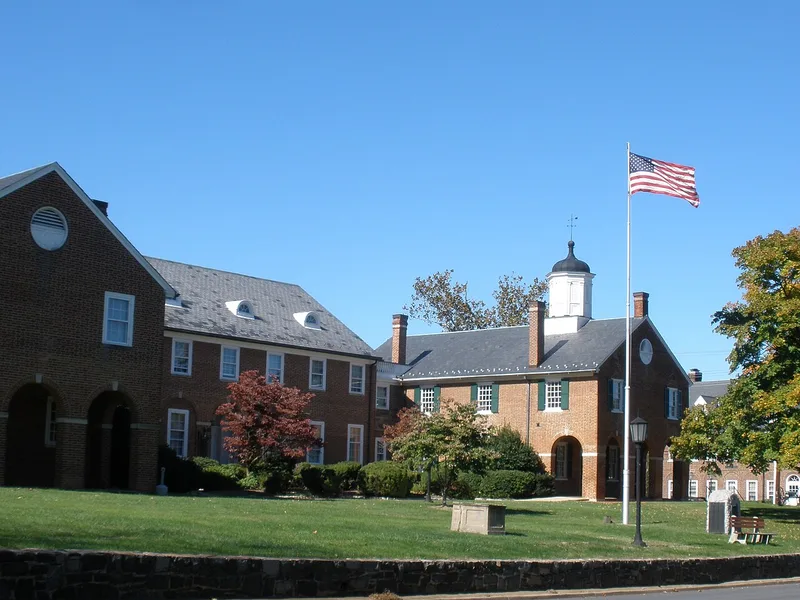
Fairfax County Government Center is west of the City of Fairfax in an unincorporated area. Fairfax County contains an exclave unincorporated area in the City of Fairfax's central business district, where many county facilities (including the courthouses and jail) are.
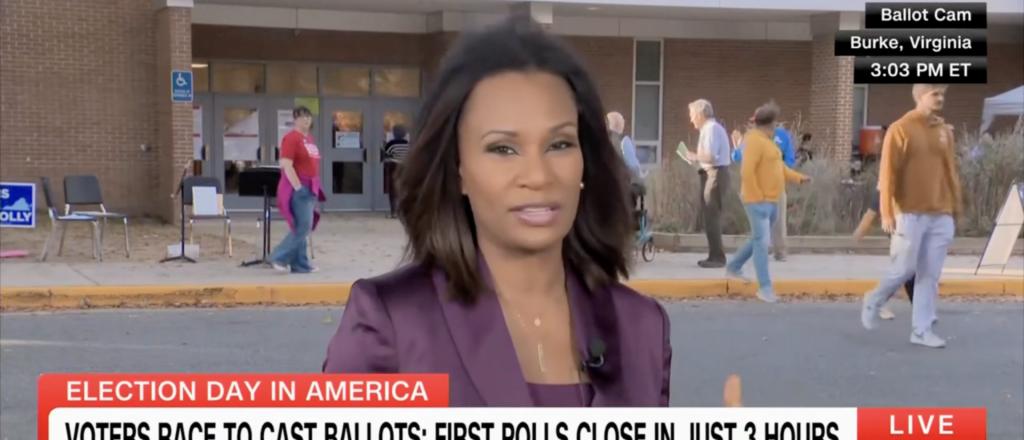
Fairfax County was once considered a Republican bastion, but Democrats now control the board of supervisors, school board (officially nonpartisan), offices of the county sheriff, and the commonwealth's attorney. Democrats also hold all the Fairfax seats in the Virginia House of Delegates and every seat in the Senate.
Fairfax County encompasses parts of three congressional districts, the 8th District, the 10th District, and the 11th District. Democrats represent all three districts, with Suhas Subramanyam representing the 10th, Don Beyer representing the 8th, and James Walkinshaw representing the 11th.
In the 2012 presidential election, Fairfax County solidly backed Barack Obama for re-election as president, who came just short of matching his 2008 performance in the county, winning it 59.6% to Mitt Romney's 39.1%. Former Virginia Governor Tim Kaine, running for the U.S. Senate in 2012, carried Fairfax County with 61% of the vote as part of his statewide victory. U.S. Representatives Connolly, Moran, and Wolf were also re-elected.
Transportation
Roads
Several major highways run through Fairfax County, including the Capital Beltway (Interstate 495), Interstate 66, Interstate 95, and Interstate 395. The American Legion Bridge connects Fairfax to Montgomery County, Maryland. The George Washington Memorial Parkway, Dulles Toll Road, and Fairfax County Parkway are also major arteries. Other notable roads include Braddock Road, Old Keene Mill Road, Little River Turnpike, State Routes 7, 28, and 123, and U.S. Routes 1, 29, and 50.
The county is part of the Washington metropolitan area, the nation's third-most congested area as of 2008.
Northern Virginia, including Fairfax County, is the third-worst congested traffic area in the nation, in terms of percentage of congested roadways and time spent in traffic. Of the lane miles in the region, 44 percent are rated "F", or worst, for congestion. Northern Virginia residents spend an average of 46 hours a year stuck in traffic.
Air
Dulles International Airport lies partly within Fairfax County and provides most air service to the county. Fairfax is also served by two other airports in the Washington area, Ronald Reagan Washington National Airport and Baltimore-Washington International Thurgood Marshall Airport. Manassas Regional Airport, in neighboring Prince William County, is also used for regional cargo and private jet service.
From 1945 to 1961, the eastern part of Fairfax County hosted Falls Church Airpark, an airfield primarily used for general aviation and civil defense purposes until encroaching residential development forced its closure. The area the airport occupied is now mainly used as a shopping center, with the western end of the complex occupied by the Thomas Jefferson branch of the Fairfax County Public Library system. Parts of several apartment complexes are also on some of the airport's former grounds.
Public transportation
Fairfax County has multiple public transportation services, including the Washington Metro's Blue, Orange, Silver and Yellow lines. The Silver line, which runs through the Tysons, Reston, and Herndon areas of the county, opened in 2014, later extended in 2022, as the first new Washington Metro line since the Green Line opened in 1991.
The Virginia Railway Express (VRE) provides commuter rail service to Union Station in Washington, D.C., with stations in Fairfax County. The VRE's Fairfax County stations are Lorton and Franconia-Springfield on the Fredericksburg line, and Burke Centre, Rolling Road, and Backlick Road on the Manassas line.
Fairfax County contracts its bus service, the Fairfax Connector, to Transdev. The City of Fairfax's CUE Bus also serves parts of the county, namely George Mason University and Vienna/Fairfax-GMU Station on the Orange line. The county is also served by WMATA's Metrobus service.
Parks and recreation
The county has many protected areas, a total of over 390 county parks on more than 23,000 acres (93 km2). The Fairfax County Park Authority maintains parks and recreation centers through the county. There are also two national protected areas that are inside the county at least in part, including Elizabeth Hartwell Mason Neck National Wildlife Refuge, George Washington Memorial Parkway, and Wolf Trap National Park for the Performing Arts. Mason Neck State Park is also in Lorton.
Fairfax County is a member of the Northern Virginia Regional Park Authority.
Reston Zoo is in Reston. The National Zoo is nearby in Washington, D.C.
Trails
The county maintains many miles of bike trails running through parks, adjacent to roads and through towns such as Vienna and Herndon. The Washington & Old Dominion Railroad Trail runs through Fairfax County, offering one of the region's best, and safest, routes for recreational walking and biking. In addition, nine miles (14 km) of the Mount Vernon Trail runs through Fairfax County along the Potomac River.
Compared to other regions of the Washington area, Fairfax County has a dearth of designated bike lanes for cyclists wishing to commute in the region. On May 16, 2008, Bike-to-Work Day, the Fairfax County Department of Transportation released the first countywide bicycle route map.
The Gerry Connolly Cross County Trail runs from Great Falls National Park in the county's northern end to Occoquan Regional Park in the southern end. Consisting of mostly dirt paths and short asphalt sections, the trail is used mostly by recreational mountain bikers, hikers, and horse riders.
Communities
Three incorporated towns, Clifton, Herndon, and Vienna, are in Fairfax County.
The independent cities of Falls Church and Fairfax were formed out of areas formerly under Fairfax County's jurisdiction but are politically separate. Nevertheless, the Postal Service has long considered several portions of Fairfax County to be unincorporated Falls Church and Fairfax City. Several portions of the county also have Alexandria mailing addresses; many locals refer to these neighborhoods collectively as "South Alexandria", "Lower Alexandria", or "Alexandria, Fairfax County". "South Alexandria" communities include Hollin Hills, Franconia, Groveton, Hybla Valley, Huntington, Belle Haven, Mount Vernon, Fort Hunt, Engleside, Burgundy Village, Waynewood, Wilton Woods, Rose Hill, Virginia Hills, Hayfield, and Kingstowne.
It has been proposed to convert the entire county into a single independent city, primarily to gain more control over taxes and roads. The most recent such proposal was made on June 30, 2009.
Other communities in Fairfax County are unincorporated areas. Virginia law dictates that no unincorporated area of a county may be incorporated as a separate town or city following the adoption of the urban county executive form of government. Fairfax County adopted the urban county executive form of government in 1966.
As of the 2000 census, Fairfax County's 13 largest communities are all unincorporated CDPs, the largest of which are Centreville, Reston, and McLean, each with a population over 45,000.
Census-designated places
The following localities in Fairfax County are identified by the U.S. Census Bureau as unincorporated census-designated places:
Population ranking
The population ranking of the following table is based on 2020 U.S. census data.
† county seat
Notable people
Historic figures
John Wynn Davidson, Union Army general who co-led the Bloody Island massacre in 1850
Fitzhugh Lee (from Clermont), Confederate general and governor of Virginia
Richard Bland Lee (from Sully Plantation), U.S. congressman from 1789 to 1795
George Mason (from Gunston Hall), Founding Father considered the "father of the United States Bill of Rights"
George Washington (from Mount Vernon), commander-in-chief of the Continental Army and first president of the United States
Films and television
Nguyễn Cao Kỳ Duyên, co-host, Paris By Night
Christina Hendricks, actress, Mad Men and Firefly
Julianne Moore, Oscar-winning actress
Park Yoo-chun, singer, TVXQ and JYJ
Prince Poppycock, America's Got Talent Season Five fourth place finalist
Jason Sudeikis, actor and writer, Saturday Night Live
tobyMac, Grammy-winning artist, producer, and songwriter
Jimmy Workman, actor, The Addams Family and Addams Family Values
Government and politics
Sharon Bulova, former chairwoman, board of supervisors
Barbara Comstock, former U.S. congresswoman (VA-10) and former Virginia delegate (R-34)
Gerry Connolly, former U.S. congressman (VA-11) and former chairman of the Fairfax County board of supervisors
Tom Davis, former U.S. congressman (VA-11)
James Gattuso, senior research fellow, The Heritage Foundation, and former associate director to U.S. Vice President Dan Quayle
Katherine Hanley, Virginia secretary of the Commonwealth and former county board chair
Nguyễn Cao Kỳ, South Vietnamese prime minister, vice president, and Air Force general
John Warner, former U.S. senator
Jim Webb, former U.S. senator
Media
Jayson Blair, former New York Times reporter who fabricated stories
Steve Scully, former host, political editor, and senior producer of C-SPAN's Washington Journal
Music, television, and film
The Dismemberment Plan, band led by Travis Morrison
Lauren Graham, actress, Gilmore Girls
Dave Grohl, drummer, Nirvana, and front man for Foo Fighters
J, K-pop R&B, and soul musician
John Jackson, blues guitarist, master of Piedmont blues
Sportspeople
Bruce Arena, head coach, United States men's national soccer team
Eric Barton, former NFL linebacker
Brian Carroll, midfielder, Philadelphia Union
Hubert Davis, former professional basketball player
Mike Glennon, professional football quarterback, Jacksonville Jaguars
Mia Hamm, U.S. Olympic and professional soccer player
Andy Heck, former NFL football player
Grant Hill, former NBA player
Allen Johnson, 110m hurdles U.S. Olympic gold medalist
Bhawoh Jue, professional football player, Green Bay Packers
Brian Kendrick, professional wrestler
Javier López, former professional baseball pitcher, Arizona Diamondbacks, Boston Red Sox, Colorado Rockies, Pittsburgh Pirates, and the San Francisco Giants and four-time World Series champion
Keith Allen Lyle, former professional football player, Los Angeles/St Louis Rams
Ilia Malinin, U.S. Olympic figure skater
Michael McCrary, former defensive end
Ed Moses, U.S. Olympic swimmer
Scott Norwood, former professional football kicker, Buffalo Bills
Other
Todd Boehly, businessman and investor
Seung-hui Cho, shooter who perpetrated the Virginia Tech shooting
Catherine Coleman, astronaut
Robert Hanssen, spy who sold secrets to the Soviet Union and Russia
Kjell Lindgren, astronaut
Christopher McCandless, wanderer who went to Alaska to try to "find himself" and died in the process, inspiring the non-fiction book Into the Wild
Lorenzo Odone, ALD patient who inspired the film Lorenzo's Oil
Sean Parker, co-founder of Napster, Plaxo, and Causes
Sister cities
Fairfax County's sister cities are:
Songpa (Seoul), South Korea (2009)
Harbin, China (2009)
Keçiören (Ankara), Turkey (2012)