Farley Earle Granger Jr. (July 1, 1925 – March 27, 2011) was an American actor. Granger was first noticed in a small stage production in Hollywood by a Goldwyn casting director, and given a significant role in The North Star (1943), a controversial film praising the Soviet Union at the height of World War II, but later condemned for its political position. Another war film, The Purple Heart (1944), followed, before Granger's naval service in Honolulu, in a unit that arranged troop entertainment in the Pacific. Here he made useful contacts, including Bob Hope, Betty Grable and Rita Hayworth. It was also where he began exploring his bisexuality, which he said he never felt any need to conceal.
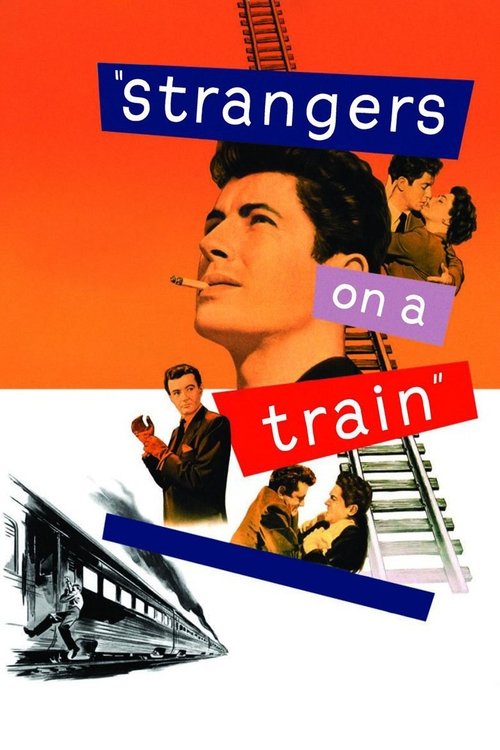
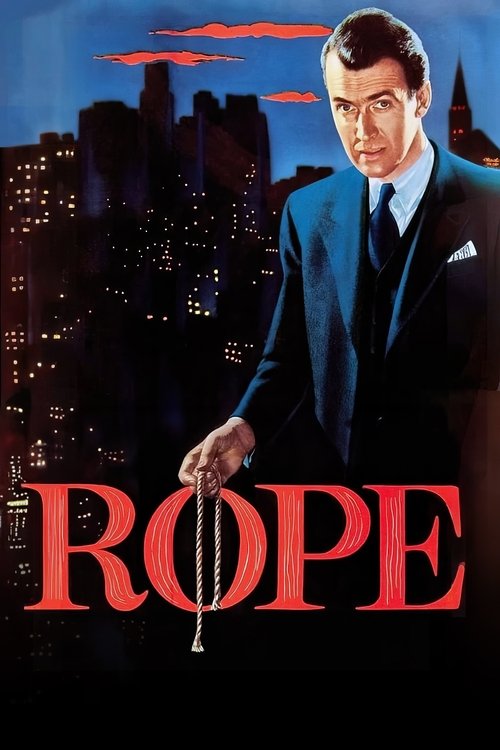
His role in Hitchcock's Rope, a fictionalized account of the Leopold and Loeb murder case of 1924, earned him much critical praise though the film got mixed reviews. Hitchcock cast him again in Strangers on a Train, as a tennis star drawn into a reciprocal murder plot by a wealthy psychopath; he described this as his happiest film-making experience.
Granger continued to appear on stage, film and television well into his 70s. His work ranged from classical drama on Broadway to several Italian-language films and major documentaries about Hollywood. For his contribution to television, Granger has a star located at 1551 Vine Street on the Hollywood Walk of Fame.
Contents
Early life
Granger was born in San Jose, California, the son of Eva (née Hopkins) and Farley Earle Granger Sr. He lived at 1185 Hanchett Avenue in the Hanchett Residence Park neighborhood.
His wealthy father owned a Willys-Overland automobile dealership, and the family frequently spent time at their beach house in Capitola on Monterey Bay. Following the stock market crash in 1929, the Grangers were forced to sell both their homes and most of their personal belongings and move into an apartment above the family business, where they remained for the next two years. As a result of this financial setback and the loss of their social status, both of Granger's parents began to drink heavily. Eventually the remainder of their possessions were sold at auction to settle their debts, and the elder Granger used the last car on his lot to spirit away the family to Los Angeles in the middle of the night.
In the 1930s, the family lived in a small apartment in a seedy part of Hollywood, and Granger's parents worked at various temporary jobs. Their drinking increased, and the couple frequently fought. Hoping he might become a tap dancer, Granger's mother enrolled him at Ethel Meglin's, the dance and drama instruction studio where Judy Garland and Shirley Temple had started.
Granger's father found work as a clerk in the North Hollywood branch of the California Department of Unemployment, and his salary allowed him to put a small down payment on a house in Studio City, where their neighbor was actor/dancer Donald O'Connor. At his office, Granger's father became acquainted with comedian Harry Langdon in the early 1940s, who advised him to take his son to a small local theatre where open auditions for The Wookey, a British play about Londoners struggling to survive during World War II, were being held. The 17-year-old Granger's use of a Cockney accent impressed the director, and he was cast in multiple roles. The opening night audience included talent agent Phil Gersh and Samuel Goldwyn casting director Bob McIntyre, and the following morning Gersh contacted Granger's parents and asked them to bring him to his office that afternoon to discuss the role of Damian, a teenaged Russian boy in the film The North Star.
Granger auditioned for producer Goldwyn, screenwriter Lillian Hellman and director Lewis Milestone. Hellman was trying to convince Montgomery Clift to leave the Broadway play in which he was appearing, and when her efforts proved to be futile, the role was given to Granger. During the 1940s, Goldwyn signed him to a seven-year contract for $100 per week.
Early career
The studio publicity department was concerned audiences would confuse Granger with British actor Stewart Granger, so they suggested he change his name and offered him a list from which to choose. "The names were all interchangeable, like Gordon Gregory and Gregory Gordon. I didn't want to change my name", Granger later recalled. "I liked Farley Granger. It was my father's name, and his grandfather's name. They kept bringing me new combinations, and finally I offered to change it to Kent Clark. I was the only one who thought it was funny." Eventually the studio issued a press release announcing Farley Granger, a senior at North Hollywood High School, had been cast in The North Star after he responded to an ad in the local paper. "I thought that was a really dumb story", said Granger. "The truth was much more interesting."
Making the film proved to be a fortunate start to Granger's career. He enjoyed working with director Milestone and fellow cast members Dana Andrews, Anne Baxter, Walter Brennan and Jane Withers, and during filming he met composer Aaron Copland, who remained a friend in later years. When released in 1943, when the Soviet Union was still an American ally in World War II, the film was savaged by critics working for newspapers owned by William Randolph Hearst, a staunch anti-Communist who felt the movie was Soviet propaganda.
For Granger's next film, he was loaned out to 20th Century Fox, where Darryl F. Zanuck cast him in The Purple Heart (1944), in which he was directed by Milestone and again co-starred with Dana Andrews. Still a teenager, Granger became a close friend of supporting cast member Sam Levene, a character actor from New York City who took him under his wing. He also became a friend of Roddy McDowall and found himself linked with June Haver in gossip columns and fan magazines.
Upon completion of The Purple Heart, Granger enlisted in the United States Navy. Following U.S. Navy Recruit Training in Farragut, Idaho, he sailed from Treasure Island in San Francisco to Honolulu. During the 17-day crossing, he suffered from chronic seasickness and lost 23 pounds, and upon arrival in Hawaii he was admitted to the hospital for several days of rehydration. As a result, the remainder of his military career was spent onshore, where he first was assigned to the cleanup crew at an enlisted men's club situated at the end of Waikiki Beach and then to a unit in Honolulu that worked with Army Special Services that was commanded by classical actor Maurice Evans, who put together and arranged entertainment for all the troops in the Pacific. It was here that he had the opportunity to meet and mingle with visiting entertainers such as Bob Hope, Bing Crosby, Betty Grable, Rita Hayworth, Hedy Lamarr, Gertrude Lawrence, and many others.
Leading roles
In November 1949, Granger, who had two years to go on his contract with Goldwyn, signed a new five-year contract with the producer.
Granger's next two films for Goldwyn in 1950, Edge of Doom and Our Very Own, were unpleasant working experiences, and the actor refused to allow the producer to loan him to Universal Pictures for an inferior magic carpet saga. When he was placed on suspension, he decided to accompany Ethel Chaplin (who had separated from her husband) and her daughter on a trip to Paris. At the last moment, they were joined by Arthur Laurents, who remained behind when the group departed for London to see the opening of the New York City Ballet, which had been choreographed by Jerome Robbins. He and Granger engaged in a casual affair until the actor was summoned to return to New York to help publicize Edge of Doom and Our Very Own, both of which received dreadful reviews. Goldwyn cancelled the nationwide openings of the latter, hoping to salvage it by adding wraparound scenes that would change the focus of the film, and Granger refused to promote it any further. Once again placed on suspension, he departed for Europe, where he spent time in Italy, Austria, and Germany with Laurents before being contacted about an upcoming film by Alfred Hitchcock.
The project was Strangers on a Train (1951), in which Granger was cast as tennis player and aspiring politician Guy Haines. He is introduced to psychopathic Bruno Anthony, portrayed by Robert Walker, who suggests they swap murders, with Bruno killing Guy's unfaithful wife and Guy disposing of Bruno's overbearing father. As with Rope, there was a homosexual subtext to the two men's relationship, although it was toned down from Patricia Highsmith's 1950 original novel. Granger and Walker, whose wife Jennifer Jones had recently left him for David O. Selznick, became close friends and confidantes during filming, and Granger was devastated when Walker died from an accidental combination of alcohol and barbiturates prior to the film's release. It proved to be a box office hit, the first major success of Granger's career, and his "happiest filmmaking experience".
On December 31, 1950, Granger picked up close friend Shelley Winters to escort her to Sam Spiegel's traditional New Year's Eve gala. The actress kept him waiting for nearly two hours, and they argued while en route to the party. Once there, they went their separate ways, and Granger met Ava Gardner. The two left to hear Nat King Cole perform at a nearby nightclub and then went to Granger's home, where they began an intense affair that lasted until Gardner began filming Show Boat a month later.
Later career
Despite his three unsuccessful Broadway experiences, Granger continued to focus on theater in the early 1960s. He accepted an invitation from Eva Le Gallienne to join her National Repertory Theatre. During their first season, while the company was in Philadelphia, John F. Kennedy was assassinated. The President had attended NRT's opening night and post-performance gala in the nation's capital, so the news hit everyone in the company especially hard. Granger had become a close friend of production supervisor Robert Calhoun, and although both had felt a mutual attraction, they never had discussed it. That night they became lovers.
Granger finally achieved some success on Broadway in The Seagull, The Crucible, The Glass Menagerie, and Deathtrap. He starred opposite Barbara Cook in a revival of The King and I at the off-Broadway New York City Center, and in 1979 he was cast in the Roundabout Theatre Company production of A Month in the Country. In 1986 he won the Obie Award for his performance in the Lanford Wilson play Talley & Son.
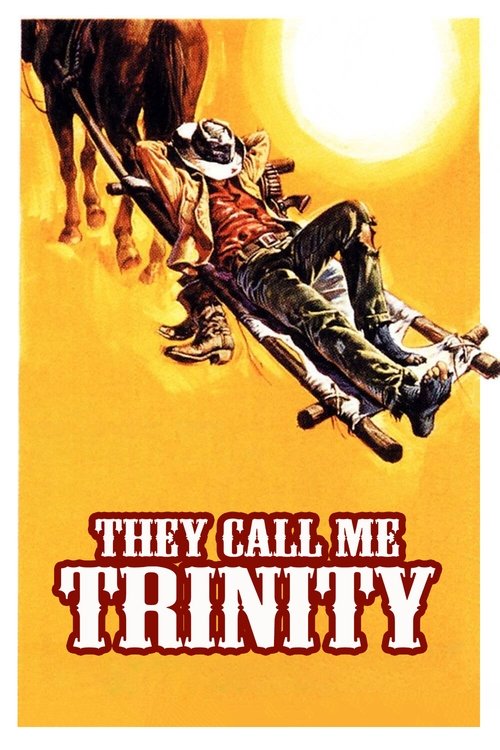
In the early 1970s, Granger and Calhoun moved to Rome, where the actor made a series of Italian language films, most notably the Spaghetti Western They Call Me Trinity (1970) and the giallo film What Have They Done to Your Daughters? (1974), alongside Mario Adorf, which was directed by Massimo Dallamano. He appeared in an episode of the ABC police drama Nakia in 1974 and also appeared on several soap operas, including One Life to Live in 1976, on which his portrayal of Will Vernon garnered him a nomination for the Daytime Emmy Award for Outstanding Lead Actor in a Drama Series, The Edge of Night in 1979, and As the World Turns in 1987–1988, produced by Calhoun.
Later he appeared in several documentaries discussing Hollywood in general and Alfred Hitchcock in particular. In 1995, he was interviewed on camera for The Celluloid Closet, discussing the depiction of homosexuality in film and the use of subtext in various films, including his own.
In 2003, Granger made his last film appearance in the documentary Broadway: The Golden Age, by the Legends Who Were There. In it, he tells the story of leaving Hollywood at the peak of his fame, buying out his contract from Samuel Goldwyn, and moving to Manhattan to work on the Broadway stage.
Death
Granger died of natural causes in his Manhattan apartment on March 27, 2011, at age 85. His body was cremated and his ashes given to family after a service at The Riverside restaurant.
Legacy
For his contribution to television, Granger has a star located at 1551 Vine Street on the Hollywood Walk of Fame.