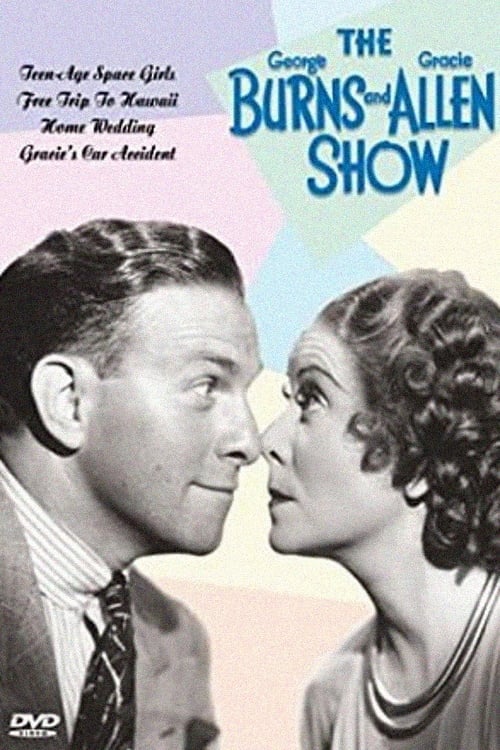
The George Burns and Gracie Allen Show
"Major radio stars like Fred Allen, Jack Benny, and Amos 'n' Andy were preparing to make the move [to television], and I wanted to do it too, but I knew Gracie had no intention of competing," Burns remembered. "She was already talking about retiring from show business, and I had to try to talk her into starting a whole new career." He finally persuaded his wife to make one TV test, and if she didn't like it, Burns would never mention the subject again.
Burns prevailed, and The George Burns and Gracie Allen Show made its TV debut on October 12, 1950. There were significant changes from the radio show:
A succession of actors portrayed Harry Morton: Hal March, The Life of Riley alumnus John Brown, veteran film and television character actor Fred Clark, and future Mister Ed co-star Larry Keating.
Burns often broke the fourth wall, and chatted with the home audience, telling understated jokes and commenting wryly on what show characters were doing. In later shows, he actually turned on a television and watched what the other characters were up to when he was off camera, then returned to foil them.
When announcer Bill Goodwin left after the first season, Burns hired announcer Harry Von Zell, a veteran of the Fred Allen and Eddie Cantor radio shows. Von Zell was cast as the good-natured, easily confused Burns and Allen announcer and buddy. He also became one of the show's running gags: his involvement in Allen's harebrained ideas got him fired by Burns as often as not.
The first shows were simply copied from the radio format, complete with lengthy and integrated commercials for sponsor Carnation Evaporated Milk by Goodwin. But what worked well on radio sometimes appeared forced and plodding on television. The show was changed into the now-standard situation comedy format, with the commercials distinct from the plot.
Midway through the run of the show, the Burnses' two children, Sandra and Ronald, began to appear, Sandy in an occasional voiceover or brief on-air part (often as a telephone operator) and Ronnie in various small roles during seasons 4 and 5. Ronnie joined the regular cast in season 6. Typical of the blurred line between reality and fiction in the show, Ronnie played George and Gracie's on-air son, showing up in the second episode of season 6 ("Ronnie Arrives") with no explanation offered for where he had been for the past five years. Originally his character was an aspiring dramatic actor who held his parents' comedy style in befuddled contempt and deemed it unsuitable for a "serious" drama student. When the show's characters moved back to California in season 7 after spending the prior year in New York City, Ronnie's character dropped his acting aspirations and enrolled in USC, becoming an inveterate girl chaser.
Burns and Allen also took a cue from Lucille Ball and Desi Arnaz's Desilu Productions and formed a company of their own, McCadden Corporation (named after the street on which Burns's brother lived), headquartered on the General Service Studio lot in the heart of Hollywood, and set up to film television shows and commercials. Besides their own hit show (which transitioned from a biweekly live series to a weekly filmed version in 1952), the couple's company produced such television series as The Bob Cummings Show (later syndicated and rerun as Love That Bob); The People's Choice, starring Jackie Cooper; Mona McCluskey, starring Juliet Prowse; and Mister Ed, starring Alan Young and a talented "talking" horse. Several of Jack Benny's 1953–55 filmed episodes were also produced by McCadden for CBS.
The George Burns and Gracie Allen Show ran until 1958, when Burns at last consented to Allen's retirement. The onset of heart trouble in the early 1950s had left her exhausted from full-time work and she had been anxious to stop, but could not say no to Burns.