1935–1943: Established director
Meanwhile, Pandro S. Berman proceeded on a film vehicle for Katharine Hepburn and selected the 1921 novel Alice Adams by Booth Tarkington. Hepburn admired the novel, and both she and Berman settled on either William Wyler and George Stevens to direct. Hepburn and Berman tossed coins, and Wyler won the first contest. Hepburn went with Stevens, and the coin was tossed in her favor. Before he had time to read Tarkington's novel, Stevens drove over to Hepburn's residence. In a meeting with Hepburn and Berman, he attempted to fake his way around discussing the novel. Unimpressed, Hepburn reportedly told Berman the next day that Stevens was the dumbest man she had met. Berman phoned Stevens stating, "Kate says you had a very pleasant evening, but you didn't say a word about the picture. That puts me in a very difficult situation."
Stevens then read the novel, and within a day, he agreed to direct Alice Adams (1935). He was displeased having read two-thirds of Jane Murfin's script adaptation, and promptly hired Mortimer Offner and Dorothy Yost to rewrite it, retaining much of the novel's dialogue. Principal photography began on May 22, 1935, and wrapped on June 29. However, the novel's original ending concluded with Alice deciding to attend a secretarial school. Murfin's script instead had Alice expressing her love with Arthur. Hepburn and Stevens had opposed the ending, though RKO insisted on the happier ending even before Stevens was hired. During post-production, Stevens and Berman exchanged memos defending their stance. Berman brought in George Cukor to decide, and he felt the novel's ending would be box office poison.
Alice Adams opened at the Radio City Music Hall on August 15, 1935. Andre Sennwald of The New York Times applauded Hepburn's performance and Stevens's direction, writing, "An oddly exciting blend of tenderness, comedy and realistic despair, [the film] touches life intimately at many points during its account of a lonely girl in a typical American small town." At the 8th Academy Awards, the film was nominated for Best Picture, and Hepburn was nominated for Best Actress.
After a successful preview of Alice Adams at Sunset Boulevard, Stevens realized he had to leave as he was scheduled to begin filming Annie Oakley (1935). RKO had purchased a script by Joseph Fields and Ewart Adamson, which fictionalized the life of Annie Oakley. Barbara Stanwyck was cast in the title role after she had left Warner Bros. The film tells of the namesake sharpshooter who becomes a local celebrity at Buffalo Bill's Wild West Show. When Buffalo Bill's manager, Jeff Hogarth (Melvyn Douglas), showcases fellow sharpshooter Toby Walker (Preston Foster), a rivalry develops between Oakley and Walker, which turns romantic. Annie Oakley opened in November 1935 and was well received by film critics and audiences.
The 1936 musical Swing Time was adapted from Erwin Gelsey's original screen story "Portrait of John Garnett". In November 1935, Gelsey was hired to adapt the script while Jerome Kern was to compose the music. Pandro S. Berman handed Stevens an unfinished script titled Never Gonna Dance, which was written specifically for Fred Astaire and Ginger Rogers. Broadway playwright Howard Lindsay wrote another draft of the screenplay, which was then rewritten by Alan Scott and Ernest Pagano. It was Kern who proposed retitling the film to Swing Time.
Astaire plays Lucky Garrett, a dancer and gambler, who arrives in New York with his friend "Pop" Cardetti (Victor Moore) to make $25,000 to prove to his prospective father-in-law, Judge Watson, that he is eligible to marry his daughter, Margaret (Betty Furness). However, Lucky falls in love with his dancing instructor, Penny Carroll (Ginger Rogers), and is torn in a love triangle. During filming, Stevens bonded well with Rogers, so much that she wrote in her memoir: "He had an incredible sensitivity to an actress playing a scene. He looked for nuances and was always delighted when I admired something new. I was unafraid to express these acting variations with Stevens at the helm, and the results were evident."
Swing Time premiered in New York on August 28, 1936, to positive reviews from critics. Abel Green of Variety wrote the film was "smart, modern, and impressive in every respect from its boy-loses-girl background to its tunefulness, dancipation, production quality and general high standards." The film also debuted the song "The Way You Look Tonight", which won the 1936 Academy Award for Best Original Song.
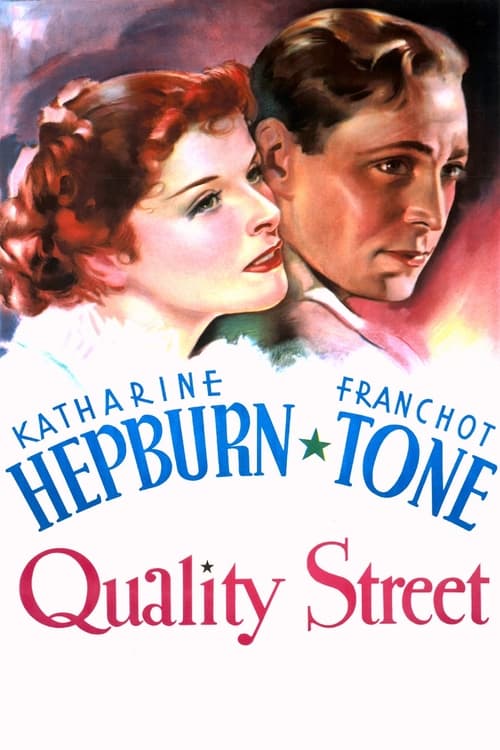
Stevens's next project was Quality Street (1937) with Katharine Hepburn. Adapted from the 1901 play by J. M. Barrie, it was the second film adaptation after a 1927 silent film directed by Sidney Franklin and starring Marion Davies. The film tells of Phoebe Throssel, a nervous young woman living on Quality Street, who expects her lover, Dr. Valentine Brown, to propose marriage, but instead, he is sent away to war. Ten years later, Throssel impersonates her own niece, Livvie, with the chance to regain his affection. Principal photography began on September 25, 1936, and wrapped two months later. By the next year, Stevens was assigned to direct Vivacious Lady, and principal filming began on April 15, 1937, with Ginger Rogers and James Stewart, who had been loaned out from MGM. At the time, the supporting cast included Fay Bainter, Donald Crisp, and Virginia Weidler. However, four days into filming, Stewart became ill and returned to MGM to film Of Human Hearts (1938). RKO suspended the project until Stewart became available again by December 1937.
In the interim, Stevens directed A Damsel in Distress (1937) with Fred Astaire in his first film without Ginger Rogers. Instead, RKO had signed Carole Lombard in the opposite female role. However, Lombard dropped out, feeling she would be unfavorably compared to Rogers. Alice Faye was considered, but Pandro S. Berman selected Joan Fontaine, who had been under contract to RKO. It was later discovered that Fontaine could not dance, but Stevens persuaded Astaire not to recast her with Ruby Keeler. Adapted from the 1919 novel by P. G. Wodehouse, Astaire portrays Jerry, an American composer who travels to London and meets the aristocratic Lady Alyce (Fontaine), who herself in love with another American man whom her family forbids her to see. When Alyce escapes the castle with her butler (Reginald Gardiner), she meets with Jerry and falls in love with him instead. Released in November 1937, A Damsel in Distress flopped at the box office.
A month later, in December 1937, production on Vivacious Lady resumed with James Stewart and Ginger Rogers returning to their original roles. However, Fay Bainter and Donald Crisp were unavailable to return as they were filming Jezebel (1938) at Warner Bros. Virginia Weidler's role had been rewritten out of the script. They were replaced by Beulah Bondi and Charles Coburn. Stewart plays Peter Morgan, a small-town botany professor, who arrives in New York City and marries Francey Brent, a nightclub singer. He brings her home but is unable to break the news to his college dean father. Filming wrapped on March 5, 1938. Released in May 1938, Edwin Schallert of the Los Angeles Times positively noted the performances of the cast, and wrote the film "is fresh, bright and new and promises to please all who are attached to it."
Meanwhile, RKO had been years in development with a film adaptation of Rudyard Kipling's 1890 poem "Gunga Din". In 1936, Edward Small had acquired the film rights for his independent studio, Reliance Pictures. He then hired William Faulkner to adapt the poem into a suitable screenplay. RKO subsequently acquired the rights, and the project was assigned to Howard Hawks with a screenplay written by Ben Hecht and Charles MacArthur. Production issues, including the script and the casting, prevented further development, and Hawks later directed Bringing Up Baby (1938). By this point, Pandro S. Berman became RKO's production head and hired Anthony Veiller to pare down the script.
During February and March 1938, Berman and Hawks discussed the project, but Berman eventually selected Stevens to direct. Berman explained, "I was afraid he would go over budget so much that I would be in trouble. So I didn't go with Howard. I went with George Stevens who, up to that time, had made pictures reasonably with us." With Stevens at the helm, Cary Grant was cast as Ballantine while Jack Oakie was considered for the part as Cutter. However, Grant convinced Stevens to instead cast him as Cutter, to which Stevens agreed. Victor McLaglen was loaned out to portray MacChesney while Douglas Fairbanks Jr. assumed the role as Ballantine. For the title role as Gunga Din, Sabu had been considered but was unavailable as he was cast in The Thief of Bagdad (1940). Stevens's friend Garson Kanin instead recommended Sam Jaffe.
Location shooting began in July 1938 and continued for the next three-and-a-half months, in which production was finished after 114 days. It had a projected production budget of nearly $2 million, becoming the most expensive film RKO had made. Gunga Din opened in February 1939 and became the highest-grossing film for RKO Pictures, earning $3.8 million.
A month after Gunga Din had premiered, Stevens signed a new contract with RKO Pictures. With the onset of World War II on the European theatre, Stevens found two novels—Kathrine Taylor's Address Unknown and Phyllis Bottome's The Mortal Storm—for his next film. However, RKO president George Schaeffer declined to acquire the screen rights to either novel. In a telegram, Berman explained to Stevens that Schaeffer was "definitely afraid [to] commit ... to any picture that is propaganda anything..." Stevens was furious and issued a letter, stating he had worked tirelessly for RKO, taking only four weeks of vacation time in the past four years. To placate Stevens, Berman offered him to instead adapt A. J. Cronin's then-upcoming novella, Vigil in the Night. Originally a serialization published in Good Housekeeping, Vigil in the Night tells of two sisters, Anne Lee and Lucy (Carole Lombard and Anne Shirley, respectively), who are both nurses in an English hospital. When Lucy's negligence causes a young patient to die, Anne takes the blame to protect her sister and loses her job. The film was a commercial disappointment, losing $327,000 at the box office.
After Vigil Night was released, Stevens departed from RKO and entered contractual discussions with Columbia Pictures. Stevens held precautions about studio president Harry Cohn's reputation for meddling, to which Cohn stipulated he would never interfere with Stevens during production. On May 14, 1940, Stevens signed a three-picture deal with Columbia. Within a week, Stevens purchased the film rights to an adaptation of Louis Bromfield's novel New Orleans with Jean Arthur attached to star. Other speculative projects included Ralston's Ring, a biography of businessman William Chapman Ralston and Hail and Farewell, a magazine story by Williston Rich. By June 1940, under his studio contract, Stevens was attached to direct This Thing Called Love (1940) though he departed the project.
That same month, in June 1940, Stevens acquired the screen rights to Martha Cheavens's story "The Story of a Happy Marriage", which had been published in McCall's magazine. Stevens hired Morrie Ryskind to pen the screenplay while Cheavens was hired as a consultant. Retitled Penny Serenade (1941), the story centers on the courtship and eventual marriage of Roger Adams, a newspaperman, and Julie Gardiner, a music shop sales clerk. Penny Serenade opened in April 1941 to largely positive reviews, with particular praise towards Cary Grant's performance.
While at Columbia, Stevens had been approached by Katharine Hepburn about directing Woman of the Year (1942). Ring Lardner Jr. and Garson Kanin had written a script in which Tess Harding, a strong-willed political affairs reporter, is pitted against Sam Craig, a sports columnist. Stevens read the unfinished script and agreed to direct, though he insisted the film be produced at Columbia. However, Hepburn had prearranged to have MGM produce the film, as she had intended on Spencer Tracy as her co-star. As a result, Stevens was loaned out to MGM. During test screenings, preview audiences disdained at the original ending, which had Tess accepting her newfound role as a housewife. Stevens, Joseph L. Mankiewicz, and Louis B. Mayer agreed that a new ending was needed, with Tess attempting to make breakfast but failing miserably. Hepburn deplored the new scene, but test audiences responded favorably.
Released in February 1942, Woman of the Year was praised by film critics for the chemistry between the stars. A contemporary article in Time magazine hailed Stevens as "one of the youngest good directors in the business" by which he has "exhibited a versatile talent, a wide range." At the 1943 Academy Awards, Hepburn was nominated for Best Actress, while Michael Kanin and Lardner Jr. won for Best Original Screenplay.
Stevens served as president of the Screen Directors Guild (SDG) from 1941 to 1943.
Stevens returned to Columbia to direct The Talk of the Town (1942). Jean Arthur stars as Nora Shelley, a New England schoolteacher who harbors Leopold Dilg (Cary Grant), an accused arsonist, from justice while sharing a country house with Michael Lightcap, a distinguished Harvard law professor (Ronald Colman) who has been nominated to the U.S. Supreme Court. Principal photography began on January 19, 1942, and ended after four months on April 8. Stevens filmed two endings, one where Nora marries Dilg and another where she marries Lightcap. He allowed test audiences to determine their preferred ending, and most preferred the former.
The Talk of the Town opened at the Radio City Music Hall on August 27, 1942, to critical success. Bosley Crowther of The New York Times felt the film is "[a] lot of fun and excitement result. Irwin Shaw and Sidney Buchman wrote a smart and lively script for the film, and George Stevens has directed it with the slyness of a first-rate comedy man." Harrison's Reports wrote "in addition to the drawing power of the stars, the story is a grand combination of comedy and human interest, the sort that should appeal to all types of audiences." The film was nominated for five Academy Awards, including for Best Picture.
Afterwards, Jean Arthur was placed on suspension after she had rejected offered scripts. In New York, she and her husband Frank Ross reconnected with Garson Kanin and hired him to write a film for her. At the time, Kanin was stationed at Fort Monmouth, New Jersey, and befriended his bunkmate Robert W. Russell. Together, they concocted a script tentatively Two's a Crowd, which impressed Arthur and Ross, who paid Kanin $25,000 for the script. Kanin then presented the script to Harry Cohn, who decided it would be the next film for Arthur and George Stevens.
Retitled The More the Merrier (1943), the romantic comedy starred Jean Arthur, Joel McCrea, and Charles Coburn. Cary Grant was Stevens's first choice to appear opposite Jean Arthur, but he was unavailable and McCrea was hired instead. Stevens held a table reading with the actors, and during filming, he encouraged on-set improvisation and shot extensive coverage for several scenes while filming. Cohn heard of this and complained, "That Stevens exposes more film and shoots more angles than any director I've ever had on the lot." The film involves Connie Milligan, a government worker, who decides to rent half of her four-room apartment to an older gentleman, Benjamin Dingle, due to a housing shortage. Though Connie is engaged, Dingle decides she needs a boyfriend and leases his half to Joe Carter, an army sergeant.
Released in 1943, The More the Merrier was positively received by film critics. The film received six nominations at the Academy Awards, including for Best Picture and Best Director; Coburn won for Best Supporting Actor. Stevens also won for Best Director at the New York Film Critics Awards. By then, Stevens was in North Africa, photographing World War II.