1945–1969: Early stage and film
A trained method actor, Page spent five years appearing in various repertory theater productions in the Midwest and New York after college. On October 25, 1945, she made her New York stage debut in Seven Mirrors, a play devised by Immaculate Heart High School students from Los Angeles. The play ran for a total of 23 performances at Blackfriars Repertory Theatre on Manhattan's Upper East Side. In February 1952 director José Quintero cast Page in a minor role in Yerma, a theatrical interpretation of a poem by Federico García Lorca, staged at Circle in the Square Theatre in New York City's Greenwich Village. Page was subsequently cast in the role of Alma in the Quintero-directed production of Summer and Smoke, written by Tennessee Williams (also at the Circle Theatre in 1952). Page's work in Summer and Smoke garnered her significant exposure, including a Drama Desk Award and a profile in Time magazine.
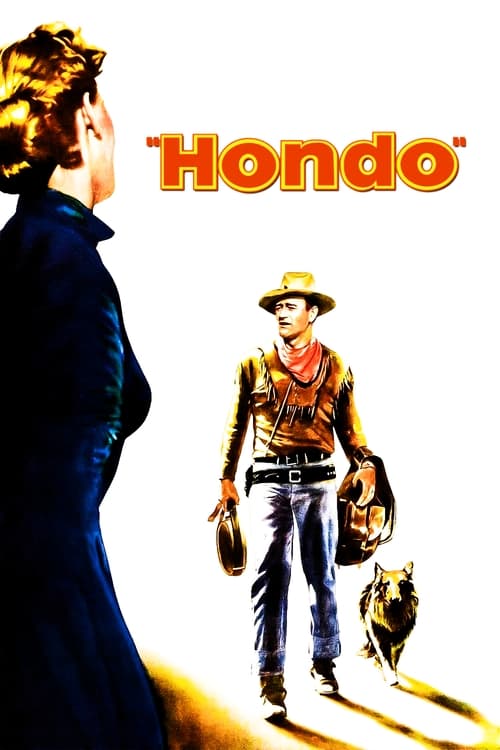
Her official film debut and role in Hondo, opposite John Wayne, earned her a nomination for the Academy Award for Best Supporting Actress. Prior to this she appeared in an uncredited role in Taxi. Speaking to a Kirksville newspaper, she said: "Actually Hondo wasn't my first movie. I had one small but satisfactory scene in a Dan Dailey picture called Taxi, which was filmed in New York." Page was blacklisted in Hollywood shortly after her debut due to her association with Uta Hagen and did not work in film for nearly ten years. Her work continued on Broadway playing a spinster in the 1954–1955 production of The Rainmaker, written by N. Richard Nash, and as the frustrated wife whose husband becomes romantically obsessed with a young Arab, played by James Dean, in the 1954 production of The Immoralist, written by Augustus Goetz and Ruth Goetz and based on the novel of the same name (1902) by André Gide. Page remained friends with Dean until his death the following year and kept a number of personal mementos from the play—including several drawings by him. After Page's death these items were acquired by Heritage Auctions in 2006. In 2015 Angelica Page revealed that her mother had an affair with Dean during the production of The Immoralist. She stated, "According to my mother, their affair went on for three-and-a-half months. In many ways my mother never really got over Jimmy. It was not unusual for me to go to her dressing room through the years, obviously many years after Dean was gone, and find pictures of him taped up on her mirror. My mother never forgot about Jimmy -- never. I believe they were artistic soul mates."
Prior to Hondo in 1952, she appeared in a revival of Summer and Smoke, placing her, the play, and director Jose Quintero at the beginning of the Off-Broadway scene. Page played the same role of Alma Winemiller in a 1953 radio version (opposite Richard Kiley) and a film version in 1961 opposite Laurence Harvey. She and Una Merkel received nominations for Best Actress and Best Supporting Actress, respectively, for the 34th Academy Awards in 1961. The awards, however, went to Sophia Loren for Two Women and Rita Moreno for West Side Story.
In 1959 Page was nominated for the Best Single Performance by an Actress Emmy Award for her role in the Playhouse 90 episode "The Old Man", written by William Faulkner. She subsequently received critical accolades for her performance in the 1959–1960 Broadway production of Tennessee Williams's Sweet Bird of Youth opposite Paul Newman, in which she originated the role of a larger-than-life, addicted, sexually voracious Hollywood legend trying to extinguish her fears about her career with a young hustler named Chance Wayne (played by Newman). For this performance Page received her first nomination for the Tony Award for Best Actress in a Play and won the Sarah Siddons Award for the run in Chicago. She and Newman later starred in the 1962 film adaptation of the play, for which Page was nominated for the Best Actress Academy Award.
Geraldine Page won consecutive Golden Globe Awards for Best Actress in a Motion Picture - Drama — for Summer and Smoke in 1961 and for Sweet Bird of Youth in 1962 .
In 1963 Page starred in Toys in the Attic, based on the Lillian Hellman play, garnering her a Golden Globe nomination. She received another nomination the following year for starring in Delbert Mann's Dear Heart as a self-sufficient but lonely postmistress visiting New York City for a convention who finds love with a greeting card salesman. In 1964 she starred in a Lee Strasberg-directed Broadway revival of Anton Chekhov's Three Sisters, playing the eldest sister Olga to Kim Stanley's Masha with Barbara Baxley as the interloper Natasha. Both Shirley Knight and Sandy Dennis played the youngest sister Irina during the run of this production.
Between 1966 and 1969, Page appeared in two holiday-themed television productions based on stories by Truman Capote: "The Christmas Memory" (for ABC Stage 67) and the television film The Thanksgiving Visitor, both of which earned her two consecutive Emmy Awards for Best Actress. In 1967, Page appeared again onstage in Peter Shaffer's Black Comedy/White Lies, a production which also included Michael Crawford and Lynn Redgrave, who were making their Broadway debuts. The same year, she appeared opposite Fred MacMurray in the Walt Disney-produced musical The Happiest Millionaire. Bosley Crowther of The New York Times was critical of the film, noting: "Geraldine Page and Gladys Cooper...square off in one musical scene of socially up-staging each other that is drenched in perfumed vulgarity. But, then, the whole picture is vulgar. It is an over-decorated, over-fluffed, over-sentimentalized endeavor to pretend the lace-curtain millionaires are—or were—every bit as folksy as the old prize-fighters and the Irish brawlers in the saloon."
Page starred opposite Ruth Gordon in the thriller What Ever Happened to Aunt Alice? (1969), the third and final film in the Robert Aldrich-produced trilogy which followed What Ever Happened to Baby Jane? (1962) and Hush...Hush, Sweet Charlotte (1964). The film is based on the novel The Forbidden Garden by Ursula Curtiss and features Page as Claire Marrable, a recently widowed socialite, who, discovers that her husband has left her virtually nothing. The widow hires a number of unsuspecting housekeepers whom she murders one by one and robs them of their life savings in order to keep up her extravagant lifestyle. Writing for The New York Times, Vincent Canby deemed the film "an amusingly baroque horror story told by a master misogynist," and praised Page's "affecting" performance.