The Guardian
In July 2012, Greenwald joined the American wing of the British newspaper The Guardian, contributing a weekly column and a daily blog. Greenwald wrote on Salon that the move offered him "the opportunity to reach a new audience, to further internationalize my readership, and to be re-invigorated by a different environment" as reasons for the move.
Greenwald was initially contacted anonymously in late 2012 by Edward Snowden, a former contractor for the U.S. National Security Agency, who said he held "sensitive documents" that he wished to share. Greenwald found the measures that Snowden asked him to take to secure their communications too annoying to employ. Snowden then contacted documentary filmmaker Laura Poitras about a month later in January 2013.
According to The Guardian, Snowden was attracted to Greenwald and Poitras by a Salon article written by Greenwald detailing how Poitras' films had made her a "target of the government". Greenwald began working with Snowden in either February or in April, after Poitras asked Greenwald to meet her in New York City, at which point Snowden began providing documents to them both.
As part of the global surveillance disclosure, the first of Snowden's documents were published on June 5, 2013, in The Guardian in an article by Greenwald reporting on the top-secret United States Foreign Intelligence Surveillance Court order requiring Verizon to provide the National Security Agency with telephone metadata for all calls between the U.S. and abroad, as well as all domestic calls. Greenwald said that Snowden's documents exposed the "scale of domestic surveillance under Obama". In September 2021, Yahoo! News reported that in 2017, after the publication of the Vault 7 files, "top intelligence officials lobbied the White House" to designate Glenn Greenwald as an "information broker" to allow for more investigative tools against him, "potentially paving the way" for his prosecution. However, the White House rejected this idea. "I am not the least bit surprised," Greenwald told Yahoo! News, "that the CIA, a longtime authoritarian and antidemocratic institution, plotted to find a way to criminalize journalism and spy on and commit other acts of aggression against journalists."
The series on which Greenwald worked contributed to The Guardian (alongside The Washington Post) winning the Pulitzer Prize for Public Service in 2014.
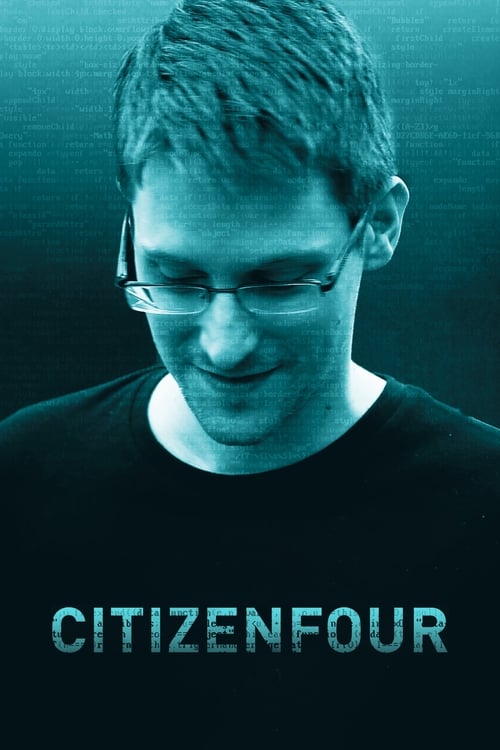
Greenwald's work on the Snowden story was featured in the documentary Citizenfour, which won the 2014 Academy Award for Best Documentary Feature Film. Greenwald appeared on stage with director Laura Poitras and Snowden's girlfriend, Lindsay Mills, to accept the award. In the 2016 feature film Snowden, directed by Oliver Stone, Greenwald was played by actor Zachary Quinto.
In a statement delivered before the Brazilian National Congress in early August 2013, Greenwald testified that the U.S. government had used counterterrorism as a pretext for clandestine surveillance to compete with other countries in the "business, industrial and economic fields".
On December 18, 2013, Greenwald told the Committee on Civil Liberties, Justice and Home Affairs of the European Parliament that "most governments around the world are not only turning their backs on Edward Snowden but also on their ethical responsibilities". Speaking via a video link, Greenwald said: "It is the UK through their interception of underwater fibre optic cables, that is a primary threat to the privacy of European citizens when it comes to their telephone and emails". In a statement given to the European Parliament, Greenwald said:
The ultimate goal of the NSA, along with its most loyal, one might say subservient junior partner the British agency GCHQ – when it comes to the reason why the system of suspicion of surveillance is being built and the objective of this system – is nothing less than the elimination of individual privacy worldwide.
On October 15, 2013, Greenwald left The Guardian to pursue a "once-in-a-career dream journalistic opportunity that no journalist could possibly decline".