Journalism
Esquire magazine features editor Clay Felker gave freelance writer Steinem what she later called her first "serious assignment", regarding contraception; he did not like her first draft and had her re-write the article. Her resulting 1962 article about the way in which women are forced to choose between a career and marriage preceded Betty Friedan's book The Feminine Mystique by one year.
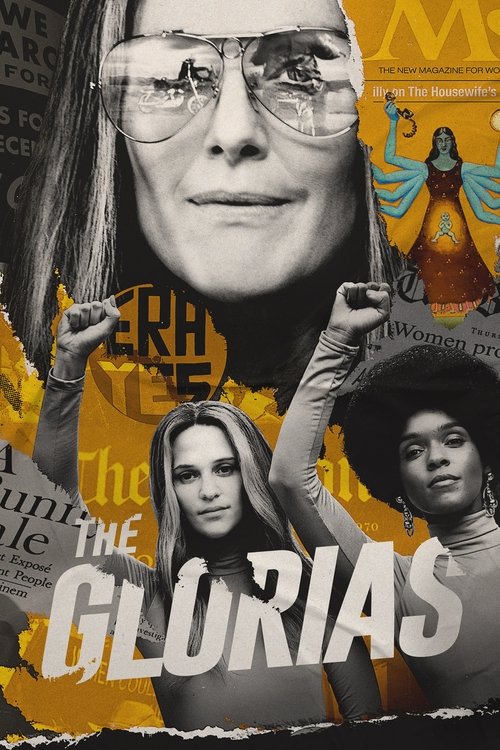
In 1963, while working on an article for Huntington Hartford's Show magazine, Steinem was employed as a Playboy Bunny at the New York Playboy Club. The resulting article, published in 1963 as "A Bunny's Tale", featured a photo of Steinem in Bunny uniform and detailed how women were treated at those clubs. Steinem maintained that she was proud of the work she did publicizing the exploitative working conditions of the Bunnies and especially the sexual demands made of them, which skirted the edge of the law. For a brief period after the article was published, Steinem was unable to land other assignments; in her words, this was "because [she] had now become a Bunny—and it didn't matter why". In response to the article, Hugh Hefner, the owner of Playboy, wrote a letter stating he would remove requirements for Bunnies to get gynecological exams and STD testing.
In the interim, Steinem conducted an interview with John Lennon for Cosmopolitan magazine in 1964. In 1965, she wrote for NBC-TV's weekly satirical revue, That Was the Week That Was (TW3), contributing a regular segment entitled "Surrealism in Everyday Life". Steinem eventually landed a job at Felker's newly founded New York magazine in 1968.
In 1969, Steinem covered for New York magazine an abortion speak-out that was held in a church basement in Greenwich Village, New York. Steinem had had an abortion in London at the age of 22. She felt what she called a "big click" at the speak-out, and later said she didn't "begin my life as an active feminist" until that day.
As she recalled, "It [abortion] is supposed to make us a bad person. But I must say, I never felt that. I used to sit and try and figure out how old the child would be, trying to make myself feel guilty. But I never could! I think the person who said: 'Honey, if men could get pregnant, abortion would be a sacrament' was right. Speaking for myself, I knew it was the first time I had taken responsibility for my own life. I wasn't going to let things happen to me. I was going to direct my life, and therefore it felt positive. But still, I didn't tell anyone. Because I knew that out there it wasn't [positive]." She also said, "In later years, if I'm remembered at all it will be for inventing a phrase like 'reproductive freedom' ... as a phrase it includes the freedom to have children or not to. So it makes it possible for us to make a coalition."
In 1972, Steinem co-founded the feminist magazine Ms. alongside founding editors Letty Cottin Pogrebin, Mary Thom, Pat Carbine, Joanne Edgar, Nina Finkelstein, Dorothy Pitman Hughes, and Mary Peacock; it began as a special edition of New York, and Clay Felker funded the first issue. Its 300,000 test copies sold out nationwide in eight days. Within weeks, Ms. had received 26,000 subscription orders and more than 20,000 reader letters.
On January 24, 1972, Steinem spoke at the National Press Club.
In 1974, Ms. collaborated with public television to produce the television program Woman Alive!, and Steinem was featured in the first episode in her role as co-founder of Ms. magazine. The magazine was sold to the Feminist Majority Foundation in 2001; Steinem remains on the masthead as one of six founding editors and served on the advisory board.
Steinem spoke at the 1977 National Women's Conference among other speakers, including Rosalynn Carter, Betty Ford, Lady Bird Johnson, Bella Abzug, Barbara Jordan, Cecilia Burciaga, Lenore Hershey, and Jean O'Leary.
In 1978, Steinem wrote a semi-satirical essay for Cosmopolitan titled "If Men Could Menstruate" in which she imagined a world where men menstruate instead of women. She concluded in the essay that in such a world, menstruation would become a badge of honor with men comparing their relative sufferings, rather than the source of shame that it had been for women.
On March 22, 1998, Steinem published an op-ed in The New York Times ("Feminists and the Clinton Question") in which she claimed that Bill Clinton's alleged behavior did not constitute sexual harassment, although she did not actually challenge the accounts by his accusers. The op-ed was criticized by various writers, as in the Harvard Crimson and in the Times itself. In 2017, Steinem, in an interview with the British newspaper The Guardian, stood by her 1998 New York Times op-ed, but also said: "I wouldn't write the same thing now."