Eldred Gregory Peck (April 5, 1916 – June 12, 2003) was an American actor. He was one of the most popular film stars from the 1940s to the 1970s. In 1999, the American Film Institute named Peck the 12th-greatest male star of Classic Hollywood Cinema.
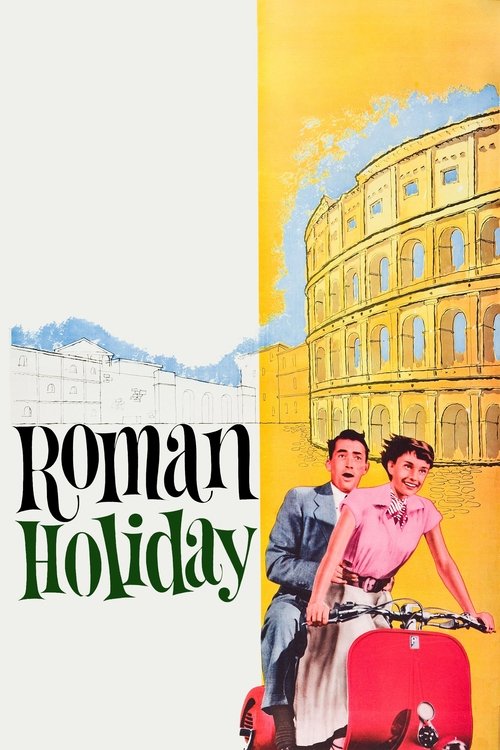
After studying at the Neighborhood Playhouse with Sanford Meisner, Peck began appearing in stage productions, acting in more than 50 plays and three Broadway productions. He first gained critical success in The Keys of the Kingdom (1944), a John M. Stahl–directed drama that earned him his first Academy Award nomination. He starred in a series of successful films, including romantic-drama The Valley of Decision (1945), Alfred Hitchcock's Spellbound (1945) and family film The Yearling (1946). He encountered lukewarm commercial reviews at the end of the 1940s, his performances including The Paradine Case (1947) and The Great Sinner (1948). Peck reached global recognition in the 1950s and 1960s, appearing back-to-back in the book-to-film adaptation of Captain Horatio Hornblower (1951) and biblical drama David and Bathsheba (1951). He starred alongside Ava Gardner in The Snows of Kilimanjaro (1952) and Audrey Hepburn in Roman Holiday (1953).
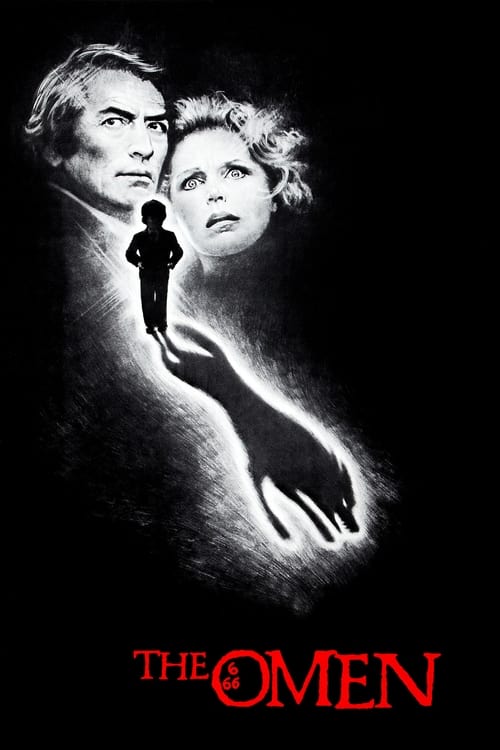
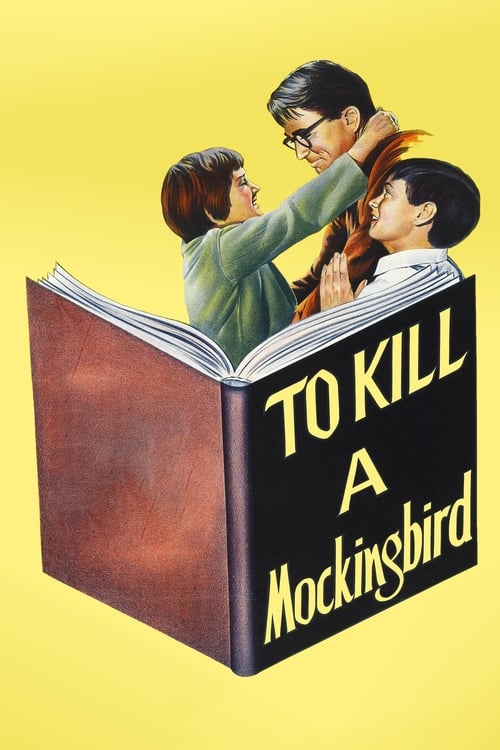
Other notable films in which he appeared include Moby Dick (1956, and its 1998 mini-series), The Guns of Navarone (1961), Cape Fear (1962, and its 1991 remake), The Omen (1976) and The Boys from Brazil (1978). Throughout his career he often portrayed protagonists with "moral fiber". Gentleman's Agreement (1947) centered on topics of antisemitism, whilst Peck's character in Twelve O'Clock High (1949) dealt with the challenges of military leadership and post-traumatic stress disorder during World War II. He won the Academy Award for Best Actor for his performance as Atticus Finch in To Kill a Mockingbird (1962), an adaptation of the modern classic of the same name, which revolved around racial inequality, for which he received acclaim. In 1983 he starred opposite Christopher Plummer in The Scarlet and The Black as Hugh O'Flaherty, a Catholic priest who saved thousands of escaped Allied POWs and Jewish people in Rome during the Second World War.
Peck was also active in politics, challenging the House Un-American Activities Committee in 1947, and was regarded as a political opponent by Richard Nixon. Lyndon B. Johnson honored Peck with the Presidential Medal of Freedom in 1969 for his lifetime humanitarian efforts. Peck died in his sleep from bronchopneumonia at the age of 87.
Contents
Early life
Eldred Gregory Peck was born on April 5, 1916, in the neighborhood of La Jolla in San Diego, California, to Bernice Mae "Bunny" (née Ayres; 1894–1992), and Gregory Pearl Peck (1886–1962), a Rochester, New York–born chemist and pharmacist. His father was of English (paternal) and Irish (maternal) heritage, and his mother was of English and Scots ancestry. She converted to her husband's religion, Catholicism, and Peck was raised as a Catholic. Through his Irish-born paternal grandmother, Catherine Ashe (1864–1926), Peck was related to Thomas Ashe (1885–1917), who participated in the Easter Rising less than three weeks after Peck's birth and died while being force-fed during a hunger strike in 1917.
Peck's parents divorced when he was five and he was brought up by his maternal grandmother, who took him to the movies every week. At the age of 10 he was sent to a Catholic military school, St John's Military Academy in Los Angeles. While he was there his grandmother died. At 14 he moved back to San Diego to live with his father. He attended San Diego High School, and after graduating in 1934 enrolled for one year at San Diego State Teachers’ College (now known as San Diego State University). While there he joined the track team, took his first theatre and public-speaking courses and pledged the Epsilon Eta fraternity. Peck had ambitions to be a doctor and later transferred to the University of California, Berkeley, as an English major and pre-medical student. Standing at 6 ft 3 in (1.91 m), he rowed on the university crew. Although his tuition fee was only $26 per year, Peck still struggled to pay and took a job as a "hasher" (kitchen helper) for the Alpha Gamma Delta sorority in exchange for meals.
At Berkeley, Peck's deep, well-modulated voice gained him attention, and after participating in a public speaking course he decided to try acting. He was encouraged by an acting coach, who saw in him perfect material for university theatre, and he became more and more interested in performing. He was recruited by Edwin Duerr, director of the university's Little Theater, and appeared in five plays during his senior year, including as Starbuck in Moby Dick. Peck later said about his years at Berkeley that "it was a very special experience for me and three of the greatest years of my life. It woke me up and made me a human being." In 1996 Peck donated $25,000 to the Berkeley rowing crew in honor of his coach, Ky Ebright.
Career
1939–1943: Beginnings and stage roles
Peck did not graduate with his friends because he lacked one course. His college friends were concerned for him and wondered how he would get along without his degree. "I have all I need from the university," he told them. Peck dropped the name Eldred and headed to New York City to study at the Neighborhood Playhouse with the legendary acting teacher Sanford Meisner. He was often broke and sometimes slept in Central Park. He worked at the 1939 World's Fair as a barker, at Rockefeller Center as a tour guide for NBC television and at Radio City Music Hall. Before 1940 he dabbled in modelling and worked in exchange for food at the Barter Theatre in Abingdon, Virginia, where he appeared in five plays, including Family Portrait and On Earth As It Is.
His stage career began in 1941 when he played the secretary in a Katharine Cornell production of George Bernard Shaw's play The Doctor's Dilemma. The play opened in San Francisco just one week before the attack on Pearl Harbor. He made his Broadway debut as the lead in Emlyn Williams' The Morning Star in 1942. His second Broadway performance that year was in The Willow and I with Edward Pawley. Peck's acting abilities were in high demand during World War II since he had been exempted from military service because of a back injury suffered while receiving dance and movement lessons from Martha Graham as part of his acting training. Twentieth Century Fox later claimed he had injured his back while rowing in college, but in Peck's words, "In Hollywood, they didn't think a dance class was macho enough, I guess. I've been trying to straighten out that story for years." Peck performed in a total of 50 plays, including three short-lived Broadway productions, 4–5 road tours, and summer theater.
1944–1946: Hollywood breakthrough
After gaining stage recognition, Peck was offered his first film role at RKO Radio Pictures, the male lead in the war-romance Days of Glory (1944), directed by Jacques Tourneur, alongside top-billed Tamara Toumanova, a Russian-born ballerina. Peck portrayed the leader of Russian guerrillas resisting the Germans in 1941 who stumble across a beautiful Russian dancer (Toumanova), who had been sent to entertain Russian troops; they protect her by letting her join their group. During production of the film, Tourneur "untrained" Peck from his theater training where he was used to speaking in a formal manner and projecting his voice to the entire hall. Peck considered his performance in the film as quite amateurish and did not wish to watch the film after it was released. The film lost money at the box office, disappeared from theaters quickly, and was largely dismissed by critics.
At the time of the film's release, critic Bosley Crowther of The New York Times assessed it as slow-moving and verbose, adding that Peck's acting was stiff. Film historian Barry Monush has written, "Peck's star power was evident from the word go." Following the release of the film, Peck gained the attention of producers, but rather than participate in the studio system, he decided to remain a freelancer with the ability to choose his roles, signing non-exclusive contracts with four studios, including an unusual dual contract with 20th Century Fox and Gone With the Wind producer David O. Selznick.
In Peck's second movie, The Keys of the Kingdom (1944), he played an 80-year-old Roman Catholic priest who looks back at his undertakings during over half a century of his determined, self-sacrificing missionary work in China. The film shows the character aging from his 20s to 80; Peck was featured in almost every scene. The film was nominated for four Academy Awards, including the Academy Award for Best Actor, which was Peck's first nomination. Although the film finished only 27th at the box office in North America for 1944, Jay Carr of Turner Classic Movies refers to it as Peck's breakthrough performance, while writer Patrick McGilligan says that it "catapulted him to stardom". At the time of release, Peck's performance was lauded by Variety and The New York Times, despite mixed reviews for the film itself. The Radio Times referred to it as "a long, talkative and rather undramatic picture" but admitted that "its success saved Peck's career". Craig Butler of AllMovie states "he gives a commanding performance, full of his usual quiet dignity and intelligence, and spiked with stubbornness and an inner fire that make the character truly come alive".
1947–1949: Highs and lows
In 1947, Peck co-founded The La Jolla Playhouse at his birthplace with Mel Ferrer and Dorothy McGuire. This summer stock company presented productions in the La Jolla High School Auditorium from 1947 until 1964. In 1983, the La Jolla Playhouse re-opened in a new home at the University of California, San Diego, where it operates today. It has attracted Hollywood film stars on hiatus, both as performers and enthusiastic supporters, since its inception.
Peck's next release was the modest-budget, serious adult drama, The Macomber Affair (1947), in which he portrays an African hunting guide assisting a tourist couple. During the trip, the wife, played by Joan Bennett, becomes enamored with Peck, and the husband gets shot. Peck was very active in the development of the film, including recommending director Zoltan Korda. The film received positive reviews but was mostly overlooked by the public upon its release, which Peck would later say disappointed him.
In November 1947, Peck's next film, the landmark Gentleman's Agreement, directed by Elia Kazan, was released and was immediately proclaimed as "Hollywood's first major attack on anti-Semitism." Based on a novel, the film has Peck portraying a New York magazine writer who pretends to be Jewish so he can experience personally the hostility of bigots. It was nominated for eight Academy Awards, including Peck for Best Actor, winning in the Best Film and Best Director categories. It was the second-highest top-grossing film of 1948. Peck would indicate in his later years that the film was one of his proudest works. Upon release, Gentleman's Agreement was widely praised for both its courageousness and its quality, Peck's performance has been described as very convincing by many critics, both upon release and in recent years. In recent decades, critics have expressed differing opinions regarding Peck's portrayal, the quality of the film by modern standard, and the film's effectiveness at addressing anti-semitism, with film writer Matt Bailey writing "Gentleman's Agreement may have been an important film at one time, but was never a good film."
Peck's next three releases were commercial disappointments. The Paradine Case was his second and last film with Hitchcock. When producer David O. Selznick insisted on casting Peck for the movie, Hitchcock was apprehensive, questioning whether Peck could properly portray an English lawyer. In later years, Peck did not speak fondly of the making of the movie. Released in 1947,The Paradine Case was a British-set courtroom drama about a defense lawyer in love with his client. It had an international cast including Charles Laughton, Ethel Barrymore and Alida Valli as the accused. The movie received positive reviews, with many complimenting Peck's performance, but it was panned by the public, only recouping half of the $4.2 million production costs. In recent decades, the film was criticized by most prominent writers, although critic's praised Peck's acting. Writers Paul Condon and Jim Sangster stated that "Peck is vulnerable yet believable in a role that requires significant delicacy of touch to maintain viewer's loyalty and interest."
1950–1953: Worldwide recognition
Peck began the 1950s with two Westerns, the first being The Gunfighter (1950), directed by Henry King, who had worked with him previously on Twelve O'Clock High. Peck plays an aging "Top Gun of the West" who is now weary of killing and wishes to retire with his alluring but pragmatic wife and his seven-year-old son, both of whom he has not seen for many years. Peck and King did much photographic research about the Wild West Era, discovering that most cowboys had facial hair, "bowl" haircuts and wore beat-up clothing; Peck subsequently wore a mustache while filming. The studio's president called for re-shoots upon seeing the initial footage with the mustache, but backed out due to costs that were inflated by the production manager at King and Peck's persuasion. The Gunfighter had disappointing sales at the box office, with $5.6 million in receipts, 47th place for earnings in 1951. 20th Century Fox's studio chief Darryl Zanuck blamed Peck's mustache for the lukewarm reaction from Peck's typical fans, stating that they wanted to see the usual handsome, clean-shaven Peck, not the authentic-cowboy Peck. The Gunfighter received "solid reviews" upon release, with particular enthusiasm from some critics, with Peck's performance "bringing him some of his best notices." The New York Times wrote, "through Mr. Peck's fine performance, a fair comprehension is conveyed of the loneliness and the isolation of a man with a lurid name...an arresting and quite exciting film." The movie has grown in critical appreciation over the years and "is now considered one of the all-time classic Westerns" Critics of recent decades uniformly praise Peck's performance, with David Parkinson of Radio Times saying "Peck gives a performance of characteristic dignity and grit."
Peck's next Western was Only the Valiant (1951), a low-budget movie; Peck disliked the script and would later label the film as the low point of his career. Peck's non-exclusive contract with David O. Selznick permitted Selznick to sell Peck's services to Warner Bros for this movie after running into financial difficulties. The plot of the film is listed as "an unpopular, strict leader gathers together a rag-tag group of men and leads them on an extremely dangerous mission, turning them into a well-oiled fighting machine by the end and earning respect along the way." Peck portrays a U.S. army captain and the mission is to protect an undermanned army fort against the attacking Apaches. Peck's romantic interest was played by Barbara Payton. Variety's review said "In this cavalry yarn...great pains have been exerted to provide interesting characters. Peck makes the most of a colorful role." It earned a moderate $5.7 million, ranking 35th in sales for the year. This little-remembered picture receives mixed reviews today, although Peck's acting is praised.
1954–1957: Overseas and New York
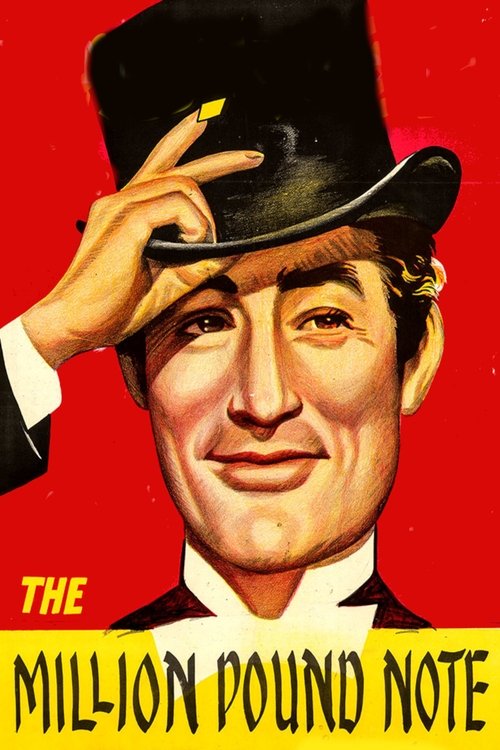
With his acclaimed performance in The Gunfighter, Peck was offered the lead role in High Noon (1952) but turned it down because he did not want to become typecast in Westerns. Peck was based in the United Kingdom for about eighteen months between 1953 and 1955; new tax laws had drastically raised the tax rate on high-income earners, but the amount due would be reduced if the payer worked outside the country for extended periods. After Roman Holiday's production in Italy, his three subsequent films were shot and set in London, Germany and Southeast Asia, respectively. Peck starred in The Million Pound Note (1954), based on a Mark Twain short story. Peck enjoyed the film's production as "it was a good comedy opportunity" and "was given probably the most elegant wardrobe he had ever worn in film." He plays a penniless American seaman in 1903 London who is given a one million pound bank note by two rich, eccentric brothers who wish to ascertain if he can survive for one month without spending any of it. The film performed modestly at the box office and received mixed reviews for its production. Adrian Turner of the Radio Times praised it as a "lovely comedy" which "has a lot of charm and gentle humor, owing to Peck's evident delight in the role and the unobtrusive direction" adding it has a "witty script."
Peck portrayed a US army colonel investigating the kidnapping of a young soldier in Night People (1954). He later stated that the role was one of his favorites as his lines were "tough and crisp and full of wisecracks, and more aggressive than other roles" he'd played. The film received praise for its production and direction, but did poorly at the box office. Peck flew to Sri Lanka to film The Purple Plain (1954), playing a Canadian bomber pilot with strong emotional problems during the Second World War. The Purple Plain was panned in the United States but became a hit in the United Kingdom, ranking tenth at the box office in 1954, and was nominated for a BAFTA Award for Outstanding British Film. Of his performance, Crowther wrote, "the extent of Peck's agony is impressively transmitted...in vivid and unrelenting scenes." In recent years, the movie "has become one of Peck's most respected works," with critic David Thomson rating Peck's performance as excellent. Craig Butler of All Movie says that "Peck is astonishing, giving the sort of layered, intense yet nuanced performance that deserves major awards."
In 1954, Peck was named the third most popular non-British film star in the United Kingdom. Peck did not have a film released in 1955. He made a comeback in the US. with The Man in the Gray Flannel Suit (1956), where he portrays a married, ex-soldier father of three who is increasingly haunted by his deeds in Italy during the Second World War. The film saw Peck reunited with Duel in the Sun co-star Jennifer Jones. During the filming of a scene where their characters argue, Jones clawed his face with her fingernails, prompting Peck to say to the director "I don't call that acting. I call it personal." The movie was successful, finishing eighth in box office gross for the year, despite contemporary and modern reviews being mixed. Butler of AllMovie declared that "the role fits (Gregory Peck) as if it had been tailor-made for him. Peck's particular brilliance lies in the quiet strength that is so much a part of him and the way in which he uses subtle changes in that quietness to signal mammoth emotions. He's given ample opportunity to do so here and the results are enthralling...an exceptional performance." Radio Times refers to "the excellent Peck" and states that Peck plays "the appealing flawed hero."
1958–1959: Reflections on violence
Peck's next movie, the Western The Bravados (1958), reunited him with director Henry King after a six-year gap. King was widely considered to have produced some of Peck's best work; Peck once said "King was like an older brother, even a father figure. We communicated without talking anything to death. It was direction by osmosis." In The Bravados, Peck's character spends weeks pursuing four outlaws whom he believes raped and murdered his wife and agonizing over his own morals. The film was a moderate success, finishing in the top 20 of the box office for 1959. In recent years, the film and Peck's performance have received mixed reviews, with Time Out asserting that "Peck's "crisis of conscience...is worked out in perfunctory religious terms;" and TV Guide stating that Peck's cowboy's "moment of truth is a powerful one and he gives it all the value it deserves, although much of his acting up to then had been lackluster."
In 1956, Peck made a foray into the film production business, organizing Melville Productions and later, Brentwood Productions. These companies produced five movies over seven years, all starring Peck, including Pork Chop Hill, for which Peck served as the executive producer. The films were observed by some as being more political, although Peck said he tried to avoid any "overt preachiness." In 1958, Peck and good friend William Wyler co-produced the Western epic The Big Country (1958) separate from Peck's production company. The project ran into numerous issues. Wyler and Peck were dissatisfied with the script, which underwent almost daily revisions after each day's shooting, causing stress for the performers; the actors would arrive the next day and find their lines and even entire scenes different from what they had prepared. The stellar cast included Jean Simmons, Carrol Baker, Chuck Connors, Charlton Heston and Burl Ives; Ives won the Academy Award for Best Supporting Actor for his intense performance. There were disagreements between director Wyler and the performers, resulting in Peck storming off-set when Wyler refused to re-shoot a close-up scene; Peck and Wyler's relationship remained strained for three years after production. Peck said in 1974 that he had tried producing and acting simultaneously and felt "either it can't be done or it's just that I don't do it well."
The film itself was a big hit, finishing fourth at the domestic box office in 1958 and second in the UK. At the time of release, reviews for The Big Country were mixed regarding the producers' prioritization of characterization versus technical filmmaking; opinions on Peck's performance were also disparate. In recent decades, critical opinion of The Big Country has generally risen, although there is still disagreement; many prominent critics and publications describe the cinematography as excellent, some laud Peck's performance, and some cite the film as too long.
1960–1964: Continued success
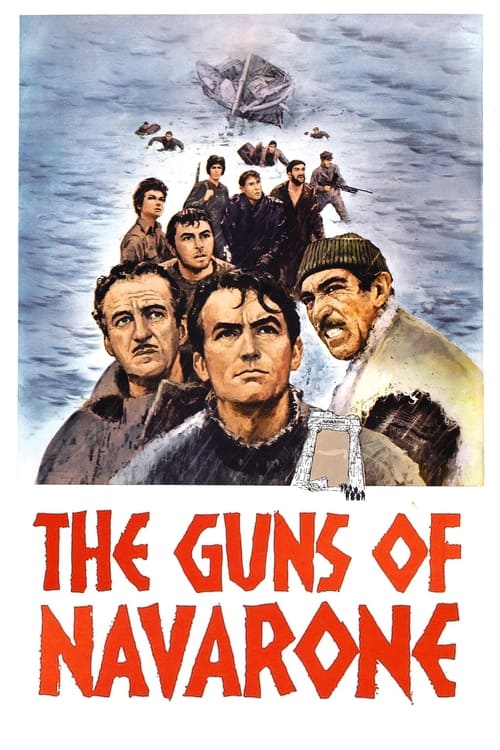
Peck's first release of 1961 was The Guns of Navarone. A J. Lee Thompson-directed World War II drama, it depicts Peck as an expert mountain climber leading a six-man commando team seeking destroy two seemingly impregnable German artillery guns on Navarone Island. The team of specialists, which includes David Niven and Anthony Quinn, needs to destroy the guns so that British ships can evacuate 2,000 trapped British soldiers across the Aegean Sea. During filming Peck said that his team seems to defeat "the entire German army," which approaches parody, concluding that cast members had to "play their roles with complete conviction" to make the film convincing. The film was the top-grossing movie of 1961, and became "one of the most popular adventure movies of its day." It landed seven Academy Award nominations, winning for Best Special Effects; other accolades include the Golden Globe Award for Best Picture, Drama and the BAFTA for Best British Screenplay.
Critics praised The Guns of Navarone, naming it the best picture of the year in Film Daily's annual poll of critics and industry reporters in 1961. Bosley Crowther opined, "more emphasis is placed on melodrama than on character or credibility," that the characters are "all such predictable people you're likely to get bored with them before the guns are blown up," and "One simply wonders why Foreman...didn't aim for more complex human drama." He goes on to write it is a "robust action drama" and "For anyone given to letting himself be entertained by scenes of explosive action and individual heroic display, there should be entertainment in this picture for there is plenty of it.... Even though the picture runs more than two hours and a half, it moves swiftly and gets where it is going. J.Lee Thompson has directed it with pace." The New Yorker's film critic declared, it was "one of those great bow-wow...movies that are no less thrilling because they are so preposterous" confessing he "was held more or less spellbound all the way through this many-colored rubbish." Paul V. Peckly of The New York Herald Tribune wrote, "Peck may seem at times a trifle wooden and his German accent too obviously American...but his not too introspective, somewhat baffled manner is manly and fitted to the role he plays. In recent decades, most prominent critics or publications give it positive reviews
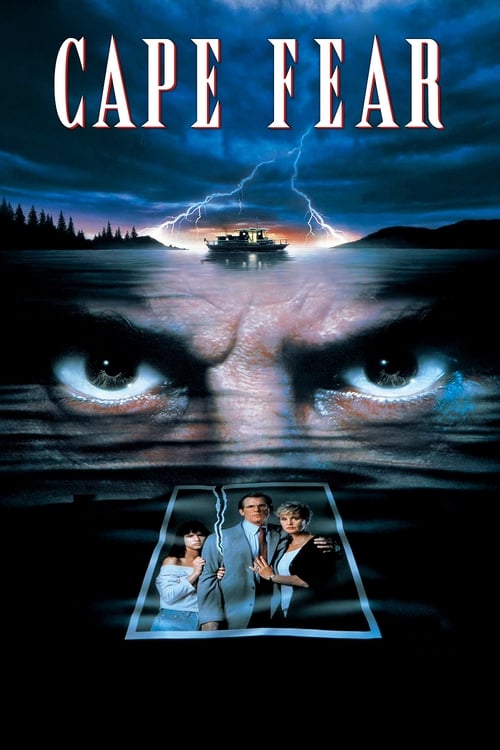
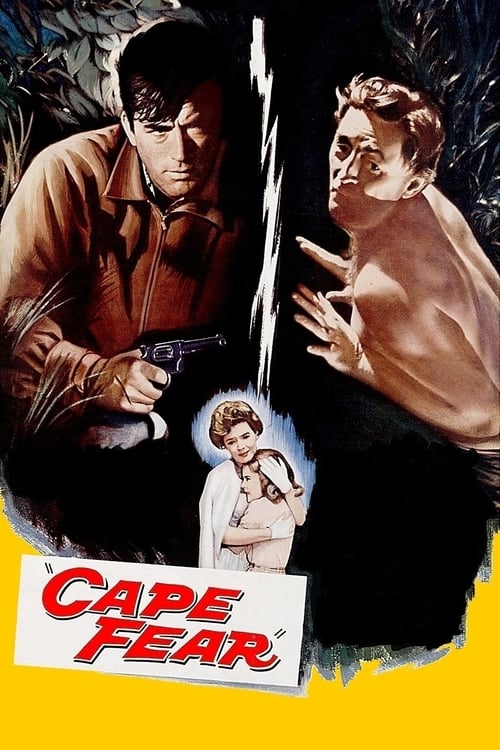
Peck's next film was Cape Fear (1962), produced by Melville Productions. Peck portrays a lawyer whose witness testimony condemned Robert Mitchum's character to eight years in prison for sexual assault. Upon release, the sadistic Max Cady threatens to get back at Peck through his wife and daughter, and meticulously terrorizes the family. Peck was anxious to have Mitchum in the role of Cady, but Mitchum declined at first, only relenting after Peck and Thompson delivered a case of bourbon to Mitchum's home. Many cuts were made to the movie to satisfy censorship codes in the US and UK. The film grossed only $5 million at the North American box office, 47th for the year. Crowther and Variety gave Cape Fear solid reviews. Both expressed satisfaction with Peck's performance, although Variety noted he could have been a little more stressed by the occurrences. Other reviews were mixed due to the movie's disturbing nature, including The New Yorker. In recent decades, reviews have been generally positive. Critics commented on Peck's performance, with TV Guide saying "Peck is careful not to act the fear; he's an interesting foe for Mitchum." After Cape Fear, Peck planned to make his directorial debut with They're a Weird Mob but eventually did not make the film.
1965–2000: Mature years and later work
Peck served as the president of the Academy of Motion Picture Arts and Sciences in 1967, Chairman of the Board of Trustees of the American Film Institute from 1967 to 1969, Chairman of the Motion Picture and Television Relief Fund in 1971, and National Chairman of the American Cancer Society in 1966. He was a member of the National Council on the Arts from 1964 to 1966.
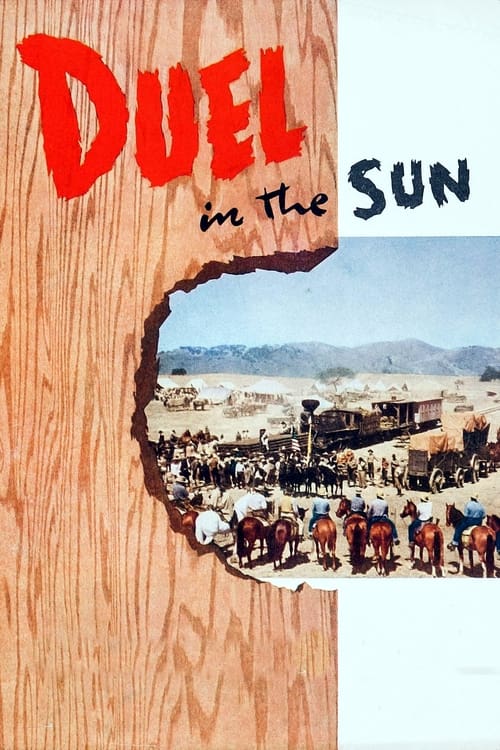
Peck's rare attempts at villainous roles were not acclaimed. Early on, he played the renegade son in the Western Duel in the Sun, and in 1978 the infamous Nazi doctor Josef Mengele in The Boys from Brazil. In the 1980s, Peck moved to television, where he starred in the mini-series The Blue and the Gray, playing Abraham Lincoln. He also starred with Christopher Plummer, John Gielgud, and Barbara Bouchet in the television film The Scarlet and the Black, about Monsignor Hugh O'Flaherty, a real-life Catholic priest in the Vatican who smuggled Jews and other refugees away from the Nazis during World War II.
Peck, Mitchum, and Martin Balsam all had roles in the 1991 remake of Cape Fear, directed by Martin Scorsese. In the remake, Peck played Max Cady's lawyer. His last prominent film role also came in 1991, in Other People's Money, directed by Norman Jewison and based on the stage play of that name. Peck played a business owner trying to save his company against a hostile takeover bid by a Wall Street liquidator played by Danny DeVito.
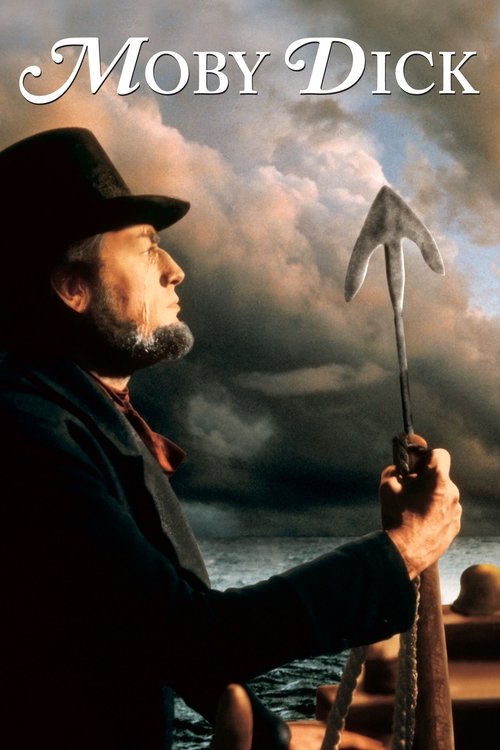
Peck retired from active film-making after the film. Peck spent the last few years of his life touring the world doing speaking engagements in which he would show clips from his movies and take questions from the audience. He came out of retirement for a 1998 mini-series version of one of his most famous films, Moby Dick, portraying Father Mapple (played by Orson Welles in the 1956 version), with Patrick Stewart as Captain Ahab, the role Peck played in the earlier film. It was his final performance, and it won him the Golden Globe for Best Supporting Actor in a Series, Miniseries, or Television Film. Peck had been offered the role of Grandpa Joe in the 2005 film Charlie and the Chocolate Factory, but died before he could accept it. The Irish actor David Kelly was then given the part.
Politics
In 1947, while many Hollywood figures were being blacklisted for similar activities, Peck signed a letter deploring a House Un-American Activities Committee investigation of alleged communists in the film industry. A life-long Democrat, Peck was suggested in 1970 as a possible Democratic candidate to run against Ronald Reagan for the office of California Governor. Although he later admitted that he had no interest in being a candidate himself for public office, Peck encouraged one of his sons, Carey Peck, to run for political office. He was defeated both times by slim margins in races in 1978 and 1980 against Republican U.S. Representative Bob Dornan, another former actor.
Peck revealed that former President Lyndon Johnson had told him that, had he sought re-election in 1968, he intended to offer Peck the post of U.S. ambassador to Ireland – a post Peck, owing to his Irish ancestry, said he might well have taken, saying, "[It] would have been a great adventure." The actor's biographer Michael Freedland substantiates the report, and says that Johnson indicated that his presentation of the Medal of Freedom to Peck would perhaps make up for his inability to confer the ambassadorship. President Richard Nixon placed Peck on his "enemies list," owing to Peck's liberal activism.
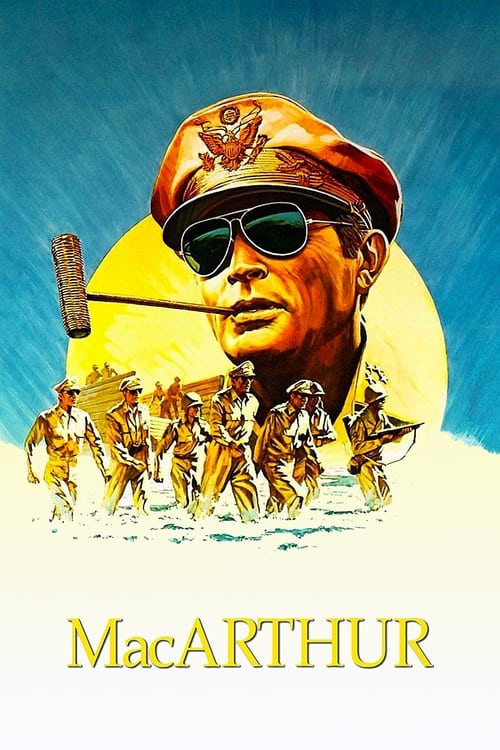
Peck was outspoken against the Vietnam War, while remaining supportive of his son, Stephen, who fought there as a Marine officer forward observer. In 1972, Peck produced the film version of Daniel Berrigan's play The Trial of the Catonsville Nine about the prosecution of a group of Vietnam protesters for civil disobedience. Despite his reservations about American general Douglas MacArthur as a man, Peck had long wanted to play him on film, and did so in MacArthur in 1976. Peck was a close friend of French president Jacques Chirac.
In 1978, Peck traveled to Alabama, the setting of To Kill a Mockingbird, to campaign for Democratic U.S. Senate nominee Donald W. Stewart of Anniston, who defeated the Republican candidate, James D. Martin, a former U.S. representative from Gadsden. In 1987, Peck undertook the voice-overs for television commercials opposing President Ronald Reagan's Supreme Court nomination of judge Robert Bork. Bork's nomination was defeated. Peck was also a vocal supporter of a worldwide ban of nuclear weapons, and a life-long advocate of gun control.
Documents declassified in 2017 show that the National Security Agency had created a biographical file on Peck as part of its monitoring of prominent US citizens.
Personal life
In October 1942, Peck married Finnish American Greta Kukkonen (1911–2008), with whom he had three sons: Jonathan (1944–1975), Stephen (b. 1946), and Carey Paul (b. 1949). They were divorced in December 1955. Peck's eldest son was found dead in his home on June 26, 1975, in what authorities believed was a suicide. "It's the most terrible thing that has happened to me in my life," Peck said once. "You never get over a thing like that."
During his first marriage, Peck had a brief affair with Spellbound co-star Ingrid Bergman. He confessed the affair to Brad Darrach of People in a 1987 interview, saying: "All I can say is that I had a real love for her, and I think that's where I ought to stop.... I was young. She was young. We were involved for weeks in close and intense work."
On New Year's Eve in 1955, the day after his divorce was final, Peck married Véronique Passani (1932–2012), a Paris news reporter who had interviewed him in 1952 before he went to Italy to film Roman Holiday. He asked her to lunch six months later, and they became inseparable. They had a son, Anthony Peck (b. 1956), and a daughter, Cecilia Peck (b. 1958). The couple remained married until Peck's death. His son Anthony is a former husband of supermodel Cheryl Tiegs. Peck had grandchildren from both marriages. One of his grandsons from his first marriage is actor Ethan Peck.
Peck was the owner of thoroughbred steeplechase race horses. In 1963, Owen's Sedge finished seventh in the Grand National. Another of his horses, Different Class, raced in the 1968 Grand National. The horse was favored, but finished third.
Peck's hobbies included gardening, reading, and listening to music, including classical, opera and jazz. Peck and his wife often hosted dinners in support of the arts and humanitarian or social justice causes.
Peck was Roman Catholic, and once considered entering the priesthood. Later in his career, a journalist asked Peck if he was a practicing Catholic. Peck answered: "I am a Roman Catholic. Not a fanatic, but I practice enough to keep the franchise. I don't always agree with the Pope.... There are issues that concern me, like abortion, contraception, the ordination of women...and others." His second marriage was performed by a justice of the peace, not by a priest, because the Church prohibits remarriage if the first spouse is still living and the first marriage was not annulled. Peck was a significant fund-raiser for the missionary work of a priest friend of his, Father Albert O'Hara, and served as co-producer of a cassette recording of the New Testament with his son Stephen.
Death and legacy
On June 12, 2003, Peck died in his sleep from bronchopneumonia at the age of 87 at his home in Los Angeles. His wife Veronique was by his side.
Gregory Peck is entombed in the Cathedral of Our Lady of the Angels mausoleum in Los Angeles. His eulogy was read by Brock Peters, whose character, Tom Robinson, was defended by Peck's Atticus Finch in To Kill a Mockingbird.
The Gregory Peck Award for Cinematic Excellence was created by the Peck family in 2008 to commemorate their father by honoring the life's work of a director, producer or actor. Originally presented at the Dingle International Film Festival in his ancestral home in Dingle, Ireland, since 2014 the award has been presented at the San Diego International Film Festival in the city where Peck was born and raised. Recipients include Gabriel Byrne, Laura Dern, Alan Arkin, Annette Bening, Patrick Stewart and Laurence Fishburne.
Acting credits and awards
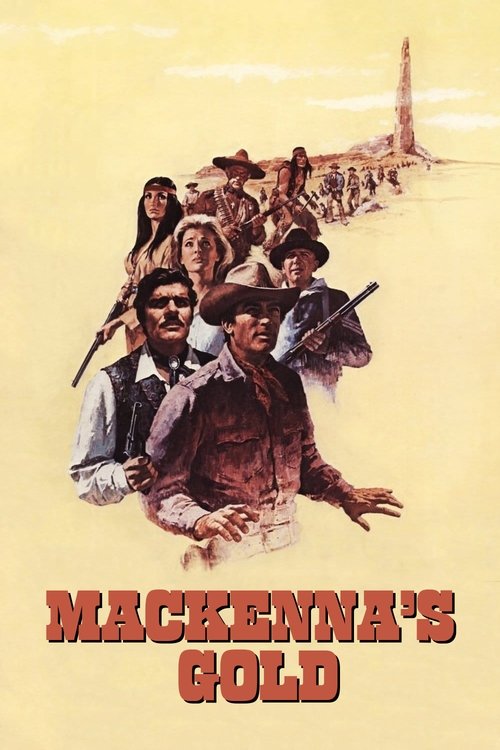
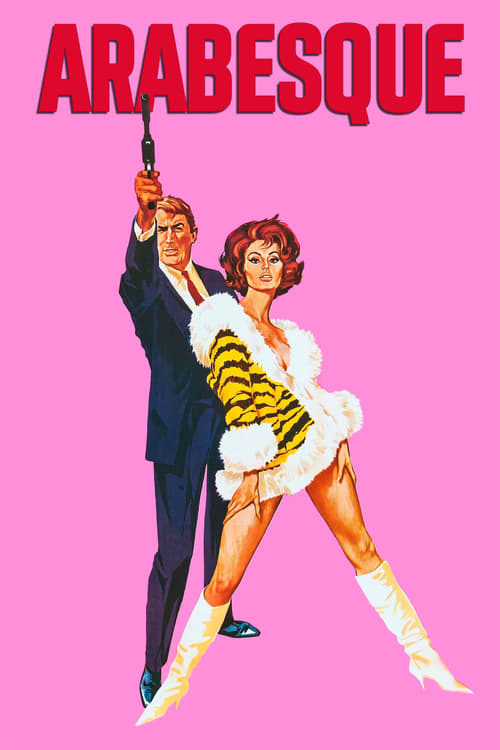
According to the American Film Institute, the Academy of Motion Picture Arts and Sciences, and the Hollywood Foreign Press Association, Peck's most significant works include Days of Glory (1944), The Keys of the Kingdom (1945), Spellbound (1945), The Yearling (1946), Gentleman's Agreement (1947), Twelve O'Clock High (1949), The Gunfighter (1950), The Snows of Kilimanjaro (1952), Roman Holiday (1953), The Big Country (1958), Moby Dick (1956), Designing Woman (1957), The Guns of Navarone (1961), Cape Fear (1962), To Kill a Mockingbird (1962), Arabesque (1966), Mackenna's Gold (1969), The Omen (1976) and Old Gringo (1989). Among his television projects are The Blue and the Gray (1982) The Scarlet and the Black (1983) and Moby Dick (miniseries 1998). On stage, Peck appeared in Gas Light at the La Jolla Playhouse and provided a voice-over for The Will Rogers Follies at the Palace Theatre.
Peck received five total Academy Award nominations for The Keys of the Kingdom (1945), The Yearling (1946), Gentleman's Agreement (1947) and Twelve O'Clock High (1949) before winning Best Actor for his performance in To Kill a Mockingbird (1962). In 1967, he received their Jean Hersholt Humanitarian Award. He received eight competitive nominations for Golden Globe Awards that recognised his work in The Yearling (1946), To Kill a Mockingbird (1962), Captain Newman, M.D. (1964), MacArthur (1977), The Boys from Brazil (1978) and the 1998 miniseries Moby Dick. Peck's five wins included the Golden Globe for Best Actor twice as well as one Golden Globe Award for Best Supporting Actor – Series, Miniseries or Television Film, and he was honored with their Cecil B. DeMille Award in 1969.
In 1969, President Lyndon B. Johnson honored Peck with the Presidential Medal of Freedom, the nation's highest civilian honor. In 1998, Peck received the National Medal of Arts from President Bill Clinton for his contributions to acting. During his lifetime, he also was a recipient of the AFI Life Achievement Award, the Screen Actors Guild Life Achievement Award and the Kennedy Center Honors. For his contribution to the motion picture industry, Gregory Peck has a star on the Hollywood Walk of Fame at 6100 Hollywood Boulevard. In November 2005, the star was stolen, and has since been replaced.
Archives
Peck donated his personal collection of home movies and prints of his feature films to the Film Archive of the Academy of Motion Picture Arts and Sciences in 1999. The film material at the Academy Film Archive is complemented by printed materials in the Gregory Peck papers at the Academy's Margaret Herrick Library.