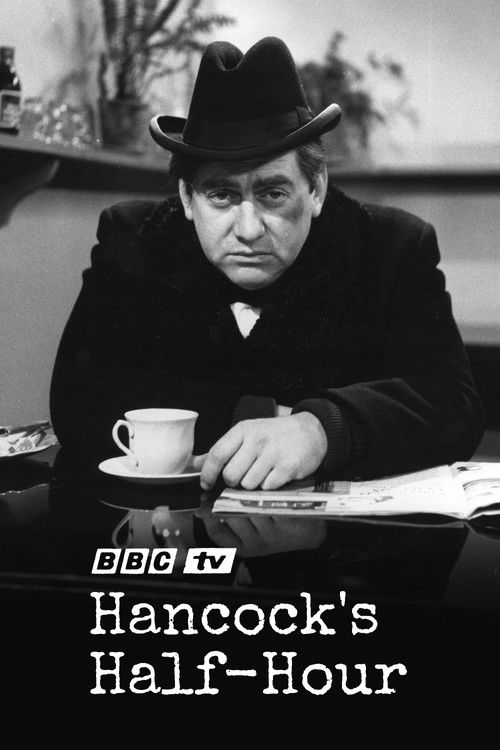
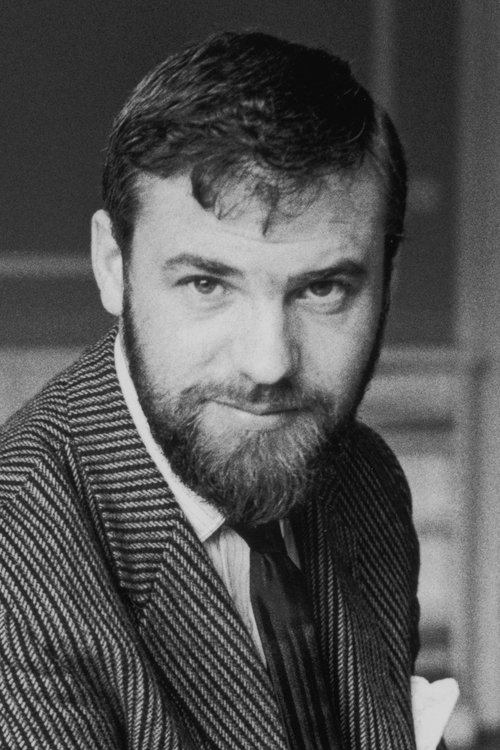
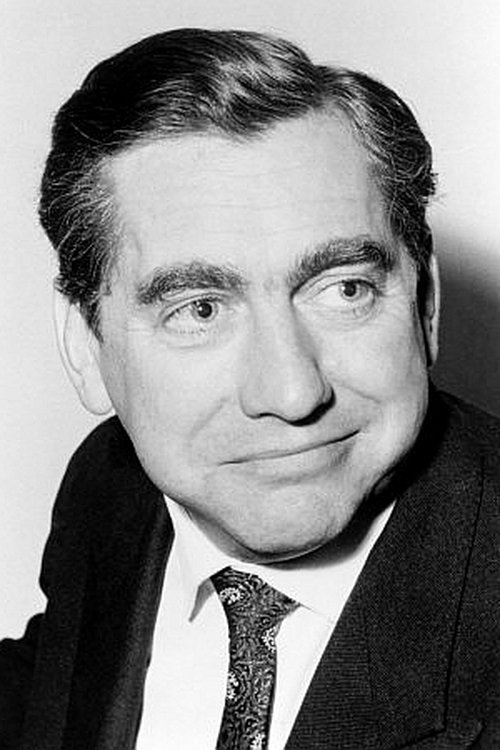
Hancock's Half Hour is a BBC radio comedy, and later television comedy series, broadcast from 1954 to 1961 and written by Ray Galton and Alan Simpson. The radio series starred Tony Hancock with Sid James, Bill Kerr and, at various times, Moira Lister, Andrée Melly, Hattie Jacques, and Kenneth Williams. The television series also featured Sid James with regular appearances from John Le Mesurier, Hugh Lloyd, Warren Mitchell, Liz Fraser and Patricia Hayes. In the final television series, renamed simply Hancock, the supporting cast included established actors such as Jack Watling and Patrick Cargill.
Hancock played an exaggerated and much poorer version of his own character and lifestyle, Anthony Aloysius St John Hancock, a down-at-heel comedian living at the dilapidated 23 Railway Cuttings in East Cheam. The series was influential in the development of the situation comedy, with its move away from radio variety towards a focus on character development. The radio version was produced by Dennis Main Wilson for most of its run. After Main Wilson departed for his television career, his role was taken by Tom Ronald. The television series was produced by Duncan Wood. The distinctive tuba-based theme tune was composed by Wally Stott.
Ten scripts (nine TV, one radio) were written but never recorded for a variety of reasons. The unused radio script for The Counterfeiter was finally recorded in 2019 with Kevin R. McNally as Tony Hancock.
Contents
Radio series
Development
The radio series broke with the variety tradition which was then dominant in British radio comedy, highlighting a new genre: the sitcom or situation comedy. Instead of the traditional variety mix of sketches, guest stars and musical interludes, the show's humour derived from characters and situations developed in a half-hour storyline. This then relatively novel format, of what was in effect a single sketch each week lasting the entire half-hour (though in the radio version James and the others sometimes played different roles), was reflected in the show's title, which aptly described the series as Hancock's "half-hour".
Roger Wilmut, in his 1978 book about Tony Hancock as a performer, credits two British radio comedy shows, already running in 1954, with establishing an uninterrupted 30-minute sitcom format: A Life of Bliss, written by Godfrey Harrison and starring George Cole, and Life with the Lyons, a programme heavily based on the US tradition of sitcoms; he therefore dismisses the notion that Galton and Simpson invented the genre.
The comedy gradually shifted to observation, with a less strong emphasis on a narrative. The playlet "Look Back in Hunger" (spoofing John Osborne's Look Back in Anger) in the episode "The East Cheam Drama Festival" from the fifth series, showed that writers Galton and Simpson were in touch with developments in the British theatre, in the use of sighs and silent pauses, something Osborne's style had in common with the plays of Harold Pinter, whose work began to emerge towards the end of the series' run. In addition, the measured pacing of the episodes was unusual in an era of fast-talking radio comedians, such as Ted Ray, who typically used a machine-gun style of delivery to fill every single second of airtime.
Setting
Hancock's character had various addresses, but by the third radio series he had arrived at 23 Railway Cuttings, East Cheam. Sometimes this was portrayed as a council house, but occasionally there was a private landlord. In a few early episodes, Hancock owned the house, and later this became the norm. The episode "Cinderella Hancock" saw a reverse of the norm with Hancock a lodger in a house owned by Bill Kerr.
The house changed to accommodate the script: in some episodes, it appeared to be a two-bedroom terraced house, with Kerr as Hancock's lodger; but in series four and five, it had at least three bedrooms, as Miss Pugh was also resident in some episodes, while in others, she 'came round' each day. Railway Cuttings and East Cheam were fictitious, but Cheam is a real town in Surrey, today part of the London Borough of Sutton in Greater London. The whole area is smart and expensive, and by creating 'Railway Cuttings, East Cheam' Galton and Simpson created an address for a snob who wanted to live in a 'posh' area, but could only afford the 'cheap end'. In those days, recordings of the radio shows were not commercially available, so the audience had to rely entirely on memory for details of who lived where or who did what in the show.
Commissioning of series in the UK was then closer to American practice with extensive runs not unknown, but in this case, with only two writers, continuity was yet to develop, and details changed to suit each episode. The domestic situation varied, but Hancock was usually portrayed as a 'resting' or hopelessly down-at-heel actor and/or comedian (though some episodes showed him having runs of success, while others depict him pursuing professional careers as fantasies); James was always "on the fiddle" in some way; Kerr gradually became dim and virtually unemployable (although he had started out as a fast-talking American-style Australian); and Hancock's 'secretary', Miss Pugh, had such a loose job description that in one celebrated episode she had cooked the Sunday lunch.
At times, the scripts would include topical realities of British life, such as the reintroduction of petrol rationing from November 1956 to March 1957 (following the Suez Crisis) in 'The Stolen Petrol', and a strike by members of the trade union ASLEF (Associated Society of Locomotive Engineers and Firemen) from 28 May to 14 June 1955 which involved a railway strike in 'The Rail Strike'. 'In-joke' references would occasionally be made to real-life events in a performer's life, such as Bill Kerr's appearance in the film "The Dam Busters".
Radio series cast
Tony Hancock as Anthony Aloysius St John Hancock, principal character.
The comedy actor Sidney James (as he was then billed) played Sid (full name Sidney Balmoral James), a criminally-inclined confidant of Hancock, who usually succeeded in conning him each week.
Bill Kerr appeared as Hancock's Australian lodger (full name William Montmorency Beaumont Kerr), a character who became noticeably dim-witted in the later shows. Often refers to Hancock as "Tub".
Kenneth Williams, taking his first job in comedy, provided the funny voices for nearly all of the minor characters in the show each week. Williams left after the first recording session for the sixth series.
Moira Lister appeared in the first series, before being replaced by Andrée Melly for the next two; both women played love interest for Hancock's character, in essentially 'straight' roles.
In the fourth and fifth series Hattie Jacques provided comedy in the female role as the harridan Griselda Pugh, who was Hancock's secretary and Sid's occasional girlfriend. By this time, Hancock's difficulties with women had become part of the characterisation.
Episodes of the radio series were included in 20 underground radio stations of the BBC's Wartime Broadcasting Service (WTBS), designed to provide information and morale-boosting broadcasts for 100 days after a nuclear attack.
Radio series episodes
Most of the radio episodes were recorded between one day and three weeks in advance of broadcast, except for Series 6 which was mostly recorded during a three-week period in June 1959 in order to avoid clashing with the recording of Series 5 of the television show.
Galton and Simpson never gave titles to any of their Hancock scripts, for radio or television; this was usually left to the girl who filed the scripts at their office, who gave them names that were a reminder of what the script was about. So when Roger Wilmut came to write his book Tony Hancock – Artiste (first published 1978) he took the liberty of inventing titles where necessary and these titles, a combination of the file names and Wilmut's own, have become the accepted ones ever since, with the approval of Galton and Simpson and the BBC.
The regular cast members generally played "themselves", in that the characters were called by the actor's real name (although the English actress Andrée Melly – sister of George – is introduced as a French character). However, there were exceptions:
Kenneth Williams played a series of unnamed characters referred to in the scripts—but not on air—as "Snide". He also played the very occasional roles of Edwardian Fred (a criminal associate of Sid's) and Hancock's Vicar, as well as various other characters (e.g. a judge). In the episode "The Emigrant" he is allowed to break the fourth wall and refer to himself as "that bloke with the funny voice".
Hattie Jacques played Griselda Pugh, Hancock's secretary, with the exception of the episode "The East Cheam Drama Festival" where she played herself.
Alan Simpson played an unnamed man in early episodes who listened patiently to Hancock's long-winded stories. His lines would frequently be restricted to simply "Yes", "Really?", "Mm-hmm", or "I see".
These performers are present in the series as indicated below.
16 episodes, 2 November 1954 – 15 February 1955
Television series
The television version began in 1956 under the same name and with the same writers, produced for the BBC by Duncan Wood. The television and radio versions alternated until 1959, when the final radio series and the fifth television series were both broadcast during the autumn season. Only Sid James transferred from the radio series, although Kenneth Williams and Hattie Jacques each made a couple of appearances. The television version drew on a stock company of actors, who played different supporting characters in each episode. Semi-regulars included Liz Fraser, John Le Mesurier, Hugh Lloyd, Arthur Mullard and John Vyvyan.
The final television series, broadcast in 1961, was retitled Hancock, as it was shortened from a half-hour to 25 minutes. For this final series Sid James was no longer in the cast, as Hancock had become frustrated with the format. Some of the most celebrated episodes of the TV series were produced in this final series, including "The Blood Donor", "The Radio Ham", "The Bedsitter" and "The Bowmans". Hancock's character was relocated to a bedsitter in Earl's Court for this series.
Some episodes of the radio series and telerecordings of some episodes from the third and fourth television series were destroyed. No episodes are known to survive from the first series of the TV show. The surviving radio episodes, which often exist only in edited versions that have been cut for overseas sale to commercial radio stations, were released as CD box sets between 2000 and 2003 (see below).
In a list of the 100 Greatest British Television Programmes drawn up by the British Film Institute in 2000, voted for by industry professionals, Hancock's Half Hour was placed 24th. In 1962, the show became the first imported programme to win a Jacob's Award following its transmission on Telefís Éireann, the Republic of Ireland's national TV station.
In 1956 and 1957 Hancock had starred in two series of a sketch show made by Associated-Rediffusion for ITV television, which were broadcast either side of his first television series on the BBC.
In 1972 a Norwegian TV show called Fleksnes Fataliteter, with Rolv Wesenlund in the title role, aired for the first time. It was based on scripts from Hancock's Half Hour. The show became trilingual, as it usually starred both Swedish and Norwegian actors, and was broadcast in Sweden and Norway as well as Denmark.
Television series cast
Sid James was a regular in series 1–6. (He does not appear in episodes 1 and 2 of series 2.)
Kenneth Williams appeared in every episode of series 2, playing a variety of characters.
Hattie Jacques appeared throughout series 2, in all episodes except the first, playing a variety of characters.
Patricia Hayes appeared very occasionally in series 4–6 as Mrs Cravatte, Hancock's cleaner.
Among the other well-known actors who appeared in the series were Hugh Lloyd, Dick Emery, Warren Mitchell, John Le Mesurier and Richard Wattis. Also appearing were Pat Coombs, Rolf Harris, Burt Kwouk (credited as 'Burd Kwouk'), and Anne Reid.
Television series episodes
6 episodes, broadcast live, every 2 weeks, 6 July – 14 September 1956. No recordings exist.
6 episodes, broadcast live, every 2 weeks, 1 April – 10 June 1957. Only "The Alpine Holiday" still exists.
11 regular episodes and one 43 minute Christmas special, broadcast live, 30 September – 23 December 1957. Episodes 5, 9, 10, 11 still exist and Episode 12 exists as a telerecording.
13 episodes; episodes 1–4 pre-recorded as telerecordings, 5–13 live, broadcast 26 December 1958 – 27 March 1959 (skipping 27 February). Episodes 1, 3, 4, 11 and 12 exist as telerecordings. Episodes 2, 5, 6, 7, 8, 9 and 10 exist as off-air audio recordings of variable quality. Episode 13 remains missing.
10 episodes, pre-recorded on videotape, broadcast 25 September – 27 November 1959. The entire series exists on telerecordings.
10 episodes, pre-recorded on videotape, broadcast 19 February – 6 May 1960. The entire series exists as telerecordings. A trailer made for Australian transmission of this series also exists.
6 episodes, pre-recorded on videotape, broadcast 26 May – 30 June 1961. Shortened to 25 minutes per episode and retitled Hancock. This is the only series Sid James does not appear in. The entire series exists on telerecordings. One script for Hancock's Half Hour/Hancock was not used: "The Diplomat" (but it was instead published in Richard Webbers' book 50 years of Hancock's Half Hour in 2004).
Chronological listing of Hancock's radio and television broadcasts, 1954–1961
Hancock's Half Hour, radio Series 1: 2 November 1954 – 15 February 1955
Hancock's Half Hour, radio Series 2: 17 April – 2 July 1955
Hancock's Half Hour, radio Series 3: 10 October 1955 – 29 February 1956
The Tony Hancock Show, Series 1 (Associated-Rediffusion for ITV): 4 April – 1 June 1956
Hancock's Half Hour, television Series 1: 7 July – 14 September 1956
Hancock's Half Hour, radio Series 4: 14 October 1956 – 24 February 1957
The Tony Hancock Show, Series 2: 16 November 1956 – 25 January 1957
Hancock's Half Hour, television Series 2: 1 April – 10 June 1957
Hancock's Half Hour, television Series 3: 9 September – 23 December 1957
Hancock's Half Hour, radio Series 5: 1 January – 3 June 1958
Hancock's Half Hour, television Series 4: 26 December 1958 – 27 March 1959
Hancock's Half Hour, television Series 5: 25 September – 27 November 1959
Hancock's Half Hour, radio Series 6: 29 September – 29 December 1959
Hancock's Half Hour, television Series 6: 19 February – 6 May 1960
Commercial releases
Four episodes of the TV series were re-recorded before studio audiences, in the style of radio programmes, and released on LP format, two by Pye on the 1961 album Hancock ("The Blood Donor" and "The Radio Ham") and two by Decca on the 1965 album It's Hancock ("The Missing Page" and "The Reunion Party"), which was reissued as The World of Tony Hancock in 1975. The re-recordings entailed the rewriting of a number of visual gags; for instance, at the end of the TV version of "The Radio Ham", Hancock smashes his radio equipment, whereas in the LP version he holds an on-air auction for it. These recordings have been reissued several times on LP, cassette and CD, and have also appeared on comedy compilation CDs.
BBC Records released an LP titled Hancock featuring the original TV soundtracks of two episodes, "The Lift" and "Twelve Angry Men". The episode "The Lift" was taken from the separate magnetic soundtrack of the telerecording, with the opening non-dialogue sequence omitted and one extra line of dialogue added: "Watch that door button... Oh my God!" as recorded by Hugh Lloyd on 24/08/76 and edited in. "Twelve Angry Men" was from the optical soundtrack of the telerecording, with theme and incidental music omitted, a few lines of dialogue edited out and pauses shortened.
The LP credits the theme music to Angela Morley, even though the music was omitted, and the episodes were recorded when she was still called Wally Stott.
There have been six LPs released of substantially complete radio episodes. The first was by Pye Records in 1960 entitled This is Hancock containing "The Wild Man of The Woods" and "Sunday Afternoon At Home". The other five were by BBC Records, released as Hancock's Half Hour: "The Poetry Society" and "Sid's Mystery Tours", released in 1980; "The Americans Hit Town" and "The Unexploded Bomb" in 1981; "The Scandal Magazine" and "The Last of the McHancocks" in 1982; "The Sleepless Night" and "Fred's Pie Stall" in 1983; and finally "Hancocks War" and "The Christmas Club" in 1984. These five LPs were also released on audio cassette at the same time. Also, a number of comedy-themed LPs, EPs and 7-inch singles have been released over the years which have featured short extracts from various radio episodes.
The radio series of Hancock's Half Hour was first released on cassette by the BBC as part of their Radio Collection series of audio cassettes in the late 1980s. The first three volumes were re-issues of the five LPs from the 1980s plus the LP of television soundtracks from 1976. Because only 10 volumes were made with four episodes each, and because a number of episodes were later returned from homemade off-air recordings by listeners, a release of the radio series was never completed on cassette. In 2000, the episodes still remaining from Series 1 of the radio series were released as a box set on CD. Series 2–6 followed throughout the next three years. The series has also been given three compilation CDs.
Scripts
(Sources:)
"The Best of Tony Hancock." (by Ray Galton and Alan Simpson) (Robson Books)
Scripts from the television series.
"Hancock" (by Ray Galton and Alan Simpson) (Corgi Transworld Publishers 1962)
4 TV scripts from Hancock's Half Hour.
"Hancock's Half Hour" (by Ray Galton and Alan Simpson)
(Woburn Press 1974, 0-7130-0087-2)
Introduction by Peter Black.
5 scripts (including "The Blood Donor")
(BBC)
Radio scripts compiled by Chris Bumstead.
(Futura, 0-8600-7246-0)