
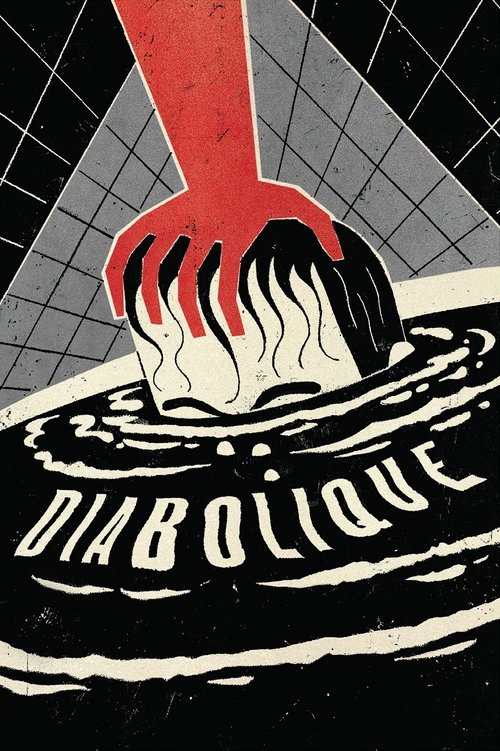

Henri-Georges Clouzot (French: [ɑ̃ʁi ʒɔʁʒ kluzo]; 20 November 1907 – 12 January 1977) was a French film director, screenwriter, and producer. He is best remembered for his work in the thriller film genre, having directed The Wages of Fear (1953) and Les Diaboliques (1955), which are critically recognized as among the greatest films of the 1950s. He also directed documentary films, including The Mystery of Picasso (1956), which was declared a national treasure by the government of France.
Clouzot was an early fan of the cinema and, desiring a career as a writer, moved to Paris. He was later hired by producer Adolphe Osso to work in Berlin, writing French-language versions of German films. After being fired from UFA studio in Nazi Germany due to his friendship with Jewish producers, Clouzot returned to France, where he spent years bedridden after contracting tuberculosis. Upon recovering, he found work in Nazi-occupied France as a screenwriter for the German-owned company Continental Films. At Continental, Clouzot wrote and directed films that were very popular. His second film Le Corbeau drew controversy over its harsh look at provincial France, and he was fired from Continental before its release. As a result of his association with Continental, he was barred by the French government from filmmaking until 1947.
After the ban was lifted, Clouzot reestablished his reputation and popularity in France during the late 1940s with successful films including Quai des Orfèvres. After the release of his comedy film Miquette, Clouzot married Véra Gibson-Amado, who would star in his next three feature films. In the early and mid-1950s, Clouzot drew acclaim from international critics and audiences for The Wages of Fear and Les Diaboliques; both films would serve as source material for remakes decades later. After the release of La Vérité, his wife Véra died of a heart attack, and Clouzot's career suffered due to depression, illness and new critical views of films from the French New Wave.
Clouzot's career became less active in later years, limited to a few television documentaries and two feature films in the 1960s. He wrote several unused scripts in the 1970s and died in Paris in 1977.
Contents
Life and career
Early years
Henri-Georges Clouzot was born in Niort, Deux-Sèvres, to mother Suzanne Clouzot and father Georges Clouzout, a bookstore owner. He was the first of three children in a middle-class family. Clouzot showed talent by writing plays and playing piano recitals. His father's bookstore went bankrupt, and the family moved to Brest where Georges Clouzout became an auctioneer. In Brest, Henri-Georges Clouzot went to Naval School, but was unable to become a Naval Cadet due to his myopia. At the age of 18, Clouzot left for Paris to study political science. Whilst living in Paris, he became friends with several magazine editors. His writing talents led him to theater and cinema as a playwright, lyricist and adaptor-screenwriter. The quality of his work led producer Adolphe Osso to hire him and send him to Germany to work in Studio Babelsberg in Berlin, translating scripts for foreign-language films shot there.
Career
Throughout the 1930s Clouzot worked by writing and translating scripts, dialogue and occasionally lyrics for over twenty films. While living in Germany, he saw the films of F. W. Murnau and Fritz Lang and was deeply influenced by their expressionist style. Clouzot made his first short film, La Terreur des Batignolles, from a script by Jacques de Baroncelli. The film is a 15-minute comedy with three actors. Film historian and critic Claude Beylie reported this short was "surprisingly well made with expressive use of shadows and lighting contrasts that Clouzot would exploit on the full-length features he would make years later". Clouzot's later wife, Inès de Gonzalez, said in 2004 that La Terreur des Batignolles added nothing to Clouzot's reputation. In Berlin, Clouzot saw several parades for Adolf Hitler and was shocked at how oblivious he felt France was to what was happening in Germany. In 1934, Clouzot was fired from UFA Studios for his friendship with Jewish film producers such as Adolphe Osso and Pierre Lazareff.
In 1935, Clouzot was diagnosed with tuberculosis and was sent first to Haute-Savoie and then to Switzerland, where he was bedridden for nearly five years in all. Clouzot's time in the sanatorium would be very influential on his career. While bedridden, Clouzot read constantly and learned the mechanics of storytelling to help improve his scripts. Clouzot also studied the fragile nature of the other people in the sanatorium. Clouzot had little money during this period, and was provided with financial and moral support by his family and friends. By the time Clouzot left the sanatorium and returned to Paris, World War II had broken out. French cinema had changed because many of the producers he had known had fled France to escape Nazism.
Clouzot's health problems kept him from military service. In 1939, he met actor Pierre Fresnay, who was already an established film star in France. Clouzot wrote the script for Fresnay's only directorial feature Le Duel, as well as two plays for him: On prend les mêmes, which was performed in December 1940, and Comédie en trois actes, which was performed in 1942. Despite writing scripts for films and plays, Clouzot was so poor that he resorted to trying to sell lyrics to French singer Édith Piaf, who declined to purchase them. In World War II, after France was invaded by Germany and subsequently during the German occupation, the German-operated film production company Continental Films was established in October 1940. Alfred Greven, the director of Continental, knew Clouzot from Berlin and offered him work to adapt stories of writer Stanislas-André Steeman. Clouzot felt uncomfortable working for the Germans, but was in desperate need of money and could not refuse Greven's offer. Clouzot's first film for Continental was the adaptation of Steeman's mystery novel Six hommes morts (Six Dead Men). Clouzot retitled the film Le Dernier des six, having been influenced by actress Suzy Delair while writing the script, allowing her to choose the name of the character she would play.
Personal life
In the late-1930s, Clouzot went to a cabaret show featuring entertainers Mistinguett and Suzy Delair at the "Deux Anes" cabaret. Clouzot waited for Delair at the stage door and after meeting her, the two became a romantic couple for the next 12 years. Clouzot had Delair star in two of his films, The Murderer Lives at Number 21 and Quai des Orfèvres. Delair eventually left Clouzot after working with him on Quai des Orfèvres.
Clouzot met his first wife Vera Clouzot through actor Léo Lapara, who had minor parts in Le Retour de Jean and Quai des Orfèvres. Véra met Clouzot after divorcing Lapara and while working as a continuity assistant on Clouzot's Miquette et Sa Mère. Clouzot named his production company after Véra and had her star in all three films made by the company: The Wages of Fear, Diabolique and Les Espions. Véra also contributed to the script of La Vérité. Véra Clouzot died of a heart attack shortly after the filming of La Vérité. Clouzot fell into a depression over her death. After her funeral, he moved to Tahiti, but returned to France in December 1960.
Clouzot met his second wife, Inès de Gonzalez, for the first time at a casting call for a film based on Vladimir Nabokov's Laughter in the Dark. In 1962, Clouzot met de Gonzalez again after she had returned from South America. In December 1963, Clouzot and Inès de Gonzalez married. In the 1960s, Clouzot converted to Roman Catholicism.
Style
With the exception of the comedy film Miquette et sa mère, every directorial feature of Clouzot involves deception, betrayal and violent deaths. When basing screenplays on written work, Clouzot often changed the stories dramatically, using only key points of the original story. The author Stanislas-André Steeman, whom Clouzot worked with twice, said Clouzot would only "build something after having contemptuously demolished any resemblance to the original, purely for the ambition of effect". When writing for his own features, Clouzot created characters that were usually corrupt and spineless, with the capacity for both good and evil within them.
Clouzot was very demanding with his actors, and would often quarrel with them to get them in the mood he desired. Suzy Delair recalled that Clouzot slapped her, but said of it, "So what? He slapped others as well...He was tough but I'm not about to complain". Pierre Fresnay recalled that Clouzot "worked relentlessly, which made for a juicy spectacle...That's to say nothing for his taste of violence, which he never tried with me". When Clouzot worked with Brigitte Bardot, one scene required her character to drool and sleep. He offered her powerful sleeping pills, saying they were aspirin; this led to her stomach having to be pumped. Although he was harsh on his actors, he did not treat them fiercely off set. Delair recalled that off set there was an "innocence about him" that was not seen.
Clouzot biographer Marc Godin suggested Clouzot's life provides clues to understanding his style as a filmmaker. Clouzot was viewed by many of his collaborators as a pessimist, short-tempered, and almost always angry. Brigitte Bardot described Clouzot as "a negative being, forever at odds with himself and the world around him". His outlook on life is reflected in his own films that focus on the darker side of humanity.
Legacy
Despite criticism following the arrival of the French New Wave, career retrospectives of Clouzot's work have been positive. Twenty years after his death, film critic Noël Herpe wrote in the French film journal Positif that "Les Diaboliques (just like Les Espions and La Verite) reveals a sterile and increasingly exaggerated urge to experiment with the powers of fiction". Film historian Philipe Pilard wrote, "There is no doubt that if Clouzot had worked for Hollywood and applied the formulas of U.S. studios, today he would be lauded by the very critics who choose to ignore him". Clouzot today is generally known for his thriller films The Wages of Fear and Diabolique. Clouzot's ability in the genre led to comparisons with Alfred Hitchcock. Clouzot respected Hitchcock's work, stating, "I admire him very much and am flattered when anyone compares a film of mine to his".
Several of Clouzot's films have been remade since their original releases. Director Otto Preminger adapted Le Corbeau into his 1951 film The 13th Letter. In 1977, the year of Clouzot's death, William Friedkin directed a remake of The Wages of Fear called Sorcerer. French director Claude Chabrol adapted Clouzot's script for L'Enfer in 1994 for a film likewise titled L'Enfer. In 1996, an American remake of Les Diaboliques was released under the title Diabolique, starring Sharon Stone.
Filmography
L'assassin habite... au 21 (The Murderer Lives at Number 21, 1942)
Le corbeau (The Raven, 1943)
Quai des orfèvres (Goldsmiths' Quay, 1947)
Manon (1949)
Miquette et sa mère (Miquette, 1950)
Le salaire de la peur (The Wages of Fear, 1953)
Les diaboliques (Diabolique, 1955)
Le mystère Picasso (The Mystery of Picasso, 1956)
Les espions (The Spies, 1957)
La vérité (The Truth, 1960)
La prisonnière (Woman in Chains, 1968)