Critical response
The film received negative reviews from critics, who cited the contrivances of the film's script and its underdeveloped characters. Critics noted that the film was the latest of a string of movies that involved women being treated as property, such as Pretty Woman, Honeymoon in Vegas and Mad Dog and Glory. A major criticism was that the film did not fully explore its potentially enticing premise. Janet Maslin of The New York Times wrote: "For all its ostensible daring, Indecent Proposal is much too cautious. None of the three principals really change as a consequence of the story. None of the frankness that might make matters interesting is allowed to sully the romantic mood. None of the characters have lives outside the confines of the story, although the lonely Gage, when celebrating a big gambling win, suddenly gives a party for 200 anonymous, soigne-looking friends."
In The Telegraph, Anthony Brett said that despite its packaging as a steamy thriller, "Indecent Proposal is in fact a largely distasteful and bizarrely plodding romantic drama, one that gently pokes at lofty ideas about power and marriage and the American dream but scurries away before it hits on anything too dicey." In Entertainment Weekly, Owen Gleiberman wrote: "Indecent Proposal starts out kinky and turns into a languid — and shockingly banal — domestic soap opera. Like 9 1/2 Weeks, the movie is all tease, all come-on. Next time Lyne should try for something a little more indecent."
Critics generally praised Redford's performance, but some lamented that the character of John Gage was given too much of a sympathetic edge, and that the role was merely a chance for Redford to once again play Jay Gatsby. Gleiberman wrote: "Like Michael Douglas' Gordon Gekko, he has that aura of money that’s almost tactile — even in his dark suit, he glows — and he speaks with the dry enticement of someone who has had too much of what he wants and now gets his kicks by testing people, living through their experiences."
Of Demi Moore, Maslin wrote, she "pours all of her effort into going through such motions smolderingly, and none into whatever sense may lie behind them. That's fine for the role; she falters only when the screenplay turns mute or turns up howlers." Todd McCarthy wrote: "What emotional legitimacy the film does possess stems from Moore's performance, which is lively, heartfelt and believable until the script ceases to permit it." Several critics found Harrelson to be the weak link of the cast, with McCarthy writing the actor is not given much to do except display "puppydog love in the first section and standard-issue jealousy in the second". However, multiple critics were complimentary of the film's supporting cast, particularly Oliver Platt as the Murphys' wisecracking, sleazy lawyer Jeremy Green.
Multiple critics opined that the film loses its narrative steam after the climactic deal takes place. In a 2014 review, Nathan Rabin wrote: "Indecent Proposal suffers from a distinct lack of stakes. The second [Diana returns from her night with Gage], the million dollars that just moments ago was going to change her and her husband's lives ceases to matter. Diana doesn’t want it. David doesn’t want it...Money ultimately doesn’t matter in the sleazy fairy-tale world of Indecent Proposal, only love, and when money threatens to soil that love, then it must be openly rejected."
The film also sparked significant backlash from feminists and critics for its depiction of a woman bartering with her body for the benefit of her husband. Peter Travers of Rolling Stone called the film "sexist propaganda." Activist Betty Friedan and filmmaker Callie Khouri argued the film promotes the idea of prostitution, with Friedan saying, "What does it say? Thirteen-year-old girls will see that movie and be told you don’t need to bother to do your homework or to get an MBA, all you need to do is diet enough to be anorexic, get some silicone and look for that lonely billionaire." Feminist writer Susan Faludi likened Gage's actions in the film to "essentially...raping a woman with money." Producer Denise Di Novi suggested the film could be characterized as a women in prison film, because it has a woman in a "submissive, controlled situation." Camille Paglia dissented, saying "What is it about this picture that moviegoers are in sync with? (Is it) women’s sexuality in ways feminist rhetoric is unable to define?"
Amy Holden Jones wrote a defense of the film in the Los Angeles Times, arguing that Diana had agency in her choice and that much of the criticism levied against the film came from male critics. Jones later said: "When the film was released, it caused a great deal of controversy, because, you know, how could I write this thing about a woman spending the night with this guy for a million dollars? The idea that a woman should not be tempted by any of those things, or she should be so pure that you can’t make a movie about her feeling that way — I mean, go watch some French cinema! It's more complicated than that. I’m as big a feminist as you’ll find, but part of feminism for me is that women can be portrayed not as visions of perfection on-screen, but as whole human beings with choices."
Among the few critics to review the film positively was Roger Ebert. Ebert gave the film a thumbs up on At the Movies, while his colleague Gene Siskel gave it a thumbs down. In his print review, Ebert admitted there "are large challenges to logic" and the plot is "manipulative", but said "there is a genuine romantic spirit at work here", concluding that a necessary suspension of disbelief is "why we line up at the ticket window: We want to leave the real world, for a couple of hours, anyway". He also described the film's decision to keep the actual night of adultery offscreen as wise.
Caryn James of The New York Times also gave a positive review, writing that while Honeymoon in Vegas and Mad Dog and Glory "dance around the issue of buying and bartering people, Indecent Proposal embraces it. It isn't aways a good film; it employs lazy voice-overs to express sappy sentiments about the Murphys' eternal love. But it turns an inflammatory plot into a surprisingly honest and entertaining movie." Her colleague Janet Maslin gave a similarly mixed response, saying the film "calls for grudging admiration. Working with a ridiculous premise and...[a] badly underwritten script...the director of Flashdance and Fatal Attraction has still come up with the sort of sexy pop parable that is his specialty. Mr. Lyne's films may not cast any new light on the human condition, but they do keep you glued to the screen."
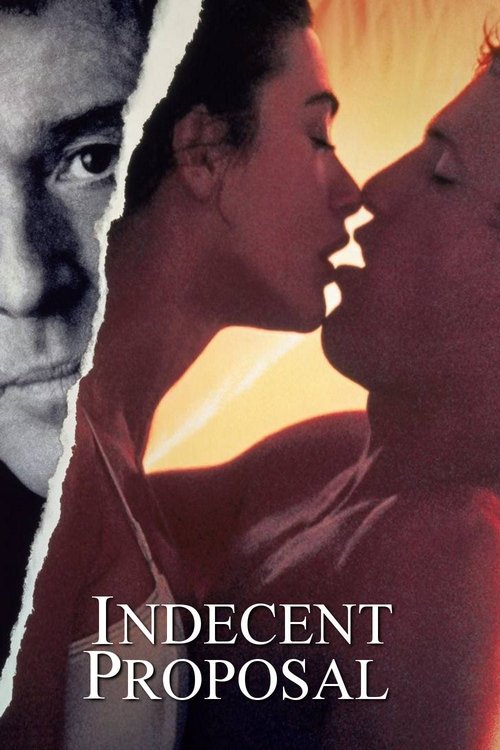
On review aggregator Rotten Tomatoes, Indecent Proposal has a 34% "rotten" rating based on 47 reviews, with an average rating of 4.8/10. The consensus reads: "Lurid but acted with gusto, Indecent Proposal has difficulty keeping it up beyond its initial titillating premise." Audience response was less negative, with those polled by CinemaScore giving an average grade of "B" on an A+ to F scale. The film is listed in Golden Raspberry Award founder John Wilson's book The Official Razzie Movie Guide as one of the "100 most enjoyably worst movies ever made".



.jpg?width=400)