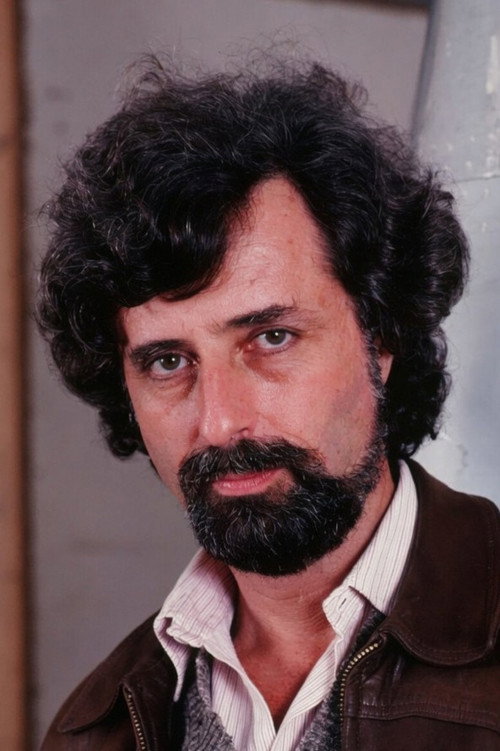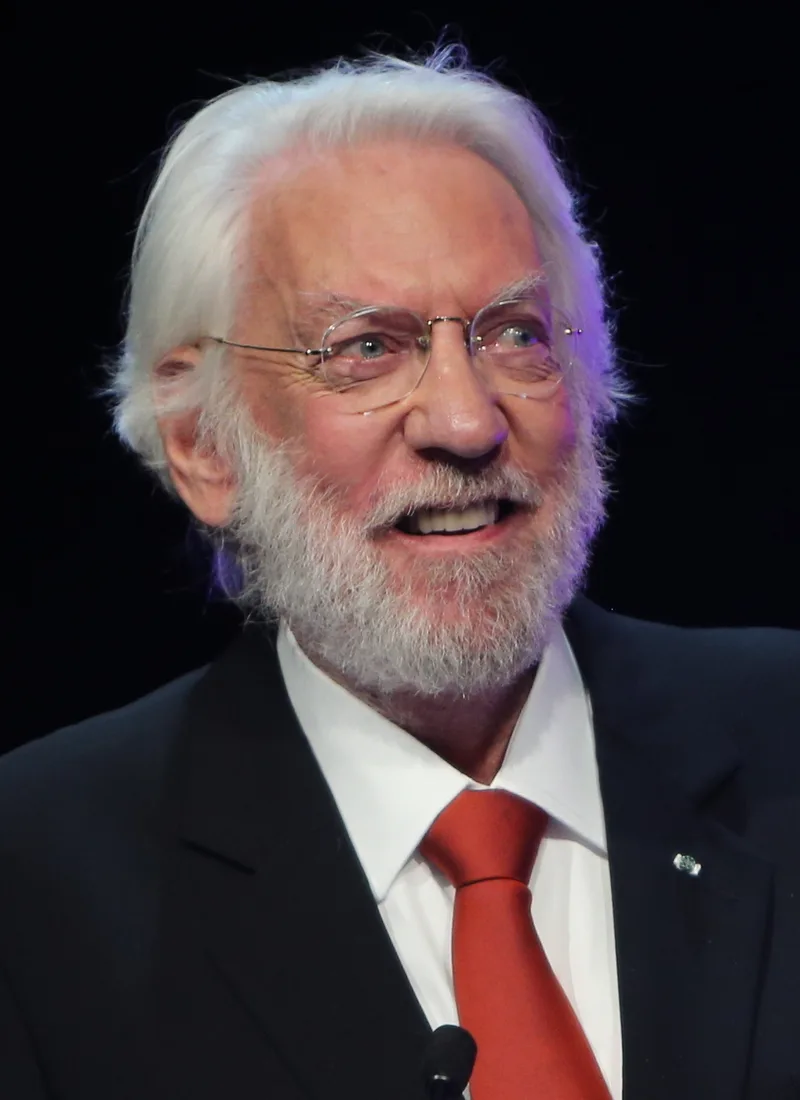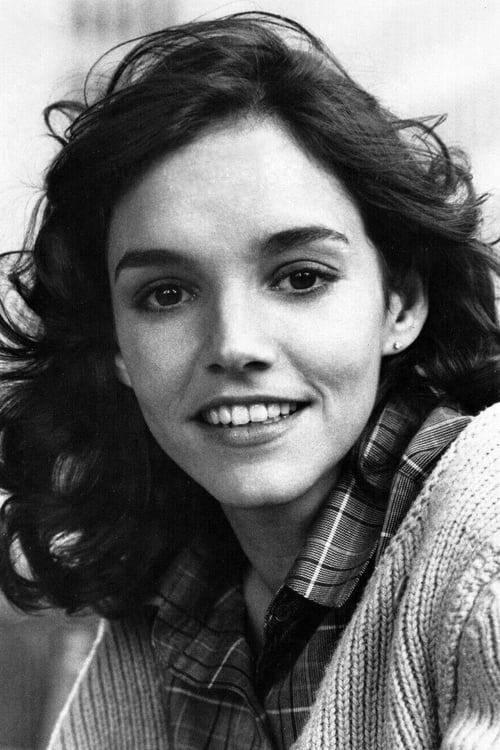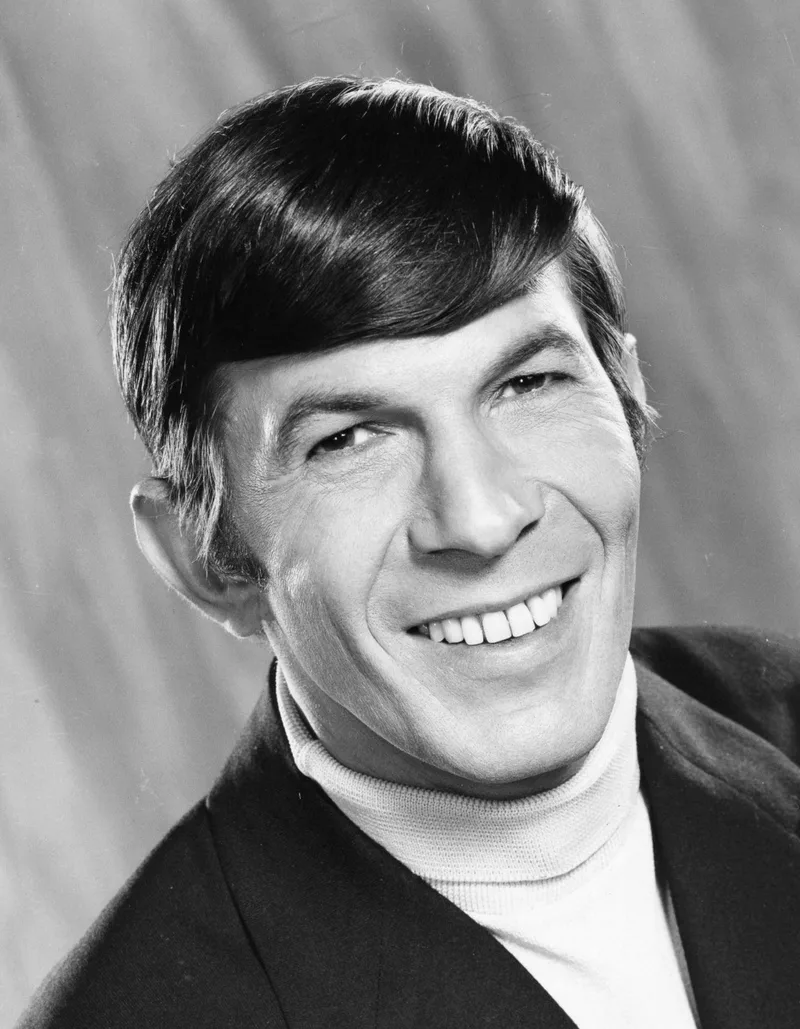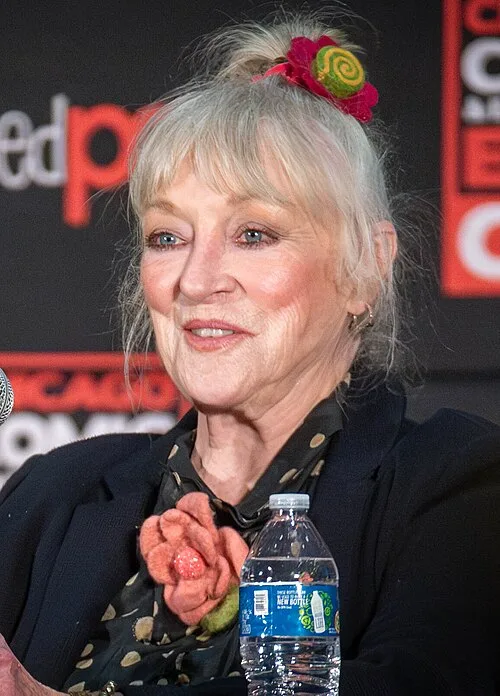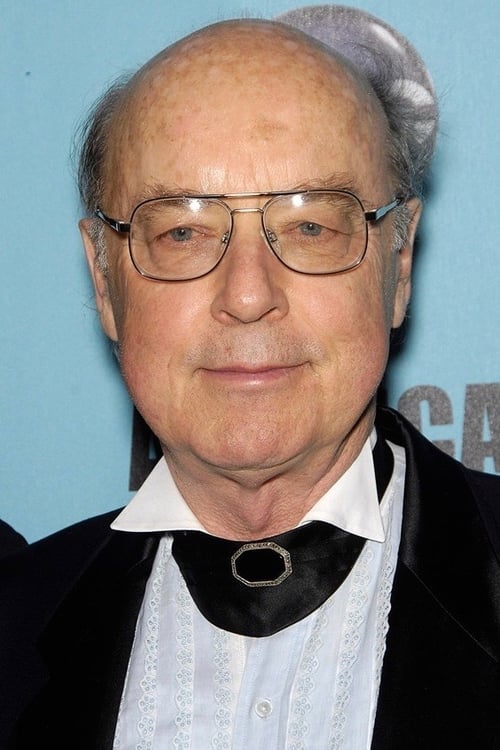



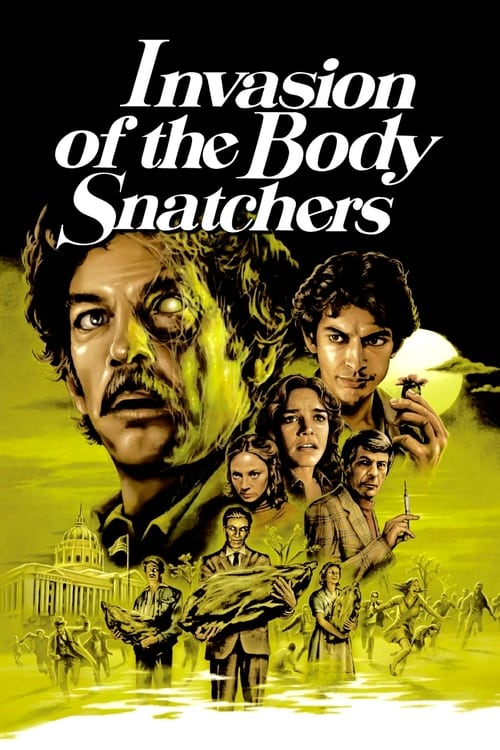
Invasion of the Body Snatchers is a 1978 American science-fiction psychological horror film directed by Philip Kaufman, written by W. D. Richter, and starring Donald Sutherland, Brooke Adams, Veronica Cartwright, Jeff Goldblum, and Leonard Nimoy. It is the second film adaptation of Jack Finney's 1954 novel The Body Snatchers, following the 1956 film.
The plot involves a San Francisco health inspector (Sutherland) and his colleague (Adams) who over the course of a few days discover that humans are being replaced by alien duplicates; each is a perfect biological clone of the person replaced, but devoid of empathy and humanity.
Released in the United States by United Artists on December 22, 1978, Invasion of the Body Snatchers grossed nearly $25 million (equivalent to $123 million in 2025) at the American box office. It initially received varied reviews from critics, though its critical reception has significantly improved in subsequent years, receiving a 93% rating on Rotten Tomatoes.
Contents
Plot
An amorphous parasitic alien race abandons its dying planet, eventually coming to Earth. Upon settling, the spores take the form of small pods with fragrant pink flowers.
Elizabeth Driscoll, a laboratory scientist at the San Francisco Health Department, brings one flower home. The next morning her live-in boyfriend, Geoffrey is cold and distant while putting the glass vase that held the flower pod into a garbage truck that is filled with fuzzy, dry material.
Elizabeth confides to her colleague and friend Matthew Bennell that Geoffrey is so changed he must be an impostor. Elizabeth secretly followed him and saw him meeting with strangers. Matthew advises Elizabeth to talk to his psychiatrist friend David Kibner.
En route to Kibner, a hysterical man warns Elizabeth and Matthew of danger as a mob pursues him. They follow the mob and see his dead body surrounded by emotionless onlookers. At Kibner's book promotion event, Matthew finds his friend Jack Bellicec, an aspiring writer, while Elizabeth meets Kibner, who reassures a woman who claims that her husband has changed. Kibner insists the husband's behavior is due to non-commitment. Elizabeth is convinced to return home to Geoffrey.
Jack returns to the mud bath spa he runs with his wife Nancy. The two find a mysterious embryonic adult-body resembling Jack, and call Matthew to investigate. At the disturbing discovery, Matthew goes to warn Elizabeth, and discovers a semi-formed duplicate of her near her bedroom. Matthew rescues Elizabeth and alerts the police and Kibner. When they arrive, Jack and Elizabeth's duplicates have disappeared.
Elizabeth suspects the flowers are involved, but is unable to examine one at the health department offices. In the meantime Matthew tries in vain to alert the authorities. After encountering several doppelgangers, Matthew, Elizabeth, Jack, and Nancy hide out in Matthew's apartment. They call Kibner, who promises to help, but he is a duplicate. As the group fall asleep, large flower pods emerge from the garden and start birthing their replacements. They wake up, and Matthew destroys his own replacement.
Cast
Don Siegel and Kevin McCarthy, respectively the director and star of the 1956 film, both make cameo appearances. Siegel plays an assimilated taxi driver, and McCarthy plays a running man shouting "You're next" (a reference to the ending of the original film).
Philip Kaufman's wife Rose Kaufman played Outraged Woman, who argues with Jack at the book party, while Robert Duvall appeared as an uncredited priest on a swing, and Kaufman himself has two uncredited cameos, one as the man who bothers Bennell in a phone booth, and another as the voice of one of the officials whom Bennell contacts.
Production
Considered a "low-budget" Allied Artist film, the movie was made on a budget of $3.500,000. The film was originally being developed by Warner Bros. in 1977, though the project was dropped after the box office failure of Exorcist II: The Heretic where it was then picked by United Artists. Producer Robert H. Solo stated he lobbied for the rights to the book as early as 1976, noting: "It was a long and very hairy process." Principal photography began on February 19, 1978 and closed on April 29, 1978.
Director Philip Kaufman had been a fan of the 1956 film, which he likened to "great radio", although he had not read the novel until after he agreed to direct the film. "I thought, 'Well this doesn't have to be a remake as such. It can be a new envisioning that was a variation on a theme'," he said on the film's 40th anniversary. The first change he anticipated was filming in color; the second was changing the location to San Francisco. "Could it happen in the city I love the most? The city with the most advanced, progressive therapies, politics and so forth? What would happen in a place like that if the pods landed there and that element of 'poddiness' was spread?"
Cinematographer Michael Chapman worked with Kaufman to try to capture the film noir feel of the original in color, reviewing some classics of that genre before production. Some of the elements they borrowed were shots with light giving way to shadow and shooting from evocative angles. They used certain color tinges to indicate that some characters were now pod people. "When they're running along the Embarcadero and the huge shadows appear first, those are sort of classic film noir images", the director said.
Sound editor Ben Burtt, who had helped create many of the signature sounds from Star Wars the year before, also added to the film's ambience. Natural sounds that mix with the city's more industrial noises give way to just the latter as the film progresses. Among them are the grinding noises of garbage trucks, a common urban sound that slowly becomes horrific as it becomes clear that most of what they are processing is the discarded husks that remain of pre-pod human bodies. Burtt also designed the shriek when pod people see a surviving human, a sound Kaufman said was composed of many elements, including a pig's squeal.
Screenwriter W. D. Richter stated that at the start of the film's production, the crew looked for alternative ways to update the design of the pods from the 1956 version. "We don't want them to look like comical giant green pea pods. We're trying to rethink all the graphic horror." All the special effects were created live for the camera. The scene at the beginning where the pods travel through space from their dead homeworld to San Francisco was one of the simplest. "I found some viscous material in an art store, I think we paid $12 for a big vat of it, and then [we dropped it] into solutions and reversed the film", Kaufman recalled. The dog wearing a mask of the banjo player's face included a hole in the mask through which the creature appeared to lick itself.
Release
Invasion of the Body Snatchers premiered in the United States on December 22, 1978, showing on 445 screens nationally.
Home video
Invasion of the Body Snatchers was released on VHS and DVD in the United States, Australia and many European countries. The film was released on Blu-ray Disc in the United States in 2010 by MGM Home Entertainment, then released once more on Blu-ray in 2013 by Arrow Video in the United Kingdom, and Shout! Factory in the United States and Canada in 2016, using a new 2K scan of the interpositive in addition to new and legacy extras. The Shout! release has since been out of print. An Ultra HD Blu-ray was released on November 23, 2021 through Kino Lorber, who also released a remastered Blu-ray on February 1, 2022, followed by Arrow Video in June 2024.
Reception
Box office
Between its premiere and December 25, the film had earned a total of $1,298,129 in box office sales. It went on to gross a total of nearly $25 million in the United States (equivalent to $123 million in 2025).
On the film's 40th anniversary, Kaufman believes the film may have seemed timely when it came out since the Jonestown mass suicide had occurred a month earlier and still dominated the news: "That was a case of a lot of people from San Francisco were looking for a better world and suddenly found themselves in pod-dom, and it was fatal. It could not have been a more pointed reason for watching the movie."
Critical reception
The New Yorker's Pauline Kael was a particular fan of the film, writing that it "may be the best film of its kind ever made". Variety wrote that it "validates the entire concept of remakes. This new version of Don Siegel's 1956 cult classic not only matches the original in horrific tone and effect, but exceeds it in both conception and execution." Gene Siskel gave the film three stars out of four and said it was "one of the more entertaining films in what has turned out to be a dismal Christmas movie season". Kevin Thomas of the Los Angeles Times called it "a thoroughly scary success in its own right. Not literally a remake—it's more of a sequel, actually—this handsome, highly imaginative film generates its own implications from Finney's sturdy allegory of dehumanization and manages even to have some fun in the process." On their syndicated TV show Siskel & Ebert gave the film a guarded "two thumbs up". Siskel felt the film was often derivative yet an effective thriller, and Ebert agreed saying it was well-made with good performance but failed to live up to the original.
The film was not without negative criticism. The New York Times's Janet Maslin wrote that the "creepiness [Kaufman] generates is so crazily ubiquitous it becomes funny." Roger Ebert wrote that it "was said to have something to do with Watergate and keeping tabs on those who are not like you", and called Kael's effusive praise for the film "inexplicable". while Time magazine's Richard Schickel labeled its screenplay "laughably literal". Phil Hardy's Aurum Film Encyclopedia called Kaufman's direction "less sure" than the screenplay.
The film received a nomination from the Writers Guild of America for Best Drama Adapted from Another Medium. The film was also nominated for the Hugo Award for Best Dramatic Presentation. It was also recognized by the Academy of Science Fiction, Fantasy and Horror Films. Philip Kaufman won Best Director, and the film was nominated Best Science Fiction Film. Donald Sutherland, Brooke Adams, and Leonard Nimoy received additional nominations for their performances.
Invasion of the Body Snatchers (1978) has been named among the greatest film remakes ever made, by several publications, including Rolling Stone.
Film scholar M. Keith Booker posited that the film's "paranoid atmosphere" links it to other films outside the science fiction genre, and that it "bears a clear family resemblance to paranoid conspiracy thrillers like Alan J. Pakula's The Parallax View (1974)". Chris Barsanti, in The Sci-Fi Movie Guide (2014), praised the performances of Adams and Sutherland, but criticized some elements of the film, writing: "The subtlety of Donald Siegel's original gives way to gaudy f/x and self-consciously artsy camerawork ... the film is overindulgently long, too, though it certainly has its shocking moments."