Filming
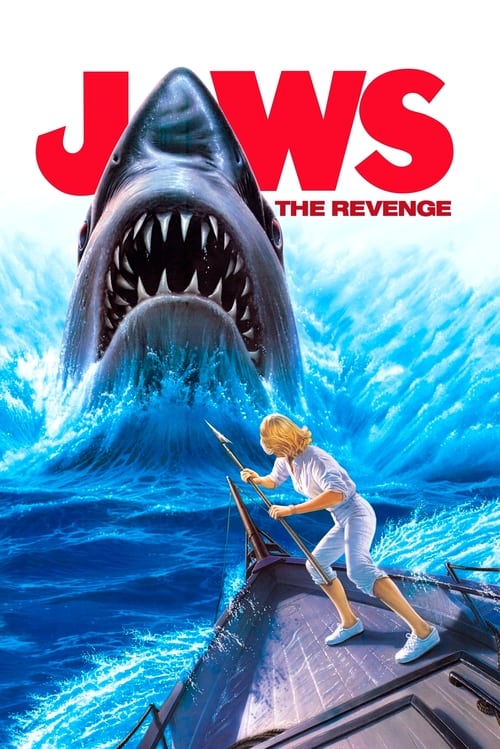
Principal photography for Jaws: The Revenge took place on location in New England and in the Bahamas, and completed on the Universal lot. Like the first two films of the series, Martha's Vineyard was the location of the fictional Amity Island for the film's opening scenes. Edgartown welcomed the production because it brought more business to the tourist town, which was usually very quiet in February. Production commenced on February 2, 1987, by which time "snowstorms had blanketed" the island for almost a month, "providing a frosty backdrop for the opening scenes." Cinematographer John McPherson recalls that filming in the Vineyard was very cold, and required seven generators and lots of equipment. He says the six-day shoot covered 22 pages of the script.
The cast and crew moved to Nassau in the Bahamas on February 9, beginning principal photography there the next day. Like the production of the first two films, they encountered many problems with varying weather conditions. The location did not offer the "perfect world" that the 38-day shoot required. Cover shots were filmed on shore and in interior sets. Cinematographer McPherson reports that some scenes had to be filmed across several days, presenting challenges for matching the weather.
The underwater sequences were coordinated from an 85-foot (26 m) boat called Moby II. Second unit director Jordan Klein says that it was initially challenging for the actors to get used to the "foreign environment" of performing underwater. Stunt performer Gavin McKinney stood in for Lance Guest in the scene with the moray eel because it was potentially dangerous.
Principal photography completed in Nassau on May 26, although the special effects team continued working until June 4. Production then moved to the two sets which had been constructed at Universal Studios for the Neptune's Folly sequences, and also some reshoots of Sean's death. A tank had been painted to replicate Nassau's seabed, and a huge backdrop was painted to look like the Bahamas sky. However, as John McPherson points out, the backdrop looked rather artificial, which the production had no remaining time to resolve.
The film was shot in the Super 35 format, with Arriflex cameras equipped with Zeiss Superspeed lenses for underwater sequences. Cinematographer John McPherson also supervised the underwater unit, which was headed by Pete Romano. Whereas underwater photography was normally filmed with an anamorphic lens, requiring overhead lighting, Romano filmed these "sequences with Zeiss, a 35 mm super-speed lens, which allows the natural ambiance to come through on film."
The special effects team, headed by Henry Millar, had arrived at South Beach, Nassau on January 12, 1987, almost a month before principal photography commenced there. In the official press release, Millar says that when he became involved "we didn't even have a script ... but as the story developed and they started telling us all what they wanted ... I knew this wasn't going to be like any other shark anyone had ever seen."
The shark was to be launched from atop an 88-foot (27 m) long platform, made from the trussed turret of a 30-foot (9.1 m) crane, and floated out into Clifton Bay. While the sharks for the first two Jaws films were pneumatically operated, the larger shark used in Revenge and the need for more precise movements led to a decision to power this shark hydraulically. According to Hydraulics & Pneumatics magazine, "the articulated shark was mounted on top of a hydraulically operated scissor lift ... which raised and lowered the shark so it would appear that he had surfaced or submerged." The carriage was capable of propelling "the shark through the water at speeds to 7 [knots]" (8.1 mph; 13 km/h). Seven sharks, or segments, were constructed from a combination of fibreglass, a metal frame and latex skin. The models were operated from a platform capable of rotating 180 degrees underwater, with a hydraulic arm operating the sharks.
Two models were fully articulated, two were made for jumping, one for ramming, one was a half shark (the top half), and one was just a fin. The two fully articulated models each had 22 sectioned ribs and movable jaws covered by a flexible water-based latex skin, measured 25 feet (7.6 m) in length and weighed 2,500 pounds (1,100 kg). Each tooth was half-a-foot long and as sharp as it looked. All models were housed under cover ... in a secret location on the island.
Universal had originally considered tasking Industrial Light & Magic to create a miniature free-swimming shark akin to the whale in Star Trek IV: The Voyage Home. The whale's designer suggested that the model could be easily converted into a shark, but its scale would be too problematic, and the proposal was aborted.
Instead, Ted Rae, who had worked on Jaws 3-D, was commissioned to create a stop-motion shark for Jaws: The Revenge. When designing and sculpturing the models, Rae tried to strike a balance between matching the full-scale sharks built by Millar, and the live action footage. Rae criticized the full-scale models, saying they "looked like a concrete log with teeth... and doesn't look as good as the shark in the first film." The animatronic puppets would subsequently appear in three or four shots in the completed film. Rae also constructed a shark and miniature boat for the climactic sequences; however, Sargent didn't like Rae's footage, and took the models to Universal for completion there.
The film company returned to Universal to finish shooting on April 2. Additional underwater photography was completed in a water tank, measuring 50 feet (15 m) by 100 feet (30 m) across, and 17 feet (5.2 m) in depth, in Universal Studio's Stage 27. Also, a replica of Nassau's Clifton Bay and its skyline was created on the man-made Falls Lake on the studio backlot. Principal photography was completed in Los Angeles on May 26. Millar's special effects team, however, remained in Nassau, completing second unit photography on June 4.
Adverse weather conditions and problems with the mechanical sharks meant that the product was delayed and exceeded its $23 million budget. Despite this, the production was hurried in order to meet the July 1987 release date. According to associate producer and production manager Frank Baur during the sequel's filming, "This [Revenge] will be the fastest I have ever seen a major film planned and executed in all of my 35 years as a production manager."
A television documentary, Behind the Scenes with Jaws: The Revenge, was broadcast in the U.S. on July 10, 1987. Twenty-two minutes in length, it was written and directed by William Rus for Zaloom Mayfield Productions.