Filmmaking career
When he returned from the war, he applied for a license to become an assistant director but was refused. Without this support, he decided to direct his films by his own means, and continued to use Melville as his stage name. He became an independent filmmaker and owned his own studio, rue Jenner, in Paris 13ème. On 29 June 1967, the studio and Melville's apartment burnt down. His personal archive of photographs and scripts was destroyed.
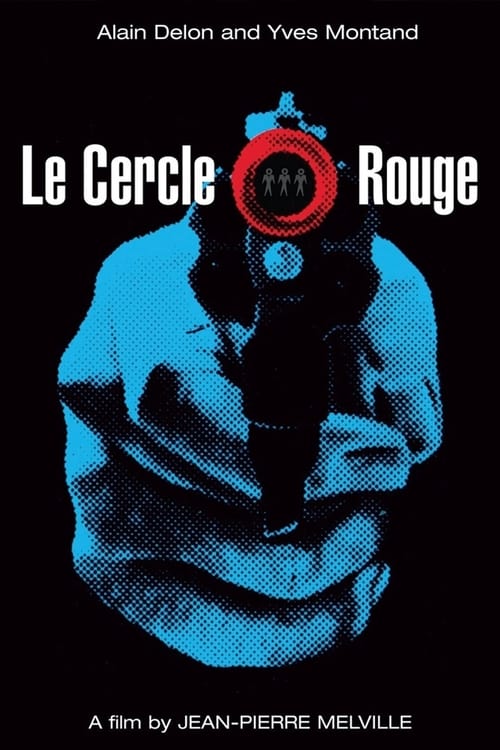
He became well known for his minimalist film noir, such as Le Doulos (1962), Le Samouraï (1967) and Le Cercle rouge (1970), starring major actors such as Alain Delon (probably the definitive "Melvillian" actor), Jean-Paul Belmondo and Lino Ventura. Influenced by American cinema, especially gangster films of the 1930s and 1940s, he used accessories such as weapons, clothes (trench coats), and fedora hats, to shape a characteristic look in his movies. He also displayed an interest in Eastern philosophies and martial traditions, as demonstrated in Le Samouraï and Le Cercle rouge. He self-described his style to André S. Labarthe as "nostalgic", while many commentators have noted its existentialist overtones.
Melville ultimately became so identified with the style that The New Yorker's Anthony Lane wrote the following about a 2017 retrospective of his films: This is how you should attend the forthcoming retrospective of Jean-Pierre Melville movies at Film Forum: Tell nobody what you are doing. Even your loved ones—especially your loved ones—must be kept in the dark. If it comes to a choice between smoking and talking, smoke. Dress well but without ostentation. Wear a raincoat, buttoned and belted, regardless of whether there is rain. Any revolver should be kept, until you need it, in the pocket of the coat. Finally, before you leave home, put your hat on. If you don't have a hat, you can't go.
In 1963, he was invited as one of the jury at the 13th Berlin International Film Festival.
For several years, he sat on the executive board of the French film classification board, the Commission de classification des œuvres cinématographiques, of the Centre national du cinéma et de l'image animée (CNC).