Professional career
After Frazier won the only American 1964 Olympic boxing gold medal, his trainer Yancey "Yank" Durham helped put together Cloverlay, a group of local businessmen (including a young Larry Merchant) who invested in Frazier's professional career and allowed him to train full time. Durham was Frazier's chief trainer and manager until Durham's death in August 1973.
Frazier turned professional in 1965 by defeating Woody Goss by a technical knockout in the first round. He won three more fights that year, all by knockout and none going past the third round. Later that year, he was in a training accident that left him legally blind in his left eye. During pre-fight physicals, after reading the eye chart with his right eye, when prompted to cover his other eye, Frazier switched hands but covered his left eye for a second time, and state athletic commission physicians seemed not to notice or act.
Frazier's second contest was of interest in that he was decked by Mike Bruce. Frazier took an "8" count by referee Bob Polis but rallied for a TKO over Bruce in the third round.
In 1966, as Frazier's career was taking off, Durham contacted Los Angeles trainer Eddie Futch. The two men had never met, but Durham had heard of Futch, who had a reputation as one of the most respected trainers in boxing. Frazier was sent to Los Angeles to train before Futch agreed to join Durham as an assistant trainer. With Futch's assistance, Durham arranged three fights in Los Angeles against journeyman Al Jones, veteran contender Eddie Machen and George "Scrap Iron" Johnson. Frazier knocked out Jones and Machen but surprisingly went through 10 rounds with Scrap Iron Johnson to win a unanimous decision. Johnson had apparently bet all his purse that he would survive to the final bell, noted Ring Magazine, and he somehow achieved it. However Johnson was known in the trade as "impossibly durable".
After the Johnson match, Futch became a full-fledged member of the Frazier camp as an assistant trainer and strategist, who advised Durham on matchmaking. It was Futch who suggested that Frazier boycott the 1967 WBA Heavyweight Elimination Tournament to find a successor to Muhammad Ali after the Heavyweight Champion was stripped of his title for refusing to be inducted into the military, although Frazier was the top-ranked contender at the time.
Futch proved invaluable to Frazier as an assistant trainer and helped modify his style. Under Futch's tutelage, Frazier adopted the bob-and-weave defensive style by making him more difficult for taller opponents to punch and giving Frazier more power with his own punches. Futch remained based in Los Angeles, where he worked as a supervisor with the US Postal Service, and flew to Philadelphia to work with Frazier during the final preparations for all of his fights.
After Durham died of a stroke on August 30, 1973, Futch was asked to succeed him as Frazier's head trainer and manager. He was training the heavyweight contender Ken Norton, who lost a rematch against Ali less than two weeks before Durham's death. Then, Norton's managers, Robert Biron and Aaron Rivkind, demanded that Futch choose to train either Frazier or Norton, with Futch choosing Frazier.
Now in his second year, in September 1966 and somewhat green, Frazier won a close decision over rugged contender Oscar Bonavena, despite Bonavena flooring him twice in the second round. A third knockdown in that round would have ended the fight under the three knockdown rule. Frazier rallied and won a close split decision after 10 rounds. The Machen win followed that contest.
In 1967, Frazier stormed ahead winning all six of his fights, including a sixth-round knockout of Doug Jones and a brutal fourth round (TKO) of Canadian George Chuvalo. No boxer had ever stopped Chuvalo, but Frazier, despite the stoppage, was unable to floor Chuvalo, who would never be knocked down in his entire career despite fighting numerous top names.
By February 1967, Joe had scored 14 wins and his star was beginning to rise. This culminated with his first appearance on the cover of Ring Magazine. That month, he met Ali, who had not yet been stripped of his title. Ali said that Joe would never stand a chance of "whipping" him even in his wildest dreams. Later that year, Muhammad Ali was stripped of his world heavyweight title because of his refusal to accept the military draft during the Vietnam War.
To fill the vacancy, the New York State Athletic Commission held a bout between Frazier and Buster Mathis, who were undefeated going into the match, with the winner to be recognized as "World Champion" by New York State. Although the fight was not recognized as a World Championship bout by some, Frazier won by a knockout in the 11th round and staked a claim to the Heavyweight Championship.
Frazier first defended his claim by beating hard-hitting prospect Manuel Ramos of Mexico. His victory came in only two rounds.
He closed 1968 by again beating Oscar Bonavena via a 15-round decision in a hard-fought rematch. Bonavena fought somewhat defensively and allowed himself to be often bulled to the ropes, which let Frazier build a wide points margin. Ring Magazine showed Bonavena afterwards with a gruesomely bruised face. It had been a punishing match.
In 1969, Frazier defended his NYSAC title in Texas and beat Dave Zyglewicz, who had lost only once in 29 fights, by a first-round knockout. Then, he beat Jerry Quarry in a seventh-round stoppage. The match with Quarry was named Ring Magazine fight of the year in 1969. Frazier showed he could do a lot more than just slug by using his newly honed defensive skills to slip, bob, and weave a barrage of punches from Quarry despite Quarry's reputation as an excellent counter-punching heavyweight.
On February 16, 1970, Frazier faced WBA Champion Jimmy Ellis at Madison Square Garden. Ellis had outpointed Jerry Quarry in the final bout of the WBA elimination tournament for Ali's vacated belt. Frazier had declined to participate in the WBA tournament to protest their decision to strip Ali. Ellis held impressive wins over Oscar Bonavena and Leotis Martin, among others. Beforehand, Ali had announced his retirement and relinquished the Heavyweight title, allowing Ellis and Frazier to fight for the undisputed title, but both lacked any lineal claim. Frazier won by a technical knockout when Ellis's trainer Angelo Dundee would not let him come out for the fifth round following two fourth-round knockdowns, the first knockdowns of Ellis's career. Frazier's decisive win over Ellis was a frightening display of power and tenacity.
In his first title defense, Frazier traveled to Detroit to fight World Light Heavyweight Champion Bob Foster, who would go on to set a record for the number of title defenses in the light-heavyweight division. Frazier (26–0) retained his title by twice flooring the hard-punching Foster in the second round. The second knockdown was delivered by a devastating left hook, and Foster could not beat the count. Then came what was hyped as the "Fight of the Century", his first fight with Muhammad Ali, who had launched a comeback in 1970 after a three-year suspension from boxing. It would be the first meeting of two undefeated heavyweight champions (and the last until Mike Tyson faced Michael Spinks in 1988) since Ali (31–0) had not lost his title in the ring but been stripped because of his refusal to be conscripted into the armed forces. Some considered him to be the true champion, and the fight would crown the one true heavyweight champion.
On March 8, 1971, at Madison Square Garden, Frazier and Ali met in the first of their three bouts which was called the "Fight of the Century". With an international television audience and an in-house audience that included singers and actors and with Burt Lancaster (who served as "color commentator" with the fight announcer, Don Dunphy), both undefeated heavyweights met in a media-frenzied atmosphere.
Several factors came together for Frazier in the fight. He was 27 and mentally and physically at his peak. Ali was 29 and coming back from a three-year absence. He had had two good wins in his comeback, including a bruising, fifteen-round technical knockout win over Oscar Bonavena.
Frazier and Futch noticed Ali's tendency to throw a right-hand uppercut from a straight standing position after dropping the hand in preparation to throw it with force. Futch instructed Frazier to watch Ali's right hand and, once Ali dropped it, to throw a left hook at the spot that they knew Ali's face would be a second later.
In a brutal and competitive contest, Frazier lost the first two rounds but was able to withstand Ali's combinations. Frazier was known to improve in middle rounds, which was the case with Ali. Frazier came on strong after the third round by landing hard shots to the body and powerful left hooks to the head. Frazier won a 15-round unanimous decision, with scores of 9–6, 11–4, 8–6–1, and claimed the lineal title. Ali was taken to a hospital immediately after the fight to check that his severely-swollen right-side jaw was not actually broken. Frazier also spent time in hospital during the ensuing month, the exertions of the fight having been exacerbated by hypertension and a kidney infection.
Later that year, he fought a three-round exhibition against hard-hitting veteran contender Cleveland Williams. In 1972, Frazier successfully defended the title twice by knocking out Terry Daniels and Ron Stander in the fourth and fifth rounds, respectively. Daniels had earlier drawn with Jerry Quarry and Stander had knocked out Earnie Shavers.
Frazier lost his undefeated record of 29–0 and his world championship, at the hands of the unbeaten George Foreman on January 22, 1973, in Kingston, Jamaica. Despite Frazier being the overall favorite, Foreman towered 10 cm (4 in.) over the more compact champion along with an 8 in. reach advantage and dominated from the start. Over the course of two rounds, Foreman managed to knock Frazier down six times en route to a technical knockout victory.
Frazier won his next fight, a 12-round decision over Joe Bugner, in London to begin his quest to regain the title.
Frazier's second fight against Ali took place on January 28, 1974, in New York City. In contrast to their previous meeting, the bout was a non-title fight, with Ali winning a 12-round unanimous decision. The fight was notable for the amount of clinching. After the fight Tony Perez, when asked about the violation from Ali, he replied that the only violation is if you hold and hit at the same time, although Ali was holding Frazier but he was not hitting.
Five months later, Frazier again battled Jerry Quarry in Madison Square Garden by winning the fight in the fifth round with a strong left hook to the ribs.
In March 1975, Frazier fought a rematch with Jimmy Ellis in Melbourne, Australia, and knocked him out in nine rounds. The win again established Frazier as the top heavyweight challenger for the title, which Ali had won from Foreman in the famous "Rumble in the Jungle" five months earlier.
Muhammad Ali and Frazier met for the third and final time in Cubao, Quezon City, which is a city within Metro Manila, the Philippines, on October 1, 1975. Prior to the fight, Ali took opportunities to mock Frazier by calling him a '"gorilla" and generally trying to irritate him.
The fight was a punishing display on both sides under oppressively-hot conditions. During the fight, Ali said to Frazier, "They said you were through, Joe." Frazier said, "They lied." Ali repeatedly held Frazier around the back of his neck with his right hand, a violation of the rules that went unpunished by the referee. After 14 grueling rounds, Ali returned to his corner demanding they cut his gloves and end the bout. However, Dundee ignored Ali. This proved fortuitous, as across the ring, Futch stopped the fight out of concern for his charge. Frazier had a closed left eye, an almost-closed right eye, and a cut. Ali later said that it was the "closest thing to dying that I know of."
In 1977, Ali told interviewer Reg Gutteridge that he felt this third Frazier fight was his best performance. When Gutteridge suggested his win over Cleveland Williams, Ali said, "No, Frazier's much tougher and rougher than Cleveland Williams."
In 1976, Frazier (32–3) fought George Foreman for a second time, shaving his head for the fight. Frazier was more restrained than usual and avoided walking into big shots like he had done in their first match. However, Foreman lobbed a tremendous left hook that lifted Frazier off his feet. After a second knockdown, the fight was stopped in the fifth round. Shortly after the fight, Frazier announced his retirement.
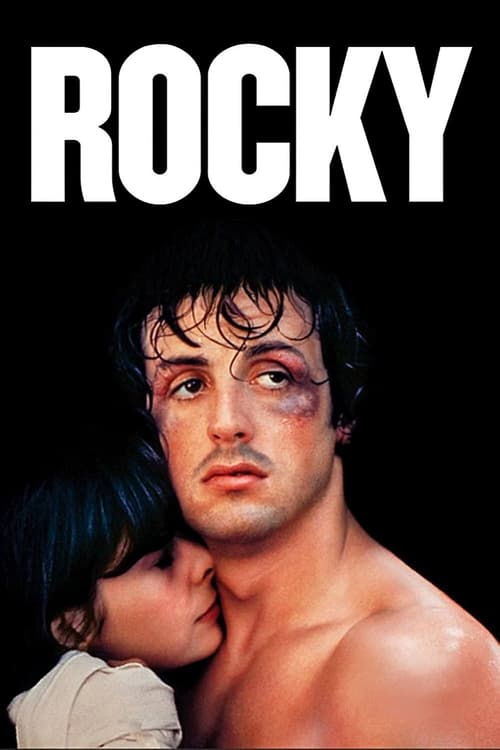
Frazier made a cameo appearance in the movie Rocky later in 1976 and dedicated himself to training local boxers in Philadelphia, where he grew up, including some of his own children. He also helped train Duane Bobick.
In 1981, Frazier attempted a comeback. He drew over 10 rounds with hulking Floyd "Jumbo" Cummings in Chicago, Illinois. It was a bruising battle with mixed reviews. He then retired for good.
Then, Frazier involved himself in various endeavors. Among his sons who turned to boxing as a career, Frazier helped train Marvis Frazier, a challenger for Larry Holmes's world heavyweight title. He also trained his daughter, Jacqui Frazier-Lyde, who became a WIBA world light-heavyweight champion whose most notable fight was a close majority decision points loss against Laila Ali, the daughter of his rival.
Frazier's overall record was 32 wins, 4 losses, and 1 draw, with 27 wins by knockout. He won 73% of his fights by knockout, compared to 60% for Ali and 84% for Foreman. He was a member of the International Boxing Hall Of Fame.
In 1984, Frazier was the special referee for the NWA World Heavyweight Championship match between Ric Flair and Dusty Rhodes at Starrcade '84. He awarded the match to Flair because of Rhodes's excessive bleeding.
In 1986, Frazier appeared as the "cornerman" for Mr. T against Roddy Piper at Nassau Veterans Memorial Coliseum as part of WrestleMania 2. In 1989, Frazier joined Ali, Foreman, Norton, and Holmes for the tribute special Champions Forever.
Frazier was inducted into the Madison Square Garden Walk of Fame in 1996.