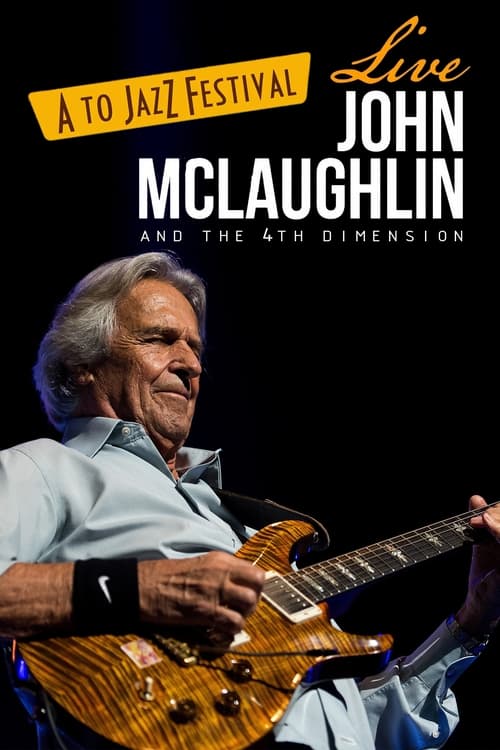
John McLaughlin (born 4 January 1942), also previously known as Mahavishnu, is an English guitarist, bandleader, and composer. A pioneer of jazz fusion, his music combines elements of jazz with rock, world music, Western classical music, flamenco, and blues.
After contributing to several key British groups of the early 1960s, McLaughlin made Extrapolation, his first album as a bandleader, in 1969. He then moved to the U.S., where he played with drummer Tony Williams' group Lifetime and then with Miles Davis on his 1969–72 electric jazz fusion albums In a Silent Way, Bitches Brew, Jack Johnson, Live-Evil, and On the Corner. His 1970s electric band, the Mahavishnu Orchestra, performed a technically virtuosic and complex style of music that fused electric jazz and rock with Classical, Indian and other influences. In 1974, he helped found Shakti, a seminal Indian-Jazz rock fusion band with Indian violinist L. Shankar and percussionists Zakir Hussain and Vikku Vinayakram.
McLaughlin's solo on "Miles Beyond" from his album Live at Ronnie Scott's won the 2018 Grammy Award for the Best Improvised Jazz Solo. He has been awarded multiple "Guitarist of the Year" and "Best Jazz Guitarist" awards from magazines such as DownBeat and Guitar Player based on reader polls. In 2003, he was ranked 49th in Rolling Stone magazine's list of the "100 Greatest Guitarists of All Time". In 2009, DownBeat included McLaughlin in its unranked list of "75 Great Guitarists", in the "Modern Jazz Maestros" category. In 2012, Guitar World magazine ranked him 63rd on its top 100 list. In 2010, Jeff Beck called McLaughlin "the best guitarist alive", and Pat Metheny has also described him as the world's greatest guitarist. In 2017, McLaughlin was awarded an honorary doctorate of music from Berklee College of Music.
Contents
Biography
1960s
John McLaughlin was born on 4 January 1942 to a family of musicians in Doncaster, South Yorkshire, England. His mother Mary was a concert violinist; his father John, of Irish descent, was an engineer. The younger John McLaughlin was predominantly raised by his mother and grandmother; his father, the elder John, had separated from Mary when he was 7 years old. The younger John did not have a relationship with his father for most of his life, until in the late 1970s when he contacted his father and took him out to a pub. The younger John said of the experience, "Without my dad, I wouldn't be here. At least I had closure, and for that I thank my lucky stars"; His father later died from a heart attack. Also, at the age of 7, the younger John McLaughlin heard classical music on the phonograph, and considered it a "message to my heart and soul more than anything"; this motivated him to become a musician.
McLaughlin studied violin and piano as a child; At the age of 11, his brother gave John a guitar and John immediately took up the instrument, exploring styles from flamenco to the jazz of Tal Farlow, Django Reinhardt and Stéphane Grappelli. Other influences included Muddy Waters, Sabicas, Jim Hall, Miles Davis, John Coltrane, Bill Evans, Thelonius Monk, S. Balachander, and Jimi Hendrix. He moved to London from Yorkshire in the early 1960s, playing with Alexis Korner and the Marzipan Twisters before moving on to Georgie Fame and the Blue Flames, the Graham Bond Quartet (in 1963) and Brian Auger. During the 1960s, he often supported himself with session work, which he frequently found unsatisfying but which enhanced his playing and sight-reading. Also, he gave guitar lessons to Jimmy Page. In 1963, Jack Bruce formed the Graham Bond Quartet with Bond, Ginger Baker and John McLaughlin. They played an eclectic range of music genres, including bebop, blues and rhythm.
Graham Bond was McLaughlin's first spiritual influence. Bond would introduce McLaughlin to Indian culture, philosophy, and religious esoteric practices, which McLaughlin stated "triggered a desire to know", while under the influence of drugs. The Graham Bond Quartet was not well received financially and critically; McLaughlin quit the group.
By 1966, while working in pop and jazz sessions, McLaughlin observed the personal tragedies of those of his musical peers who succumbed to drug addictions and death. As a response, McLaughlin would gradually stop using drugs and pursue a spiritual lifestyle, which would be a recurring motif of his music career. At the same time, McLaughlin experienced a profound musical revelation when psychedelic music was in vogue: he inferred that this music raised existential questions and insisted that he was "on the same boat" as those who sought answers to such questions, which further motivated his interests in Indian culture and its classical music. For a time, in 1968, McLaughlin would be involved in the free jazz scene with musician Gunter Hampel; McLaughlin described this experience as "devastating" and "anarchistic", but appreciated the free-form aspect of the genre. McLaughlin would later state in a July 2024 interview for JazzTimes that his experience with Hampel was "self-indulgent" and that he needed "structure ... the more restraints I put on myself, the happier I felt."
1970s
McLaughlin recorded Devotion in early 1970 for Douglas Records (run by Alan Douglas), a high-energy, psychedelic fusion album that featured Larry Young on organ (who had been part of Lifetime), Billy Rich on bass and the R&B drummer Buddy Miles. Devotion was the first of two albums he released on Douglas. In 1971 he released My Goal's Beyond in the US, a collection of unamplified acoustic works. Side A ("Peace One" and "Peace Two") offers a fusion blend of jazz and Indian classical forms, while side B features melodic acoustic playing on such standards as "Goodbye Pork Pie Hat", by Charles Mingus whom McLaughlin considered an important influence. My Goal's Beyond was inspired by McLaughlin's decision to follow the Indian spiritual leader Sri Chinmoy, to whom he had been introduced in 1970 by Larry Coryell's manager. The album was dedicated to Chinmoy, with one of the Guru's poems printed on the liner notes. It was on this album that McLaughlin took the name "Mahavishnu".
In 1973, McLaughlin collaborated with Carlos Santana, also a disciple of Sri Chinmoy at the time, on an album of devotional songs, Love Devotion Surrender, which featured recordings of Coltrane compositions including a movement of A Love Supreme. McLaughlin has also worked with the jazz composers Carla Bley and Gil Evans.
McLaughlin's 1970s electric band, the Mahavishnu Orchestra, included violinist Jerry Goodman, keyboardist Jan Hammer, bassist Rick Laird, and drummer Billy Cobham. They performed a technically difficult and complex style of music that fused electric jazz and rock with Eastern, Classical, and Indian influences. This band helped establish fusion as a new and growing style. McLaughlin's playing at this time was distinguished by fast solos and non-western musical scales.
The first incarnation of the Mahavishnu Orchestra split in late 1973 after two years and three albums, including a live recording Between Nothingness & Eternity, due to personality clashes and overwork imposed by their management; Jan Hammer and Jerry Goodman were among the outspoken members who disputed with McLaughlin's leadership, religious beliefs and songwriting credits. Upon reading an article from Crawdaddy Magazine en route to Japan for a tour, McLaughlin was offended by the writeups and disparagement of his religious beliefs. Goodman reconciled with McLaughlin, several years after the breakup. In 1999 the Lost Trident Sessions album was released; recorded in 1973 but shelved when the group disbanded.
1980s
The short-lived One Truth Band recorded one studio album, Electric Dreams, with L. Shankar on violins, Stu Goldberg on keyboards, Fernando Saunders on electric bass and Tony Smith on drums. After the dissolution of the One Truth Band, McLaughlin toured in a guitar duo with Christian Escoudé.
With the group Fuse One, he released one album in 1980.
In 1981 and 1982, McLaughlin recorded two albums, Belo Horizonte and Music Spoken Here with The Translators, a band of French and American musicians who combined acoustic guitar, bass, drums, saxophone, and violin with synthesizers. The Translators included McLaughlin's then-girlfriend, classical pianist Katia Labèque.
From 1984 through to (circa) 1987, an electric five-piece operated under the name "Mahavishnu" (omitting the "Orchestra"). Two LPs were released, Mahavishnu and Adventures in Radioland. The former featured McLaughlin making extensive use of the Synclavier synthesizer, allied with a Roland guitar/controller. The first of the two albums was recorded with a line-up of McLaughlin, Bill Evans (saxophones), Jonas Hellborg (bass), Mitchel Forman (keyboards) and both Danny Gottlieb and Billy Cobham on drums. Initial advertising for concert dates in support of the album included Cobham's name, but by the time the tour started in earnest, Gottlieb was in the band. Forman left at some point between the albums, and was replaced on keyboards by Jim Beard.
In tandem with Mahavishnu, McLaughlin worked in duo format (c. 1985–87) with bassist Jonas Hellborg, playing a number of concert dates, some of which were broadcast on radio and TV, but no commercial recordings were made.
In 1985 McLaughlin was reunited with Miles Davis once more on having worked the You're Under Arrest album. He would also appear on Davis' concept album Aura four year later.
In 1986, he appeared with Dexter Gordon in Bertrand Tavernier's film Round Midnight. He also composed The Mediterranean Concerto, orchestrated by Michael Gibbs. The world premier featured McLaughlin and the Los Angeles Philharmonic. It was recorded in 1988 with Michael Tilson Thomas conducting the London Symphony Orchestra. Unlike what is typical practice in classical music, the concerto includes sections where McLaughlin improvises. Also included on the recording were five duets between McLaughlin and his then-girlfriend Katia Labèque.
1990s
In the early 1990s, McLaughlin toured with his trio on the Qué Alegría album. By this time, Eckhardt had left, with McLaughlin and Gurtu joined by bass player Dominique Di Piazza. In the latter stages of this trio's life, they were joined on tour by Katia Labèque alone, or by Katia and her sister Marielle, with footage of the latter configuration forming part of a documentary on the Labèque Sisters. Following this period he recorded and toured with The Heart of Things featuring Gary Thomas, Dennis Chambers, Matt Garrison, Jim Beard and Otmaro Ruíz. In 1993 he released a Bill Evans tribute album entitled Time Remembered: John McLaughlin Plays Bill Evans, with McLaughlin's acoustic guitar backed by the acoustic guitars of the Aighetta Quartet and the acoustic bass of Yan Maresz.
In 1994, McLaughlin and Trilok Gurtu composed the soundtrack to the drama film Molom, conte de Mongolie, directed by Marie-Jaoul de Poncheville. The film was praised for its visual aspects, authenticity and acting by outlets such as The New York Times and Variety; Conversely, reception to the soundtrack was mixed, as Variety considered McLaughlin and Gurtu's score "too contemporary to mesh", while remarking that the Mongolian folk music in the soundtrack was "pleasant".
McLaughlin formed a group, Remember Shakti and toured with them; In addition to original Shakti member Zakir Hussain, this group has also featured eminent Indian musicians U. Srinivas, V. Selvaganesh, Shankar Mahadevan, Shivkumar Sharma, and Hariprasad Chaurasia. In 1996, John McLaughlin, Paco de Lucia and Al Di Meola (known collectively as "The Guitar Trio") reunited for a world tour and recorded an album of the same name. They had previously released a studio album entitled Passion, Grace & Fire back in 1983. Meanwhile, in the same year of 1996 McLaughlin recorded The Promise. Also notable during the period were his performances with Elvin Jones and Joey DeFrancesco.
2000s
In 2003, McLaughlin recorded a ballet score, Thieves and Poets, along with arrangements for classical guitar ensemble of favourite jazz standards and a three-DVD instructional video on improvisation entitled "This is the Way I Do It" (which contributed to the development of video lessons.) In June 2006 he released the post-bop/jazz fusion album Industrial Zen, on which he experimented with the Godin Glissentar as well as continuing to expand his guitar-synth repertoire.
In 2007, he left Universal Records and joined Abstract Logix. Recording sessions for his first album on that label took place in April. That summer, he began touring with a new jazz fusion quartet, the 4th Dimension, consisting of keyboardist/drummer Gary Husband, bassist Hadrien Feraud, and drummer Mark Mondesir. During the 4th Dimension's tour, an "instant CD" entitled Live USA 2007: Official Bootleg was made available comprising soundboard recordings of six pieces from the group's first performance. Following completion of the tour, McLaughlin sorted through recordings from each night to release a second MP3 download-only collection entitled, Official Pirate: Best of the American Tour 2007. During this time, McLaughlin also released another instructional DVD, The Gateway to Rhythm, featuring Indian percussionist and Remember Shakti bandmate Selva Ganesh Vinayakram (or V. Selvaganesh), focusing on the Indian rhythmic system of konnakol. McLaughlin also remastered and released the shelved 1979 Trio of Doom project with Jaco Pastorius and Tony Williams. The project had been aborted due to conflicts between Williams and Pastorius as well as what was at the time a mutual dissatisfaction with the results of their performance.
On 28 July 2007, McLaughlin performed at Eric Clapton's Crossroads Guitar Festival in Bridgeview, Illinois.
On 28 April 2008, the recording sessions from the previous year surfaced on the album Floating Point, featuring the rhythm section of keyboardist Louis Banks, bassist Hadrien Feraud, percussionist Sivamani and drummer Ranjit Barot bolstered on each track by a different Indian musician. Coinciding with the release of the album was another DVD, Meeting of the Minds, which offered behind the scenes studio footage of the Floating Point sessions as well as interviews with all of the musicians. He engaged in a late summer/fall 2008 tour with Chick Corea, Vinnie Colaiuta, Kenny Garrett and Christian McBride under the name Five Peace Band, from which came an eponymous double-CD live album in early 2009.
Artistry
McLaughlin is a leading guitarist in jazz and jazz fusion. His style has been described as one that incorporates aggressive speed, technical precision, and harmonic sophistication. He is known for using non-Western scales and unconventional time signatures. Indian music has had a profound influence on his style, and he has been described as one of the first Westerners to play Indian music to Indian audiences. He was influential in bringing jazz fusion to popularity with Miles Davis, playing with Davis on five of his studio albums, including Davis' first gold-certified Bitches Brew, and one live album, Live-Evil. Speaking of himself, McLaughlin has stated that the guitar is simply "part of his body", and he feels more comfortable when a guitar is present.
Although a successful and critically acclaimed artist, some musicians consider McLaughlin's fast alternate picking and unorthodox note choices to be one of his shortcomings. Frank Zappa, who toured with the Mahavishnu Orchestra in May 1973, was indifferent to McLaughlin's fast picking, and made some back-handed compliments to the English player:
A person would be a moron not to appreciate McLaughlin's technique. The guy has certainly found out how to operate a guitar as if it were a machine gun. But I'm not always enthusiastic about the lines I hear or the ways in which they're used. I don't think you can fault him, though, for the amount of time and effort it must have taken to play an instrument that fast. I think anybody who can play that fast is just wonderful. And I'm sure 90% of teenage America would agree, since the whole trend in the business has been "faster is better."
Decades later, McLaughlin issued a rebuke to Zappa's "machine gun" comment. Although he conceded that Zappa "has every right to his opinions", McLaughlin countered Zappa's criticism by saying "he was just jealous!" McLaughlin was also critical of Zappa's lead playing, especially on a live setting. "While I’ve always enjoyed his recordings, on tour he would take very, very long guitar solos, and he just didn’t have what it takes to play long guitar solos", said the English musician.
Guitarist Ritchie Blackmore of Deep Purple was not favourable to the musicianship of McLaughlin and his contemporary, Carlos Santana, although he appreciated the musicianship of Mahavishnu Orchestra members Billy Cobham and Jerry Goodman. In a 1974 interview to Cameron Crowe, Blackmore stated:
Influence
In 2010, Jeff Beck said: "John McLaughlin has given us so many different facets of the guitar. And introduced thousands of us to world music, by blending Indian music with jazz and classical. I'd say he was the best guitarist alive." McLaughlin has been cited as a major influence on many 1970s and 1980s guitarists, including prominent players such as Steve Morse, Gary Moore, Eric Johnson, Mike Stern, Al Di Meola, Shawn Lane, Scott Henderson, and Trevor Rabin of Yes. Other players who acknowledge his influence include Omar Rodríguez-López of the Mars Volta, Paul Masvidal of Cynic, and Ben Weinman of the Dillinger Escape Plan. According to Pat Metheny, McLaughlin has changed the evolution of the guitar during several of his periods of playing. Johnny Marr of the Smiths called McLaughlin "the greatest guitar player that's ever lived".
McLaughlin is considered a major influence on composers in the fusion genre. In an interview with Downbeat, Chick Corea remarked that "what John McLaughlin did with the electric guitar set the world on its ear. No one ever heard an electric guitar played like that before, and it certainly inspired me. John's band, more than my experience with Miles, led me to want to turn the volume up and write music that was more dramatic and made your hair stand on end."
The musician and comedian Darryl Rhoades also paid tribute to McLaughlin's influence. In the 1970s, he led the "Hahavishnu Orchestra", which did parodies of the funk, rock and jazz musical styles of the era.
Personal life
McLaughlin was married to Eve when he was a disciple of Sri Chinmoy. For a time he lived with the French pianist Katia Labèque, who was also a member of his band in the early 1980s. As of 2017, McLaughlin is married to his fourth wife, Ina Behrend. They had a son in 1998. Since the late 1980s, he has lived in Monaco. McLaughlin is a pescetarian.
McLaughlin, alongside Behrend, supports a Palestinian music therapy organization, Al-Mada, who run a program called "For My Identity I Sing". McLaughlin performed in Ramallah, Palestine, in 2012 with Zakir Hussain and in 2014 with 4th Dimension.
Awards and nominations
DownBeat
1972: Jazz Album of the Year - The Inner Mounting Flame from Mahavishnu Orchestra
1972: Pop Album of the Year - The Inner Mounting Flame from Mahavishnu Orchestra
Guitarist of the year - multiple years - John McLaughlin
2024: Hall of Fame
Grammy Awards
1973: Best Pop Instrumental Performance – "The Inner Mounting Flame" from The Inner Mounting Flame with Mahavishnu Orchestra
1974: Best Pop Instrumental Performance – "Birds of Fire" from Birds of Fire with Mahavishnu Orchestra
1997: Best Pop Collaboration with Vocals – "The Wind Cries Mary" from In From the Storm with Sting, Dominic Miller and Vinnie Colaiuta
2002: Best World Music Album – Saturday Night in Bombay with Remember Shakti
2009: Best Contemporary Jazz Album – Floating Point
2010: Best Jazz Instrumental Album, Individual or Group – Five Peace Band Live with Chick Corea & Five Peace Band
2026: Best Global Music Album nomination for Mind Explosion (50th Anniversary Tour Live) and Best Global Music Performance nomination for Shrini's Dream (Live).
Guitar Player Magazine
Annual Readers Poll Awards
Equipment
Gibson EDS-1275 – McLaughlin played the Gibson doubleneck between 1971 and 1973, his first years with the Mahavishnu Orchestra; this is the guitar which, amplified through a 100-watt Marshall amplifier "in meltdown mode", produced the signature McLaughlin sound hailed by Guitar Player as one of the "50 Greatest Tones of All Time".
Double Rainbow doubleneck guitar made by Rex Bogue, which McLaughlin played from 1973 to 1975.
The first Abraham Wechter-built acoustic "Shakti guitar", a customised Gibson J-200 with drone strings transversely across the soundhole.
Gibson Byrdland with a scalloped fingerboard on albums Inner Worlds and Electric Guitarist
Gibson ES-345 with a scalloped fingerboard on albums Electric Dreams and Trio of Doom
He has also played Godin electric/MIDI guitars. He discusses the Godin and other gear in an interview for Premier Guitar online.
McLaughlin endorses PRS guitars.