Filming
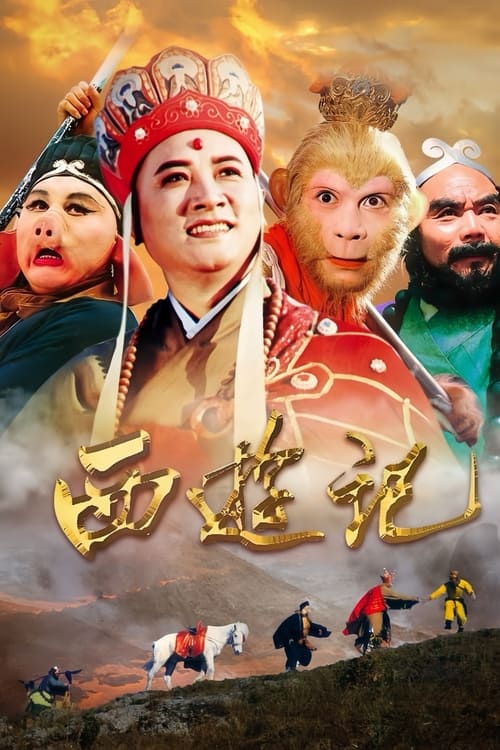
Filming began on 3 July 1982 with the entirety of season one being shot on a single Sony BVP-300 model camera. On location shooting took place across various provinces and cities in China including Beijing, Guizhou, Jiangsu, Sichuan, and Xinjiang, while episodes depicting India were completed in Thailand. Various underwater scenes and those depicting Heaven were shot at a sound stage, with dry ice being used to imitate the effects of clouds. The first season's episodes were not shot in chronological order, with episode 13 Slaying Demons in the Kingdom of Wuji being completed first followed by episodes 9, 1, 6, and 10. Slaying Demons in the Kingdom of Wuji was broadcast as a pilot on National Day of 1982 where it was poorly received by test audiences, who primarily criticised its crude makeup and cinematography while CCTV was also reportedly unhappy with Wang Yue's portrayal of Tang Sanzang. These resulted in extensive reshoots and editing which would not be complete until 1986 when the production team was satisfied with the episode.
To ensure the acrobatic elements of Peking opera did not detract from the realness of battle scenes, wushu practitioner Lin Zhiqian, who also portrayed Erlang Shen, provided most of the action choreography for season one. For season two, a stunt team from Hong Kong, headed by martial arts instructor Cao Rong, was hired.
Limited resources and poor logistical support caused several issues during season one's production process. Many actors were injured during airborne battle sequences as the wires used to suspend them frequently broke. To compensate, cardboard boxes and pillows were placed beneath the wires while young athletes from local sport schools were hired to perform stunts using trampolines for high angle shots. Due to the innate danger of using real flames, special effects were originally set to be used whilst filming Sun Wukong's imprisonment in Taishang Laojun's furnace as well as during his battle with Red Boy. However, Yang was dissatisfied with the poor quality of the effects resulting in pyrotechnics to be implemented. On Yang's insistence, the intensity of the flames were increased on both instances and nearly resulted in Liu Xiao Ling Tong suffering fatal injuries. The actor recalled that while filming the furnace scene, "the fire burned beyond the control of the technical staff" and the fur on his monkey suit was burned off, whilst the fire used in the battle scene, which required him to be set alight with nothing but cotton-padding in his costume, caused him to collapse from suffocation.
With individual scenes being shot on a single camera, a significant amount of time was required for the completion of a single episode, often needing three to four months. By 1986, the first fifteen episodes had accrued CCTV three million yuan in production costs resulting in funding to be pulled. Production was further interrupted when Yang Jie and the production team came under investigation by the network on suspicions they were squandering national funds. Season one was only able to be completed when supporting cast member Li Hongchang helped secure a three-million-yuan loan from the China Railway 11th Bureau Group. However, five of the planned 30 episodes remained unfinished and were adapted into a later season a decade later in 1998. Season two reportedly received thirteen million yuan in funds to film.