

Kieu Chinh (Vietnamese: Kiều Chinh; born September 3, 1937) is a Vietnamese-American actress, producer, humanitarian, lecturer and philanthropist.
Contents
Early life
Dame Kieu Chinh was born on September 3, 1937, in Hanoi as Nguyễn Thị Kiều Chinh.
During World War II, her mother and her newly born brother were killed when their hospital was struck by an Allied bombing raid targeting Japanese troops in Hanoi during the Japanese occupation of French Indochina, when Chinh was at the age of six. Even so, her father was a government official so the family was quite wealthy.
Following the end of World War II and the subsequent division of Vietnam into Communist and National regimes after the Geneva Conference, Chinh's older brother ran away from home to join the Resistance Forces. Her father urged her to board an aircraft and travel to the South, while he remained in the North to search for her older brother, promising to reunite with her in Saigon. Following her arrival in South Vietnam, however, she never saw her father again. Following her return to Vietnam in 1995 to meet her older brother, Chinh learned that her father was imprisoned in a communist re-education camp for more than six years and, after his release, died homeless and destitute.
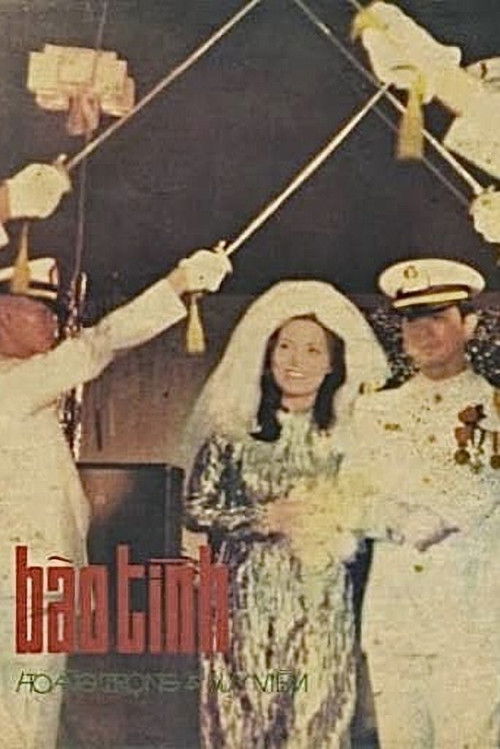
Her father's friend adopted the young Kieu Chinh. Monsieur Nguyễn Đại Độ was worried that his son would stay in America after the airborne course, so he decided to send a telegram to the North. He asked permission from Chinh's father to pair her with Sub-lieutenant Nguyễn Năng Tế - the son of Mr. Độ - in 1956. After that, she only went to church on weekends because her husband's family were Buddhists. This had a great impact on her later career.
Career
1955–1975
One day in 1956 Kieu Chinh was walking near the Hôtel Continental, when a young man approached her and asked her to go to a roadside café to meet someone. Then he introduced that person as a famous director named Joseph L. Mankiewicz. Mankiewicz said that Chinh suited a fictional role he was going to film in Saigon. He suggested she take the script of The Quiet American. However, after pressure from her family, who were reluctant to allow her, Kieu Chinh had to decline that opportunity. Within a week, Saigon widespread press headline news, including portrait photos of "Vietnamese unknown girl rejects Hollywood's famous director". So politician Bùi Diễm invited Kieu Chinh to play the lead role in the first project of his studio - Tân Việt Films. Her character, which her family agreed to, was a Buddhist nun. So Chinh began her acting career in South Vietnam, starting with a starring role in The Bells of Thiên Mụ Temple (Hồi Chuông Thiên Mụ) (1957).
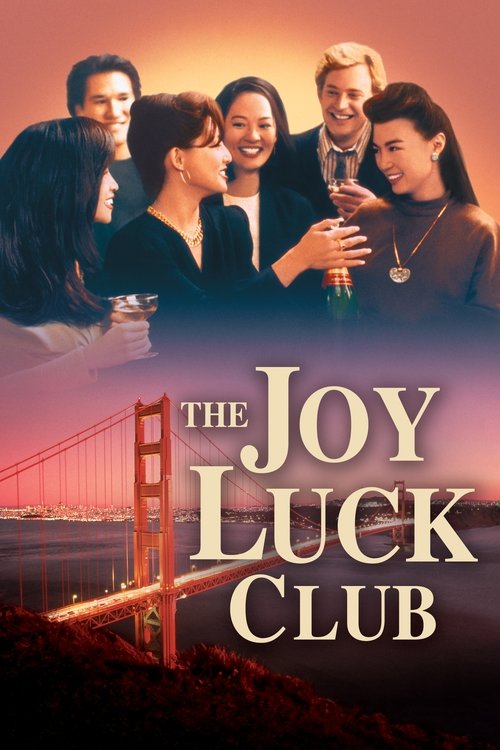
In her career spanning over sixty years from 1957 to the present, Chinh has received many accolades including an Emmy Award in 1996. Her film roles included Operation C.I.A. (1965) and The Joy Luck Club (1993). She is also a president, co-founder, and co-chair of the Vietnam Children's Fund.
In the 1960s, in addition to Vietnamese films, she also appeared in several American productions including A Yank in Viet-Nam (1964) and Operation C.I.A. (1965), the latter opposite Burt Reynolds. Kieu Chinh also produced a war epic Faceless Lover (or Warrior, Who Are You) (1971), which later would be remastered and shown in the U.S. at the 2003 Vietnamese International Film Festival.
About 1970, filmmaker Hoàng Vĩnh Lộc told his best friend Kieu Chinh that: "Chinh, we made so many nonsense ones that I got too bored. I have just written this scenario. Read ! So we can now do it, alright ?". By Hoàng Vĩnh Lộc's idea, a feature of Faceless Lover that related so much to the military forces, that every Saigon studio had declined. They feared the system of censorship, not to mention that South Vietnamese contemporary audiences almost hated war films. "We should try doing it !" — said Kieu Chinh. After deliberation, they decided to immediately establish a small studio to realize their ideas.
Permission for the Giao Chỉ Films Studio's war film was initially rejected because the studio was privately owned, so general director Kieu Chinh asked for permission from the Ministry of Information, Ministry of National Defence, and especially the headquarter of the Republic of Vietnam Military Forces. So during the summer of 1971, the project started filming. Later that year, the film was first shown at the Rex Movie Theatre which was the biggest theatre in South Vietnam. Later, it was shown at the Asian Film Festival in Taipei. However, its subsequent public release was delayed for almost a year.
1976 to present
Chinh lived in Canada with her children for several years. After divorcing her husband, Chinh decided to go to California to settle there. She founded the Giao Chỉ Film Production company to promote Vietnamese culture and arts. Chinh invited many old friends who are known authors and artists for collaborations. At the same time, she re-released two films which she still kept after the sorrowful events of April 30: Faceless Lover and Love Storm.
Chinh subsequently acted in feature films as well as TV movies, including The Children of An Lac (1980), Hamburger Hill (1987), Riot (1997), Catfish in Black Bean Sauce (1999), Face (2002), Journey From The Fall (2005), 21 (2008). She also became an MC with Giao Chi Television from Los Angeles.
From 1989 to 1991, she had a recurring role as Triệu Âu on the ABC Vietnam War drama series China Beach.
In her best-known role, she starred as Suyuan, one of the women in Wayne Wang’s film The Joy Luck Club in 1993. In 2005, Chinh starred in Journey from the Fall, a film tracing a Vietnamese family through the aftermath of the fall of Saigon, the re-education camps, the boat people experience, and the initial difficulties of settling in the U.S.
In 2016, she returned to Vietnam to inaugurate the 50th school which was built in Hanoi under the Vietnam Children's Fund. In 2021, she released her memoir Kieu Chinh An Artist in Exile.
Personal life
During the peak period of boat people fleeing the border since 1980, Chinh did charity work for the United States Citizenship and Immigration Services. She called for the attention of the US government to help Vietnamese boat people floating at sea or trapped in refugee camps. In 1993, together with journalist Terry A. Anderson, Kieu Chinh co-founded the Vietnam Children's Fund, a non-profit organization that has built a network of elementary schools in Vietnam as living memorials to remember the families and children lost in that country’s long wars. The first school was located in Quảng Trị and named after one of the association's founders, Lewis Burwell Puller Jr., in memory of the American veteran who died nearly a year earlier. By 2016, the organization had built its 50th school in Quảng Nam province.
The family is Buddhist, but Kieu Chinh attended a Christian school when she was young. When Chinh married, she became a Buddhist. Both religions play an important role in her life. In 2014, she met the 14th Dalai Lama in Dharamsala, India, and in 2016 at the Vietnamese Buddhist temple in Westminster, California. Kieu Chinh and her husband Nang Te Nguyen (Nguyễn Năng Tế) had three children. The couple divorced in 1980.
Filmography
Accolades
She was named "Refugee of the Year" by the United States Congress in 1990, received the "Warrior Woman Award" from the Asian Pacific Women's Network, and was the only Vietnamese person invited to speak at the 10th anniversary ceremonies for the Vietnam Memorial in Washington, DC. At the 2003 Vietnamese International Film Festival, Chinh received the Lifetime Achievement Award. In the same year, at the Festival Internazionale Cinema delle Donne (Women's International Film Festival) in Turin, Chinh was awarded the Special Acting Award (Premio Speciale Per La Miglior Interpretazione Femminile) for her role in Face. Three years later, the San Diego Asian Film Festival honored her with the Lifetime Achievement Award. In 2015, the San Francisco Bay Area – Festival of Globe (FOGsv) honors Chinh with a Lifetime Achievement Award for her contributions to the film industry and more. A documentary based on her life, Kieu Chinh: A Journey Home by Patrick Perez / KTTV, won the Emmy Awards in 1996. Chinh was honored as the 2009 Woman of the Year for her work in film and community service by State Senator Lou Correa. In addition, she was awarded a Humanitarian Award at the Asian World Film Festival in 2021.