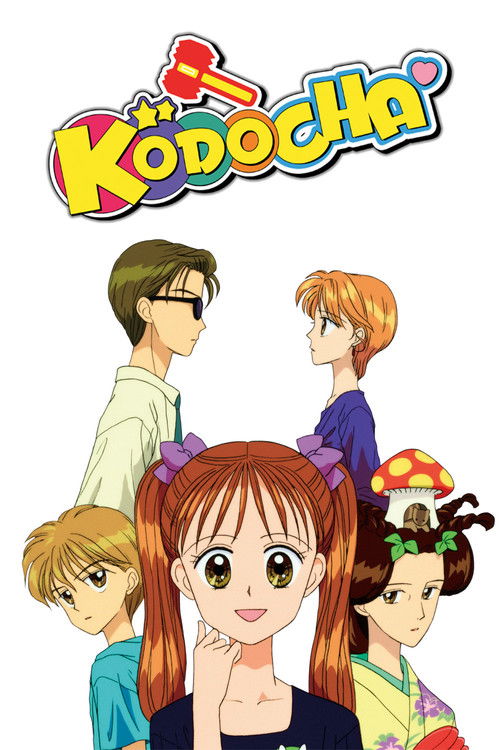
Kodocha (Japanese: こどものおもちゃ, Hepburn: Kodomo no Omocha; lit. 'Child's Toy') is a Japanese manga series written and illustrated by Miho Obana. The series was adapted as an OVA by J.C. Staff and released on December 16, 1995, by Shueisha under their Ribon Video label. An anime television series was produced by NAS and TV Tokyo, animated by Studio Gallop, and broadcast on TV Tokyo every Friday from April 5, 1996, to March 27, 1998.
In 2002, the manga was published in North America in English by Tokyopop as Kodocha: Sana's Stage. In 2006, Tokyopop lost the license to the manga, leaving it out of print. In 2005, the first half of the anime series was licensed for North American distribution by Funimation Entertainment and has been released on DVD. In 2012, Funimation announced that their Kodocha DVDs went out of print.
In 2020, Discotek Media announced that they have rescue licensed the series for release on SD Blu-ray in 2021.
Both the manga and anime have been well received by publications for different media for the character interactions and the comedy. The manga won the 1998 Kodansha Manga Award for shōjo manga. At the American Anime Awards held in 2007, it was nominated for best comedy anime.
Contents
Plot
Sana Kurata is a cheerful, popular, and energetic child actress who attends an elementary school that is plagued with chaos, led mainly by an aloof boy named Akito Hayama. At first, the two come in conflict with each other because of their opposing ideals, but as they get to know each other, they start supporting both each other and their classmates and peers. It's a story about kids dealing with adult issues. It showcases family struggles, communication gaps, and the challenges of growing up. Following them from sixth grade through their first year of secondary school.
Characters
Main characters
Sana Kurata (倉田 紗南, Kurata Sana)
Voiced by: Chisa Yokoyama (OVA), Shizue Oda (TV series) (Japanese); Laura Bailey (English)
At the start of the series, Sana is an exuberant child actress who has been having a hard time at school due to the antics of troublemaker Akito Hayama. Sana sets out to stop him and bring peace to her world; however, she soon learns that there is more to Akito than it seems. While she is energetic and always has a smile on her face, she also has a short temper and fierce determination. She never backs down from a fight, especially against Akito.
Sana was adopted by her mother Misako as an infant after Misako found her abandoned on a park bench. At her mother's behest, she began her acting career at the Komawari Theater Troupe when she was five years old, and now stars in a popular variety program called Child's Toy, as well as several commercials. During the course of the series, her career flourishes. She stars in multiple TV dramas and a feature film. Sana also deals with many ups-and-downs of show business, such as competitive co-stars, rabid fans, zealous paparazzi, false rumors in tabloids, ruthless talent managers who try to poach her, and in the anime, even an imposter.
From the beginning of the series, she developed a strong rivalry with Akito and gradually falls in love with him, although she doesn't realize it until after he starts dating Fuka.
In a 2009 one-shot called Deep Clear, Sana asks for help from a detective. In Deep Clear, Sana is separated from Akito because Akito told her to divorce him if she chooses to have the baby, but she longed to raise the baby with him. They reconcile when their daughter is born. Although they are married, Sana and Akito still argue.
Akito Hayama (羽山 秋人, Hayama Akito)
Voiced by: Megumi Ogata (OVA), Tatsuya Nakazaki (TV series) (Japanese); Jerry Jewell (English)
Akito is the troublemaker who is causing chaos in Sana's sixth grade class. A sullen boy of few words, he is physically strong, and has a powerful karate chop. At the beginning of the series, it is shown that Akito has acrophobia. Akito's mother died when giving birth to him, which leads to his older sister Natsumi resenting him, frequently becoming angry with Akito and calling him "devil boy." In addition, Akito has a distant relationship with his father, who works long hours. As a result, Akito is not home often and usually eats junk food for dinner. Akito is disrespectful towards most adults in general, but upon meeting Sana's formidable mother, he speaks to her with deference. Akito gets good grades despite being a troublemaker.
Family members
Misako Kurata (倉田 美紗子, Kurata Misako)
Voiced by: Sakurako Kishiro (OVA), Hana Kino (TV series) (Japanese); Colleen Clinkenbeard (English)
Misako is Sana's adoptive mother. Misako is a beautiful, intelligent, indomitable and goofy woman. She married a no-good gambling addict at age 18, and divorced him at 20. After her divorce, she decided that being normal just was not "her", and began wearing kimono, wearing her hair in odd ways, and felt liberated by being eccentric. She found Sana on a park bench and took her to the Kamura orphanage until she officially adopted her. When Sana was only five, Misako vows to be a famous author, and asks Sana to become better known than the average girl by becoming a small-time actress, so that they could find Sana's real mother one day. Misako and Sana are successful in their efforts beyond their original goals: Misako becomes an award-winning novelist, and Sana becomes one of the most popular child stars of her day. Misako then writes a controversial book named "My Daughter and I", hoping to find Sana's real mother.
Misako loves Sana deeply, and raises Sana with a balance between discipline and letting her be independent, thereby teaching her not to be a spoiled child. While Misako lets Sana make much of her own decisions, she will also not let Sana avoid the consequences of her actions. And when it comes time for Sana to realize that Rei is not her boyfriend, Misako holds nothing back, despite knowing that Sana will be hurt and humiliated. Misako also takes a liking to Akito: after learning that Akito kissed Sana, Misako tells him, "Do it as much as possible. It's fun!"
Natsumi Hayama (羽山 夏美, Hayama Natsumi)
Voiced by: Michiko Neya (OVA), Akemi Okamura (TV series) (Japanese); Caitlin Glass (English)
Akito's older sister. Natsumi is an avid Sana-fan. As a result of grief and stress from growing up without a mother and having to take care of a younger brother, Natsumi is pretty mean to Akito and accuses him of causing their mother's death. She often yells at him and calls him a "devil." (She calls him "Monster" in the American version of the anime and "Demon" in the Japanese version of the anime.) After Sana scolds her and her father, and Natsumi watches a TV drama that Sana filmed, Natsumi realizes that they are mistreating Akito, and starts being nicer to him. Also showing the fact that she becomes overprotective of him which shows in the last episode when she freaks out when she sees him in bandages. Like her brother, she has a difficult personality but she's also very intelligent.
School characters
Shinichi Gomi (五味 真一, Gomi Shinichi)
Voiced by: Miki Nagasawa (OVA), Masanobu Hirota (TV series) (Japanese); Kent Williams (English)
A boy in Sana's 6th grade class. He had long hair, but his father makes him shave it all off when he starts middle school. When Akito decides not to terrorize the teachers anymore, Gomi decides he will be the leader, but gets beat down by Akito (with Sana's one-time permission). In a story arc that showcases Akito's integrity, Gomi rebels against his parents who pressure him to attend a prestigious middle school. Gomi beats Akito up with the help of older delinquents, and shoplifts, letting Akito take the blame. He later confesses and apologizes to Akito.
Hisae Kumagai (熊谷 ひさえ, Kumagai Hisae)
Voiced by: Yumiko Kikuchi (Japanese); Cynthia Cranz (English)
Hisae is one of Sana and Aya's school friends who stays throughout the series. When Sana forgets to attend her birthday party, she becomes very angry and tries to ostracize Sana, but forgives her later. She and Gomi fight a lot but they are close friends despite that.
Mami Suzuki (鈴木 まみ, Suzuki Mami)
Voiced by: Azusa Nakao (Japanese); Kate Oxley (English)
Mami is one of Sana's friends. She is a quiet girl, with short black hair kept back by a hairband. During Akito's troublemaker days, she calls Akito a "devil", the same word his sister uses to insult him. Akito gets revenge by getting the other boys to throw Mami into a pond, which causes Sana to become angrier than she's ever been. Mami remains traumatized by this incident for quite a while afterwards. She remains so afraid of Akito that when he tries to talk to her, she screams and cries. But when she sees that Akito regrets what he did, they get over it.
Principal Narunaru (なるなる校長, Narunaru Kōchō)
Show business colleagues
Mikio Ono (小野 幹雄, Ono Mikio)
Voiced by: Takeshi Matsuyama
Director of the Mizu no Yakata movie Naozumi & Sana starred in. He likes to take risks in his movies that put both himself & his crew in danger. He has long black hair & a huge scar on his face.
Mayu Tobita (飛田 まゆ, Tobita Mayu)
Voiced by: Kaori Asoh (Japanese); Leah Clark (English)
A young singer, about the same age as Sana herself. Tobita is a strict actress who takes her work seriously to the point of being stuck-up. She regards Sana as a rival and finds Sana's laid-back attitude extremely irritating. She also gets jealous when Naozumi talks to Sana.
Tomomi Ayanohanamarukoji (綾乃花丸小路 智美, Ayanohanamarukōji Tomomi)
Voiced by: Tomomi Nishimura (Japanese); Brina Palencia (English)
She appears alongside Mayu. Tomomi is a very quiet girl, but can be persuasive if she wishes to be. She, Mayu, and Sana together form the singing group Sho-Roku-Tai (少六隊, Shō-Roku-Tai).
Zenjiro (ぜんじろう, Zenjirō)
Voiced by: Zenjiro (Japanese); Sonny Strait (English)
A regular character in the anime television series, Zenjiro hosts the Child's Toy television series that Sana appears in. His character is a parody of hosts on Japanese television variety shows, and is voiced by the real-life television personality with the same name; he is also shown to have buck teeth.
Miho Obana (小花 美穂, Obana Miho)
The author appears as herself in some of the quiz-show styled recap episodes in the anime. She doesn't say much, only the phrase: "Obana here."
Other characters
Ryousuke Kashima (鹿島 隆介, Kashima Ryousuke)
Voiced by: Kenjirou Tsuda (Japanese); Mike McFarland (English)
Misako's ex-husband. He is a gambling addict who kept showing up over and over again asking his ex-wife Misako for money. But in the end he is thrown out by Misako with some random gadget she had recently purchased.
Takeshi Gojo (ゴジョ 武志, Gojo Takeshi)
Voiced by: Hiroshi Takahashi (Japanese); John Gremillion (English)
As famous male actor and is Sana's pretend-father in the Late Night Murder Mystery Theatre, and later revealed to be her biological father. Not long after they started working together, reporters started believing that they were actually father and daughter (they did not know they actually were yet) and Sana breezily declared that they were lovers which they later become. Takeshi is quite chilled usually. He is funny, and he shares a lot in common with Sana. He speaks slowly and can be very comforting. He enjoys surprising people in the wackiest ways possible; in the series he suffered from a chronic illness which is the reason why he doesn't get very large roles when it comes to his career. His illness catches up with him leading to his death in the anime.
Brad (ブラッド, Buraddo)
Voiced by: Tatsuya Nakazaki
An American version of Hayama, who lives in New York at Gary Hamilton's mansion. He is the son of the Maid, Ramsey (who looks a lot like Shimura). He looks exactly like Hayama, but with different hair and eye color. He also has complete opposite personality from Hayama. Brad is also arrogant, mischievous and is always seen smiling. He has feelings for Sicil but Sicil likes Naozumi, so this drives Brad to try and scare Naozumi and Sana into returning to Japan. He knows the Hamilton secret. By the end of the New York episode, he begins to like Sana and Naozumi.
Sicil Hamilton (シチェル・ハミルトン, Shicheru Hamiruton)
Production
Some parts of the series are based on Obana's life.
Media
Manga
Kodomo no Omocha was originally serialized by Shueisha in the magazine Ribon from August 1994 to November 1998. Shueisha collected the 51 chapters in ten tankōbon volumes from April 1995 to January 1999. The series was published in North America by Tokyopop under the title Kodocha: Sana's Stage from June 25, 2002, to November 11, 2003. In 2006, Tokyopop was not able to renew the license and the English edition became out of print. In 2026, the series became licensed digitally in English on Shueisha's Manga Million platform.
In 2010, Obana authored a crossover story called Deep Clear in which Sana and Akito interact with characters from Honey Bitter. In 2015, Obana authored a one-shot of Kodomo no Omocha for Ribon magazine's 60th anniversary issue in September. In 2025, she authored an 8-page promotional comic in collaboration with the beauty salon aggregate platform Hot Pepper Beauty.
The crossover story, Deep Clear, was published in 2010, and takes place ten years after the end of Kodocha. Shuri, the heroine of Honey Bitter, is hired by Rei to spy on Akito because he had separated from Sana earlier. At this point, Sana and Akito are married and expecting a child. As she follows Akito, Shuri becomes good friends with Sana. She eventually discovers that the reason Akito separated from Sana is because he is afraid that she will die giving birth. When Sana gives birth, Shuri convinces Akito to face his fears by going to the hospital and seeing Sana and the baby. Sana gives birth to a daughter whom she names Sari. After their daughter's birth, Sana and Akito reconcile and begin raising their daughter together.
A special one-shot was published in the September 2015 issue of Ribon in order to celebrate the magazine's 60th anniversary. The story takes place between February and March of Volume 4 of Kodocha, after Misako's first essay has been published but before Sana begins middle school. Gonta, one of Sana's dogs, narrates his daily life in the Kurata household leading up to Sana's twelfth birthday, during which he and the other dogs destroy a gift Akito meant to give to her as they mistrust his intentions. Shimura catches them in the act and informs Sana, leading her to find Akito and thank him for remembering her birthday regardless; she also assures him that she's going to Jinbou Middle School with the rest of their friends, to Akito's secret relief. At home, Sana chastises her dogs and asks Gonta to be a little kinder to Akito, as he is one of her precious friends. Gonta reluctantly agrees, because although he is still wary of Akito, he trusts Sana and wants to protect her happiness.
Anime
An original video animation was produced in 1995 to mark the 40th anniversary of Ribon.
An anime adaption was later produced by TV Tokyo and NAS and animated by Studio Gallop, consisting of 102 TV episodes, airing on TV Tokyo and its affiliates from April 5, 1996, to March 27, 1998. The opening theme songs are "7 O'Clock News" by Tokio (episodes 1-44) and "Ultra Relax" by Tomoe Shinohara (episodes 45–102); the ending theme songs are "Panic" by Still Small Voice (episodes 1-39), "Daijo-bu" by Tomoko Hikita (episodes 40–74), and "Pinch (Love Me Deeper)" by Rina Chinen (episodes 75–102). The first 51 episodes covers the elementary school story arc, while the remaining 51 episodes cover the middle school story arc.
The series was first licensed by Funimation from NAS, releasing the first 51 episodes on DVD. The series was partially broadcast on American TV in a syndicated Funimation Channel programming block airing on Colours TV and Los Angeles KSCI-DT channel 18.3. The first opening song, "7 O'Clock News", was replaced with "Ultra Relax" due to licensing issues via Johnny & Associates.
Discotek Media announced that they had re-acquired the North American rights from ADK Emotions to the series during a live Twitch panel from December 14, 2020, mentioning that 7 O'Clock News would be restored on the upcoming SD Blu-ray release of the first arc in November 2021 as rights issues had been resolved following the death of Johnny Kitagawa. The second arc was released in 2022 as a sub-only release.
Stage Production
A stage play adaptation of Kodocha was announced in the March 2015 issue of Shueisha's Ribon magazine, to be written and directed by Akitaro Daichi, the director of the Kodocha television anime. Sana was portrayed by both Kokoro Okuda and Rio Ogura, and Akito by Yuga Aizawa and Rihito Itagaki. Additional cast members included Sogo Ito as Tsuyoshi Oki, Satsuki Usui and Mio Yoshimura as Natsumi Hayama, and Hiyori Arima, Masahiro Ezaki, Mari Kazama, Wakana Kawai, Keita Takahashi, Miu Takahashi, Mitsuki Nishida, Mirai, and Yumeka Yoshiwara as classmates.
The play opened August 20, 2015, via Nelke Planning in Tokyo, and ran for ten days until the 30th.
Reception
Kodocha won the Kodansha Manga Award for best shōjo manga in 1998. Jason Thompson found the manga "joyfully weird ... with good lines and funny details", calling the art quaint. Holly Kolodziejczak from Animefringe praised the series for its multiple elements such as mystery and romance that form a strong comedy. Additionally, like Thompson, he found the art quality despite the time its age. Dillon Font from the same site called it "very solid part of a manga collection." The reviewer compared it with the anime adaptation "sorely missing the insane quirkiness that Daichi's [the anime's director] direction injected into the anime series" which might leave the manga "dull." Allen Divers from Anime News Network recommended it to readers commenting it is "a solid story about a young girl coming of age that remains entertaining the entire way".
The anime adaptation also received the praise with THEM Anime Reviews' Carlos Ross who claimed "the frenzied comedy is the selling point of this anime, and sell it does". Zac Bertschy from Anime News Network praised the characters as likables and also liked the animation and music. Reviewing the series' 10th DVD, Carl Kimlinger from the same website as Bertschy said that while "neither the show nor Sana has slowed a whit in forty episodes" the material not as appealing as previous episodes.