"Everyone is Free!"
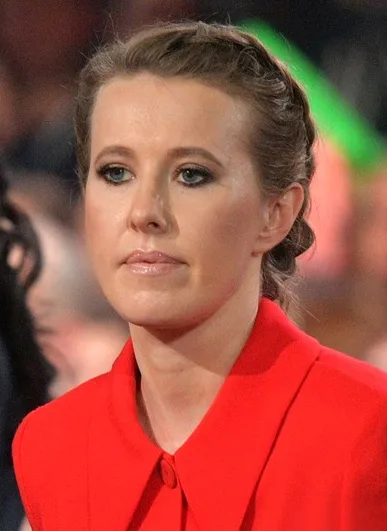
At the end of March 2006, Sobchak rented a two‑storey mansion at 16 Arbat Street and convened a press conference to announce the creation of the youth movement 'Everyone is Free!' According to the television presenter, she was prompted to take this step by numerous letters in which fans of her work on Dom-2 shared their problems and experiences. Sobchak felt that political positions and opposition served only as a pretext for realising her ambitions and declared her movement non‑political, aimed at providing help and support to young people. Sobchak promised to fund 'Everyone is Free!' from her personal funds. The rented building on Arbat was hastily renovated and decorated in the movement's 'signature' colour of blue denim; it housed the movement's headquarters and a reception area for those wishing to join. The Izvestia newspaper conducted an online survey in which, after the press conference, users were asked about their desire to join Sobchak's movement. The results showed a lack of enthusiasm: of 2,133 respondents, only 6% expressed a desire to join for political reasons or sympathy for the leader, and 38% admitted that they did not know who Ksenia Sobchak was. After the first press conference, Sobchak stopped communicating with journalists for a month. On 7 July, she avoided participating in a debate with the leader of the youth branch of the Rodina party, Sergey Shargunov, at the Club on Brestskaya, which caused dissatisfaction among the youth politicians and journalists who attended the event.
On 12 June, 'Everyone is Free!' declared itself with a street action dedicated to improving the square around the monument to Sergei Yesenin on Tverskoy Boulevard. Participants in the movement collected rubbish, painted benches and playgrounds on the boulevard, and Sobchak herself, in the presence of journalists and onlookers, wiped off a yellow bikini with a red heart drawn by an unknown vandal from the crotch of the Yesenin monument. According to local residents, on the morning of that day, there was no paint on the monument, and it appeared only before the event. The action ended with a small concert and fashion show on a stage near the monument. In early July, a 'club day' was held at the movement's headquarters. Sobchak made policy statements and issued club cards to the most active participants, providing free access to nightclubs, discounts, and other privileges. During the meeting, Sobchak gave a presentation on the goals and moral guidelines of the movement, in which two slides were occupied by the declared sponsors: Microsoft, Coca‑Cola, Russian Standard Bank, the Renaissance Capital investment bank, Lukoil, MegaFon, the Bilingua café‑club, and other companies. 'Club day' ended with a debate between the writers Oksana Robski and Sergey Minaev.
At first, the movement was the cause of gossip in political circles: experts and young politicians tried to understand Sobchak's motivations. The political scientist and contemporary art collector Marat Gelman suggested that Sobchak might have set her sights on a political career in United Russia and was gathering her supporters ahead of the 2007 Russian legislative election. The head of Yabloko Youth, Ilya Yashin, doubted Sobchak's independence and shared with journalists his opinion that 'Everyone is Free!' could have been created to criticise the opposition with the approval of the Presidential Administration. The leader of the pro‑Kremlin Nashi movement, Vasily Yakemenko, doubted the Kremlin's involvement in the creation of the 'Everyone is Free!' movement: in his opinion, Sobchak could both be useful to the Presidential Administration and discredit the Russian authorities. Subsequently, the movement ceased any activity, and journalists mentioned Sobchak as the head of 'Everyone is Free!' only once – in the context of discussing the elections to the Legislative Assembly of Saint Petersburg of the fourth convocation, which it considered fictitious, and the construction of the Okhta Centre skyscraper for Gazprom on the right bank of the Neva opposite the Smolny Cathedral.