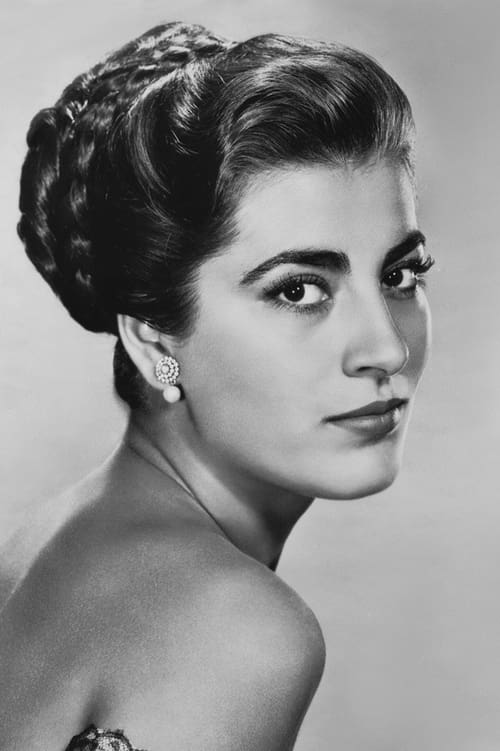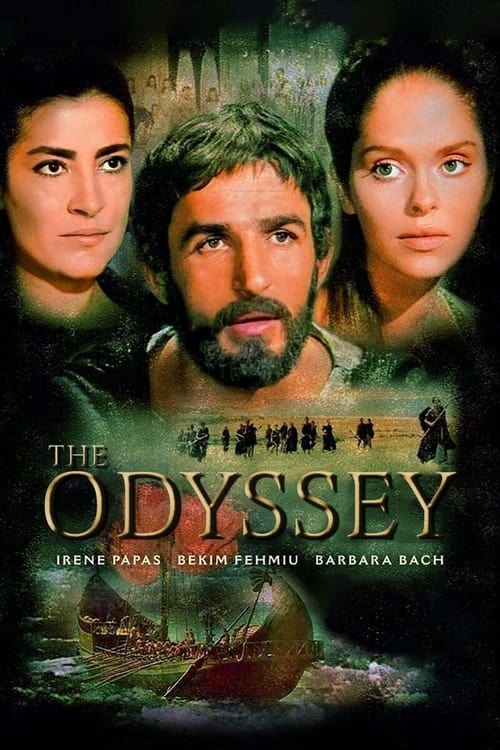
The Odyssey (Italian: Odissea (dal Poema di Omero)) is an eight-episode Italian TV miniseries broadcast on RAI in 1968 and based on Homer's Odyssey. It is a Radiodiffusion-Télévision Française coproduction, it was directed by Franco Rossi, assisted by Piero Schivazappa and Mario Bava; the cast includes Bekim Fehmiu as Odysseus and Irene Papas as Penelope, Samson Burke as the Cyclops, as well as Barbara Bach as Nausicaa, and Gérard Herter.
Contents
Plot
First episode: Telemaco and Penelope
Athena arrives in Ithaca, disguised as Mentes, to make sure that Odysseus' return is pleasant. Although welcomed with respect by Telemachus, Mentes discovers that the palace of the king of Ithaca is besieged by numerous nobles of the region, the suitors, who wait for Queen Penelope to decide to take a new husband between them, supposing that Odysseus died since twenty years have passed since his departure for Troy, looting without reserve the cellar and the pantry of the palace. Penelope tries to take time by declaring to the suitors that she must weave a shroud for her father-in-law Laertes, but with this pretext, every night she undoes it and starts it again the next morning.
Telemachus announces a town meeting to try to find out who is on his side to be able to chase away the suitors and who is willing to follow him on the land to ask for information about Odysseus to King Nestor, the oldest commander who participated in the war. The suitors also arrive at the assembly, claiming to be right about the king's long absence and the fact that Penelope is spending too much time weaving the shroud. To these answers, the people of Ithaca are silent and dare not oppose, yet the soothsayer Egizio, noting a hawk perched on the battlements of the palace, sees the success of Telemachus' journey, but is derided by the suitors. The next morning, Telemachus is joined by his father's friend and adviser Mentor, who gives him a boat and sailors to get to Pylos. Before leaving, Telemachus asks the nurse Eurycleia not to say anything to Penelope. During the night, Melantho, a young female servant of the palace who is a lover of Eurymachus, betrays Penelope by revealing to the suitors what Penelope does to her shroud at night. Discovered, Penelope is forced to finish the shroud without apology.
The next day, the suitors noticed the absence of Telemachus and discovered, by threatening a boat seller, that he has really left to look for news about his father. Concerned that his research might be successful, Antinous, suggests an ambush of Telemachus. Arriving in Pylos in the middle of a sacrificial ceremony for Poseidon, Telemachus joins the king after the ceremony. Nestor tells Telemachus about the evening before he returned from Troy: there were those who, like Odysseus, wanted to punish the allies of the Trojans and those like Menelaus who wanted to go home; after several discussions, the Achaean fleet separated and Nestor no longer knew about Odysseus, so he advised Telemachus to go to Sparta, to Menelaus, with Pisistratus, who would guide him. Medon, on hearing the suitors, runs to warn Penelope who, after a moment of anger at Eurycleia for not having told her anything, prays for the safety of her son.
Second episode: Odysseus, Nausicaa and Calypso
At the beginning of the second episode there is a discussion between Zeus and Athena in which the two agree that Poseidon has tortured Odysseus enough and that it is time for his suffering to end. Odysseus is shipwrecked on an island and, having found a refuge, wanders into a grove of trees and falls asleep on a bed of fallen leaves. The island in which Odysseus arrived is Scheria, governed by the Phaeacians, and Athena appears in a dream to the young princess Nausicaa, in the guise of a friend, telling her that she should prepare herself for her now near marriage and go with the maids to the mouth of the river to do the laundry. The next day Nausicaa goes to the river's mouth and after doing the laundry, the princess starts to play with the maids, when she sees in the bushes a man, naked and caked with salt and leaves. All the girls run away except for Nausicaa, who is staring at the man. Odysseus also remains captivated by the beauty of the girl and compares her to a goddess, then begging her to take him with her to the palace and to help clean him up.
Nausicaa has him washed and dressed by the maids, but she asks that he not follow her to the palace, or the young people would believe she had chosen him as a husband. Accepting the wishes of the girl, Odysseus goes to the city, while an internal voice suggests to him how to behave in front of the sovereigns: Alcinous and Arete. The nobles and monarchs of the palace, suspicious of all the foreigners who come to their land, ask him many questions, only to apologize for their interrogation, after they recognize a good man with nothing to hide. Odysseus pretends to be a shipwrecked traveler in search of protection. Alcinous tells that long ago his people, ruled by his grandfather, resided in the Land of the Cyclops, monstrous and violent beings, who continually threatened their lives; so they decided to move with the help of the gods to a new island, paying the price of being isolated and unknown to any traveler, except Odysseus.
Hosted in the palace, Odysseus knows that the Phaeacians are peaceful and that they know how to build boats that never sink and never get lost, but have stopped building them, worried by a prophecy that Poseidon would punish the Phaeacians by destroying the crew of the ship that accompanies an enemy on board. Odysseus spends a lot of time with Nausicaa, telling her that until a few weeks ago he had been a prisoner in Ogygia for seven years, an islet in which the nymph Calypso resides, to whom Odysseus mentally resisted, until she was finally ordered by the gods to allow him to depart on a raft.
Third episode: the fall of Troy and the island of the Lotus-eaters
For the victory of the athletes, the blind aedes Demodocus tells everybody the history of the last thing he saw before losing his sight: the fall of Troy. Ten years had passed since the beginning of the war, but neither of the two factions gave up, until one day, the Trojans found the achaean camp deserted and a gigantic wooden horse on the beach. While Priam and many other citizens interpreted it as an offer of the Achaeans to Poseidon to secure a safe journey, the priest Laocoön understands that it is a trap, or an offer asking that the god destroy the city. The priest is sure of what he said that he thrust a spear in the belly, almost piercing Odysseus and the others hidden inside. On the verge of burning it, Priam stops Laocoön and orders for the horse to be brought inside the city to repent the offense made. Odysseus' plan works: with the horse inside the walls, the Acheans come out of the sculpture, warn the hidden companions and Troy is conquered. The tragedy is unstoppable and on that same night, the Trojans are wiped out by the Greeks; this is the destiny also of Priam, of Deiphobus, the new husband of Helen, and of Astianax, the baby son of Hector and Andromache, who is taken from his cradle and thrown out of the walls by Neoptolemus, the cruel son of Achilles. Odysseus starts to cry softly, shaken by violent shivers, and Demodocus, after realising it, recognize him under the shock of all people.
Telemachus and Pisistratus arrive in Sparta, where Menelaus and Helen have just returned from their journey. The sovereigns welcome Telemachus, in contrary to his expectations, finds himself in front of two spouses, tested by the fatigue of the war and the fate of the survivors. Agamemnon, was killed by his wife Clytemnestra, and many met the same death in their homes. He says that the last time he heard about Odysseus, he heard from Proteus, who also told him how to go home. Helen drugs the wine of her husband and of the guests to relieve their pain and tells of the time she saw Odysseus before Troy was conquered. After being beaten to death by his friend Diomedes to appear as a beggar, he entered the city presenting himself as a soldier attacked by his comrades. The priestess Cassandra, immediately believes him and confides in him that she knows that her city is destined to lose, if the Palladium of Athena were to be stolen from the temple. After Cassandra goes away, Helen arrives, who has become the widow of Paris, immediately recognizes Odysseus, although battered and bleeding. Odysseus, furious, threaten her of playing the double-cross and unnecessarily wasting time in that palace, since the entire army of Greece is fighting for her, he finally leaves her, warning her against Menelaus.
Fourth episode: Polyphemus and the gift of Aeolus
The cave is inhabited by a monstrous giant with feral habits named Polyphemus. The cyclops is horrible to behold, full of hair like a beast and with a single eye in the middle of the forehead. The companions fall to the ground as soon as they see him blocking the entrance to the cave with a huge boulder and asking them to introduce themselves. Odysseus, trying to protect his friends, asks Polyphemus for hospitality, since they need food, and to respect the laws of the powerful and vengeful Zeus in regard to visitors. Polyphemus bursts into a laugh, declaring that he is the son of Poseidon and therefore above any law and that he does not have to obey anyone, not even the other gods. The men run away terrified, but Polyphemus takes one and crushes him in his hand; then he grabs another, fainted from shock, and dashes him violently against a stone, and then eats them both. Odysseus would like to kill him immediately after he has gone to bed, but is held back by his friends, including Eurilochus. If Odysseus had killed the Cyclops while asleep, then no one would have had the strength to remove the gigantic boulder from the entrance, and so the hero is forced to await the end of the night. The next day, however, he gets an idea and orders his companions to take a large olive branch and sharpen it, while the Cyclops goes out to graze the herd. Subsequently, Odysseus draws lots for the companions who should distract the Cyclops, while he hides the trunk, but the chosen ones are not fast enough and Polyphemus devours them too.
All the prisoners are about to lose hope, were it not for the astute Odysseus, who decides to make the Cyclops drink the wine he had brought with him from the ship as a gift for the inhabitants of that land, a special wine, so concentrated that to be drunk normally it should be diluted with as many as 20 measures of water. Having filled a large bowl, Odysseus grabs it and hands it to Polyphemus, who, although suspicious of the new drink, tastes it, immediately becoming crazy for it and demands more. Odysseus brings him another full bowl, which Polyphemus empties. Odysseus, at the request of Polyphemus to reveal his name, replies that he is called "Nobody", whereupon the Cyclops laughs and says that as a reward he will eat him last. Odysseus, without wasting time, after the Cyclops has fallen asleep, calls to him his friends who heat the tip of the tree trunk: the prisoners intend to blind Polyphemus so that he can provide them a means of escape when he opens the entrance. The companions, including Odysseus, take the trunk and approach the bed of Polyphemus, climbing on it and positioning themselves behind the monster's head to implant the trunk. With a shout of encouragement, Odysseus and his companions thrust in the pole, but the cry of pain of Polyphemus is so resounding that it makes them all fall to the ground, while the Cyclops, waving his hands, creates a great disorder and noise in the cave. He also calls screaming to his Cyclops neighbours who, rushing up outside the cave, ask what or who is doing him harm. To the answer "Nobody wants to kill me!" the other Cyclops tell Polyphemus that they can do nothing and that he must pray to Poseidon and abandon him.
Fifth episode: the island of Circe and the descent to the Underworld
Having landed on a new and unknown island, Odysseus together with his companions decide to visit it to see if it was inhabited by beasts or bloodthirsty men. He divides the expedition into two groups: one commanded by Eurilochus and the other by himself. Entering the thick wood, however, the group of fillet is attacked and no one knows people are transformed into pigs. Meanwhile, Odysseus meets a shepherd boy, who tells him the sad fate of the other group. Odysseus would like to rush to their aid, but the god stops him, telling him that this is a spell of the sorceress Circe, and that to free his friends he must first of all eat a flower. After that the hero would have presented himself to the sorceress and would have been led to her abode; Circe would deceive him, by giving him a potion to drink, but Odysseus would have remained immune and would be seized by a terrible desire to stab the sorceress, but restraining himself.
Odysseus hears this prophecy and goes into the garden where he meets a woman, beautiful and terrible at the same time, who subjects him to riddles and tests, but Odysseus solves them all. Circe, realizing that this man is different from all her other victims, decides to take him home to make him drink some wine. Suddenly Odysseus finds himself in a strange abode full of climbing plants and cages containing animals and birds of all kinds, but he is immediately invited to sit by Circe who offers him a golden cup. Odysseus drinks it all in one gulp, yet he suffers greatly from her poison. Meanwhile, Circe laughs, thinking that soon the unfortunate person would turn into a pig too, but suddenly, she goes pale and begins to become terribly ugly: she realized that her powers are ineffective on the hero. Odysseus rushes with the sword drawn to the sorceress, but then remembers the prophecy and doesn't kill her, but he orders her to take him to her friends. Circe takes him to a stable where pigs grunt desperately and turns them back into the people they were before. Due to the sudden metamorphosis, the companions find themselves confused and don't recognize Odysseus, running away every time he tries to talk to them. Circe then takes the opportunity to hold back the hero a little longer, since the effect of the magic on his companions would disappear in a few days, and she spends passionate nights with him.
Circe makes him drink a magic potion that makes him forget Ithaca, and makes him invisible in front of his companions. With Circe, Odysseus will spend a full year, and only the intervention of his companions, tired of living on the ship doing nothing, will bring the hero back to reason. Odysseus asks Circe to be let go once and for all and she accepts, but before leaving she confides him some secrets and above all orders him to go to the underworld. Since many of the gods are hostile to him, Odysseus has a uncertain and dangerous destiny when he sails on the sea and so he needs the prophecies of Tiresias, who aged over 700 years, so that he can sail peacefully to in Ithaca.
Sixth episode: the Sirens, Scylla and Charybdis, the island of the Sun and the return to Ithaca
Encouraged his companions to embark to return to Ithaca, Odysseus resumes his journey, immediately approaching the rock of the sirens. These are beings not visible to man, although the legend endows them with the bodies of rapacious birds and the heads of beautiful women, and they have the power to enchant travelers with their voice, to finally make them smash their boat on the rock. The companions believe that Odysseus has gone mad, as he wants to cover their ears with wax so that they do not hear the voice. Odysseus, to show them that he is perfectly lucid, is tied by Eurilochus to the mainmast, recommending him to hold tighter if he begged to untie him. The ship has now reached the rock and while skirting it, Odysseus glimpses the bones of the unfortunate sailors, victims of the Sirens, and finally begins to hear their voices that penetrate his mind, obscuring it. The voices insistently invite Odysseus to land on the island so that he can end his days in joy and carefree after so many years of fighting and living in pain, but Eurilochus holds him tight and so Odysseus, severely tested by the power of the Sirens, manages to overcome the rock with his companions.
The second stage is the crossing of a narrow gorge between two huge rocks: Scylla and Charybdis. However, Odysseus, believing he was wasting too much time in the crossing and not getting out of it alive, took another longer route that brought him to the island of the Trident, consecrated to the god Helios (the Sun) for his cows to graze on its grass.
The ship lands on the beach and immediately a great calm falls on the area, preventing the companions from resuming the journey soon. In fact, Odysseus was reluctantly forced by his friends Heraclius, Eurilochus, Polites and Filetor, who no longer had faith in their commander; now the sailors can only hope for the food they have brought with them and the fish they can catch. Odysseus no longer knows what to do because Circe's prophecy had told him that if anyone dared to kill a single cow, the entire ship would be annihilated by the gods. The hero does everything to prevent his companions, now exhausted for weeks by hunger and lack of food, from doing it, but one day when he climbs a cliff to implore Zeus, a misfortune occurs. Eurilochus has had a heifer killed and has feasted on it with the others all night; Odysseus does not even scold him because he already knows that the fate of those unfortunates is sealed. In fact, after leaving the island due to the sudden return of the wind, a terrible storm unleashed by Poseidon arrives and wrecks the ship with his companions. Only Odysseus is saved on a beam and is tossed for seven days in the sea until he arrives on the island of Calypso.
Seventh episode: Odysseus beggar at the court and the eve of the final competition
Odysseus is accompanied by Eumaeus to the palace, but first he stops in front of an old and decrepit dog: it is Argos, the dog loved by Odysseus, now dying, who recognizes his master, even after twenty years of absence, and finally dies happy. At the prompting of Athena, in his beggar's disguise, he approaches the suitors for alms. The welcome of the suitors is rude and cruel: they mock and insult him, not knowing what fate awaits them in a few days. The episode is one of the most characteristic of the entire work because there is a continuous connection of the narrative that passes both through the mouth of a male voiceover (as happened in the other episodes) and into the lips of muses in the guise of handmaids. Telemachus cannot endure for long the abuses of the suitors against his father who is even beaten by Antinous, leader of the suitors, when he approaches the latter for alms. As if that were not enough, the corpulent Arnaeus (known as Irus) also arrives at the court, who boasts of being the strongest of all beggars and bullies Odysseus, fearing that the latter wants to steal his place. The suitors propose to make them fight by giving away a choice piece of roast meat and they head into the courtyard. At first it seems that Arnaeus is about to win but then the bully's blows awaken an ancient wrath in Odysseus' chest, who knocks him down with a single well-aimed blow on the jaw. Bleeding and staggering, Arnaeus falls to the ground and Odysseus places him in front of a column, with a stern warning not to challenge him any further or suffer a worse fate.
He is later summoned to meet with Penelope, to speak with the queen in private. Penelope is intrigued by that stranger and she would like to know more about him. Odysseus lies and tells her that he is Aethon, brother of the Cretan king Idomeneus, son of Minos, but he claims to have known Odysseus, describing in every detail his cloak with the golden buckle depicting a dog tearing a deer. Penelope is amazed and even deludes herself into recognizing yhis beggar as her husband, but Odysseus controls his emotions by reminding her that he is only a Minoan warrior who fell from grace after the Trojan War.
Eurycleia, the oldest and wisest handmaid in the palace, is called to wash the beggar's feet and, going up to the knee, she recognizes a scar. This is the wound inflicted on the hero by a wild boar many years earlier during a hunting trip. The nurse has finally recognized her master, but he covers her mouth, fearing that she may, even if unwilling, ruin all her plans for revenge. Eurycleia is sworn to silence and Odysseus goes to the stables where a young cowherd is feeding a bullock: it is Philoetius, hired by Odysseus when he was a ten-year-old boy; not even he recognizes his master. Eumaeus, knowing everything, is equally silent.
Eighth episode: victory of Odysseus and the recognition of Penelope
Antinous tries to draw the bow but it is impossible for him; the other suitors are also unsuccessful. Then Odysseus, in his beggar disguise, asks humbly to be able to try to thread the bow. All the suitors mock him for daring to be their equal, but Penelope steps in and gives him permission to do so. Odysseus skillfully draws the bow, shooting the arrow and making it pass through all the holes in the axes. He then turns towards Antinous and kills him with an arrow to the side. The suitors are in a shock at his deed, then Odysseus strips off his rags and reveals himself to them, sending them in a panic. Eurymachus, the second foremost of the suitors, lays the blame on Antinous for being the instigator of wasting the palace resources and offers compensation for everything they had consumed, but Odysseus rejects his proposition and proceeds to shoot him and the other suitors. They begin to panic and try to escape his wrath but they are unable to, for the doors had been locked beforehand on Odysseus' orders. They do not even have weapons to defend themselves: all of these had been secreated by Telemachus and Eumaeus the previous night. With the help of Telemachus and the loyal servants Eumaeus the swineherd and Philoetius the cowherd, Odysseus slaughters all suitors. Not even one is saved, and the maids who had betrayed the trust of Queen Penelope by consorting with the suitors are made to clean up the blood and gore and dispose of the bodies of the dead suitors before being punished themselves for their disloyalty by being hanged.
Finally Odysseus has taken his revenge and is waiting for nothing but to go to the room of Penelope, who has witnessed all, terrified and amazed at the carnage. The woman is not yet fully convinced that the warrior is Odysseus, but she lets him into the room. The recognition occurs when Penelope proposes to move the nuptial bed, to which Odysseus replies that this is impossible, because that bed had been built by himself by carving it from a huge tree trunk, around which he had then built his palace. Penelope then has no more doubts and she embraces the groom crying and laughing with joy. Odysseus, moved by her, tells her all her misfortunes and with her he spends a long and happy night of love; in fact Aurora prolongs the night by not letting dawn arrive for several days. The final part of the episode tells of the peace-making, through the intercession of Mentor and Athena, between Odysseus and the relatives of the suitors, who are seeking vengeance for their deaths. When the clash between the two parties in the fields near Laertes' hut (where Odysseus had gone with his family) seems inevitable, at the urging of Mentor and Athena, Odysseus first lays down his arms, kneeling in a sense of respect for the relatives of the young dead, then the same is done by the father who led the opposing party, thus sanctioning the pacification.
Production
The miniseries was produced principally for broadcasting on the state televisions of Italy, Germany and France. There are 8 episodes in the original version, running a total of 446 minutes. Each episode is preceded by an introduction in which poet Giuseppe Ungaretti read some verses of the original poem.
The screenplay was written by a team of six.
Special effects were designed by Mario Bava (who outright directed the Polyphemus episode) and Carlo Rambaldi.
The exteriors were shot entirely in Yugoslavia, which offered a scenery that was similar to the lands of Ancient Greece.
Release
The show ran on television in Europe between 1968 and 1970. In Italy alone, the episodes had an audience of over 16 million viewers. The entire television series was dubbed into English, ran several times on the TVO network in Ontario, Canada, and was broadcast in the US by CBS years later in 1978. An abridged theatrical version (running only 110 minutes) was released to European theatres as well, also available in English, but the English dub was later lost. There are DVD editions still available in Italian and German.
Reception
The adaptation is considered by some to be the most faithful rendering of Homer's epic on screen, by including most of the characters and events, as well as by attempting to fill in graphic details.