Story development
According to the film's publicity materials, the origins of Lady and the Tramp were inspired by an incident in 1925. At the time, Walt Disney had been actively working at the Disney Brothers Studio and was seldomly at home with his wife Lillian. One night, Disney became so preoccupied with one cartoon that he stayed overnight at the studio while his wife waited patiently for him to return home. Guilt-ridden, Disney decided to purchase a dog companion for Lillian for Christmas. Lillian had disliked dogs, but regardless, Disney asked her what breed of dog she would want if she had to make a choice. She answered with a chow dog, as she read somewhere they were less odorous.
Disney then purchased a chow puppy from a nearby kennel on Christmas Eve and kept the dog near his brother Roy's house until the next morning. On Christmas Day, Disney presented Lillian with a peace offering kept inside a hat box. She opened the box expecting a hat, but she was immediately floored when she saw the puppy with a red ribbon around its neck. The Disneys named their new puppy Sunnee. Years later, Lillian recalled: "I forgave him. You can't stay mad at Walt for very long." This inspired the film's opening sequence, in which Darling unwraps a hat box on Christmas morning and finds Lady inside.
In 1937, Joe Grant, a storyboard artist working for Walt Disney Productions, pitched an idea inspired by the antics of his English Springer Spaniel Lady, and how she got "shoved aside" by Grant's new baby. The twist is that the story would be told from a dog's perspective. Grant then presented Disney with several sketches of Lady, which Disney enjoyed. He then commissioned Grant to commence story development on a new animated feature. According to Frank Tashlin, who had worked on the film's early development, a rough story outline had been written by 1940. The outline included two Siamese cats that were named Nip and Tuck as secondary characters. Tashlin stated: "Joe Grant had models of the dog, Lady, and Sam [Cobean] and I did a story. I never saw the film...I think we had rats coming after the baby at the end...did they have that? Then that's what we did."
In 1943, story development resumed when Disney decided to produce the story into an animated featurette. Grant pitched the new story, and while Disney was fascinated by the charm of the character Lady, he felt the story was lacking something "extra". Disney explained, "We discovered during our preliminary conferences that we only had half of the story we wanted. Our prim, well-bred, house-sheltered little Lady, when confronted with a crisis, just up and ran away." That same year, Disney then read the 1937 short story "Happy Dan, the Cynical Dog" by Ward Greene, an editor for King Features, which also distributed Disney comic strips. The story was later published in the February 1945 issue of Cosmopolitan magazine. In the story, Happy Dan was a streetwise, happy-go-lucky mutt compared to Lady, in Grant's story, who was refined. Disney contacted Greene and suggested a romance between the dogs, stating, "Your dog and my dog have got to get together!" Greene agreed, and he promptly rewrote his story retitling it "Happy Dan, the Whistling Dog, and Miss Patsy, the Beautiful Spaniel." Disney subsequently acquired the rights to the story. Back at the studio, the stray dog was first named Homer, but Grant and Dick Huemer renamed him Rags and then Bozo. The revised story told of the "amazing adventures" between the two mismatched canines, though it served minimal influence on the finished film.
In 1944, Disney heard a radio play adapted from another Cosmopolitan magazine story titled "Lady". He then hired its author Charles "Cap" Palmer to write a story treatment. Palmer wrote an expanded story outline and suggested musical numbers. Palmer's outline resembles the plot structure of the finished film, but with differences. Lady is romantically pursued by Hubert, a stuffy, pompous canine (modeled after Ralph Bellamy) who lives next-door. The Siamese Cats were named Nip and Tuck; the intrusive rat was named Herman and was characterized with a sly personality with comic overtones.
That same year, Grant wrote a short story titled "Lady", which was published in a children's book Walt Disney's Surprise Package published by Simon & Schuster. This version of the story had a loyal female Cocker Spaniel protecting the baby from two Siamese cats that were brought by a mother-in-law character. The cocker spaniel is blamed for having caused a mess, but her innocence is proven and the mother-in-law leaves with her two cats in tow. A story conference was held on September 25, 1945 with Grant, Dick Huemer, Disney, Charles Palmer, and other story artists in attendance to expand on Grant's story. The story was noticeably expanded to have more of the action occur outside of the house. Ted Sears suggested a scenario where Lady is taken inside a dog pound. The mother-in-law character was recharacterized as Aunt Sarah to avoid having the antagonists be too closely related.
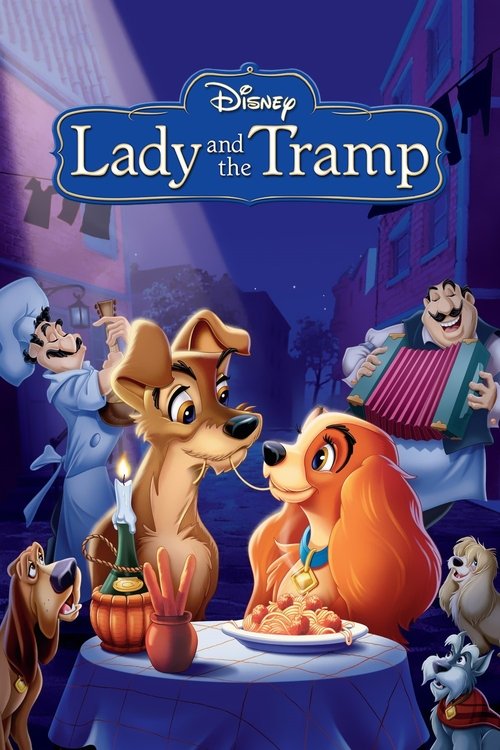
During the story meeting, Disney suggested the name "Tramp". From there, Huemer suggested that Tramp should be "a mongrel". Disney agreed, "A neat-looking mongrel. I don't think we should make him a funny-looking guy. After all, he's our leading man. He's got to be a Cary Grant. He's got to have a certain something that you like." When Greene reiterated a romance between the two dogs, Grant and Huemer objected to the idea, suggesting it was "distasteful" and "utterly contrary to nature." When the two character names were settled, Disney insisted on the film's final title being Lady and the Tramp despite Greene's objections and the concerns of film distributors. Disney declared, "That's what it's about—a lady and a tramp." However, further story development was placed on hold when Disney decided to scale back further animation projects to more affordable package films.
In 1952, Walt's older brother Roy O. Disney encouraged him to place Lady and the Tramp back into production, provided they keep the production costs low and release it in smaller theaters for first-run engagements. Disney then held two polls, independently of each other, within the animation department to gauge whether there was considerable interest in the subject matter of the project. "With the reaction we got", Disney said, "I have confidence that if we get going on this, we're liable to get a picture out of here that will be a change of pace in many ways." Disney then convened a story conference, with a recorded attendance of 26 studio employees, which was held on May 15, 1952.
A month later, in June 1952, Disney announced Lady and the Tramp was in production and budgeted at $2.5 million, with its release set for 1954. Since Huemer and Grant had left the Disney studio in 1948 and 1949, respectively, the final story development were done mostly by Erdman Penner and Joe Rinaldi. A solid story began to consolidate in 1953, based on Grant's storyboards and Greene's short story. The character Hubert was later replaced with Jock, a Scottish Terrier, and Trusty, a bloodhound. Originally, Lady's owners were called Jim Brown and Elizabeth. These were changed to highlight Lady's point of view. They were briefly referred to as "Mister" and "Missis" before settling on the names "Jim Dear" and "Darling". Nip and Tuck, the Siamese cats, were renamed Si and Am. The rat was recharacterized more realistically to raise dramatic tension.
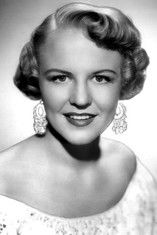
When Peggy Lee was hired to compose songs for Lady and the Tramp, she was shown the film's narrative through storyboards. It was initially written to have Trusty killed by the dog catcher's wagon. Lee remembered:
"I was like a small child. The rat scared me. And when Trusty was killed, I was so upset. I'm very sentimental about animals. It made me cry. I said, 'Oh Walt you can't do this,' and he said, 'You have to have some tension in the story. It would change everything if he's not killed.' I said, 'But if you kill him the children will cry too much, like with Bambi'—although I'd never seen Bambi. So he said, finally, 'Well, all right. Old Trusty can live... but the rat stays."
At Disney's insistence, Greene wrote a novelization of the film, published in 1953, so that film-going audiences would be familiar with the story. Titled Lady and the Tramp: The Story of Two Dogs, the novelization featured a foreword by Walt Disney and the illustrations were storyboard sketches drawn by Joe Rinaldi. Due to Greene's novelization, Grant was not given any screen credit for his work on the film. In 1995, Grant stated, "Lady and the Tramp is a real tragedy as far as I'm concerned as far as the credit for it. This I never forgave Walt for. He knew damn well where all this stuff came from!" In 2006, animation director Eric Goldberg rectified Grant's involvement in a making-of DVD documentary of the film's Platinum Edition release.