Lavrente Indico Diaz (born December 30, 1958) is a Filipino filmmaker, actor, and former film critic. He is known as one of the key names of the slow cinema genre, directing a diverse range of long narrative films that explore social and political issues in Philippines, with minimalist storytelling and long takes.
Diaz made his feature directorial debut with Serafin Geronimo: Ang Kriminal ng baryo Concepcion, released in 1998. Initially making low budget films within the Philippine studio system, he first came into prominence with Batang West Side (2001) and Evolution of a Filipino Family (2004), which both feature long running times that have become part of his cinematic trademark. His work garnered international acclaim with Norte, the End of History (2013), which was entered into the Un Certain Regard section of the 2013 Cannes Film Festival.
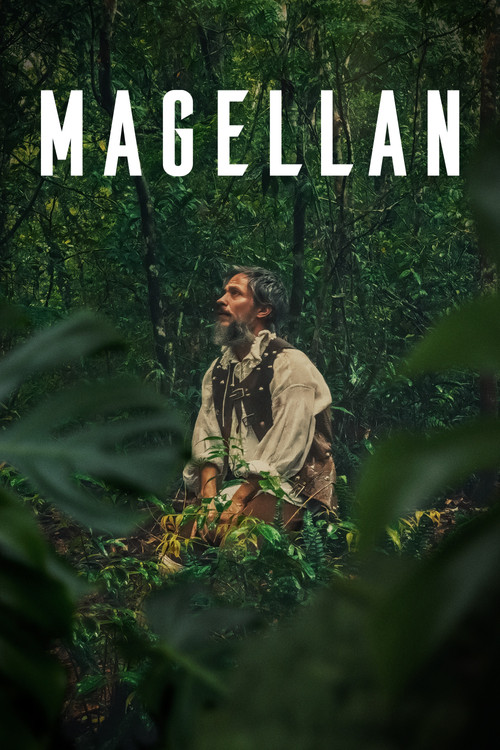
Diaz received further accolades with From What Is Before (2014), A Lullaby to the Sorrowful Mystery (2016), and The Woman Who Left (2016). He is a recipient of 2018's FAMAS Lifetime Achievement Award and 2021's Natatanging Gawad Urian (Gawad Urian Lifetime Achievement Award). Diaz's latest film, Magellan (2025), was his second film to be submitted to the Academy of Motion Picture Arts and Sciences for the Academy Award for Best International Feature Film, after Norte, the End of History.
Contents
Early life and education
Lavrente Diaz was born on December 30, 1958 in Columbio, Cotabato within Mindanao to Mario Diaz, an Ilocano from Guimba, Nueva Ecija, and Maria Indico, from Lambunao, Iloilo; both of his parents are teachers who had previously decided to volunteer for a government program and travel to Mindanao to assist in building schools. Lav Diaz was initially meant to be named "José", but his father Mario, whom he described as "a hardcore socialist" who loved Russian literature, settled on naming him after Lavrentiy Beria, the head of Joseph Stalin's secret police in the Soviet Union during World War II. According to his father, Diaz's family descended from Valentín Díaz, one of the founders of the Katipunan that initiated the Philippine Revolution in 1896. Diaz had a total of four siblings; an older brother, Bonifacio Diaz, died as an infant upon being given the wrong medication for his sickness at a hospital.
At the age of four, Diaz was nearly paralyzed by a sickness initially diagnosed as a rare form of polio (later discovered to be dystonia), and was bed-ridden for a year while his parents sought help from faith healers and doctors. He later recalled that "[the doctor] would dip me in very hot water with oil for hours, and I would be screaming and wailing all the time, in pain and in fear". After some time, Diaz's sickness began to subside, and he proceeded to relearn how to walk beginning with crawling. His motor functions never fully returned to its initial state, and Diaz grew to be shy and reclusive.
Diaz's childhood was marked by the presence of violent conflicts between Muslim armed groups and the Philippine government, although Diaz himself did not personally witness the conflict. Due to the dangerous situation, his family moved to the more peaceful town of Tacurong in what is now Sultan Kudarat where he finished his high school education. Diaz has cited his father Mario, a cinephile, as one of his influences in cinema, having spent time watching double features with his father at a cinema in Tacurong growing up. Diaz graduated in 1980 with an economics degree from Notre Dame University in Cotabato City.
Career
Diaz went to Manila where he began doing odd jobs for various publications and took up writing about music and film for a living; prior to becoming a filmmaker, Diaz's main interest was in writing music. Then, he became a production assistant for Balintataw. For a time, he wrote comics as part of the editorial staff for Ang Masa and We Forum.
After attending multiple film workshops, Diaz directed in 1985 his first film, a three-minute Super 8 mm short called Banlaw (lit. 'Cleanse'), which depicts an idealist young man inspired by a self-immolating Buddhist to protest the Marcos regime in a similar manner. After the People Power Revolution in 1986, Diaz worked as a critic for the Manila Standard newspaper in the late 1980s, during which time he directed his second short film, Step No, Step Yes, in 1988. His Filipino-language short story, "Pula, Puti at Saka Blu at Marami Pang Kolor" (lit. 'Red, White and Also Blue and Many Other Colors'), which he wrote under the pseudonym Bahagharing Timog (lit. 'Southern Rainbow'), won 2nd place at the 1990 Palanca Awards under the category of Short Story - Filipino. Diaz later moved to New York City to further study filmmaking.
He has won several international awards such as the award for Best Picture at the Singapore International Film Festival, the Independent Film Festival of Brussels and Gawad Urian in 2002 and Netpac Jury Prize and Best Acting Ensemble (2001 Cinemanila International Film Festival) for his film Batang West Side (including Best Director, Best Screenplay, Best Actor, Best Supporting Actor, Best Cinematography, Best Production Design, Best Music, Best Sound at the Urian), in Gawad Urian in 2005 for the film Ebolusyon ng Isang Pamilyang Pilipino (Evolution of a Filipino Family), and Special Jury Prize at the Fribourg International Film Festival in 2006 for Heremias, Book One.
His films often tackle the issues regarding the current social and political state of the Philippines. His film Kagadanan sa Banwaan ning mga Engkanto (Death in the Land of Encantos), the Closing Film of the orizzonti section of the Venice Film Festival 2007, was awarded with a Golden Lion Special Mention. Death in the Land of Encantos was also in competition at the Artistic Innovation Award (Visions) of the Toronto International Film Festival 2007. He has three Palanca Memorial Awards for Literature recognitions (a second place (1990) and an honorable mention (1991) for short stories, and third place (1997) for screenplay). His film Melancholia won the Orizzonti Grand Prize at the 65th Venice International Film Festival in 2008. In January 2011, he joined the board of directors for Cine Foundation International.
Political views
Similar to his father, Diaz is a socialist, having expressed admiration for Filipino revolutionaries such as New People's Army leaders Bernabe "Kumander Dante" Buscayno and Gregorio "Ka Roger" Rosal. He has described himself as a "Malay" instead of a Filipino (although he shared in an interview that "Maybe I'm just rhetorical about it"), and wishes to deemphasize national borders in his filmmaking ("I'm branding it as Malay cinema, but it's just about cinema."). Diaz stated that he holds a fatalistic view of life.
In December 2023, alongside 50 other filmmakers, Diaz signed an open letter published in Libération demanding a ceasefire and an end to the killing of civilians amid the 2023 Israeli invasion of the Gaza Strip, and for a humanitarian corridor into Gaza to be established for humanitarian aid, and the release of hostages.
Personal life
Diaz has three children. One of his daughters experienced the same disease he had during his childhood, which was soon diagnosed as a condition called dystonia after she enrolled in a study at Columbia University.
In late 2003, he underwent an operation to remove a mass of cancer between his lungs and above his heart, and was assisted by actor Joel Torre in raising funds for his treatment.