Lee Buck Trevino (born December 1, 1939) is an American retired professional golfer who is regarded as one of the greatest players in golf history. He was inducted to the World Golf Hall of Fame in 1981. Trevino won six major championships and 29 PGA Tour events over the course of his career. He is one of only four players to twice win the U.S. Open, The Open Championship and the PGA Championship. The Masters Tournament was the only major that eluded him. He is an icon for Mexican Americans, and is often referred to as "the Merry Mex" and "Supermex", both affectionate nicknames given to him by other golfers.
Contents
Early life
Trevino was born in Garland, Texas, into a family of Mexican ancestry. He was raised by his mother, Juanita Trevino, and his grandfather, Joe Trevino, a gravedigger. Trevino never knew his father, Joseph Trevino, who left when his son was small. During his childhood, Trevino occasionally attended school and worked to earn money for the family. At age 5, he started working in the cotton fields.
Trevino was introduced to golf by an uncle who gave him a few golf balls and an old golf club. He spent his free time sneaking into nearby country clubs to practice and began as a caddying at the Dallas Athletic Club, near his home, soon working there full-time. He left school at 14 to work earning $30 a week as a caddie and shoe shiner. The caddies had access to three short holes behind their shack, where he practiced after work, hitting at least 300 balls a day. Many of these practice shots were struck from the bare ground with very little grass (known locally as 'Texas hardpan') and often in very windy conditions. It is this that is widely believed to be the reason Trevino developed his extremely distinct, unique (many would say unorthodox), and compact swing method, which he went on to develop with tremendous effect. A very pronounced controlled "fade" was his signature shot, although he had many other shot types in his repertoire and he is, still to this day, remembered as one of the very finest shot-makers of all time.
When Trevino turned 17 in December 1956, he enlisted in the United States Marine Corps, and served four years as a machine gunner and was discharged in December 1960 as a corporal with the 3rd Marine Division. He spent part of his time playing golf with Marine Corps officers. He played successfully in Armed Forces golf events in Asia, where one rival was Orville Moody, who would follow Trevino to the PGA Tour in the late 1960s.
Professional career
After Trevino was discharged from the Marines, he went to work as a club professional in El Paso, Texas. He made extra money by gambling for stakes in head-to-head matches. He qualified for the U.S. Open in 1966, made the cut, and tied for 54th, earning $600. He qualified again in 1967 and shot 283 (+3), eight shots behind champion Jack Nicklaus, and only four behind runner-up Arnold Palmer. Trevino earned $6,000 for finishing fifth, which earned him Tour privileges for the rest of the 1967 season. He won $26,472 as a rookie, 45th on the PGA Tour money list, and was named Rookie of the Year by Golf Digest. The fifth-place finish at the U.S. Open also earned him an exemption into the following year's event.
In 1968, his second year on the circuit, Trevino won the U.S. Open at Oak Hill Country Club, in Rochester, New York, four strokes ahead of runner-up Nicklaus, the defending champion. His rounds of 69-68-69-69 was the first time 70 was broken in all 4 rounds of a U.S. Open. During his career, Trevino won 29 times on the PGA Tour, including six majors. He was at his best in the early 1970s, when he was Jack Nicklaus's chief rival. He won the money list title in 1970, and had six wins in 1971 and four wins in 1972.
Trevino had a remarkable string of victories during a 20-day span in the summer of 1971. He defeated Nicklaus in an 18-hole playoff to win the 1971 U.S. Open. Two weeks later, he won the Canadian Open (the first of three), and the following week won The Open Championship (British Open), becoming the first player to win those three titles in the same year. Trevino was awarded the Hickok Belt as the top professional athlete of 1971. He also won Sports Illustrated magazine's "Sportsman of the Year" and was named ABC's Wide World of Sports Athlete of the Year.
In 1972 at Muirfield in Scotland, Trevino became the first player to successfully defend The Open Championship since Arnold Palmer in 1962. In a remarkable third round at Muirfield, Trevino had five consecutive birdies from the 14th through the 18th, holing a bunker shot on the 16th and sinking a 30–foot chip on the 18th for a round of 66. In the final round, Trevino was tied for the lead on the 17th tee with Tony Jacklin. Trevino chipped in from rough on the back of the green for a par on the 17th. A shaken Jacklin three-putted the same hole from 15 feet for a bogey. Trevino parred the 18th hole for a final round of 71, winning him the Open by a stroke over Nicklaus, with Jacklin finishing third. Trevino holed out four times from off the greens during the tournament. Nicklaus had won the first two majors of the year (Masters, U.S. Open) and fell just short in the third leg of the grand slam. After holing his chip shot on the 17th in the final round, Trevino said: "I'm the greatest chipper in the world."
Masters Tournament
At the Masters Tournament in 1989, 49-year-old Trevino opened with a bogey-free five-under-par 67 to become the oldest to lead the field after a round in the tournament. It came despite Trevino's words twenty years earlier, when he said after the 1969 edition: "Don't talk to me about the Masters. I'm never going to play there again. They can invite me all they want, but I'm not going back. It's just not my type of course." Trevino said that he felt uncomfortable with the atmosphere at Augusta National and that he disliked the course because his style of play, where he liked to fade low shots left to right, was not suited to the course.
Trevino did not accept invitations to the Masters in 1970, 1971, and 1974. In 1972, after forgoing the previous two Masters tournaments, he stored his shoes and other items in the trunk of his car, rather than use the locker room facilities in the clubhouse. Trevino complained that had he not qualified as a player, the club would not have let him onto the grounds except through the kitchen. But he later described his boycott of the Masters as "the greatest mistake I've made in my career" and called Augusta National "the eighth wonder of the world."
After his opening round 67 in 1989, Trevino tied for eighteenth; his best career result at the Masters was a tie for tenth (1975, 1985).
Distinctions and honors
Trevino was the first player to shoot all four regulation rounds under par at the U.S. Open. At Oak Hill in 1968, Trevino played rounds of 69-68-69-69.
A major street in El Paso, Texas was named Lee Trevino Drive in his honor, and streets in Rio Rancho and Belen, New Mexico were also named for him.
Trevino received the 1971 BBC Overseas Sports Personality of the Year Award.
Trevino received the 1971 Sporting News Sportsman of the Year Award.
One of two golfers to win the PGA Tour's three oldest events in the same year: The Open Championship (1860), the U.S. Open (1895), and the Canadian Open (1904). Trevino won in 1971 and Tiger Woods won in 2000
Trevino played for the United States in the Ryder Cup six times (1969, 1971, 1973, 1975, 1979, 1981), and had an impressive 17–7–6 (.667) record. He also served as team captain in 1985.
Trevino won the Vardon Trophy for lowest scoring average five times: 1970, 1971, 1972, 1974 and 1980.
Trevino has established numerous scholarships and other financial aid to Mexican-Americans.
Trevino was inducted into the World Golf Hall of Fame in 1981.
In 2000, Golf Digest magazine ranked Trevino as the 14th-greatest golfer of all time.
Humor
Throughout his career, Trevino was seen as approachable and humorous, and was frequently quoted by the press. Late in his career, he remarked, "I played the tour in 1967 and told jokes and nobody laughed. Then I won the Open the next year, told the same jokes, and everybody laughed like hell."
At the beginning of Trevino's 1971 U.S. Open playoff against Jack Nicklaus, he threw a rubber snake that his daughter had put in his bag as a joke at Nicklaus, who later admitted that he asked Trevino to throw it to him so he could see it. Trevino grabbed the rubbery object and playfully tossed it at Nicklaus, getting a scream from a nearby woman and a hearty laugh from Nicklaus. Trevino shot a 68 to defeat Nicklaus by three strokes.
During one tournament, Tony Jacklin, paired with Trevino, said: "Lee, I don't want to talk today." Trevino retorted: "I don't want you to talk. I just want you to listen."
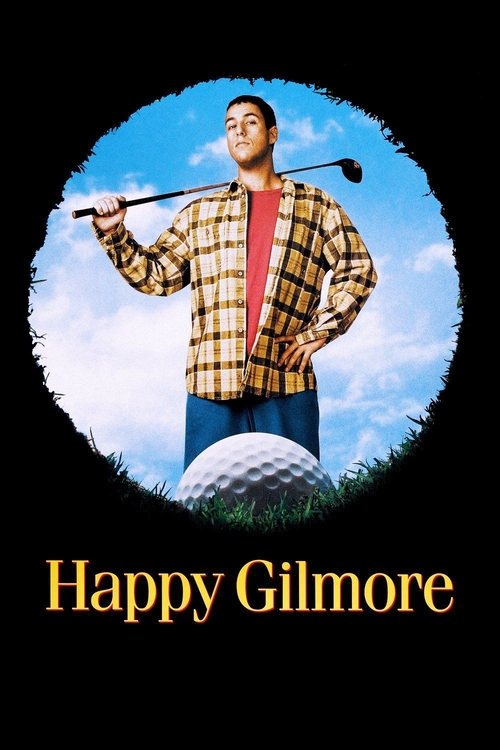
Trevino made a notable cameo appearance in the comedy Happy Gilmore, appearing in several scenes where he's a witness to Happy's anger outbursts, always shaking his head in shocked disapproval. His only spoken line is when the movie's antagonist, Shooter McGavin, says to Happy in sarcasm, "Yeah, right, and Grizzly Adams had a beard," to which an unexpected Trevino appears and says to McGavin, "Grizzly Adams did have a beard." Trevino would later regret appearing in the film, due to the amount of swearing.
After he was struck by lightning at the 1975 Western Open, Trevino was asked by a reporter what he would do if he were out on the course and it began to storm again. Trevino answered he would take out his 1-iron and point it to the sky, "because not even God can hit a 1-iron." Trevino said later in an interview with David Feherty that he must have tempted God the week before by staying outside during a lightning delay to entertain the crowds, saying "I deserved to get hit...God can hit a 1-iron."
Trevino said: "I've been hit by lightning and been in the Marine Corps for four years. I've traveled the world and been about everywhere you can imagine. There's not anything I'm scared of except my wife."
Professional wins (92)
PGA Tour wins (29)
PGA Tour playoff record (5–5)
European Tour wins (5)
European Tour playoff record (1–1)
Other wins (17)
1965 Texas State Open
1966 Texas State Open, New Mexico Open
1969 World Cup (team with Orville Moody), World Cup Individual Trophy
1971 World Cup (team with Jack Nicklaus)
1972 New Mexico Open
1973 Mexican Open
1974 World Series of Golf
1975 Mexican Open
1977 Morocco Grand Prix
1978 Lancome Trophy
1979 Labatt's International Golf Classic
1980 Lancome Trophy, Johnnie Walker Trophy
1981 PGA Grand Slam of Golf
1983 Labatt's International Golf Classic
1987 Skins Game
2001 Tylenol Par-3 Shootout
Senior PGA Tour wins (29)
Senior PGA Tour playoff record (3–3)
Other senior wins (10)
1991 Liberty Mutual Legends of Golf (with Mike Hill)
1992 Mitsukoshi Classic, Liberty Mutual Legends of Golf (with Mike Hill)
1993 American Express Grandslam
1994 American Express Grandslam
1995 Liberty Mutual Legends of Golf (with Mike Hill)
1996 Liberty Mutual Legends of Golf (with Mike Hill), Australian PGA Seniors Championship
2000 Liberty Mutual Legends of Golf – Legendary Division (with Mike Hill)
2003 ConAgra Foods Champions Skins Game
Major championships
Wins (6)
1Defeated Jack Nicklaus in 18-hole playoff; Trevino 68 (−2), Nicklaus 71 (+1).
Results timeline
CUT = missed the halfway cut
"T" indicates a tie for a place.
Summary
Most consecutive cuts made – 16 (1969 Open Championship – 1973 PGA)
Longest streak of top-10s – 2 (seven times)
The Players Championship
Results timeline
CUT = missed the halfway cut
WD = withdrew
DQ = disqualified
"T" indicates a tie for a place.
Champions Tour major championships
U.S. national team appearances
Professional
Ryder Cup: 1969 (tied), 1971 (winners), 1973 (winners), 1975 (winners), 1979 (winners), 1981 (winners), 1985 (non-playing captain)
World Cup: 1968, 1969 (winners, individual winner), 1970, 1971 (winners), 1974